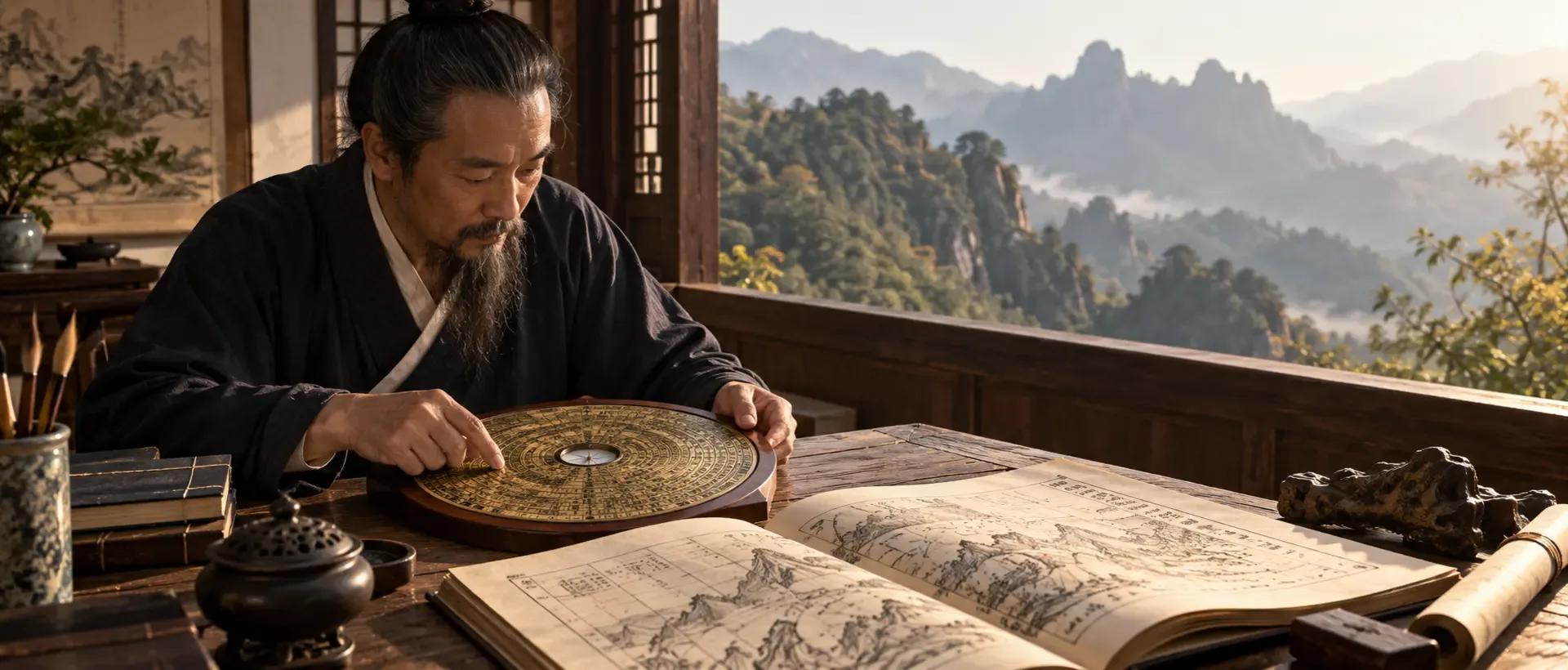
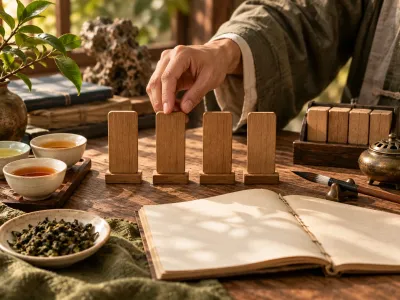
A changing line becomes a hexagram. A mountain and watercourse shape the experience of a site. A birth moment is arranged into stems, branches, palaces and cycles. A proposed date is compared with purpose, people and practical conditions. Chinese metaphysical traditions turn time, place and relationship into structured fields of attention.
Wudang.Org uses Chinese Metaphysics as a clear English pathway into Yi studies and the traditional technical arts often called shushu. These traditions share symbols — yin and yang, the Five Phases, trigrams, stems and branches, directions and calendars — but they do not all ask the same question or use the same method.
Their value does not depend on claiming total control over the future. At their best, they can slow judgement, reveal assumptions, organise a complex situation and help a person discuss timing, environment and choice with greater care. The final decision and its consequences remain human responsibilities.
Six Ways to Begin
I Ching (Yijing) — Read change through trigrams, hexagrams, line positions and a classical tradition that joins divination, philosophy and commentary.
Feng Shui — Observe how landscape, orientation, buildings, time and human use meet in homes, workplaces and cultural sites.
Yin-Yang & Five Phases — Learn the relational and cyclical language shared across Chinese cosmology and the technical arts.
BaZi (Four Pillars) — See how a birth moment becomes four pillars and how Day Master, Ten Gods and time cycles are read in relationship.
Zi Wei Dou Shu — Understand a chart of twelve palaces, symbolic stars, transformations and changing periods.
Date Selection — Bring purpose, calendar, people and real constraints together to choose a workable time.
A Shared Language, Different Methods
Time
Calendars, solar terms, stems and branches and other cycles give time texture rather than treating every day or period as interchangeable.
Place
Direction, landform, water, buildings and movement make environment part of the question.
Relationship
Symbols gain meaning through position, support, tension, transformation and the specific context around them.
Responsibility
A chart or reading can inform reflection; it does not remove consent, evidence, professional duties or accountability for a choice.
Learn or Consult
Begin with the educational guides if you want to understand the language and differences among systems. If you are seeking a consultation, choose a practitioner whose method, training, scope, fee, privacy practice and relationship with Wudang.Org are clearly stated. No service should promise certainty, use fear to sell remedies or replace regulated professional advice.
TAO · Events & Courses · Experience Wudang