A path into the reading
Chinese Incense Culture
Materials, vessels, uses and responsible ways to begin
Start here
01 Find your bearings
Origins and History of Chinese Incense Culture
Dated objects, traded aromatics and changing practices from early China to the present
Explore this section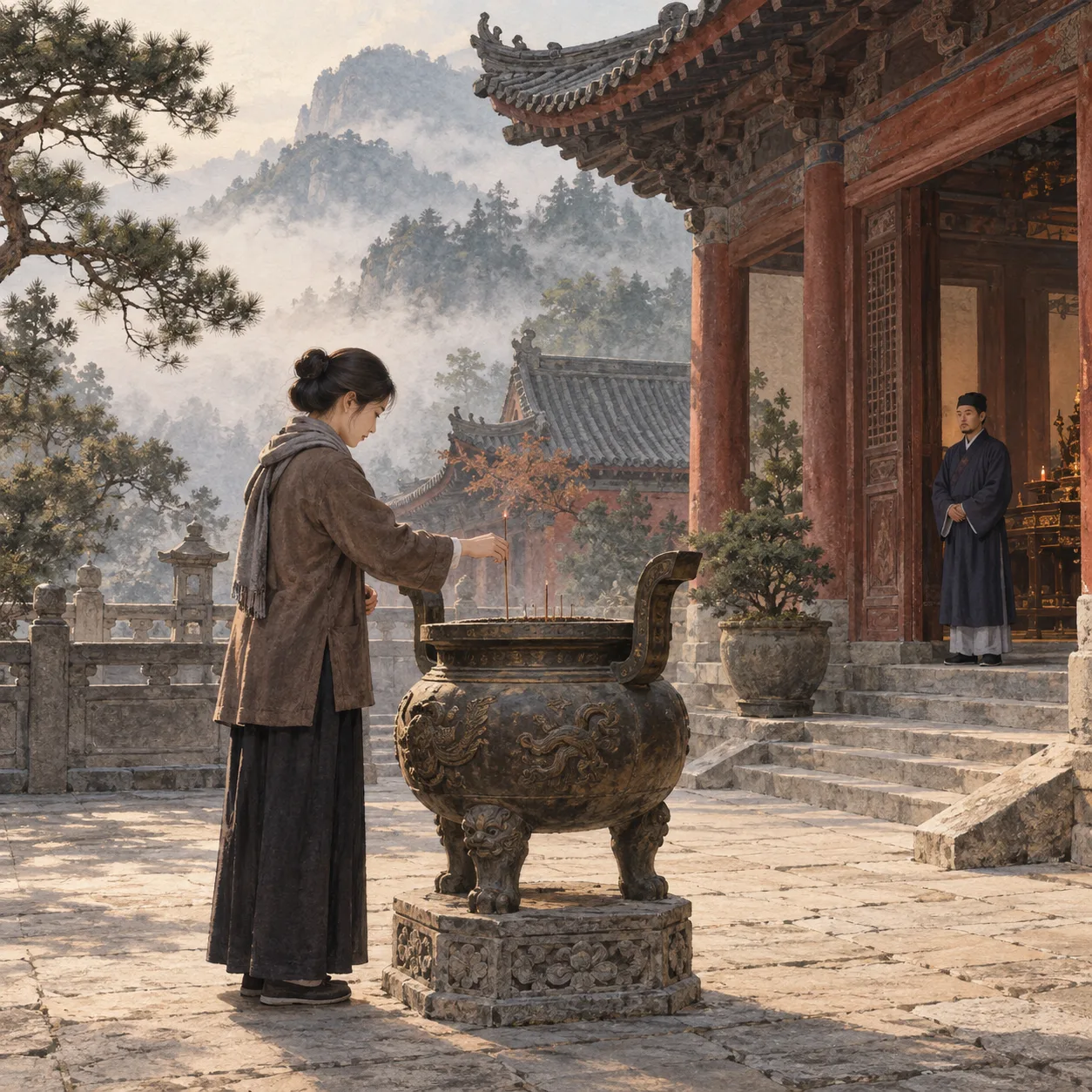
02 Explore the subject
Incense in Daoist Ritual and Temple Life
Offerings, liturgy and respectful visiting—what incense can mean without turning local customs into universal rules
Explore this section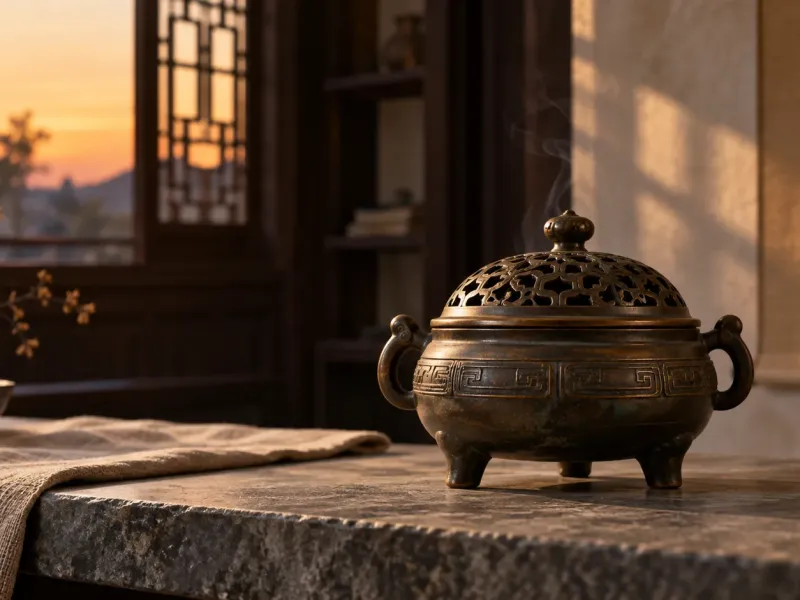
03 Keep reading
Chinese Incense Burners: Bronze, Ceramic, Form and Context
Learn to read a censer through its parts, material, model, object record, provenance and historical setting.
Explore this sectionGo further
Deeper reading
- Origins and History of Chinese Incense CultureDated objects, traded aromatics and changing practices from early China to the present
- Aromatic Materials: Woods, Resins and Responsible SourcingHow to identify material categories, read seller claims and compare scent without false certainty
- Incense Forms and the Art of AppreciationSticks, coils, pressed powder and indirect warming—what each form changes and how to compare them carefully
- Incense in Daoist Ritual and Temple LifeOfferings, liturgy and respectful visiting—what incense can mean without turning local customs into universal rules
- Incense, Meditation and Taoist PracticeUsing scent as an optional cue for attentive practice—without confusing atmosphere, health claims and formal religion
- Learning Chinese Incense: Reading and PracticeA source-aware path from small samples and observation to books, objects and responsible sourcing
- Chinese Incense Burners: Bronze, Ceramic, Form and ContextLearn to read a censer through its parts, material, model, object record, provenance and historical setting.
- Chinese Incense Seals: Ash, Patterns and Fragrant TimeHow powdered incense, ash beds and patterned stencils could turn fragrance into a visible duration—and how to read the surviving objects without mistaking every incense seal for a precision clock.
- Chinese Incense Sets: Burner, Box, Vase and ToolsHow burners, boxes, tool vases, spoons and tongs form a practical and artistic ensemble
The full guide
What should I know before reading further?
Chinese incense culture is not one ceremony or one unbroken school. It includes aromatic materials, crafted preparations, burners and tools, religious offerings, domestic customs, scholarly appreciation and modern revivals. The meaning of fragrance changes with the object, place, community and purpose.
Read more The complete guide
Chinese incense culture is not one ceremony or one unbroken school. It includes aromatic materials, crafted preparations, burners and tools, religious offerings, domestic customs, scholarly appreciation and modern revivals. The meaning of fragrance changes with the object, place, community and purpose.
This guide offers a grounded way in. It explains what may be heated or burned, how forms and techniques differ, why temples and study rooms are not the same setting, and how to consider air quality, fire safety and material provenance without turning fragrance into a medical or spiritual promise.
What the word incense covers
In English, incense often means a stick that is lit. Chinese sources use xiang, 香, more broadly for fragrant substances, prepared incense and aroma. A page about incense therefore needs to name the material and method rather than treating every scented object as equivalent.
Common forms include sticks, coils, cones, pellets, loose powders, stamped powder trails and pieces of aromatic wood. Some are burned directly. Others are warmed over a controlled heat source so that their aroma develops without an open flame touching the material.
A history with many settings
Aromatic substances have appeared in Chinese ritual, courtly, medical, domestic and literary settings across different periods. Surviving censers, recipes, trade records and written descriptions do not tell one straight story; they show changing uses, imported materials, local ingredients and different standards of refinement.
Modern demonstrations may draw on historical texts and objects, but their present sequence, teaching vocabulary or staging may be recent. A responsible account distinguishes documented practices from reconstruction and avoids presenting every contemporary lesson as an unchanged ancient lineage.
Begin with the material
Agarwood is resin-rich wood formed in certain trees, especially species of Aquilaria and Gyrinops, after injury and complex biological processes. Sandalwood comes from several Santalum species. Exact species, origin, cultivation, processing and storage all matter; a prestigious common name alone does not establish identity or quality.
Chinese compounded incense may also include resins, spices, roots, leaves, flowers and binders. Recipes vary by time, region and purpose. Ingredient lists should be treated as evidence to examine, not as proof that a product is traditional, therapeutic or rare.
Form and heat change the experience
A self-burning stick is convenient and gives a continuous fragrance, but its combustible base and binders contribute to the smoke. A coil extends the burn time. A powder trail makes duration and shape visible. A chip warmed indirectly can reveal changes in one material as the temperature rises.
No method is automatically more authentic. Choose according to the purpose, room and material, then use the smallest amount that allows careful observation. Reliable practice begins with stable heat, appropriate tools and attention to what is actually happening.
Vessels are evidence, not just decoration
Chinese censers were made in bronze, ceramic and other materials, with forms that changed across periods and contexts. A mountain-shaped boshan censer, a tripod vessel and a modern tabletop burner carry different historical associations. A reign mark or antique-looking surface is not proof of date.
For use, the vessel must also suit the heat source. It should stand securely on a heat-resistant surface, contain ash and embers, and leave space around curtains, paper and other flammable objects. Historical appearance never replaces practical fire safety.
Religious offering, hospitality and appreciation
Incense can mark an offering, prepare a ritual space, accompany remembrance or welcome a guest. Daoist, Buddhist, household and local practices overlap in some places and differ in others. The number of sticks, order of gestures and words spoken are not governed by one universal Chinese code.
Fragrance appreciation has another emphasis: compare materials, temperatures and stages of aroma with patience. It may be contemplative, but attention to scent does not by itself prove a religious initiation, therapeutic effect or special state of consciousness.
How to observe fragrance
Record the material name, supplier, form, amount, heat source, room conditions and time. Notice the first aroma, later changes, smoke, residue and how long the scent remains after heating stops. Comparing one variable at a time is more useful than collecting elaborate adjectives.
Language for scent is personal and learned. You can describe sweetness, dryness, resin, wood, spice or cooling sensations without treating those words as a fixed grading system. If a demonstration asks everyone to report the same experience, separate social expectation from sensory observation.
Air quality, sensitivity and fire
Burning material creates indoor particles. The United States Environmental Protection Agency notes that indoor combustion activities are sources of particulate matter and that inhalable particles can affect the lungs and heart. Good ventilation, shorter sessions and less material reduce exposure; a closed room full of smoke is not a sign of depth or authenticity.
Stop if smoke or fragrance causes discomfort, and choose a non-burning approach when that is more suitable. Keep flame and hot charcoal attended, use a stable burner, let ash cool fully, and take extra care around children or anyone with respiratory or fragrance sensitivities. Cultural information is not medical advice.
Responsible sourcing and conservation
CITES maintains decisions and implementation measures for agarwood-producing Aquilaria and Gyrinops taxa because international trade and conservation require scrutiny. Buyers should ask for the botanical name, country of origin, cultivated or wild status, and any documents needed for legal trade rather than accepting vague claims of rare wild wood.
Responsible sourcing is not a guarantee of a particular aroma, and high price is not proof of legal origin. Transparent plantation material, small quantities and suppliers who can explain their chain of custody are more useful starting points than secrecy, miracle claims or rarity theatre.
A reading path through Wudang.Org
Continue with Origins and History of Chinese Incense Culture; Aromatic Materials and Fragrant Woods; Forms and the Art of Appreciation; Incense in Ritual and Temple Life; Incense, Meditation and Taoist Practice; and Learning Chinese Incense. Each guide takes one question further while keeping historical evidence, health boundaries and sourcing visible.
If you are new, begin with the materials guide, then compare direct burning with indirect warming before approaching ritual or contemplative contexts. Return to Chinese Literati Arts to place incense beside tea, guqin, calligraphy, painting and flower arrangement without assuming that all of them share one origin or religious identity.
Recommended next page
Where next?
Aromatic Materials: Woods, Resins and Responsible SourcingHow to identify material categories, read seller claims and compare scent without false certaintyA few alternatives