A path into the reading
Zhuangzi
Freedom of mind in a world of changing perspectives.
Start here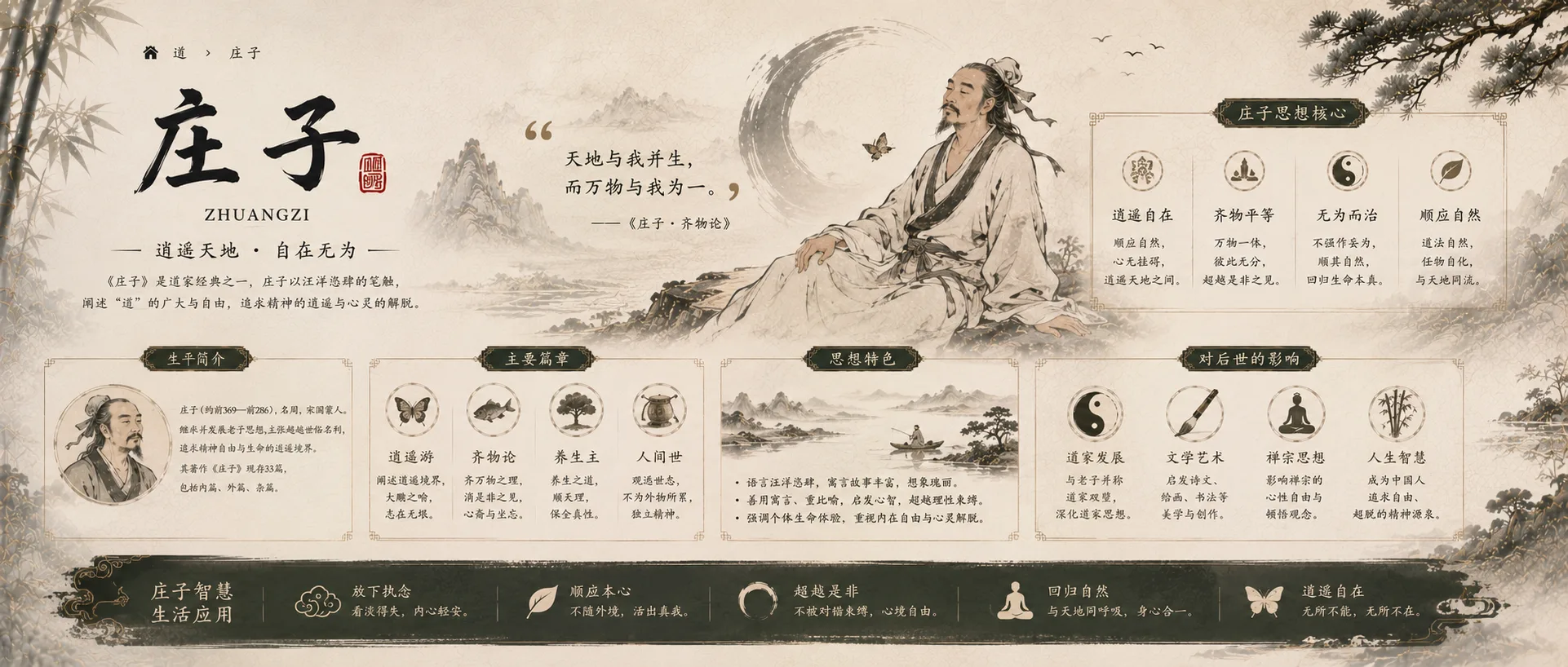
01 Find your bearings
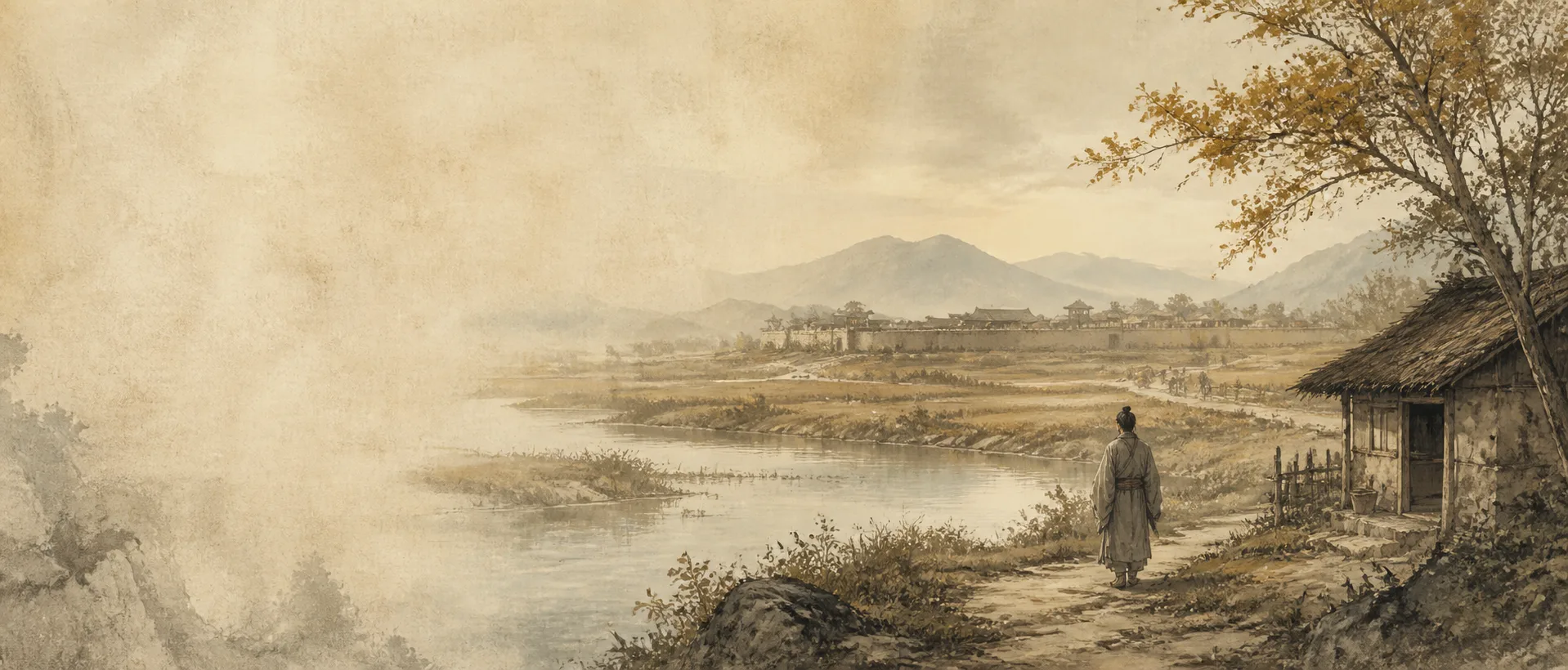
Life & Historical Context of Zhuangzi
The Man Behind the Book and the World That Shaped Him
Explore this section
02 Explore the subject
The Equality of Things & the Relativity of Perspectives
Zhuangzi's Skepticism and the Wisdom of Many Viewpoints
Explore this section
03 Keep reading
Key Translations & Further Reading
A Guide to English Translations and Studies of the Zhuangzi
Explore this sectionGo further
Deeper reading
- Life & Historical Context of ZhuangziThe Man Behind the Book and the World That Shaped Him
- Structure & Authorship of the TextInner, Outer & Miscellaneous Chapters
- Core Themes: Wandering, Wu Wei & SpontaneityFreedom, Effortless Action & the Flow of Nature
- The Equality of Things & the Relativity of PerspectivesZhuangzi's Skepticism and the Wisdom of Many Viewpoints
- Famous Parables of the ZhuangziThe Butterfly Dream, Cook Ding & the Useless Tree
- Zhuangzi in Taoist Practice & Later InfluenceFrom Religious Taoism to Chan Buddhism, Poetry & Art
- Key Translations & Further ReadingA Guide to English Translations and Studies of the Zhuangzi
The full guide
What should I know before reading further?
The Zhuangzi invites the reader into a world where giant birds cross impossible distances, trees survive because no carpenter wants them, a cook moves through an ox without forcing his blade and familiar certainties turn upside down. Its stories are playful, but their play has purpose: they loosen the habits that make one viewpoint feel complete.
Read more The complete guide
The Zhuangzi invites the reader into a world where giant birds cross impossible distances, trees survive because no carpenter wants them, a cook moves through an ox without forcing his blade and familiar certainties turn upside down. Its stories are playful, but their play has purpose: they loosen the habits that make one viewpoint feel complete.
Across its thirty-three received chapters, the work explores language, knowledge, transformation, death, skill, freedom and the many ways people become trapped by reputation or rigid judgement. It does not offer a single system. It teaches through stories, voices and reversals, allowing understanding to move rather than settle too quickly.
Ways into the Zhuangzi
Stories and Parables — Begin with memorable encounters, impossible creatures, skilled craftspeople and the humour through which the text opens difficult questions.
Equalising Things — Consider how names, distinctions and standpoints shape what appears true, useful or valuable.
Skill and Effortless Action — Read the craftsmen stories as portraits of long practice becoming responsive, embodied skill.
Life and Historical Setting — Meet Zhuang Zhou and the intellectual world in which the text's earliest layers emerged.
Structure and Authorship — Understand the Inner, Outer and Miscellaneous chapters and why the received book speaks in more than one voice.
Translations and Further Reading — Choose an accessible translation while keeping the text's humour, ambiguity and multiple voices in view.
How to Read the Stories
Let the story work before extracting a lesson. Notice who is speaking, what changes by the end and whose certainty is being unsettled. A Zhuangzi story often remains useful because it supports more than one angle. Its purpose is not always to replace one fixed conclusion with another, but to restore movement to thought.
Recommended next page
Where next?
Structure & Authorship of the TextInner, Outer & Miscellaneous ChaptersA few alternatives