Wudang Internal Cultivation
武当内修
Wudang internal cultivation is best understood as an umbrella term, not one secret exercise or a single curriculum. In different Wudang settings it may include standing, qigong, breathing, quiet sitting, martial basics, recitation, meditation and the discipline of daily routine.
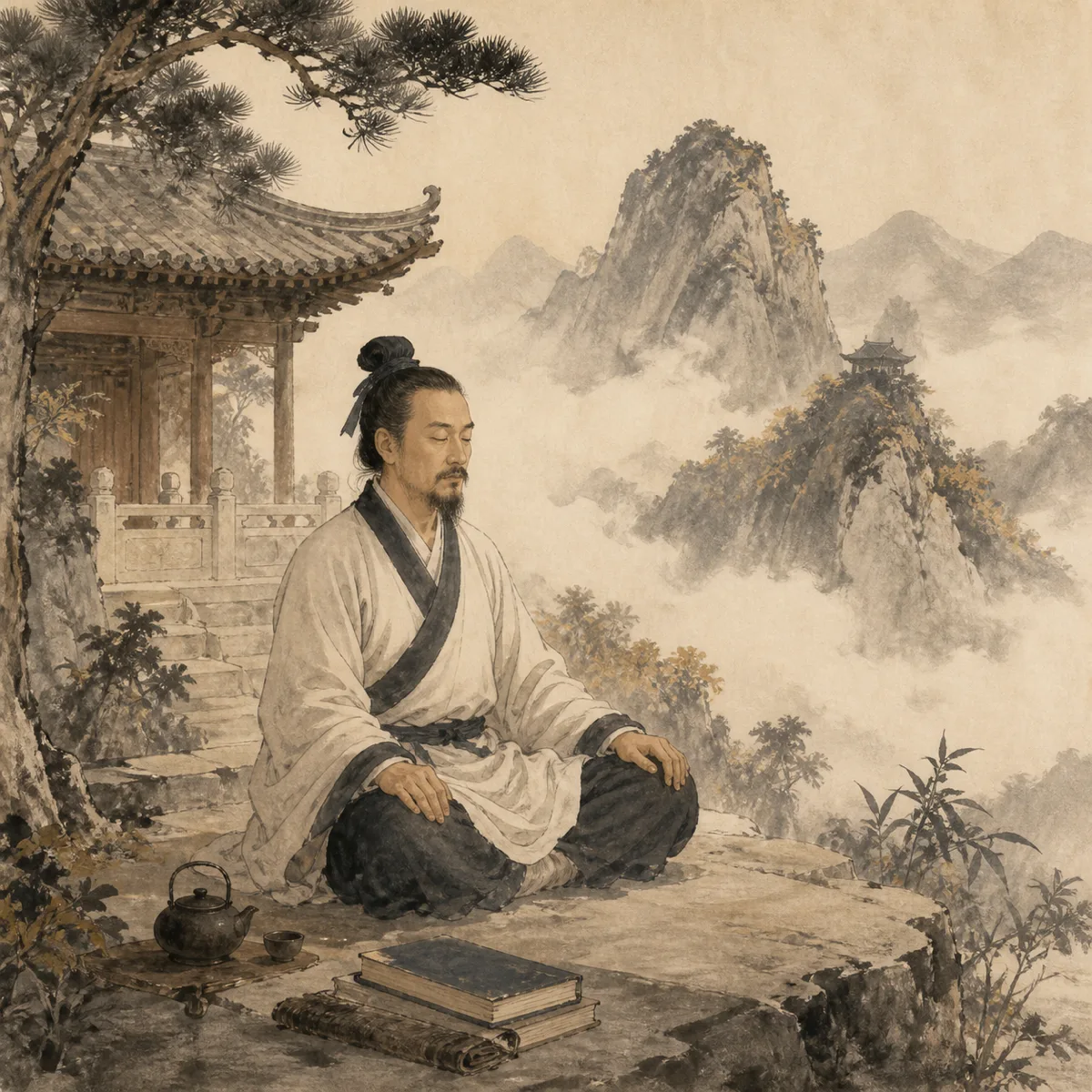
The exact content depends on the teacher, community and purpose. A responsible introduction begins with what can be practised and observed: posture becomes more organised, breathing less forced, attention steadier and conduct more deliberate. Traditional language can guide practice without being turned into a promise of invisible power or a substitute for medical explanation.
What “Wudang internal cultivation” means
Wudang is a place, a sacred landscape and a name used by several religious, martial and cultural communities. It does not identify one unchanging lineage. A temple-based Daoist programme, a martial school, a health class and an independent teacher may all use the phrase “internal cultivation” while teaching different material.
The first question is therefore not whether a method is genuinely “internal.” Ask what the method is called, who transmits it, what students actually do, what its purpose is and what prerequisites it assumes. Clear answers are more useful than a prestigious label.
Four related terms—and why they are not identical
Cultivation: xiulian and xiuyang
Cultivation is the broadest idea. It may include body practice, meditation, study, ritual, ethical discipline and ordinary conduct. In religious contexts the aim can extend beyond health or martial skill to transformation of the person and relationship with the Dao.
Neigong: internal training
Neigong usually refers to training qualities considered “internal” to a method: coordination, structure, breathing, attention, power organisation or endurance. The meaning changes between martial systems. It should not be assumed to name one ancient Wudang syllabus.
Qigong: a modern broad category
Qigong is now used for many breathing, movement and meditative exercises. Some can form part of internal cultivation, but an ordinary health qigong class is not automatically internal alchemy, religious training or martial neigong.
Neidan: internal alchemy
Neidan is a historical Daoist field with its own texts, symbols, lineages and soteriological aims. It uses alchemical language to describe transformation within the practitioner. Calling any relaxation exercise “neidan” removes the religious and textual context that gives the term meaning.
A careful historical perspective
Chinese traditions of inward self-cultivation are older than the word neidan. Breathing, meditation, daoyin, nourishing-life practices and reflections on essence, qi and spirit developed across different texts and communities.
Internal alchemy emerged later as a recognisable body of doctrine and practice, becoming especially influential from the Song period onward. Quanzhen traditions made it a major part of religious cultivation together with disciplined conduct, community life and study.
Wudang communities inherited and reworked material from these wider Daoist worlds. Martial practice also became a powerful part of the mountain’s modern public identity. That history does not form one straight, unchanged chain from an ancient sage to every class now advertised as “Wudang internal arts.” Good teaching should state the particular lineage and period it represents.
Four dimensions of practice
Body
Standing, stepping, slow movement and ordinary posture reveal where effort is excessive, disconnected or unstable. The aim is not to freeze into an ideal shape but to organise weight, joints and muscular effort so movement becomes more economical.
Breath
Breath is first observed, then coordinated gradually. For beginners, it should remain comfortable enough that speech, balance and attention are not disturbed. Forceful retention, rapid breathing and pressure-seeking methods belong to specific practices and require qualified supervision.
Attention
Meditation, counting, listening and mindful repetition develop continuity of awareness. The aim is not a blank mind. Noticing distraction and returning without agitation is already part of the work.
Daily conduct
Sleep, food, speech, emotional habits, relationships and the ability to maintain a steady rhythm are not background details. In many Daoist accounts, practice that produces impressive sensations but leaves conduct unchanged is incomplete.
What progress can look like
Useful progress is usually quiet. You recognise unnecessary tension sooner. Balance recovers more easily. Breathing settles after effort. You can repeat a simple method without constantly changing it. Attention returns more readily, and practice makes ordinary interactions less reactive rather than more self-important.
Heat, tingling, swaying, vivid images and changes in body sensation can occur for many ordinary reasons. They do not by themselves prove that a channel has opened, that qi has been stored or that a higher level has been reached. A teacher should be able to correct observable practice without depending on dramatic interpretations.
A twenty-minute beginner practice
This is a modest example, not a canonical Wudang sequence. Anyone with a medical condition, recent injury, pregnancy or a history of falls may need a modified version.
Arrive — two minutes
Stand or sit comfortably. Notice contact with the floor or chair and allow the breath to continue naturally. Do not try to make it deep.
Organise the posture — five minutes
Use an easy standing position. Let the knees remain soft, the spine rise without stiffness and the shoulders release. Shift weight gently if stillness creates discomfort.
Move slowly — eight minutes
Choose one familiar sequence: joint circles, a short qigong set, basic stepping or a simple taijiquan movement. Work within a comfortable range and keep the breath unforced.
Become quiet — three minutes
Stand or sit and observe the effects of the movement. If attention wanders, return to physical contact, sound or natural breathing.
Record one observation — two minutes
Note something concrete: balance, tension, breathing, mood or pain. This creates a more reliable record than judging the session by whether it felt “powerful.”
A responsible progression
Settle the foundations
Begin with natural breathing, comfortable posture and a practice short enough to repeat. Consistency matters more than intensity.
Learn one method accurately
Stay with a named method long enough to receive correction. Collecting disconnected techniques makes it difficult to know what produced an effect or a problem.
Integrate stillness and movement
Observe whether the organisation developed in quiet practice remains during walking, work and conversation. Internal cultivation should become less dependent on a special room or mood.
Deepen under appropriate guidance
Breath retention, strong abdominal pressure, intensive retreats, fasting, sexual methods and alchemical systems should never be smuggled into a generic beginner course. They require explicit prerequisites, consent and safety planning.
How to assess a teacher or course
The method, lineage and actual curriculum are named clearly.
Prerequisites and intended outcomes are specific rather than mystical.
The teacher can modify posture and movement for different bodies.
Students may ask questions, refuse touch and stop an exercise.
Pain, dizziness and distress are treated as signals to assess, not proof of spiritual progress.
Medical claims, fees and the limits of the teacher’s role are stated plainly.
“Internal cultivation” should not be used as a prestige label when the curriculum is ordinary stretching, nor as cover for an esoteric practice that is never properly disclosed.
Safety and evidence boundaries
Gentle qigong, tai chi and meditative movement generally have good safety records when taught appropriately, but “generally safe” does not mean suitable for every person or every method. Pregnancy, heart or lung conditions, neurological illness, recent surgery, balance problems and medication may change what is safe.
Stop for chest discomfort, fainting, unusual shortness of breath, sudden weakness, severe headache or new neurological symptoms. Pain that persists is not a blockage to push through. Forceful breathing can produce dizziness or faintness, and long breath holds are not a beginner requirement.
Meditation is not risk-free for everyone. If practice produces persistent anxiety, panic, insomnia, disturbing memories, derealisation or loss of daily function, reduce or stop the practice and seek qualified support. A competent teacher does not diagnose such distress as a necessary purification.
Research on qigong, tai chi or meditation studies particular programmes and outcomes. It cannot validate “Wudang internal cultivation” as a single treatment, because no single standard intervention exists. Evidence for a component practice also does not establish qi as a measurable substance or prove the lineage’s whole explanatory system.
Internal cultivation can complement an active life, but gentle practice may not supply all the aerobic and strengthening activity recommended for health. It must not replace vaccination, diagnosis, medication, psychotherapy, rehabilitation or emergency care.
The Three Treasures as traditional language
Jing, qi and shen—often rendered as essence, qi and spirit—appear in varied medical, Daoist and cultivation traditions. A responsible teacher explains how a named source or lineage uses the terms.
They are not three fixed anatomical substances, and one lineage’s sequence should not be presented as universal Wudang doctrine. The terms may organise attention and practice while remaining traditional categories rather than laboratory measurements.
Common questions
Is internal cultivation the same as qigong?
No. Qigong may be one component. Internal cultivation can also include standing, martial basics, meditation, study, ritual and daily conduct.
Should I feel qi?
You may notice warmth, tingling, heaviness, lightness or pulsing. These sensations are real experiences but do not have one guaranteed interpretation. Do not chase them or use them to diagnose yourself.
Do I need to practise every day?
Frequent short practice is usually easier to learn from than rare intense sessions. Rest is also part of training. A routine that consistently worsens sleep, pain or mood needs adjustment.
Do I need a teacher?
Basic comfortable standing, natural breathing and gentle movement can often be explored from clear instructions. A teacher becomes increasingly important when the method is complex, involves partner work, strong breathing, fasting, retreat conditions or claims of alchemical transformation.
Can internal cultivation heal illness?
It should not be presented as a cure. Some component practices may support balance, activity, stress management or quality of life for particular people, but they do not replace diagnosis or treatment.
Continue reading
Standing Practice — begin with observable alignment, balance and unnecessary effort.
Qigong — compare its history, practice families, evidence and safety.
The Three Treasures — understand how jing, qi and shen are used across different traditions.
The Wudang Practice Beginner Pathway — build a wider sequence for movement and martial training.
Evidence and historical context
Religious Daoism — Stanford Encyclopedia of Philosophy
Qigong: What You Need to Know — NCCIH
Meditation and Mindfulness: Effectiveness and Safety — NCCIH
WHO Guidelines on Physical Activity and Sedentary Behaviour
Key points
Wudang internal cultivation is an umbrella term, not one secret exercise or universal curriculum.
Cultivation, neigong, qigong and neidan overlap but should not be treated as synonyms.
Useful progress appears in posture, breathing, attention, consistency and conduct—not merely unusual sensations.
A beginner practice should remain comfortable, repeatable and easy to stop.
Advanced breathing, fasting, retreat and alchemical methods require explicit teaching and safety boundaries.
Component practices may support wellbeing, but internal cultivation is not a medical treatment or replacement for care.