A path into the reading
Training and Practice: Building a Sustainable Wudang Routine
A flexible framework for classes, solo work, feedback, recovery and long-term learning
Start here
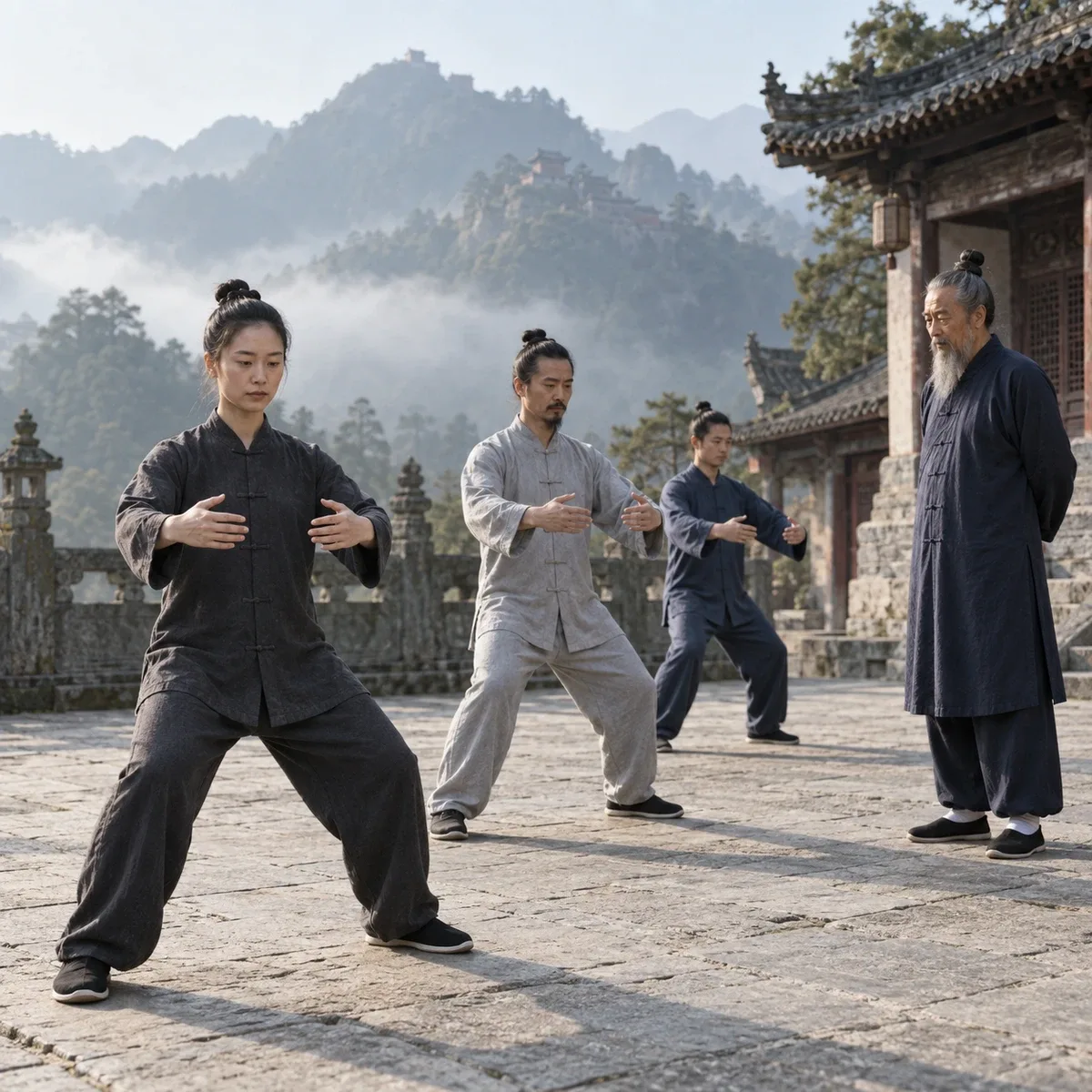
01 Find your bearings
Jibengong and Stance Training: Building Foundations Safely
A practical guide to stance variables, repetition, conditioning, feedback and sustainable progression.
Explore this section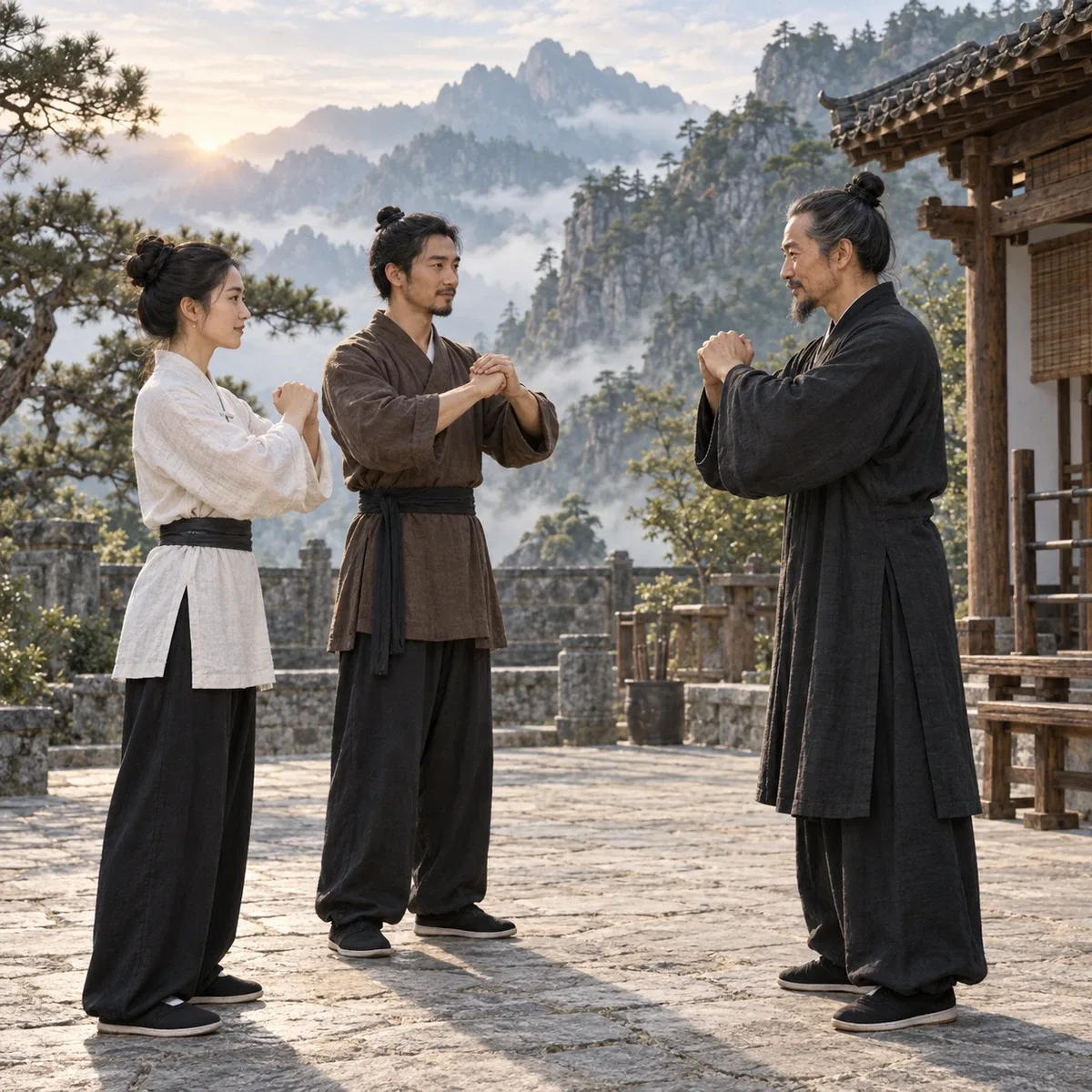
02 Explore the subject
Wude: Martial Ethics, Lineage and Responsible Teaching
How conduct, consent, attribution and clear expectations support a healthy training relationship
Explore this section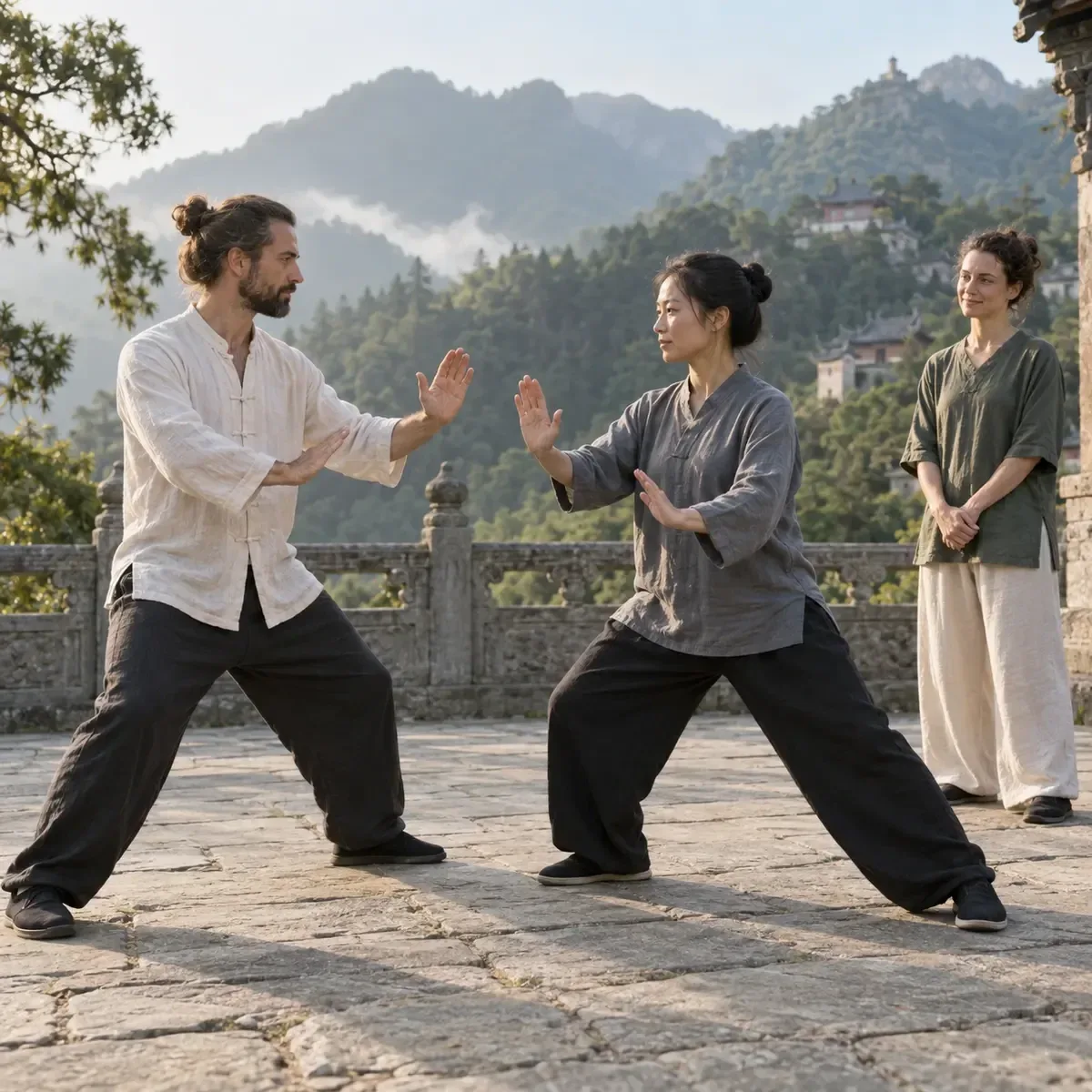
03 Keep reading
How to Begin Wudang Practice: A Beginner Pathway
Choose a realistic starting point among Taijiquan, Qigong, standing practice, Baduanjin, sword training and studying at Wudang.
Explore this sectionGo further
Deeper reading
- Jibengong and Stance Training: Building Foundations SafelyA practical guide to stance variables, repetition, conditioning, feedback and sustainable progression.
- Forms, Drills and Applications: Connecting Solo and Partner PracticeHow solo sequences, focused drills and ruleset-aware partner work can answer different training questions.
- Neigong: Internal Training, Breath and AttentionA careful guide to a varied term, common practice methods, traditional frameworks and sensible boundaries
- Wude: Martial Ethics, Lineage and Responsible TeachingHow conduct, consent, attribution and clear expectations support a healthy training relationship
- Training at Wudang: How to Choose a School or RetreatA practical checklist for programs, teachers, safety, costs, accommodation and follow-up
- Training Sources and Reading Paths: From Manuals to PracticeHow to compare old texts, modern teaching, research, video and your own training record
- How to Begin Wudang Practice: A Beginner PathwayChoose a realistic starting point among Taijiquan, Qigong, standing practice, Baduanjin, sword training and studying at Wudang.
The full guide
What should I know before reading further?
Wudang practice can include basic exercises, standing, forms, partner work, weapons and reflective or internal training. The balance varies across teachers, branches, ages and goals. A useful programme therefore begins by explaining what it teaches and how each part supports the learner.
Read more The complete guide
Wudang practice can include basic exercises, standing, forms, partner work, weapons and reflective or internal training. The balance varies across teachers, branches, ages and goals. A useful programme therefore begins by explaining what it teaches and how each part supports the learner.
This guide offers a framework, not a compulsory syllabus. It helps readers plan regular classes, individual practice, workshops or residential study while keeping progress, consent, recovery and honest expectations in view.
1. Define why you are training
Someone seeking cultural understanding may choose differently from someone preparing for performance, partner practice or quiet daily movement. Write down one immediate aim and one longer-term aim. This makes it easier to judge whether a class and its teaching methods fit.
Goals can change. Review them after a course, a new form or a period away from training. Progress need not mean collecting more material; it may mean performing fewer movements with clearer coordination, attention and control.
2. Use four lenses to understand a curriculum
Basic skills, forms, partner work and reflective or internal practice are four useful lenses. Basic work develops repeatable movement qualities; forms organise sequences; partner work introduces another person’s distance and response; internal practice may develop attention, breathing awareness or stillness according to the tradition.
Not every school uses these names or gives them equal time. A curriculum is not automatically incomplete because its categories differ. Ask what is practised, what the exercise is intended to develop, how feedback is given and how the work changes as a learner progresses.
3. Build sessions around purpose
A session might move from gentle preparation to a focused basic exercise, a short section of form and a closing review. Another may concentrate entirely on standing, partner drills or one difficult transition. The best order depends on the task, teacher, group, space and the learner’s condition that day.
Instead of copying a fixed timetable, give each session one main question. Examples include keeping the feet stable during a turn, maintaining control of a weapon’s full length or recognising when unnecessary tension appears. A clear question turns repetition into observation.
4. Connect basics, forms and application
Basic exercises isolate relationships that can be hard to notice inside a long sequence. Forms then place these relationships into changing directions, rhythms and transitions. Neither automatically produces partner skill, but both can prepare material for carefully designed drills.
In partner work, begin with an agreed task, speed and contact level. Increase uncertainty only when both people can stop and reset safely. A drill should make its purpose observable; it should not be used to prove rank, toughness or a historical claim.
5. Make feedback specific and consensual
Useful feedback identifies what happened and offers one manageable adjustment. A teacher may demonstrate, describe, use a mirror or video, set an external task, or—with permission—use physical contact to indicate direction or alignment. No single method suits every learner.
Consent applies throughout training. A learner can decline touch, a drill or a contact level without being shamed. Before partner work, agree on boundaries and stopping signals. Responsible instruction adapts while keeping the learning aim clear.
6. Practise alone without drifting
Solo practice becomes more reliable when the task is small enough to observe. Use a short sequence, count a limited number of careful repetitions, or record one angle for later comparison. Notes can track the question practised rather than declaring a session good or bad.
Video can reveal timing and shape, but it does not replace instruction or show every internal sensation. Compare recordings made under similar conditions and avoid judging a whole practice from one frame. Periodic feedback can help identify habits that repetition alone may reinforce.
7. Understand short and intensive courses
A workshop or residential course can introduce vocabulary, routines, teaching methods and a concentrated experience of daily practice. Its value depends on the actual hours, group size, instructor access, progression and what support exists after the course.
Do not confuse exposure with mastery. Before enrolling, ask what a beginner is expected to retain, whether material is recorded or reviewed, and how questions can be addressed later. A modest, clearly described outcome is more useful than a promise of rapid transformation.
8. Adjust load and recovery
Frequency, duration, range, speed, stance depth, resistance and weapon weight all change training load. Adjust one or two variables at a time so the response is easier to understand. More intensity is not always more learning, especially when fatigue reduces control.
Ordinary effort and unfamiliarity are not the same as every kind of pain. Stop when a symptom is sudden, severe, worsening or accompanied by illness, and seek appropriate medical advice rather than asking a martial-arts article to diagnose it. Return to training according to individual health needs, not another student’s timetable.
9. Evaluate a teacher, school or programme
Look for a clear curriculum, attention to different experience levels, safe space and equipment, consent in partner work, and honest descriptions of what a course can achieve. Fees, accommodation, language, daily schedule and refund terms also matter for residential study.
Observe how questions and mistakes are handled. Tradition and discipline can coexist with explanation, boundaries and respect. A credible teacher can distinguish a lineage account, a training method and a health claim instead of using one to prove the others.
10. Plan the next stage
Choose a practice you can repeat, one source of feedback and one question to review after several sessions. Keep enough space for recovery and ordinary life. Sustainable practice is built through return and adjustment, not through a perfect plan made in advance.
The guides in this section examine basic skills, forms and drills, neigong, martial ethics, training at Wudang and further sources. Until every translation is ready, use the navigation available in your language or return to the Wudang martial arts overview for a wider path.
Recommended next page
Where next?
Forms, Drills and Applications: Connecting Solo and Partner PracticeHow solo sequences, focused drills and ruleset-aware partner work can answer different training questions.A few alternatives