A path into the reading
Wudang Sword and Weapons: History, Practice and Context
A source-aware guide to the straight sword, other weapons, religious imagery, modern curricula and safe practice
Start here
01 Find your bearings
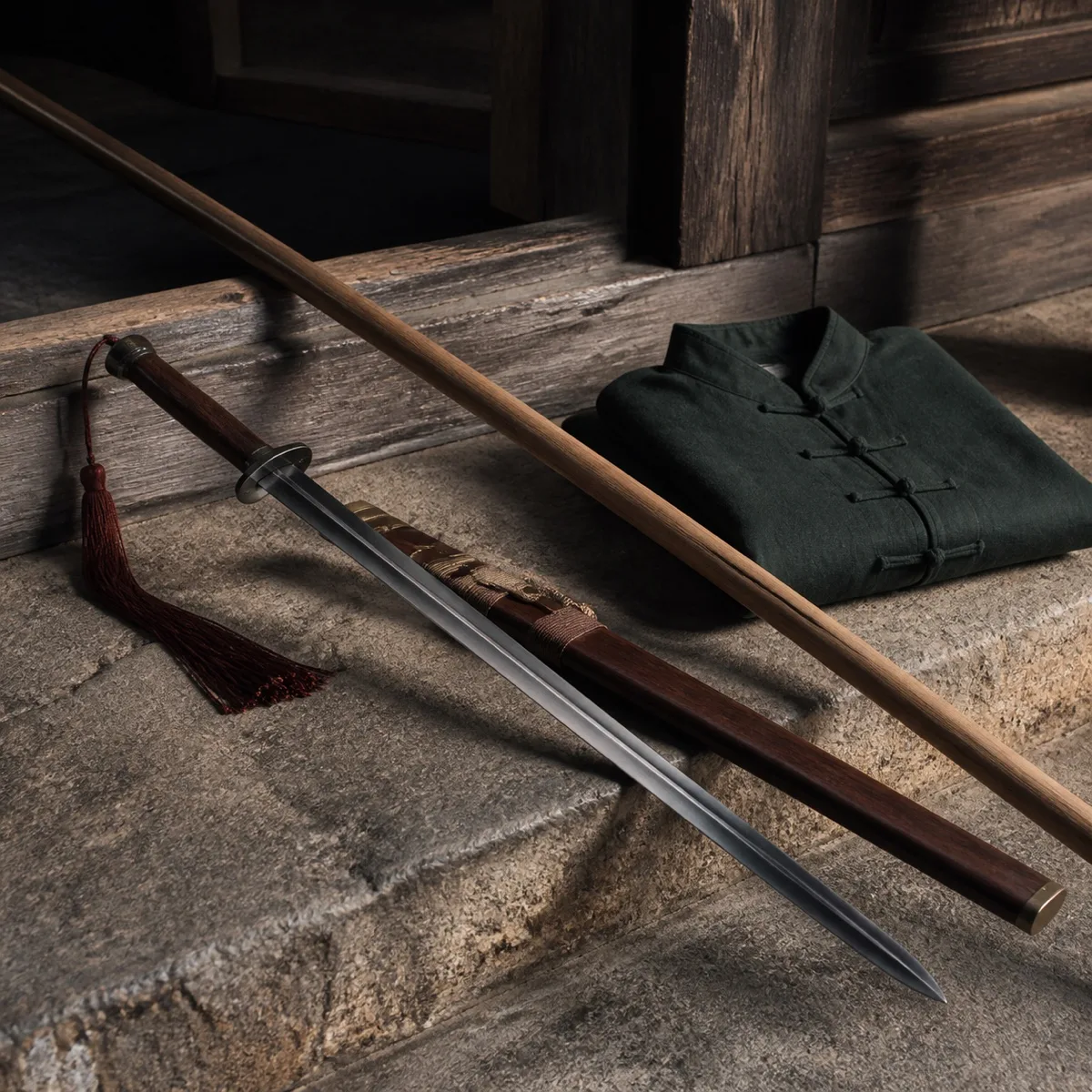
Wudang Straight Sword: The 1931 Curriculum and Its Context
Read Huang Yuanxiu’s thirteen methods, staged partner work and lineage preface as one documented Republican-era curriculum
Explore this section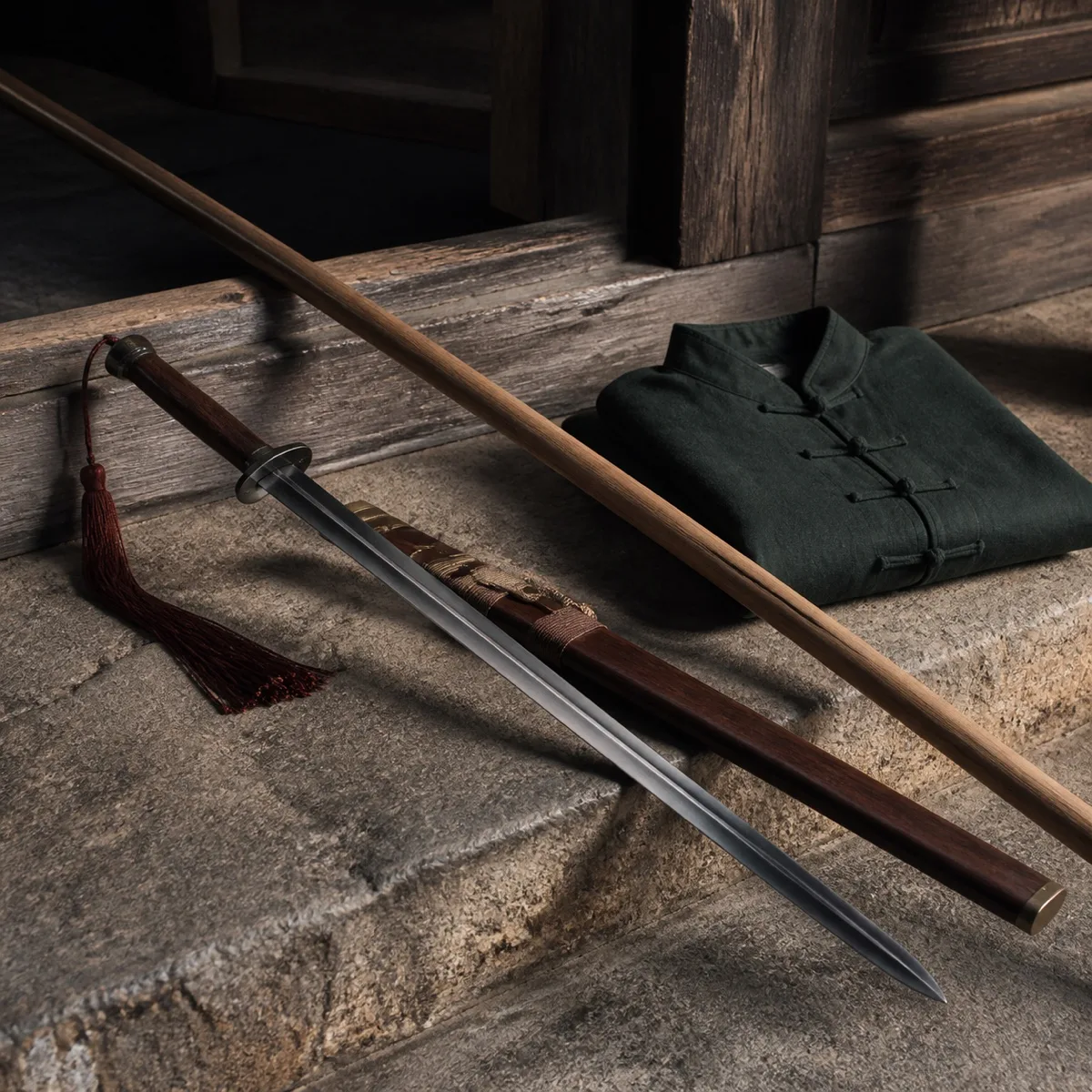
02 Explore the subject
The Weapon and the Body: Coordination, Perception and Practice
Read a traditional teaching image alongside tool research and practical questions for learning
Explore this section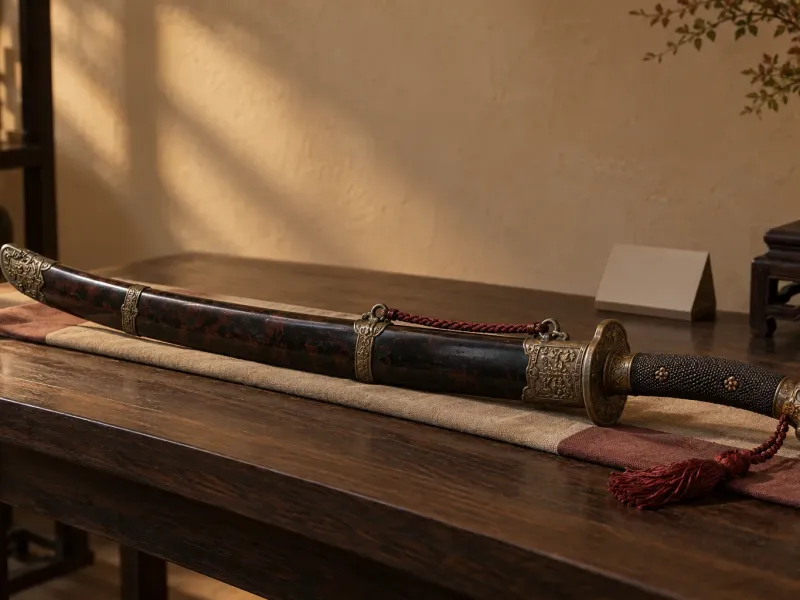
03 Keep reading
How to Read a Chinese Dao: Edge, Curve, Mountings and Context
A material guide to single-edged blades, curvature, hilts, scabbards and later change—and why no one surviving dao defines the tradition.
Explore this sectionGo further
Deeper reading
- Wudang Straight Sword: The 1931 Curriculum and Its ContextRead Huang Yuanxiu’s thirteen methods, staged partner work and lineage preface as one documented Republican-era curriculum
- The Sabre, Staff and Spear: A Guide to Chinese WeaponsExplore three weapon families through their forms, teaching traditions and practical learning questions
- Whisk, Fan and Other Wudang Implements: Objects and PracticeUnderstand the objects, distinguish cultural evidence and explore questions for thoughtful practice
- The Weapon and the Body: Coordination, Perception and PracticeRead a traditional teaching image alongside tool research and practical questions for learning
- Weapons Sources and Reading Paths: How to Compare the EvidenceA practical guide to manuals, objects, images, rules and research—and what each can actually tell us
- How to Read a Chinese Jian: Blade, Hilt, Scabbard and ContextA material guide to form, fittings, metallurgy and later change—and why no single surviving sword defines the whole tradition.
- How to Read a Chinese Dao: Edge, Curve, Mountings and ContextA material guide to single-edged blades, curvature, hilts, scabbards and later change—and why no one surviving dao defines the tradition.
The full guide
What should I know before reading further?
Wudang sword is at once a weapon, a religious image, a modern training subject and a stage emblem. Those contexts overlap, but they are not interchangeable. A painted immortal with a sword does not document a fencing curriculum; a recent form does not become ancient because it is performed on the mountain; and a solo set does not tell us by itself how—or whether—partners trained.
Read more The complete guide
Wudang sword is at once a weapon, a religious image, a modern training subject and a stage emblem. Those contexts overlap, but they are not interchangeable. A painted immortal with a sword does not document a fencing curriculum; a recent form does not become ancient because it is performed on the mountain; and a solo set does not tell us by itself how—or whether—partners trained.
This gateway separates the object, the surviving printed record and the purposes of present practice. It also routes readers to the detailed weapon pages without turning lineage tradition into documentary proof.
One gateway, four contexts
“Wudang weapons” can refer to historical arms, implements used in Daoist settings, curricula attributed to Wudang lineages, or modern performance. The same straight sword may appear in more than one context, but its meaning depends on who uses it, where, and for what purpose. Good evidence therefore begins with a dated object, text, image or observed practice—not with the name alone.
The pages in this section use four labels consistently: documented history for dated records; lineage account for claims preserved by a community; practice for teachable methods; and performance for work composed or adapted for an audience. None of these labels is an insult. They answer different questions.
Wudang as a Daoist place and an imperial landscape
The UNESCO record for Wudang’s Ancient Building Complex documents a long religious landscape, with surviving buildings from the Yuan, Ming and Qing periods and an especially large imperial building campaign under the Ming Yongle emperor. It supports Wudang’s importance as a Daoist centre and the historical setting in which sword imagery could carry religious and political meaning.
That architectural record does not establish a continuous martial syllabus. Nor does the sword in an image automatically describe a weapon lesson. Ritual use, divine iconography and fencing require their own evidence. Detailed claims about peach-wood swords, talismans or command functions should be tied to a named ritual text or catalogued object; this gateway does not generalise them.
The straight sword: object before legend
The jian is a double-edged straight sword. Historical examples vary in length, mass, balance, fittings and intended use, so no single modern replica defines the category. The safest editorial starting point is the object itself: two edges, a point, a guard, a grip and a pommel. What people did with it must then be reconstructed from dated material.
Modern instruction may use thrusts, cuts, deflections, changes of line and footwork. Those are practice categories, not proof that one school preserves every earlier use. A flexible demonstration blade, a rigid training sword and a sharp antique also impose different constraints. Equipment should never be used as a shortcut to authenticate a lineage.
The 1931 Huang Yuanxiu witness—and its limits
The clearest inspectable Republican-era anchor for this section is Huang Yuanxiu’s Essentials of the Wudang Sword Art, published in Shanghai in July 1931 after a preface dated summer 1930. The bilingual presentation identifies Huang as recording material taught by Li Jinglin. Its contents include thirteen named methods, photographs, body and stepping requirements, solo progression, arranged partner work, moving-step practice and free sparring.
This proves that a Wudang-labelled sword curriculum was being explained in print by 1931 and shows how that author organised it. It does not independently verify every lineage statement in the book’s prefaces. Huang’s text places Li’s teaching in a lineage leading through Song Weiyi to Zhang Sanfeng. Zhang Sanfeng is treated here respectfully as a Ming-dynasty figure of enduring Wudang significance; the 1931 attribution is evidence of Republican-era lineage memory, not by itself a transmission record reaching back to the Ming.
A modern secondary study of Li Jinglin discusses differing accounts of his meeting with Song Weiyi and reports a 1923 Song manual. Until that edition is directly inspectable, this gateway does not use it to support exact technical or publication claims.
Sabre, staff and spear are different training problems
Dao, staff and spear should not be described as interchangeable extensions of one universal “body method.” Their shapes, contact surfaces, safe distances and partner conventions differ. A single-edged sabre invites different handling choices from a straight sword; a staff can strike with either end; a spear adds a point and a flexible shaft. Historical military importance also does not prove that a present form descends unchanged from battlefield practice.
Useful teaching states the variables: what equipment is used, whether contact is allowed, how distance is controlled, what target and stopping rules apply, and which quality the drill is meant to develop. The sabre, staff and spear guide compares these problems without declaring one branch universal.
Whisks, fans and rarer implements need separate labels
A horsehair whisk can be a Daoist clerical or ritual object, a prop in visual culture, and the model for a modern martial routine. A fan can be an everyday object, a theatrical device or a purpose-made training implement. Those possibilities must not be collapsed into one ancient combat history.
The guide to whisks, fans and rarer weapons asks three separate questions: what object is documented, what use is attested, and what is taught now. Where a ritual text or early technical witness is missing, the honest label is modern practice or unresolved tradition.
Solo, paired and performance work answer different questions
Solo practice can develop sequence, balance, directional change and familiarity with an implement. Arranged partner work can add distance, timing and contact under agreed conditions. Freer work tests decisions but also increases risk. Demonstration can preserve a sequence or communicate style to an audience. None of these modes, alone, proves historical combat effectiveness.
Huang’s 1931 contents are useful precisely because they distinguish stages and partner formats. Present teachers may arrange them differently. The practical question is not whether a movement looks “real,” but what task, resistance, equipment and success condition the exercise actually uses.
Safe present practice
Weapon practice should progress from appropriate inert or blunt equipment, ample clearance and controlled solo handling to pre-arranged partner tasks. Partners need a shared pace, permitted targets, contact level, stop signal and permission to decline. Sharp or uncontrolled weapons have no place in ordinary partner drills. Damaged equipment, crowded space, fatigue or loss of control are reasons to stop.
Protective equipment can reduce some risks but does not make unsuitable weapons or uncontrolled contact safe. Children, beginners and people returning after injury need narrower tasks and qualified supervision. A form is not medical treatment, and pain, dizziness or neurological symptoms are not training milestones.
Choose the next reading path
Continue with Wudang straight sword for the 1931 curriculum and its later interpretations; sabre, staff and spear for different handling problems; whisks, fans and rarer implements for evidence labels; the weapon as an extension for training design; and sources and further reading for witnesses, editions and research limits.
For broader chronology, Peter Lorge’s Chinese Martial Arts: From Antiquity to the Twenty-First Century places weapons and martial institutions in a history wider than any single lineage. Read it alongside, not as a substitute for, the dated technical witness.
Recommended next page
Where next?
The Sabre, Staff and Spear: A Guide to Chinese WeaponsExplore three weapon families through their forms, teaching traditions and practical learning questionsA few alternatives