A path into the reading
Guqin: Sound, History and Ways to Listen
Meet the seven-string zither through its sound, sources and living musical practice.
Start here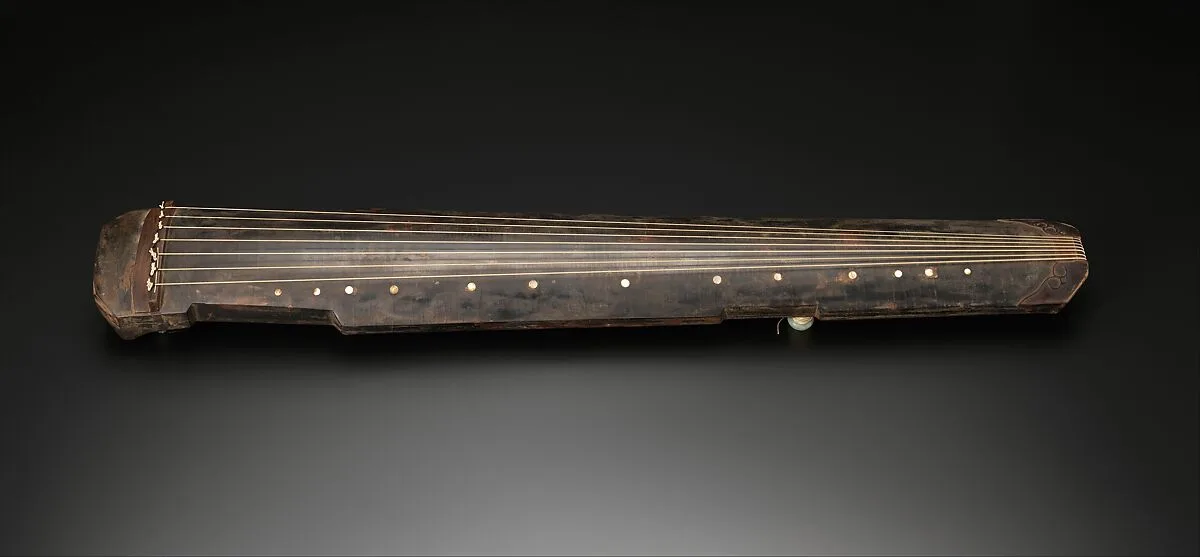
01 Find your bearings
A History of the Guqin: Objects, Texts and Living Music
Read instruments, manuscripts and recordings as different kinds of historical evidence.
Explore this section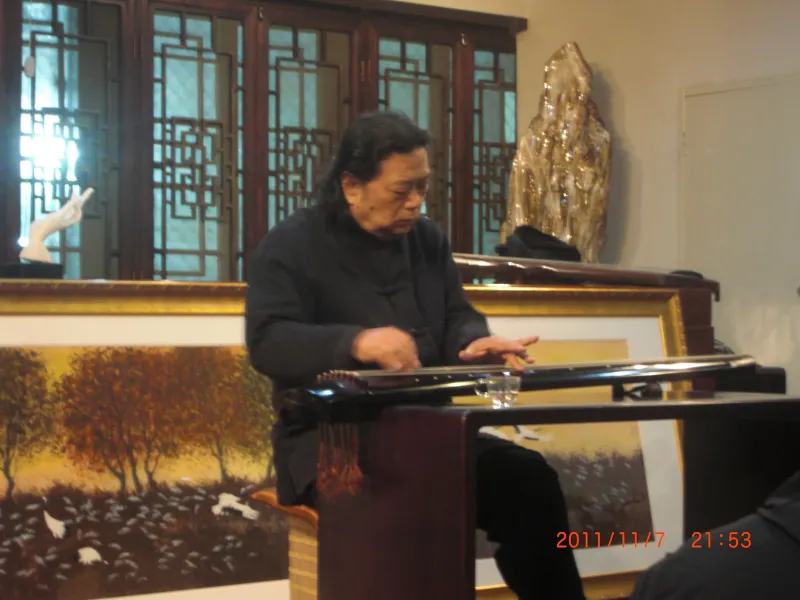
02 Explore the subject
Guqin and Daoist Cultivation: Listening, Practice and Limits
How literati practice, Daoist ideas and formal religion overlap—and where they do not
Explore this section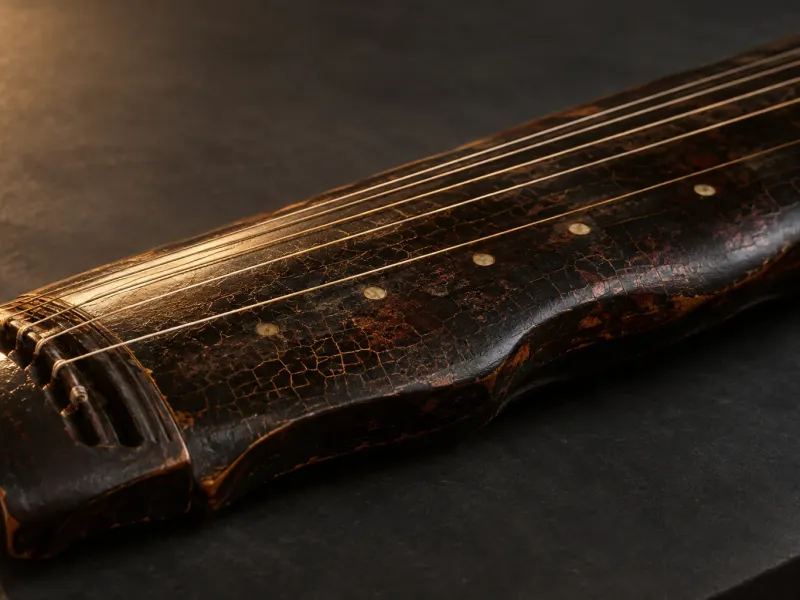
03 Keep reading
Reading Guqin Lacquer: Layers, Crack Patterns and Repair
How to look at lacquer layers and crack patterns without turning surface appearance into a shortcut for dating or authenticity.
Explore this sectionGo further
Deeper reading
- A History of the Guqin: Objects, Texts and Living MusicRead instruments, manuscripts and recordings as different kinds of historical evidence.
- How the Guqin Works: Strings, Body and SoundLearn to recognize the strings, markers and body—and connect what you see with what you hear.
- Playing the Guqin: Gesture, Notation and InterpretationFollow a sound from the hands to the score, then hear what a performer brings to it.
- Guqin Melodies: Stories, Versions and Ways to ListenFour pieces show how story, score and performance meet without becoming the same thing
- Guqin and Daoist Cultivation: Listening, Practice and LimitsHow literati practice, Daoist ideas and formal religion overlap—and where they do not
- Learning the Guqin: Listening, Sources and Finding a TeacherA practical route from first listening to informed study—without rigid timelines or sales myths
- Guqin Tables and Playing Spaces: Support, Posture and ListeningHow qin tables, ordinary side tables, chairs and rooms shape the practical setting of guqin music—and how museum objects and paintings reveal variation rather than one timeless arrangement.
- How to Read a Guqin Handbook: Tablature, Editions and DapuRead qinpu as books, score witnesses and starting points for living musical interpretation.
- Reading Guqin Lacquer: Layers, Crack Patterns and RepairHow to look at lacquer layers and crack patterns without turning surface appearance into a shortcut for dating or authenticity.
- Reading Guqin Inscriptions and Seals: Names, Dates and ProvenanceA careful method for distinguishing instrument names, maker and date marks, poems, collection seals and later ownership notes.
- Guqin Forms: Reading Zhongni, Banana-Leaf and Other ShapesA museum-minded guide to recognizing guqin silhouettes, comparing catalogue terms and avoiding false conclusions about date, maker or sound.
- Guqin Strings: Silk, Modern Composites and How Material Changes PlayingRead silk, nylon-wound metal and composite guqin strings through making, touch, acoustics, evidence and responsible use.
The full guide
What should I know before reading further?
The guqin (古琴) is a Chinese seven-string zither played across a table. Its appeal begins with sound: a plucked note, a sliding inflection, a resonance that gradually fades. You do not need to know Chinese philosophy or read a score to begin listening.
Read more The complete guide
The guqin (古琴) is a Chinese seven-string zither played across a table. Its appeal begins with sound: a plucked note, a sliding inflection, a resonance that gradually fades. You do not need to know Chinese philosophy or read a score to begin listening.
This guide introduces the instrument, the people and ideas around it, and a practical route into its music. It treats historical sources, musical interpretation and personal reflection as related subjects—not interchangeable kinds of evidence.
Recognising the instrument
Look for a long, low wooden body, seven strings and thirteen inlaid position markers called hui (徽). The strings run above an unfretted playing surface. Unlike a guzheng, the guqin does not have a row of movable bridges beneath individual strings; its strings are supported at the ends. “No movable bridges” is more precise than saying it has no supporting bridge at all.
A photograph can help you recognise the outline, but it cannot establish an instrument’s age, sound quality or suitability for a learner. Treat an attractive image as an introduction, not an appraisal.
Listening beyond the first pluck
Three useful terms are san yin (散音), open-string sounds; an yin (按音), stopped sounds made by pressing a string; and fan yin (泛音), harmonics made with a light touch. Listen for their different colours rather than trying to memorise every technique at once. Peiyou Chang’s technique introduction.
Try following one phrase from its first attack through the movement and decay of its notes. On a second hearing, notice where the pace gathers or relaxes. A quiet passage need not be rhythmically shapeless, and a lively passage is no less a part of guqin music.
A long history, not a frozen design
Early excavated qin differ from the familiar seven-string instrument. The Metropolitan Museum’s historical overview describes shorter, ten-string examples. Its collection also includes a guqin dated 1634, associated with the Ming princely household of Lu. These are useful, distinct points of reference—not proof of an unchanged object across every intervening century. The Met: historical overview; 1634 instrument.
When exploring an old instrument or melody, separate three questions: when is the surviving object or score dated, what earlier history is claimed for it, and what can be demonstrated? A traditional origin story can be culturally important without serving as an archaeological date.
Private study and shared music
The qin belongs to the literati ideal of qin, qi, shu and hua: music, the board game go, calligraphy and painting. Accounts of intimate playing and self-cultivation are important to that history. They do not mean that the instrument was never heard by an audience. John Thompson: introduction.
Keep ideals of conduct separate from a complete account of musical life. Listening with a friend, studying with a teacher and hearing a public performance pose different questions; none should be dismissed solely because it does not resemble a secluded scholar’s room.
What the tablature tells you
Jianzipu (减字谱), or reduced-character tablature, combines instructions for strings, hand positions and techniques. It works differently from staff notation. Its detail about movement is an asset, not a failed attempt to write another kind of score. Tablature and technique.
Many historical scores do not specify durations directly, but that does not leave rhythm wholly arbitrary. Musical structure, fingering instructions and transmitted versions provide clues. Dapu (打谱) brings a written source into sounding form; the choices involved should be explained, not presented as certain recovery of a past performance. Rhythm; dapu.
Cultivation without a single religious label
Self-cultivation is a significant part of guqin literature, but it is not an exclusively Daoist idea. A listener may find a connection with restraint, attention or simplicity without claiming that every piece is a religious exercise.
For Wudang.Org, the useful distinction is between a personal response to music and a documented teaching or ritual tradition. A title, a mountain setting or an image of incense cannot by itself identify a lineage. Claims about a particular teacher, temple or practice need evidence specific to that claim.
A first listening session
Choose one recording with a named performer and a clear title. The Met’s 1634 instrument page offers “Ode to Autumn Wind,” performed by Jiaoyue Lyu in 2016. NASA’s Golden Record list identifies Guan Pinghu under the spelling Kuan P’ing-hu, performing the piece it calls “Flowing Streams.” These are starting points for identifying recordings, not a ranking of the repertoire. The Met recording; NASA’s track list.
Listen at a comfortable volume in a reasonably quiet place. Note one detail you heard and one question you have. When comparing performances, record the performer, source or edition if stated, and whether the track is complete. A shared title is the beginning of comparison, not a guarantee of an identical version.
Choosing a route into further study
Begin with the instrument’s anatomy if you want to understand what the hands are doing. Choose history if you are curious about objects and documents, or melodies and their stories if you want to build a listening list. Technique and notation, cultivation, and further listening offer other routes; there is no need to finish them in one prescribed order.
Before committing to lessons or an instrument, write down what you want to learn and ask how teaching will address it. Ask about access to a practice instrument, feedback on hand position and how notation is introduced. Set a modest first goal, such as recognising a phrase or practising one movement comfortably, rather than promising yourself proficiency by a fixed date.
Recommended next page
Where next?
How the Guqin Works: Strings, Body and SoundLearn to recognize the strings, markers and body—and connect what you see with what you hear.A few alternatives