Standing Practice
站桩
Standing practice, often called zhan zhuang, uses sustained postures to make balance, alignment, tension and attention easier to observe. From the outside it may look motionless. Inside the practice, weight shifts, joints settle, breathing changes and the student repeatedly adjusts between effort and release.
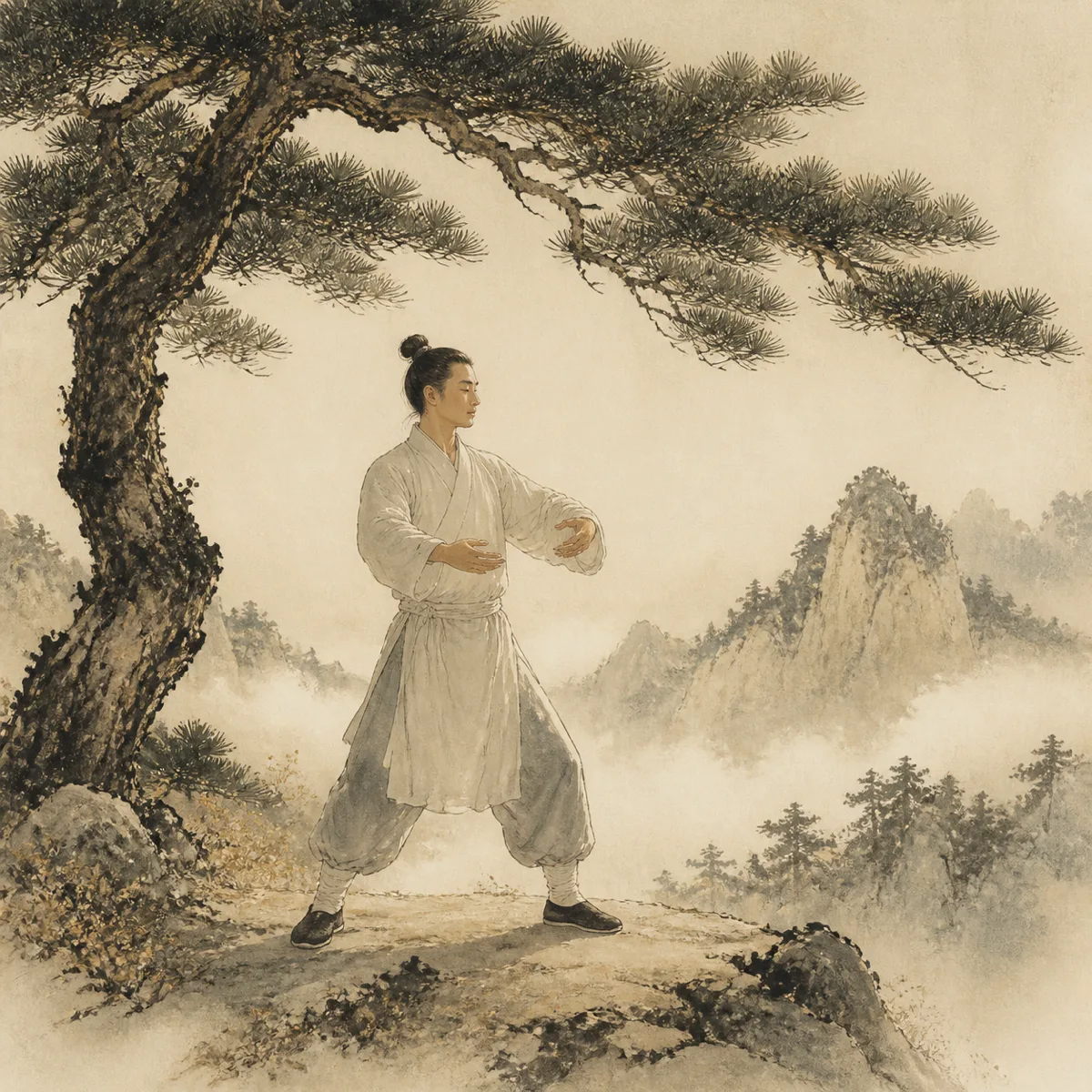
Different systems use different postures and explanations. Some methods prepare martial structure; others support Qigong, meditation or general body awareness. Wudang.Org keeps the beginner guide here under Wellness and links to Martial Arts when the same practice is used for technical training.
What Standing Practice Develops
Alignment
The student learns how feet, knees, hips, spine, shoulders and head relate without freezing them into a perfect shape.
Balanced effort
Muscles work enough to maintain the posture while unnecessary gripping is gradually recognised and reduced.
Breath awareness
Natural breathing gives feedback about strain. Breath-holding or forced abdominal pressure is not a beginner goal.
Sustained attention
Remaining with a simple posture makes restlessness, distraction and habitual tension visible without turning discomfort into a test of willpower.
Transition into movement
A posture becomes useful when its organisation can continue through stepping, turning and ordinary movement.
Begin Without Forcing
Use an appropriate posture
A teacher may raise the stance, reduce the arm position or use a chair or wall so the exercise matches the student.
Keep the joints available
Do not lock the knees or hold the shoulders rigidly. Stability should retain the possibility of movement.
Build duration gradually
Quality matters more than enduring a long hold. Stop before form and breathing deteriorate.
Distinguish effort from warning
Ordinary muscular effort differs from sharp pain, numbness, faintness, severe shaking or breathlessness.
Stop signal: end the practice if you feel sharp or increasing pain, dizziness, faintness, chest discomfort, unusual shortness of breath or loss of sensation. A teacher should never shame a student for resting or adapting a posture.
What Zhan Zhuang Means
The Chinese term zhan zhuang (站桩) joins the words “to stand” and “post” or “stake”. English translations include standing post, standing pole and standing like a tree. These are useful images, but the practice is not simply an instruction to become rigid or motionless.
Zhan zhuang names a family of standing methods rather than one universal stance. One school may use a comfortable upright posture with the arms lowered; another may hold the arms in a rounded position; a martial system may use a stance designed for a particular technical purpose. The outer shape matters, but the teacher’s method explains what the student is learning from it.
A Short First Session
A beginner session should be simple enough that you can still notice posture, breath and attention. It should not become a test of endurance.
Choose a clear, stable space where you will not be interrupted or forced to balance on an uneven surface.
Use the posture your teacher has shown you. If you are practising alone, keep the stance comfortable and the arms in an easy position rather than copying a demanding photograph.
Let the breath remain natural. Notice whether effort in the legs causes you to grip the jaw, lift the shoulders or hold the breath.
Continue only while you can remain attentive and organised. Finish before fatigue turns the posture into strain.
Lower the arms without dropping them suddenly, shift the weight gently, and walk for a few moments before moving on.
There is no single beginner duration that suits every body or every method. A short, repeatable practice with good attention is more useful than chasing a time target.
Common Beginner Mistakes
Standing too low too soon. A deeper stance is not automatically a better practice.
Locking the knees or fixing the spine. Stability should not remove the possibility of movement.
Copying the visible shape only. Two similar postures may be taught for different purposes.
Forcing the breath or chasing unusual sensations. Tingling, heat or shaking is not proof of progress and should not override comfort or clear instruction.
Using time as status. Longer standing can simply mean longer compensation when the posture is no longer well organised.
Meditation, Qigong or Martial Training?
Standing practice can belong to all three, but the categories are not interchangeable. A contemplative method may emphasise settled attention. A Qigong lesson may organise body, breath and awareness together. A martial teacher may use the same outward posture to study rooting, whole-body connection, stepping or the management of force.
Ask what the posture is for and how its qualities carry into the next exercise. “Standing still” is the visible activity; the training purpose is found in the instructions, corrections and progression.
Wellness Foundation, Martial Application
Standing practice can support steadiness, body awareness and gentle strength, but its martial role is more specific. A martial teacher connects the posture to stepping, issuing, receiving force and the technical language of a school. The two subjects are cross-linked rather than explained twice.
Evidence and Responsible Claims
Research has examined particular forms of standing Qigong and Tai Chi standing meditation, but methods, participants and outcomes vary. Small or narrowly designed studies cannot establish that every form of zhan zhuang produces the same result, and they do not justify claims that standing practice cures disease.
Treat this page as cultural and practical education, not medical treatment. If you have a condition affecting balance, joints, breathing or exercise tolerance, seek appropriate professional advice and tell the teacher before beginning.
Choosing Guidance and Continuing
A responsible teacher should be able to explain the purpose of the posture, offer an easier version, observe alignment, distinguish ordinary effort from warning signs and show how standing connects to later practice. Be cautious when discomfort is treated as failure or dramatic health claims replace clear instruction.
Continue with Qigong, Baduanjin, Wudang Internal Cultivation, Tai Chi vs Qigong or the beginner pathway to Wudang practice. For martial context, read Foundations of Internal Martial Arts. For current Singapore opportunities, use Find a Practice and Events & Courses; dates and teachers should remain in the live listings rather than being hard-coded into this guide.