立冬17 November · 6 days to Minor Snow
Warm drinks · short indoor stretches · lunch away from the desk · early bed
Today
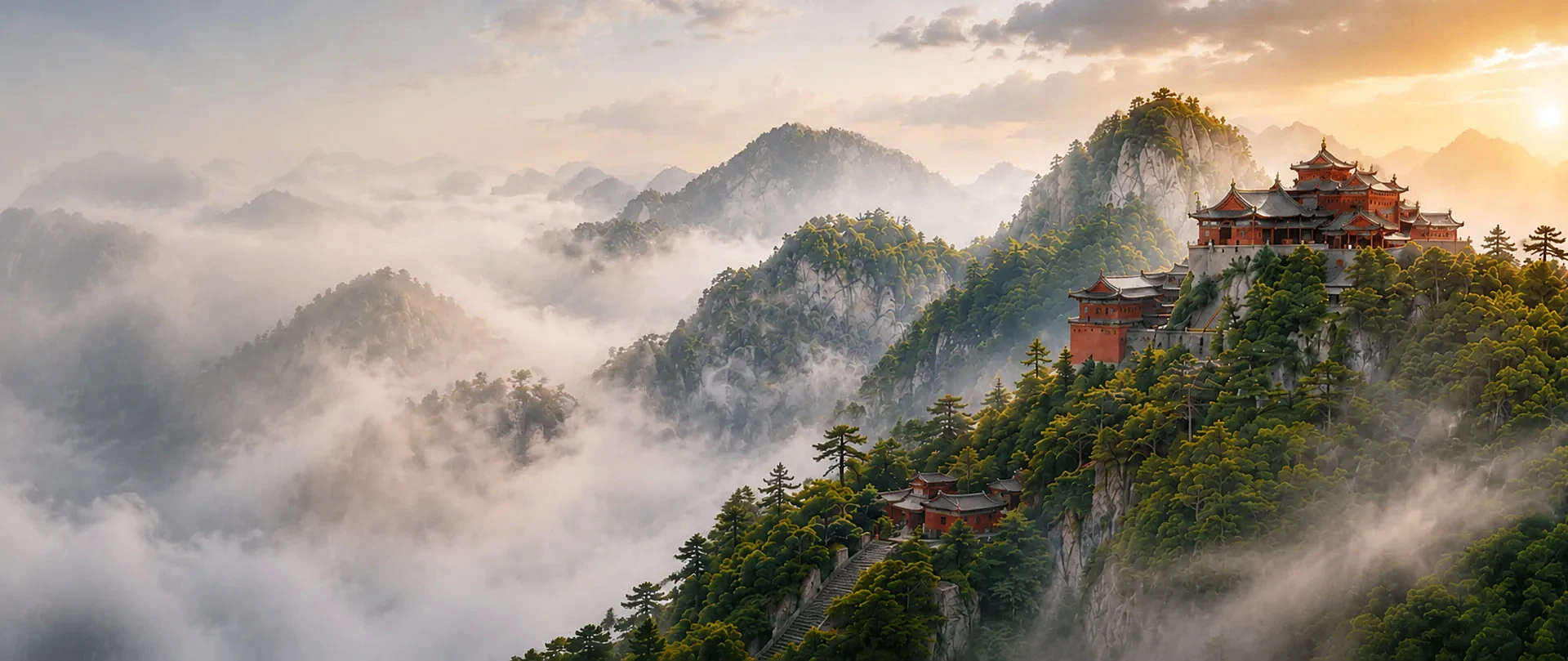
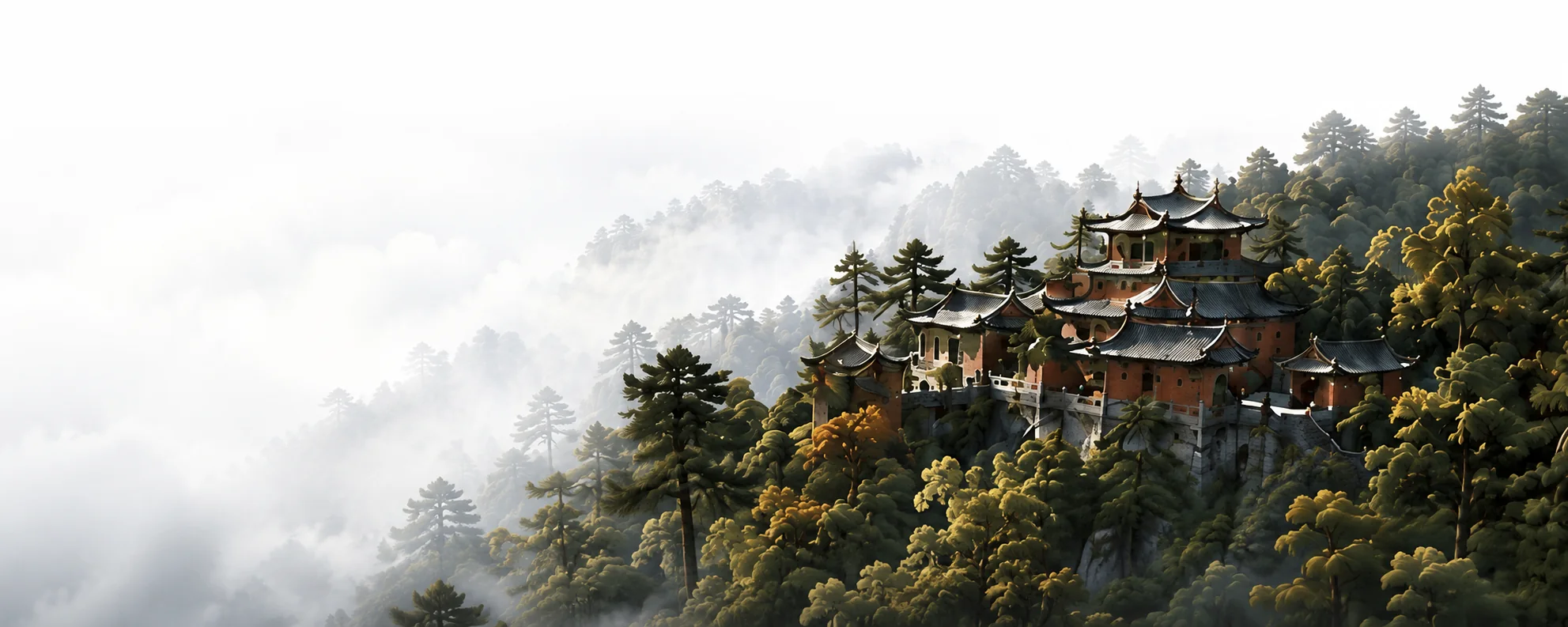
「山中何所有,岭上多白云。」 — Rooted in Wudang Mountain in Hubei, China, whose ancient Taoist temples are a UNESCO World Heritage Site, and practised daily in Singapore through philosophy, movement, tea and quiet contemplation.
An international home for Wudang culture: study Taoist philosophy, internal martial arts, Qigong, tea and the Book of Changes through the writings and living heritage of Wudang Mountain, and practise in person with teachers in Singapore.
立冬17 November · 6 days to Minor Snow
Warm drinks · short indoor stretches · lunch away from the desk · early bed
07:00 Morning Mobility
Baduanjin · Wag the head and tailA loose, rocking sway that releases a tight neck and lower back.
12:00 Lunch & Office Tea
Aged white tea · mushroom soupA soft tea and a small bowl of soup make an unhurried lunch break.
21:00 Bedtime Wind-Down
Five minutes of quiet sittingSit, put the phone away and let the day settle before bed.
Tao Te Ching 76 · Softness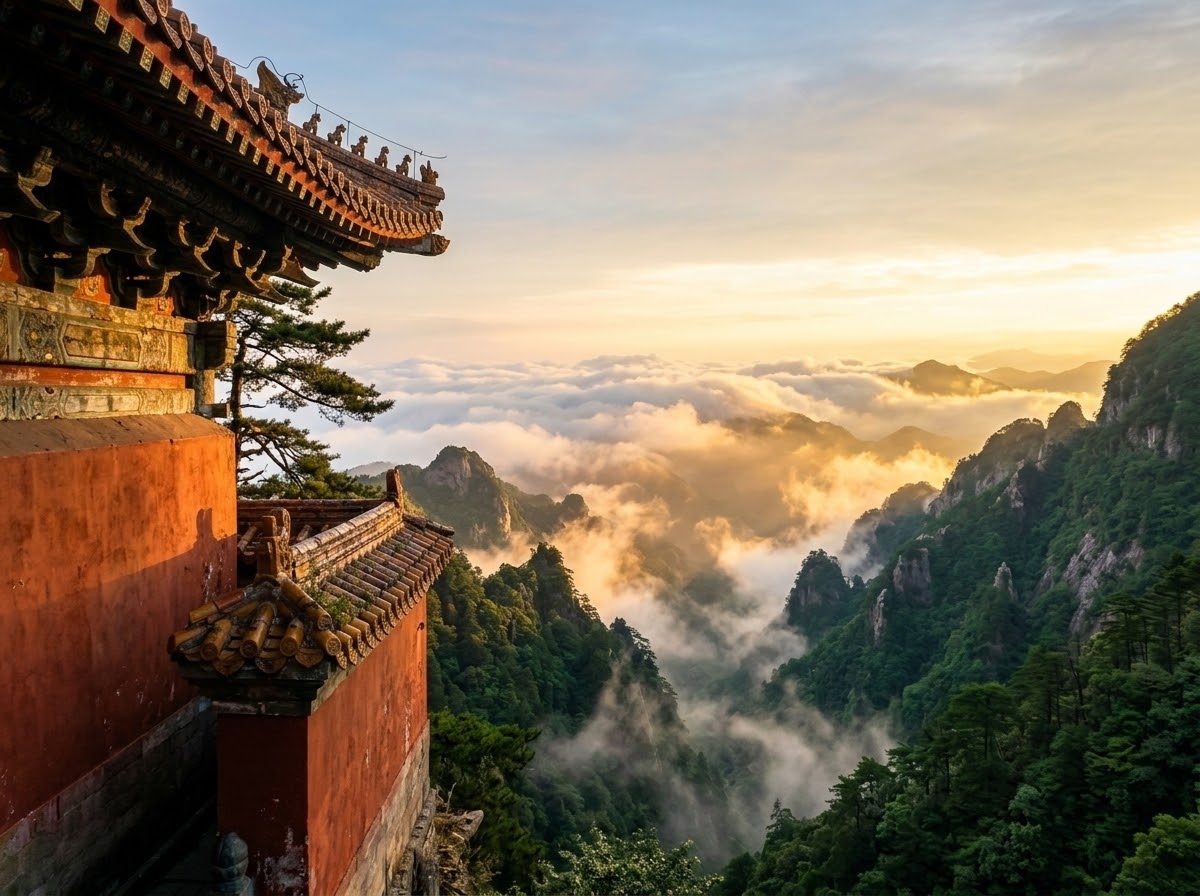
The Cultural Source · Ancient Heritage & Classical Study
Mountain Base · No. 72 Jianhe 2nd Rd, Wangjiayuan, Wudangshan, Hubei
In-Person Classes · Practice & Community
Wudang Academy · 58A Smith Street (2nd Floor) · Classes & By AppointmentFIND YOUR STARTING POINT
Choose the question closest to where you are today — each opens a direct answer, free cultural guides, and a beginner-friendly course in Singapore.
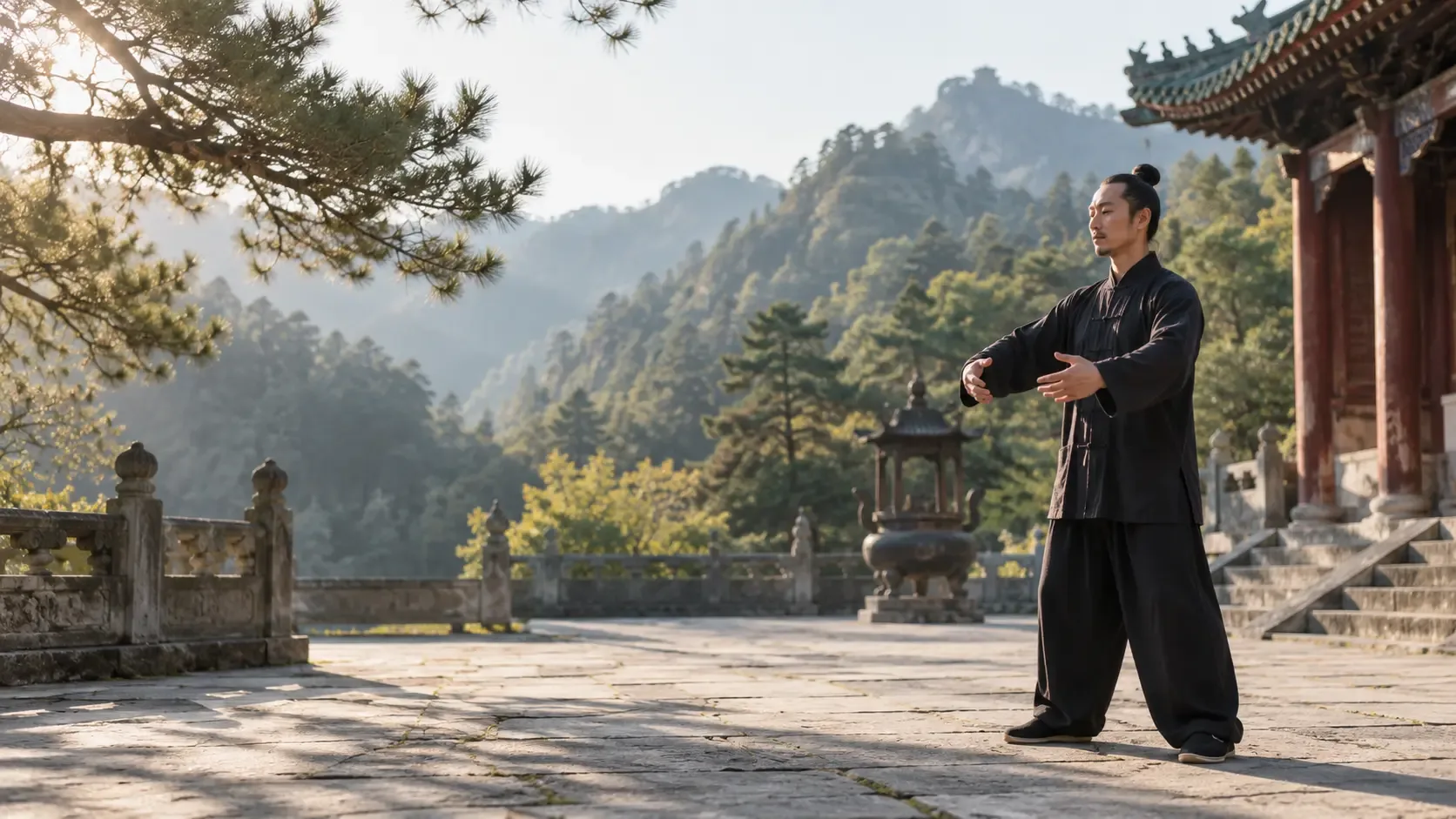
Unlike complex martial routines that require deep stances or large space, Baduanjin and Standing Practice gently lengthen the spine, settle the breath, and restore Qi in a few square feet of space.
Common Follow-Up Questions
1. Read the Free Cultural Guides
Traditional Baduanjin Workshop — Nov–Dec 2026
Start with Baduanjin (Eight Brocades) & Standing Meditation (Zhan Zhuang). — Unlike complex martial routines that require deep stances or large space, Baduanjin and Standing Practice gently lengthen the spine, settle the breath, and restore Qi in a few square feet of space.
Can I practise if I have sensitive knees or lower back stiffness? Often, yes. Beginner Qigong and Baduanjin keep the stance high and natural: never bend the knees past what feels comfortable, and start by letting the shoulders and hips soften. If something hurts, ease off and ask your teacher or your doctor.
How many minutes a day do I need to feel a difference? A steady 10 to 15 minutes each morning is far more useful than one long session a week. Short and regular is easier to keep, and keeping it is what matters.
How should I breathe? I worry about doing it wrong. Breathe naturally through the nose, quietly and without effort. Never hold the breath or force it deeper; let the movement and the breath find each other over weeks. If you feel dizzy or tight, return to ordinary breathing.
Can I practise indoors, in an air-conditioned room or at the office? Yes. You need about two arm-spans of space and flat shoes or bare feet. In a cold room, keep the neck and waist covered, and open a window or step outside when you can for fresher air.
Qigong builds the engine (breath & vitality); Taijiquan applies it in continuous flowing movement. — Qigong uses short, repeatable movements that you can learn in a single afternoon. Taijiquan is a complete internal martial art — teaching balance, weight shifting, spiral force, and calm focus across a linked sequence.
Am I too old or too stiff to start Wudang Taijiquan? Wudang Taijiquan does not rely on jumping or strength; it is learned slowly, with small movements first. Many people begin later in life, and flexibility tends to return as tension leaves the joints. Move within comfort and tell your teacher about any limits.
How is Wudang internal alignment different from external athletic styles? External training builds speed and power by contracting muscle. Wudang internal training aims for an upright, relaxed frame in which the waist and hips turn in gentle spirals, so the whole body moves together rather than the arms alone.
What should I wear? Do I need special shoes? Loose, comfortable clothes that let you move freely, and flat, flexible-soled shoes. Special uniforms are not needed for a first class. Check the event page for what to bring.
When can a beginner explore the Wudang straight sword? Usually after your footwork, balance and first sequence feel steady, often several months in; your teacher decides when you are ready. The sword is taught as a slow practice with a light training blade.
Begin with the I Ching text and its hexagrams, then add Liu Yao casting when you are ready. — The Book of Changes is a text about how situations change; Liu Yao is a method of casting six lines and reading them. Both can be learned step by step from translations. We teach them as a tradition with its limits stated, never as a promise of what will happen.
Do I need to read classical Chinese? No. Beginner classes use plain explanations, and you learn the few key terms as you go. Classical Chinese helps later, but it is not a requirement to start.
What is the difference between studying the I Ching text and Liu Yao casting? The text study is reading and reflecting on the sixty-four hexagrams and their images. Liu Yao is a practical method: you cast six lines for a question and read them using stems, branches and the five phases.
Is this about calm clarity, or superstition and fate? We treat it as a way to notice patterns and slow down before choosing, not as a verdict on your future. The choice and the responsibility stay with you.
What kinds of everyday decisions suit Liu Yao study? Everyday questions you want to think through: a change of job, a move, timing a project, a relationship to handle. It is a structured way to reflect, not a replacement for professional advice; health, legal and money decisions need qualified advice.
Start with Zi Wei Dou Shu or BaZi to read the chart, then add face reading and Feng Shui. — These are classical methods for reflecting on timing, temperament and surroundings. Each has a clear logic you can learn and check for yourself, and each has limits: they describe tendencies and give you something to think about, they do not decide your life.
How does Zi Wei Dou Shu differ from BaZi? Zi Wei Dou Shu places stars in twelve palaces, each standing for an area of life, so it reads like a map. BaZi uses the four pillars of year, month, day and hour, and looks at the balance of the five phases. They are separate systems with separate logic.
What if I only know my approximate birth time? The hour matters, because the chart changes with each two-hour period. With an approximate time, a teacher can compare the nearby hours and see which fits your life best, but treat the result as tentative. Parents’ records or a birth certificate help.
What does classical face reading (Mian Xiang) observe, responsibly? It looks at proportions, the three zones of the face and the twelve palaces, as a prompt for reflecting on temperament and habits. It is not a way to judge or label a person, and it never predicts illness or fate.
How does classical Feng Shui look at light, airflow and layout, rather than superstition? At its root it is the old practice of observing a place: where the light falls, how air and water move, and how a space feels to live in. We teach that observation and its tradition; we do not claim a room arrangement will change your luck.
Begin with tea, then add incense or guqin as your attention settles. — Preparing tea, lighting incense or playing a single guqin note all ask for the same thing: one slow task, done with attention. None needs strength or fitness, and you can start with a simple set at home.
Are tea sets and tools provided for beginners? It depends on the session, so please read its event page: it lists what is provided and what to bring. If it does not say, ask us before you book.
How can preparing tea or incense settle a screen-busy day? It gives your hands and eyes one slow, simple job: warm the cup, pour, smell, sip. Ten quiet minutes away from the screen is often enough to feel the day loosen. It is a pause, not a treatment.
What is included in the Cultural Experience Day (SGD 69)? One registration covers five experiences: annual Feng Shui insights, Ba Duan Jin with Tai Chi, Chinese zodiac culture, heritage handicrafts, and a Wudang tea gathering with retreat sharing. Our Singapore base is Wudang Academy at 58A Smith Street (2nd Floor); the team confirms the venue and timetable after you register.
Can I come alone, or bring friends or family? Both. Many people come alone. On the Cultural Experience Day page you can reserve two to four places together, or send a friend an invitation.
Read them as open cultural classics: no belief or conversion is needed. — The Tao Te Ching (Dao De Jing) and the Zhuangzi are read around the world as philosophy and literature. We approach them as a cultural study that welcomes every background, and we keep religious practice separate from reading and learning.
Do I need any religious belief or to convert? No. Our classes are an open cultural academy that welcomes people of every background and none. You are never asked to believe or to take part in any ritual.
Should I start with the Tao Te Ching or the Zhuangzi stories? If you like short, dense sayings to ponder, start with the Tao Te Ching. If you prefer stories and humour, start with the Zhuangzi. Many readers alternate between the two.
What does Wu Wei (“unforced action”) mean in a modern job? It does not mean doing nothing. It means acting without strain: doing the next sensible step, not forcing outcomes, and knowing when to wait. In practice, it can look like a calmer pace and clearer priorities.
What language are the classes in Singapore taught in? Mostly Mandarin, with English support in many sessions, but it varies by teacher and event. Check each event page before you book, or ask us.
Begin with Everyday Wudang & our Temple Etiquette and Visit Planning guides. — Before travelling to Hubei, understanding the history of Zhenwu, the architecture of the Golden Hall and Purple Cloud Palace, and respectful temple etiquette turns a sightseeing trip into a meaningful cultural encounter.
What etiquette should I know before entering a Taoist temple? Dress modestly, step over (never on) the wooden threshold, use the Baoquan hand salute (left hand cradling the right), and follow each hall’s posted incense instructions. When unsure, watch what others do and keep your voice low.
What is the difference between the UNESCO site and your mountain base? The ancient building complexes on Wudang Mountain are inscribed as UNESCO World Heritage (No. 705): that means the historic temples and structures themselves. Our mountain base, at No. 72 Jianhe 2nd Rd, Wangjiayuan, Wudangshan, is a separate working address and is not part of the heritage site.
When is the best season, and what should I wear on the mountain? Spring and autumn are generally the most comfortable; summer is warmer and wetter, and winter can be cold and slippery near the summit. It gets cooler and windier as you climb, so bring layers, a rain jacket and sturdy shoes, and check the forecast before you go.
How can I prepare my breath and walking stamina in Singapore before a trip? Walk and climb stairs a few times a week in comfortable shoes, and add a short Baduanjin or standing practice to get used to calm, even breathing. Build up gradually, and if you have a health condition, check with your doctor first.
Available Courses, Workshops & Retreats in Singapore
Study in person with experienced teachers in Singapore across I Ching hexagram divination, Liu Yao, Wudang Taijiquan, Baduanjin Qigong, Face Reading, and Zi Wei Dou Shu. All foundational courses welcome complete beginners.
Dates, prices and venues are taken from each event page. Please confirm them there before you book.
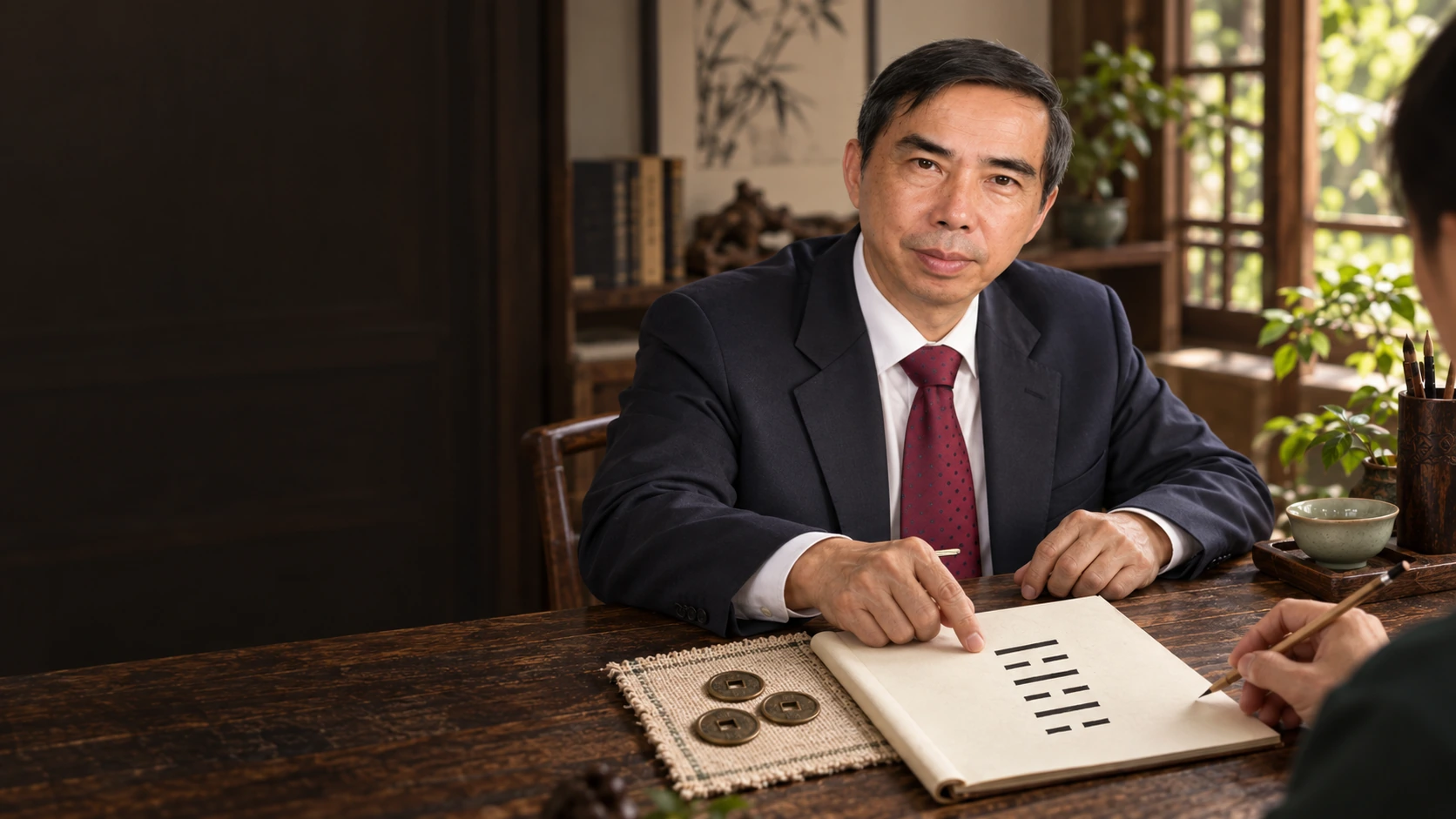
Guides beginners step by step through classical six-line hexagram casting and Five-Phase interpretation.
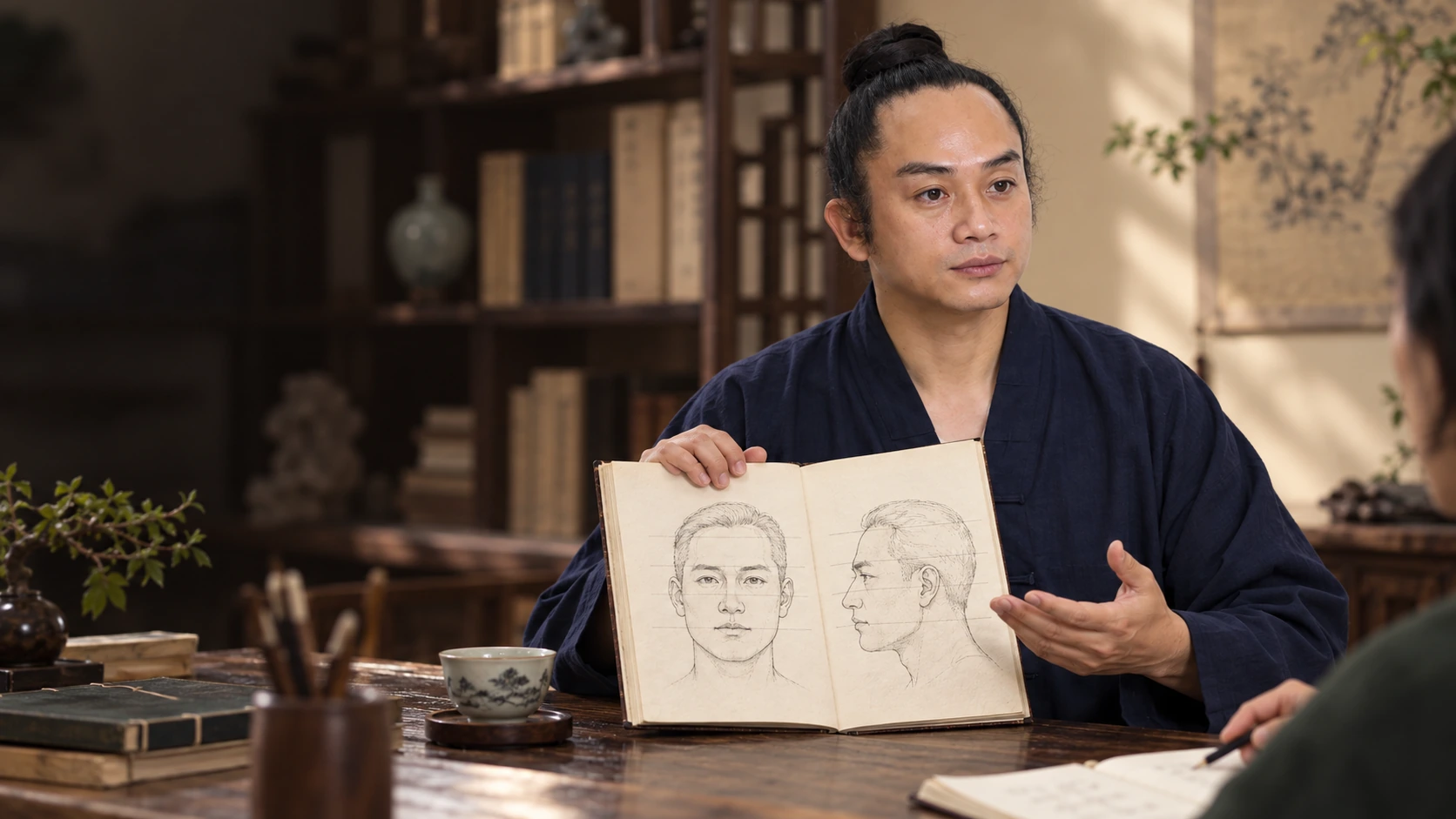
Specialises in Zi Wei Dou Shu Twelve Palaces star charting, classical Feng Shui, and Chinese face reading.
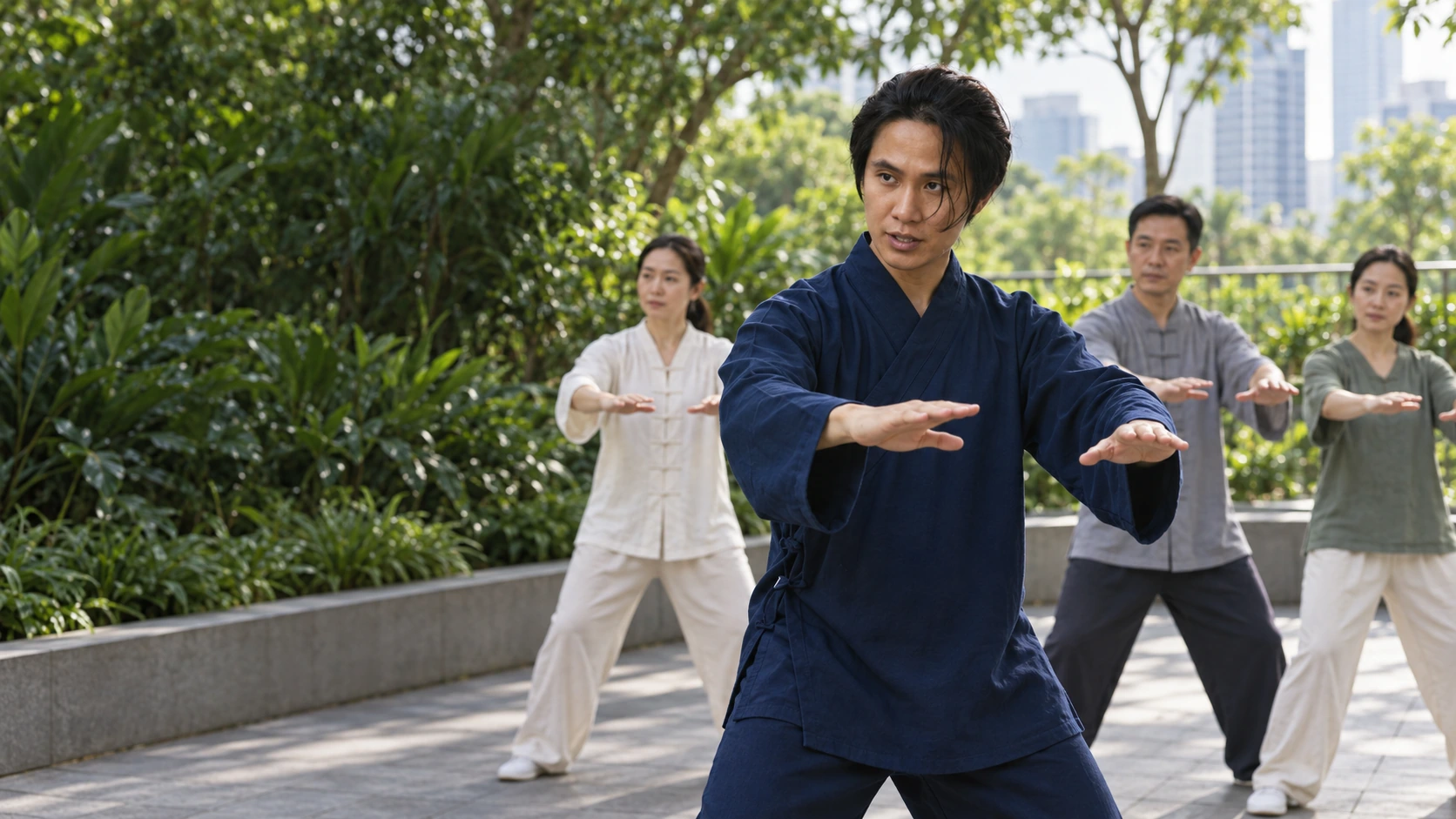
Trained and certified at Wudang Mountain. Teaches Wudang Wushu in Singapore across Eight Brocades (Baduanjin), Wudang Tai Chi, and straight sword.
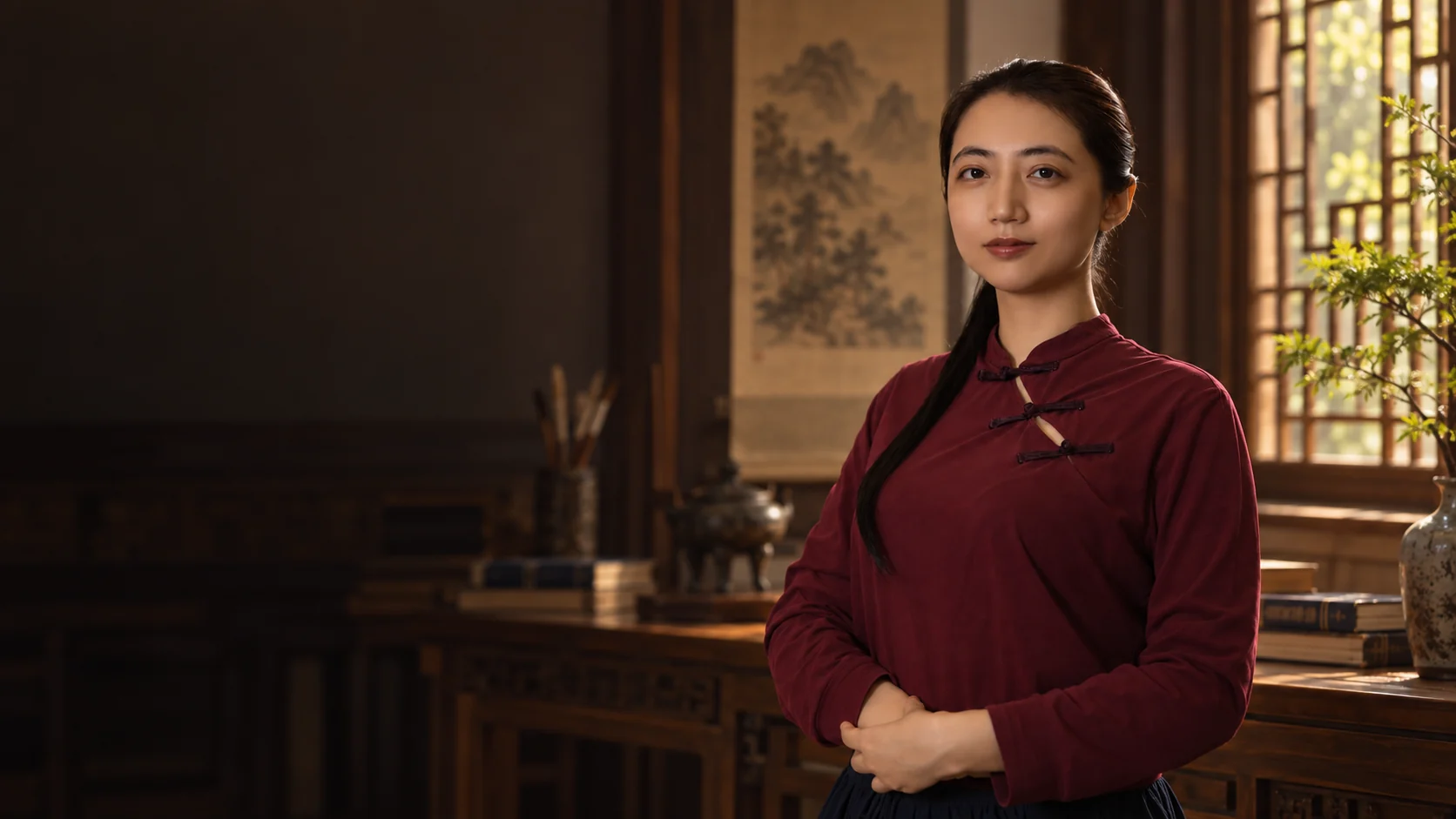
Teaches the foundational Book of Changes, Eight Trigrams, and 64 Hexagrams for everyday life clarity.
Lee Wudang isn’t one person — he’s our resident Chinatown pavilion host and the collective team behind our Singapore Tai Chi retreats and Cultural Experience Day.
The Chinese year is cut into 24 small seasons of about 15 days each. See which one you are in today, and how people at Wudang breathe, eat, drink tea and rest in it.
白话导读 · 30秒看懂节气历Plain-Language Guide · Understand the Almanac in 30 seconds
China’s classical seasonal calendar, based on the sun’s position. The year is cut into 24 turning points, about 15 days apart. It is not the lunar calendar.
Each term splits into three 5-day chapters, named after small signs in nature: wind, water, plants and animals.
Each season comes with three simple old customs: how to breathe, what to eat and drink, and when to rest. They are a cultural guide, not medical advice. Readers of the I Ching also get the month’s hexagram, a gauge of daylight growing and fading.
2026: 7 November – 22 November
Winter is “established”. The year turns to storing: rest more, spend less.
Everyday tip Office or Singapore: keep your neck and lower back covered in cold air-con, slow down in the evening and go to bed a little earlier.
Sun at 225° of the ecliptic · month branch 亥
Five Phase: 水 · WaterOld Chinese almanacs named each 5-day stretch after something people could see outside.
「天行健,君子以自强不息;地势坤,君子以厚德载物。」
“Heaven’s movement is ceaseless vitality — thus the noble seeker cultivates untiringly. Earth’s nature is receptive breadth — thus one carries all things with generous virtue.”
Words to know
Contemplation for Daily Practice
The wisdom of the I Ching balances active initiative (Yang) with receptive steadiness (Yin) — knowing when to advance with diligence and when to nourish quietly.
Everyday takeaway: Work with steady effort during the day, and let the evening be for resting and receiving rather than pushing harder.
Return to the Mountain & Everyday Wudang
Explore first-hand stories and video portraits from Wudang Mountain in Everyday Wudang, or plan a cultural journey to encounter its temples, mist, tea, and living practice at the source.