Where can I begin with the Tao?
Nine readings introduce Taoist ideas, texts and living traditions. Begin with the first reading, then explore the deeper reading below.
What do these ideas mean?
Start with dao: a way or path, understood through relationships and change.
Begin with the overview, then follow the readings on dao (道), wu wei (无为) and yin-yang (阴阳). Each page introduces words used by the next. Keep a question in mind as you read, and return to an unfamiliar term. The aim is a useful starting map, with room for different texts and traditions.

Is Taoism philosophy, religion, or both?
Both. These labels do not divide its traditions neatly.
The familiar distinction helps us notice differences between a philosophical passage, a temple ritual and a community’s practice. It can also hide connections. Classical writings became part of religious life, while religious teachers wrote commentary and philosophy. Read each text in its setting, and leave room for the variety of living Taoist traditions.
How can these ideas relate to everyday life?
Begin with a familiar situation and ask what response fits.
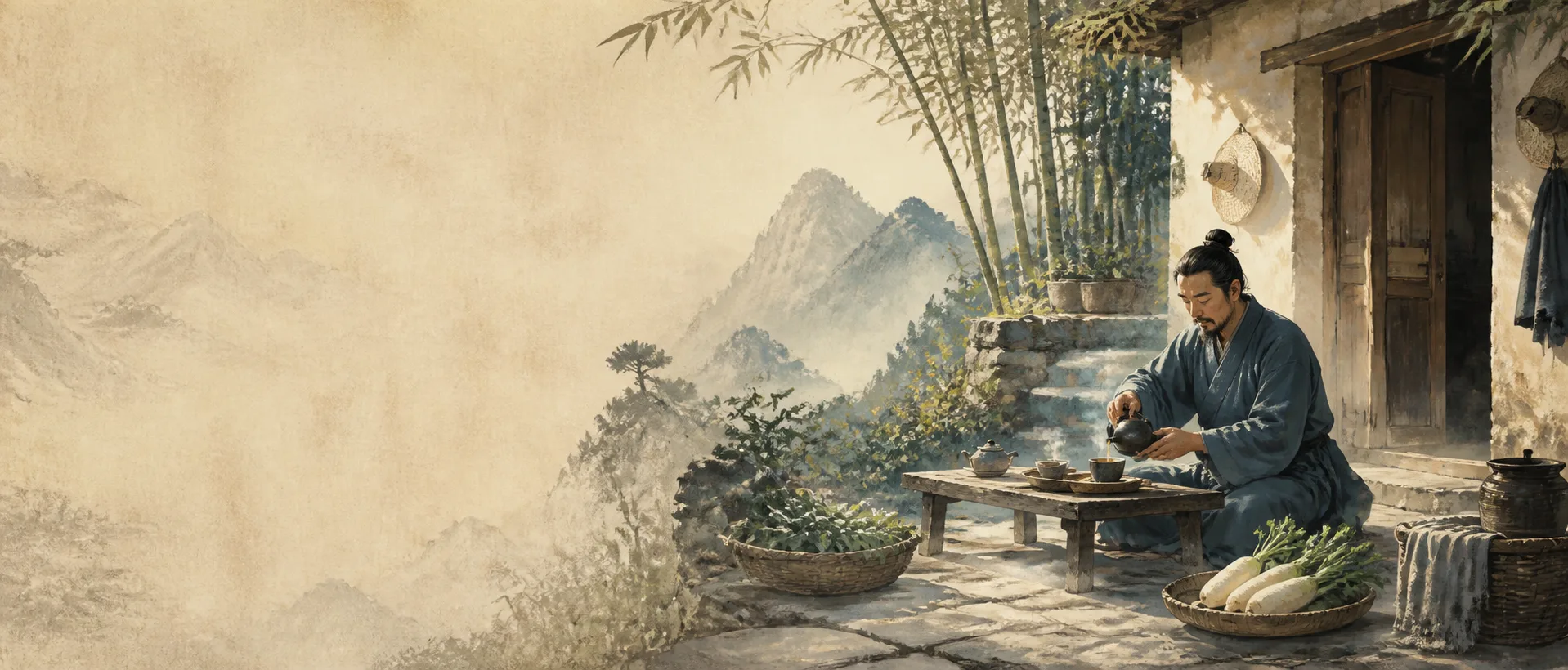
Choose a small moment: deciding whether to speak, pause, persist or change direction. Ideas such as wu wei and yin-yang invite attention to timing and relationship. The readings offer context rather than a single formula. Treat the illustrations as prompts for reflection, and keep their metaphors separate from historical evidence.
Deeper reading
- 01
What is Taoism?
A first map of texts, communities and practice.
- 02
The Tao explained
Meet the idea of a way, path and unfolding order.
- 03
Wu wei, yin-yang & ziran
Read the vocabulary through relationship, change and responsiveness.
- 04
Philosophy & religion
See their differences alongside their shared traditions.
- 05
A short history
Follow changing texts, institutions and communities.
- 06
Key texts
Find your bearings among the principal works.
- 07
Everyday life
Explore culture, attention and daily choices.
- 08
Taoism in context
Return familiar ideas to their historical and living settings.
- 09
Where next?
Choose a path through the wider library.
The full guide
Read more The complete guide
This is the Tao-specific beginner guide. If you are new to Wudang as a whole—its philosophy, movement, wellness, arts and mountain culture—begin with the site-wide Start Here page:
A nine-part introduction
These nine pages are written for complete beginners. They assume no Chinese, no background in philosophy and no prior reading. Read in order, they take about ninety minutes and establish the context needed for the rest of the Tao library.
What the sequence covers
The guide begins by separating early philosophical writing from later organised religion. It then explains the Tao, introduces wu wei, yin-yang and ziran, gives a short history, surveys the principal texts, examines everyday practice, corrects common misconceptions and suggests where to continue.
How to read it
Follow the pages in the order shown in this section. Each introduces vocabulary used by the next. If time is short, read What Is Taoism?, Core Ideas, and Common Misconceptions. Those three provide the minimum context for avoiding the most common errors.
A grounded approach
The aim is clarity rather than persuasion. The articles distinguish documented history, traditional accounts and modern interpretation; explain uncertainty where it exists; and avoid turning unfamiliar Chinese terms into mystical claims.
Begin with What Is Taoism? in the reading list, then continue one page at a time. When your interest broadens into movement, wellness, cultural arts or Wudang Mountain, return to the main Start Here page to choose another doorway.