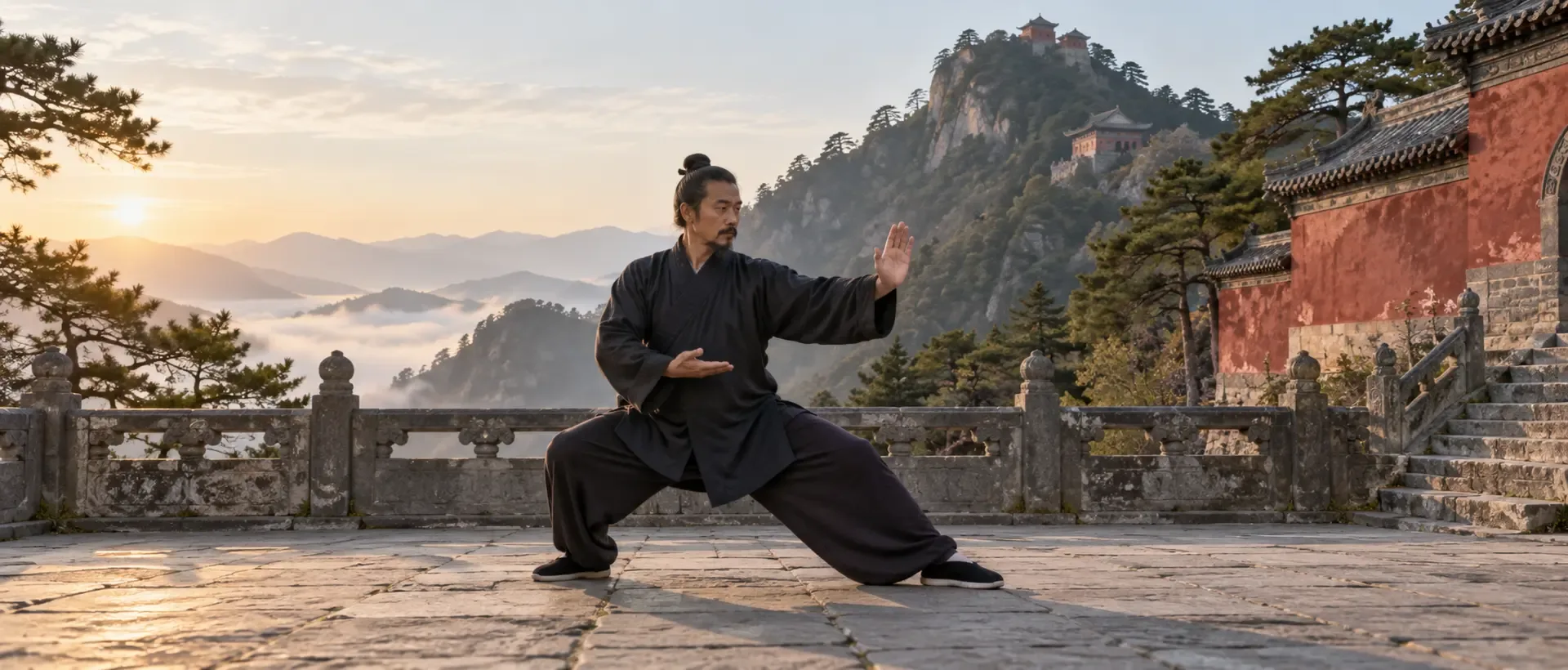
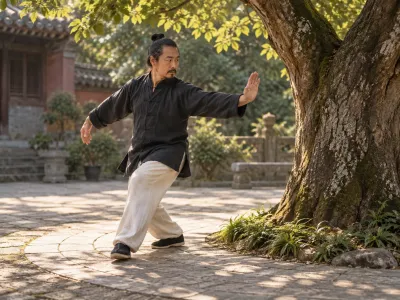
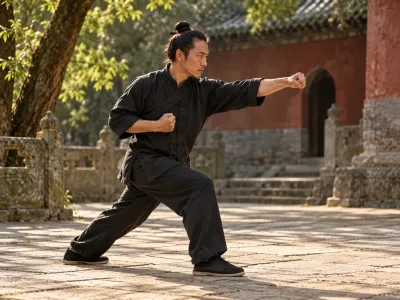
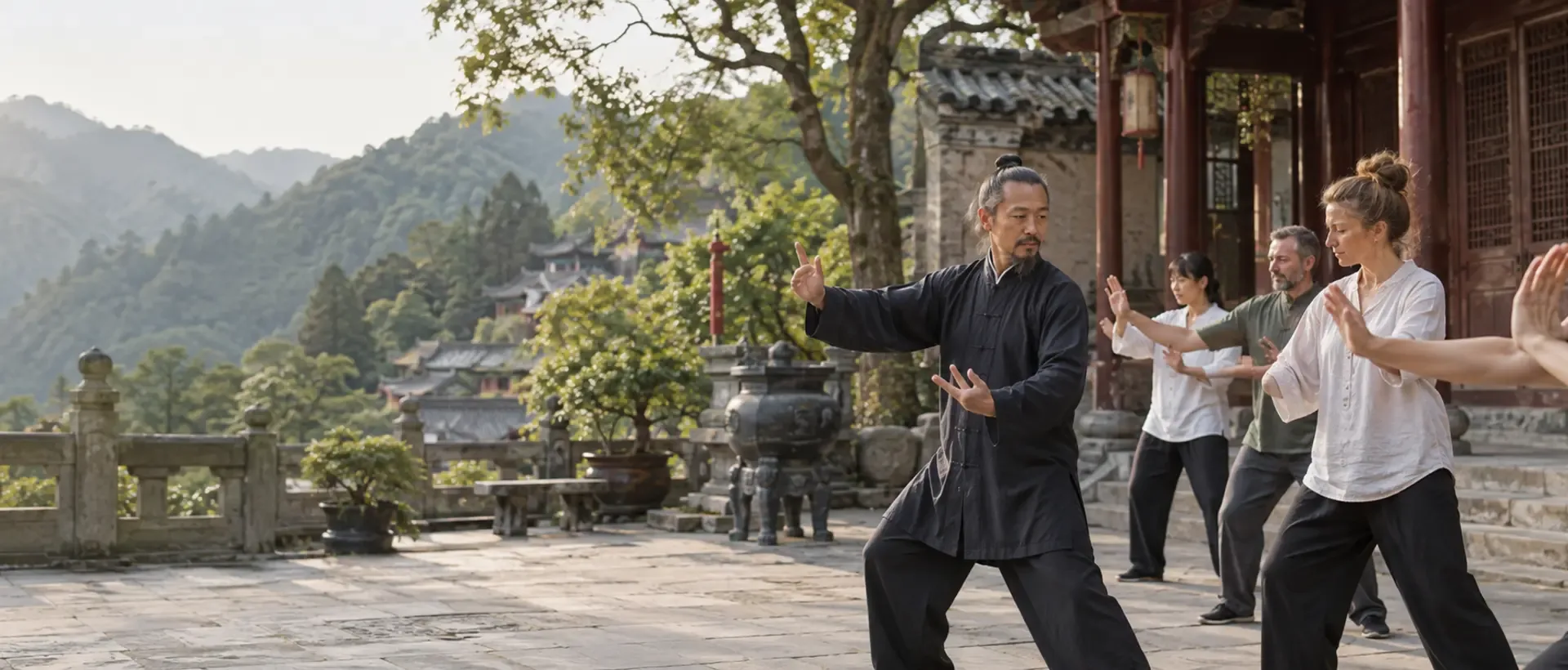
Wudang martial arts bring together disciplined movement, attentive stillness and the ability to change without losing the centre. Training may include standing, stepping, forms, partner work, applications, weapons and internal practice. Over time, these methods develop structure, coordination, timing and a calmer way of meeting pressure.
Wudang is not one fixed international syllabus. Different temples, schools, families and teachers preserve different routines and teaching methods. What connects them is a living relationship with Wudang culture and a shared interest in integrating body, breath, awareness and martial skill.
Choose a Practice Path
Foundations of Internal Arts — Begin with structure, song, rooting, whole-body connection, intention and the training ladder that supports every internal art.
Taijiquan — Study continuous movement, changing weight, forms, push hands and martial principles across living traditions.
Baguazhang — Enter through circle walking, turning, palm changes and the practice of transforming direction while staying centred.
Xingyiquan — Discover direct stepping, the Five Element Fists, animal methods and connected whole-body power guided by clear intention.
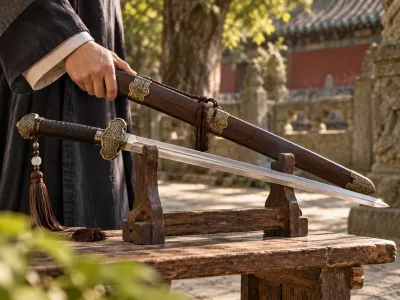
Weapons & Wudang Sword — See how sword, broadsword, staff, spear and other weapons extend posture, distance, coordination and focus.
Training & Practice — Understand how a responsible curriculum progresses from basics and forms to partner work, application and deeper study.
What Training Develops
A stable and responsive body
Learn to stand, step, turn and change direction without losing alignment or becoming rigid.
Whole-body coordination
Connect the feet, legs, torso and hands so movement is not divided into isolated parts.
Attention under movement
Notice distance, rhythm, tension and change while the body is active, not only in quiet reflection.
Respect and responsibility
Practise with care for teachers, partners, equipment, tradition and the limits of one's present ability.
A long view of progress
Build skill through accurate repetition and patient correction rather than collecting forms or chasing dramatic results.
Begin Where You Are
Newcomers do not need to be flexible, strong or experienced before attending a genuine beginner class. They do need a suitable pace, clear instruction and permission to progress gradually. Start with foundations or Taijiquan, then explore another art when the basic movement language becomes familiar.
Browse Events & Courses
Safety: martial practice carries physical risk. Choose supervised training, disclose relevant health or mobility concerns, follow contact and equipment rules, and stop when pain, dizziness or unusual shortness of breath signals that something is wrong.
From Philosophy to Practice
Taoist ideas such as balance, return, non-forcing and responsiveness can illuminate training, but they do not replace mechanics, correction or partner feedback. Explore TAO for philosophy, Wellness for Qigong and standing practice, and Events & Courses for current programmes.