A path into the reading
Wudang Mountain Temples and Sacred Sites
Begin with the names of the places, then look at how they relate to the mountain. This guide introduces Wudang’s principal sacred sites, the different periods behind them, and the questions that help make sense of their architecture.
Start here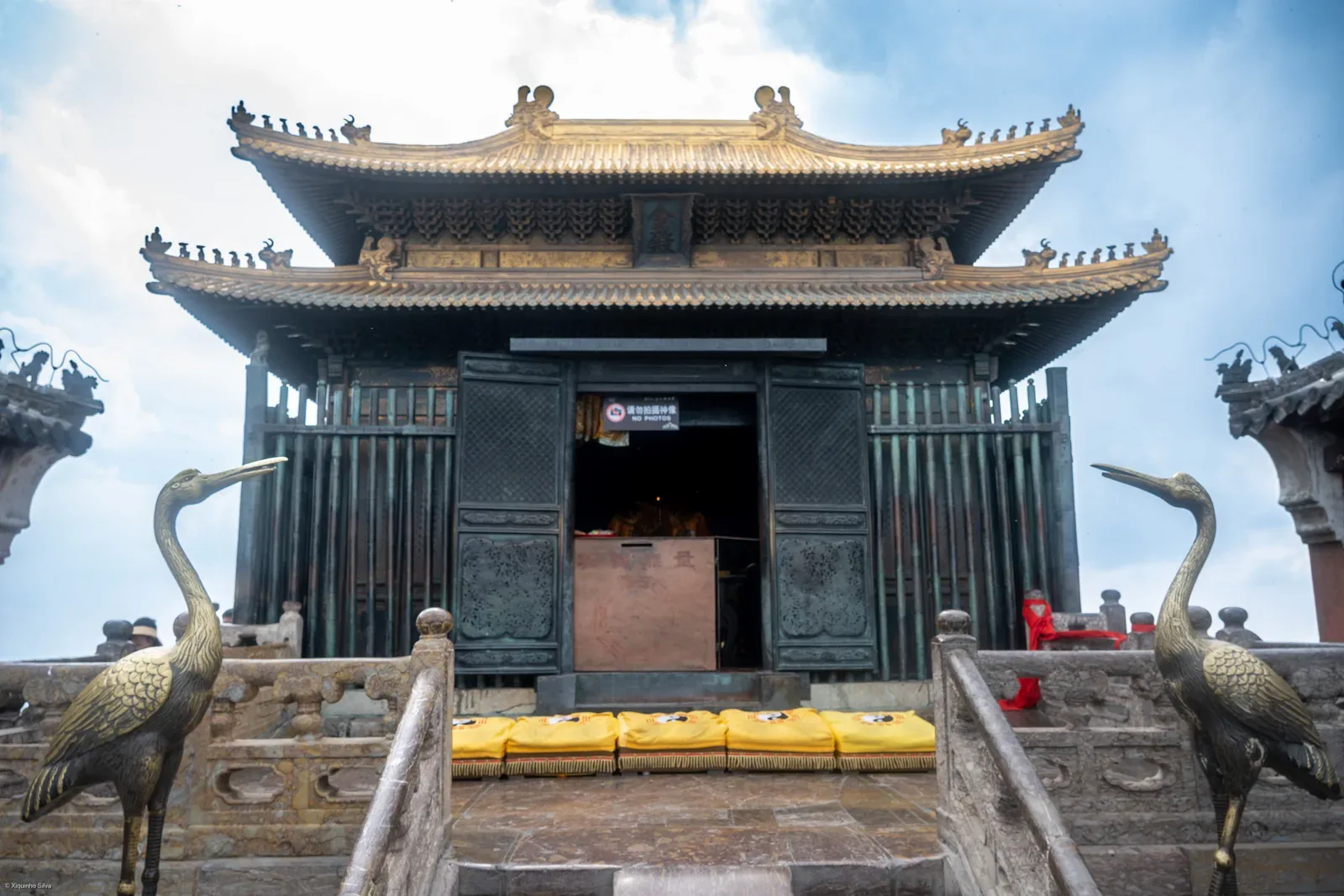
01 Find your bearings
The Central Temple Route at Wudang Mountain
Taizipo, Zixiao Palace, Nanyan and the Golden Summit in their original sequence
Explore this sectionGo further
Deeper reading
- The Central Temple Route at Wudang MountainTaizipo, Zixiao Palace, Nanyan and the Golden Summit in their original sequence
- Outlying Palaces and Quiet Sites at Wudang MountainYuxu, Yuzhen and Wulong — major, partly ruined and away from the central route
- Wudang Mountain Temple Layout and ArchitectureImperial planning, building hierarchy, timber construction and a landscape designed as one work
The full guide
What should I know before reading further?
A first encounter with Wudang can leave a reader with many impressive images but an uncertain sense of place. A palace name, a summit name, and the name of an individual hall may appear together without explaining whether they describe the same thing.
Read more The complete guide
A first orientation
A first encounter with Wudang can leave a reader with many impressive images but an uncertain sense of place. A palace name, a summit name, and the name of an individual hall may appear together without explaining whether they describe the same thing.
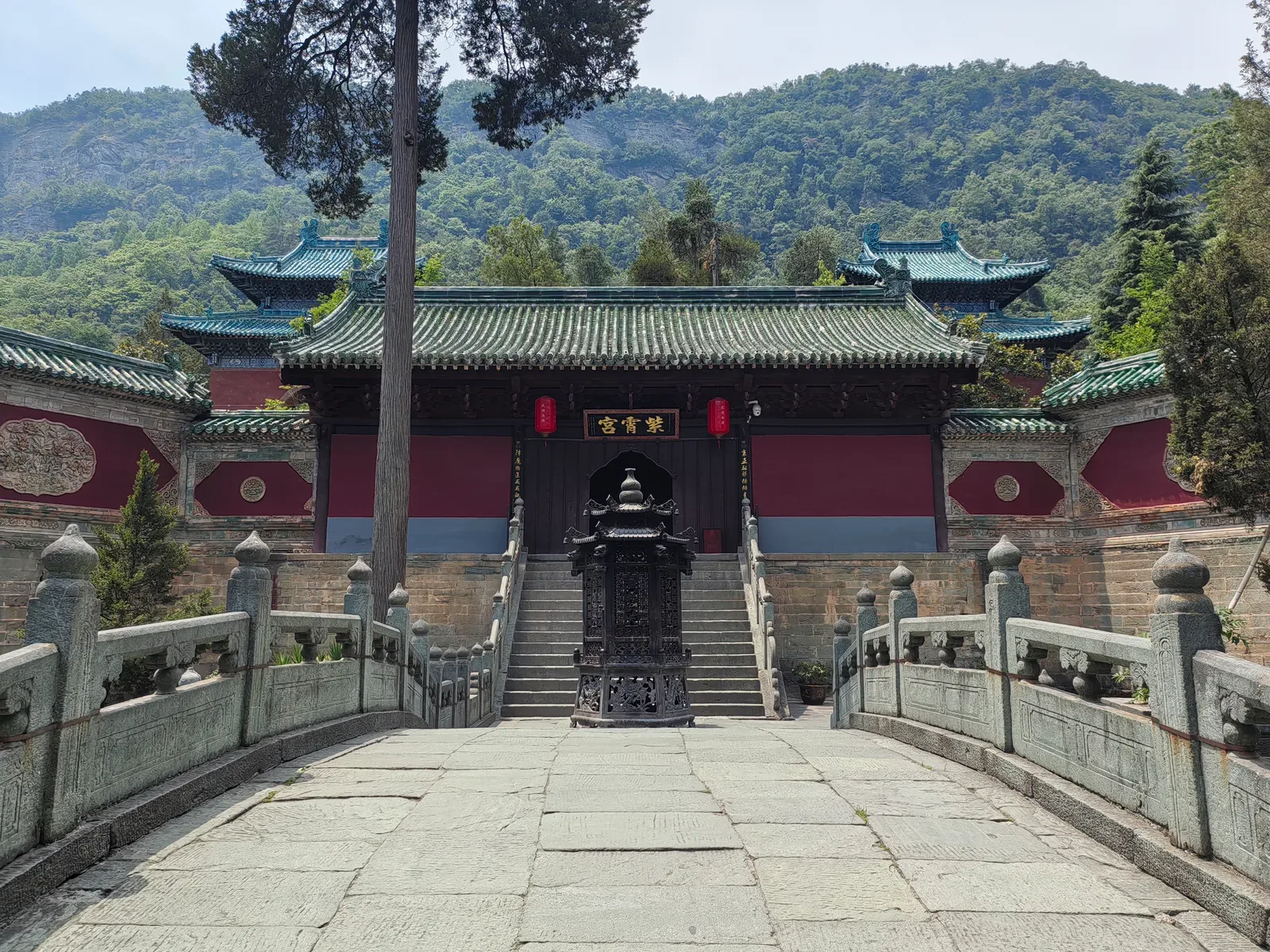
Start with three useful points of reference: Zixiao Palace (紫霄宫, Zǐxiāo Gōng), Nanyan Palace (南岩宫, Nányán Gōng), and the Golden Hall (金殿, Jindian) at the summit. Use these names when moving between photographs, maps, and individual guides.
The word “palace” also needs context. Here it can name a religious establishment; it should not automatically bring to mind a ruler’s residential palace. Similarly, the Golden Hall names a particular building, while Golden Summit is a broader place-name. Keeping the building and the surrounding area distinct makes descriptions easier to follow.
The purpose of this overview is to provide that first orientation. It is not necessary to memorize a catalogue of sites before beginning. Choose a few places, understand their names, and follow their histories in greater depth.
A landscape built across generations
The Ancient Building Complex in the Wudang Mountains was inscribed on the UNESCO World Heritage List in 1994. Its history extends across successive dynasties, with major Ming patronage shaping a landscape that already had religious foundations. UNESCO’s account recognizes this historical breadth. UNESCO property record
A useful question is therefore not simply “How old is this temple?” Ask instead: when was the establishment founded, when were its principal buildings constructed, and what has been repaired or changed?
Zixiao offers one example of this layered history: an earlier foundation was followed by Ming rebuilding and Qing extension. ICOMOS evaluation, printed p. 81
These distinctions do not diminish the importance of a place. They make its history more intelligible. A religious establishment, its buildings, and the objects within them need not share one date.
The bronze buildings require particular care. The summit Golden Hall is dated to 1416 in the technical article listed below. It should not be confused with the older bronze shrine dated 1307 in the ICOMOS assessment. Tan Derui, ICOMOS evaluation
Look at the setting as well as the building
A useful way to approach the architecture is to begin outside it. Before concentrating on decoration, notice the approach, the ground beneath the building, and the relationship between one space and the next.
Where does the entrance direct your attention? What changes as you move from an open area towards a hall? Can you understand the building better by looking back at it from the route you have just followed?
These are ways of looking, rather than a formula that explains every site. Avoid assuming that one architectural principle accounts for every decision, or that a modern visitor route reproduces every aspect of an earlier pilgrimage.
Photographs can support this reading if they show more than an isolated roof or doorway. Compare a close view of the Golden Hall with an image that includes Zixiao’s entrance and wooded setting. Each offers a different scale of attention.
For a fuller discussion of construction and spatial organization, continue to Wudang’s layout and architecture. Keep the overview in mind, but allow the individual building to complicate it.

Zhenwu, worship, and imperial patronage
Wudang’s architecture is also encountered through religious names, images, and stories, including those associated with Zhenwu. These offer another way to understand the sites, alongside the evidence for their construction.
When a place is associated with an episode from a sacred life, describe the association as a religious tradition. A story can be important to how people understand a place without serving as a dated construction record.
Imperial patronage adds another dimension. The 1994 heritage evaluation discusses the relationship between support for Wudang and claims to political authority. That is an interpretation to identify and explain, rather than permission to declare that religious devotion was merely an excuse. ICOMOS evaluation
Readers should be able to distinguish an inscription or building date, a historian’s explanation, and a religious narrative. None becomes clearer when they are blended into a single account presented with equal certainty.
This approach also leaves room for people to encounter the sites differently. An architectural interest, a religious commitment, and a wish to understand Chinese cultural history need not produce identical readings of the same place.
Reading what survives
A surviving building is a starting point for questions, not proof that everything around it has remained unchanged. When a guide describes something as original, restored, rebuilt, or relocated, look for an explanation of exactly what that description covers.
Does it concern the whole structure, a particular hall, an object, or the position of a surviving feature? If the evidence does not answer the question, uncertainty should remain visible.
Yuzhen Palace provides a specific conservation example. UNESCO reported a damaging fire there on 20 January 2003. That contemporary report documents an event; it should not be used by itself to describe the condition of the complex today. UNESCO fire report
In 2025, the World Heritage Committee requested clearer on-site explanation of the Yuzhen Palace uplift project and additional information about archaeological sites. The request illustrates why explaining interventions matters alongside preserving material remains. It does not establish that the requested interpretation has since been completed. Committee decision
For the reader, the practical lesson is simple: notice both the structure and the explanation provided for it. A clearly described repair or reconstruction offers more understanding than an undifferentiated claim of antiquity.
Choose the next guide
Follow the subject that interests you most.
For orientation among the principal sites, begin with the central temple route. For a closer introduction to one named complex, continue to Zixiao Palace.
To broaden the picture beyond the central route, read about the outlying palaces. For buildings, materials, and spatial organization, choose layout and architecture.
Before visiting, also read the guide to temple etiquette. Cultural understanding includes attention to how a place is used, not only how it looks.
Use these articles as cultural orientation. Confirm current access and arrangements separately when planning an actual visit.
Sources and further reading
Recommended next page
Where next?
Outlying Palaces and Quiet Sites at Wudang MountainYuxu, Yuzhen and Wulong — major, partly ruined and away from the central routeA few alternatives