Photo Note
Coming to Ask the Way问道武当
A group from Xi’an arrives for three nights on Wudang Mountain. Three photographs trace the way in: a station, a screen wall and an old stone gate.
A group from Xi’an came to Wudang Mountain for three nights. Before any temple or training hall, the visit was recorded in three photographs taken on the way in: at the railway station, before a screen wall and beneath an old stone gate. Each is a group portrait. Read in order, they also trace the ordinary threshold every visitor crosses between the city and the mountain.
Met at the station
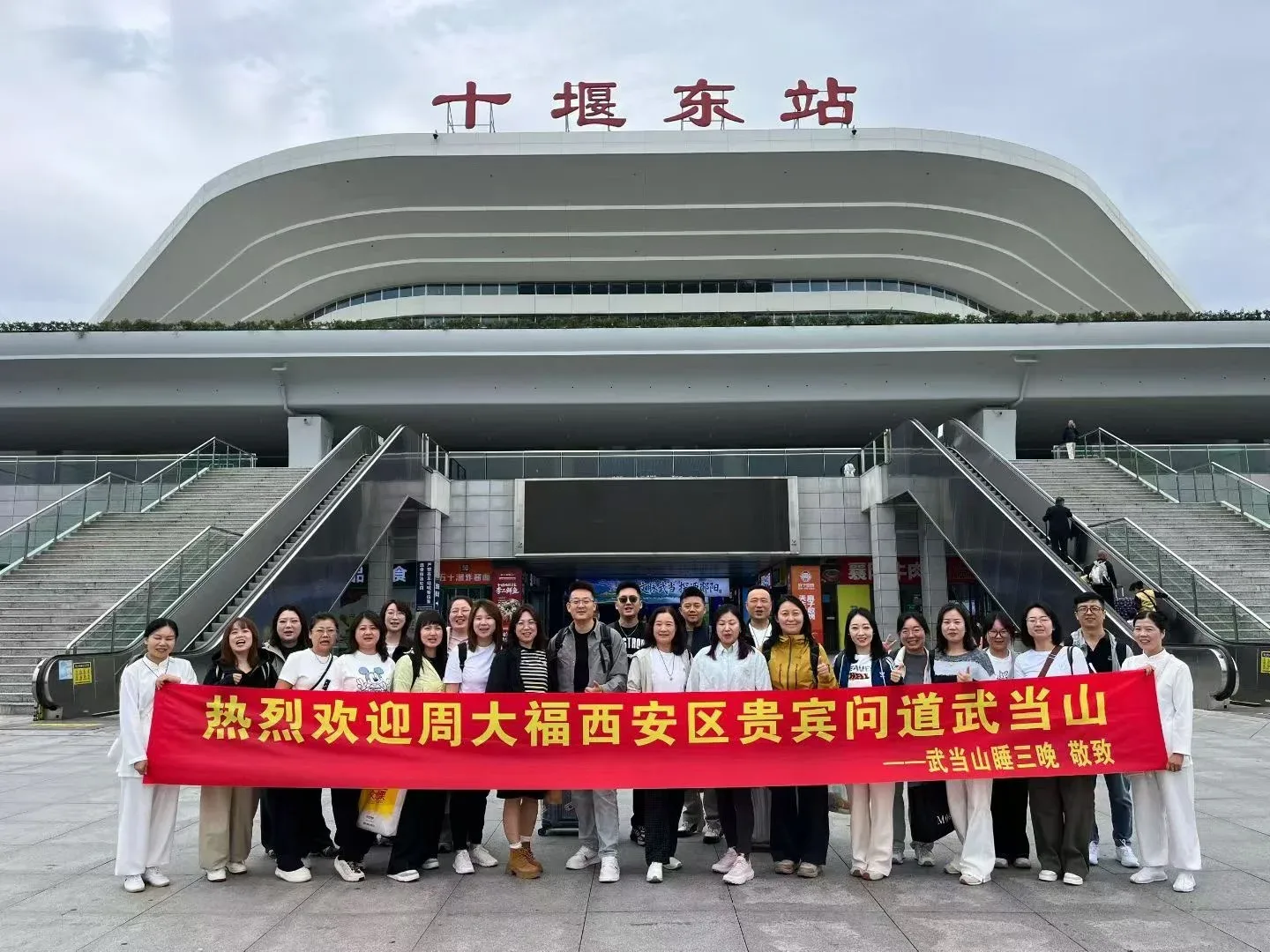
Shiyan East is where most travellers to Wudang step off the high-speed train. The forecourt is wide and new: glass, escalators, a sweeping white roof. Against it, a long red banner stretches across the front row, held at each end by a host dressed in white practice clothes.
A welcome banner is a familiar Chinese courtesy, a plain way of saying you were expected. This one describes the visit as 问道武当山, “asking the Way at Wudang Mountain.” Some people are laughing; some are still settling their bags. Nobody has changed yet, and the mountain is still some distance ahead.
Under the name of the Great Peak
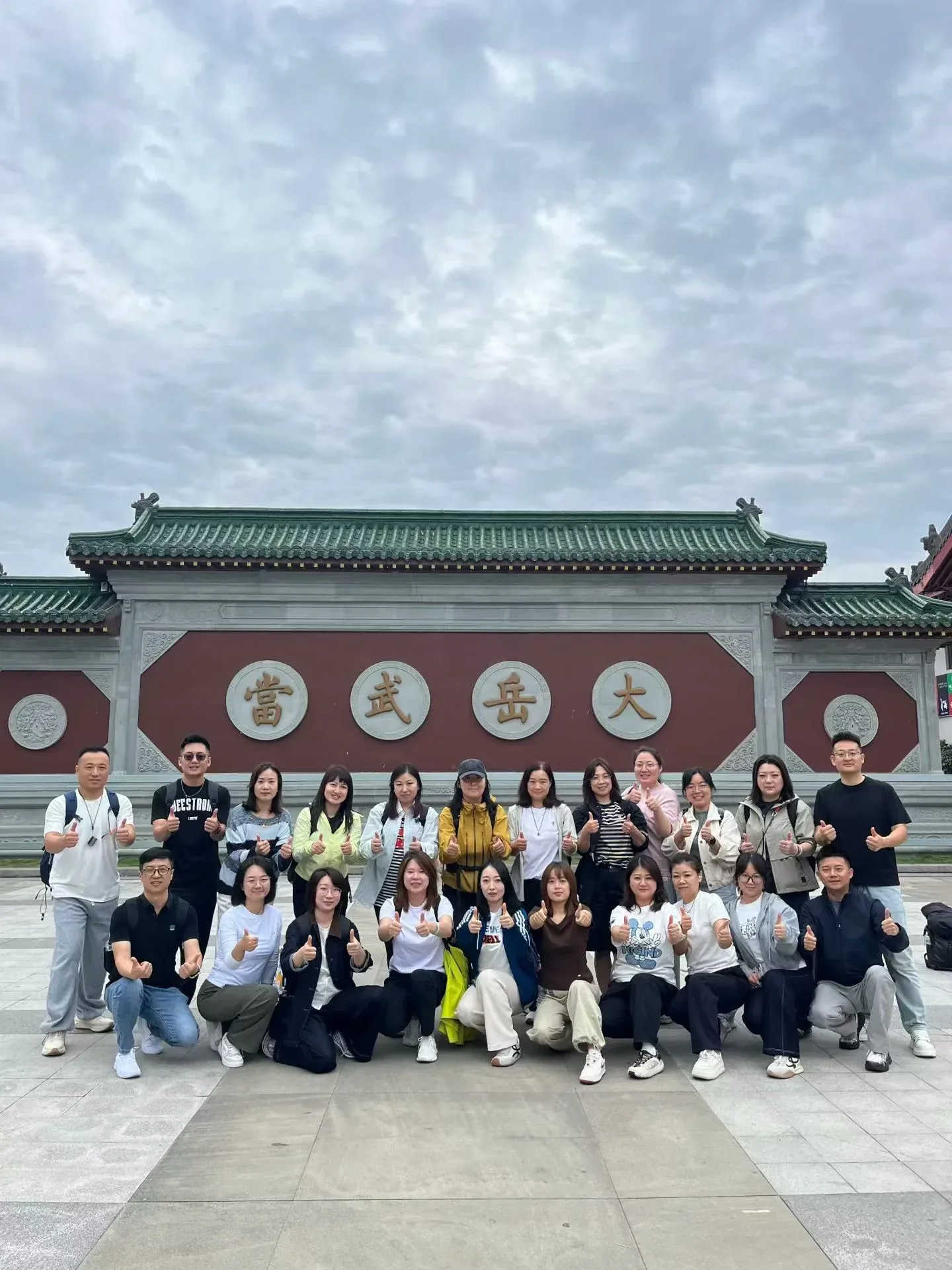
The second stop is a long red screen wall beneath green glazed tiles. Four stone medallions carry the characters 大岳武当, “Wudang, the Great Peak.” The title looks back to the Ming dynasty, when imperial patronage placed Wudang above the traditional Five Sacred Mountains and funded the building of the halls and palaces now recognised as a World Heritage site.
A screen wall stands before an entrance to block the direct line of sight, so that anyone coming in must turn and slow down. Here, the group is anything but solemn: two rows, standing and crouching, every hand raised in a thumbs-up under a grey, unsettled sky.
Through the stone gate
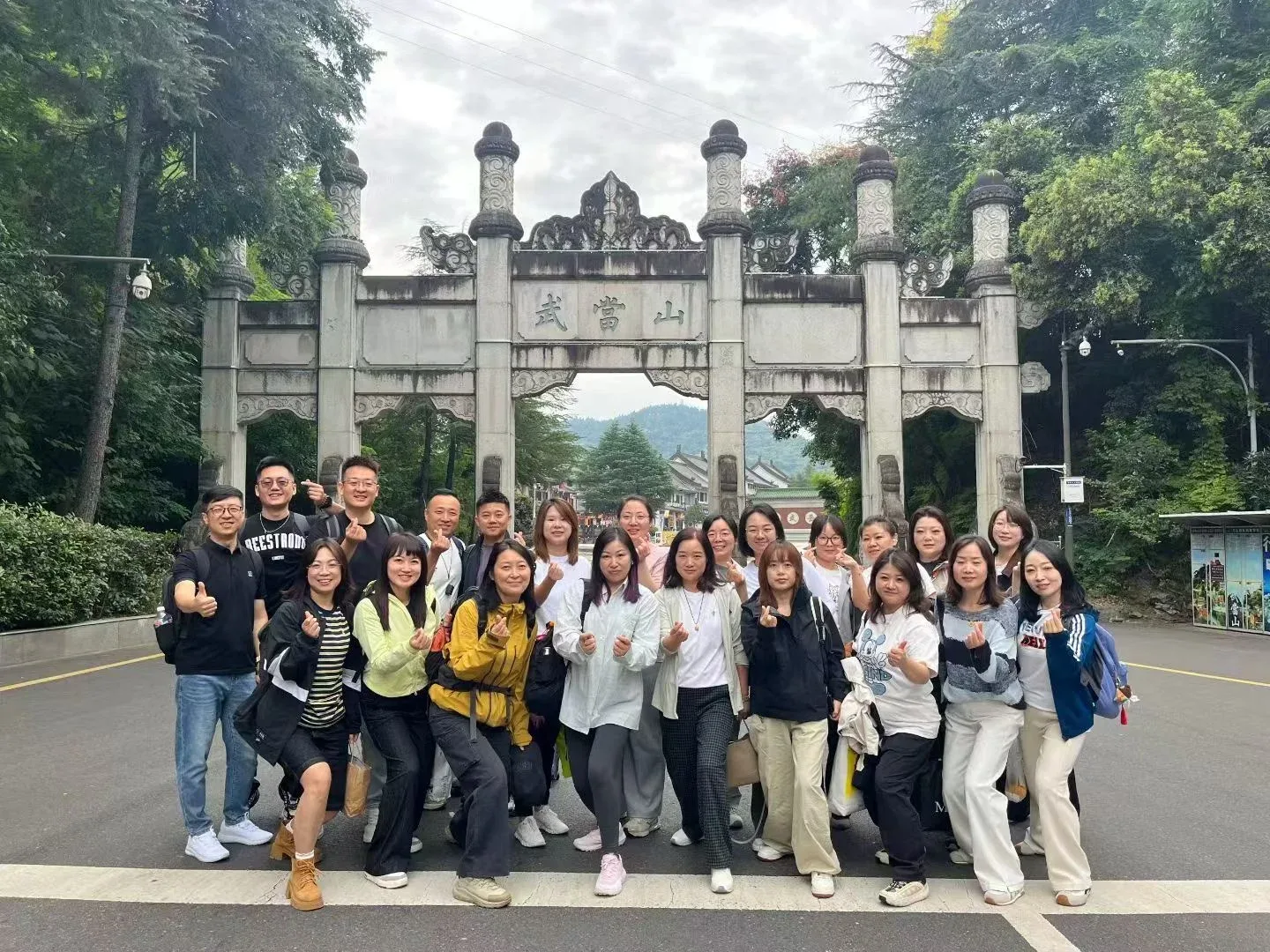
The photograph at the top of this page was taken at the stone archway inscribed 武当山. Its pillars are darkened by weather and moss and capped with carved cloud scrolls. Through the central opening you see tiled rooftops, then forested hills: the first real view of what lies beyond.
The group gathers at its foot, many making the small finger-heart gesture now common in photographs across China. It is an unguarded, cheerful picture, and that is part of its truth. People arrive at a sacred mountain as they are: colleagues and friends with backpacks and shopping bags, glad to be off the train.
Asking the way
问道 (wèn dào) means, literally, to ask about the Dao. In an old story the Yellow Emperor climbs Mount Kongtong to put this question to the sage Guangchengzi, and the phrase has since come to describe any journey made in order to learn. It is a generous word for a first day. Nothing has been taught yet. There has only been a station, a wall, a gate and the willingness to go further in.
Perhaps that is where asking begins: not with a question spoken aloud, but with the decision to come and see.
Explore Taoist Culture · Explore Wudang Mountain · More from Everyday Wudang
About this entry
- Place
- Wudang Mountain