Photo Note
Making Incense Pendants · 10 August 2026亲手做香牌 · 2026年8月10日
A hands-on afternoon of Chinese incense culture: blending fragrant powders, pressing them into carved moulds and finishing a pendant to wear.
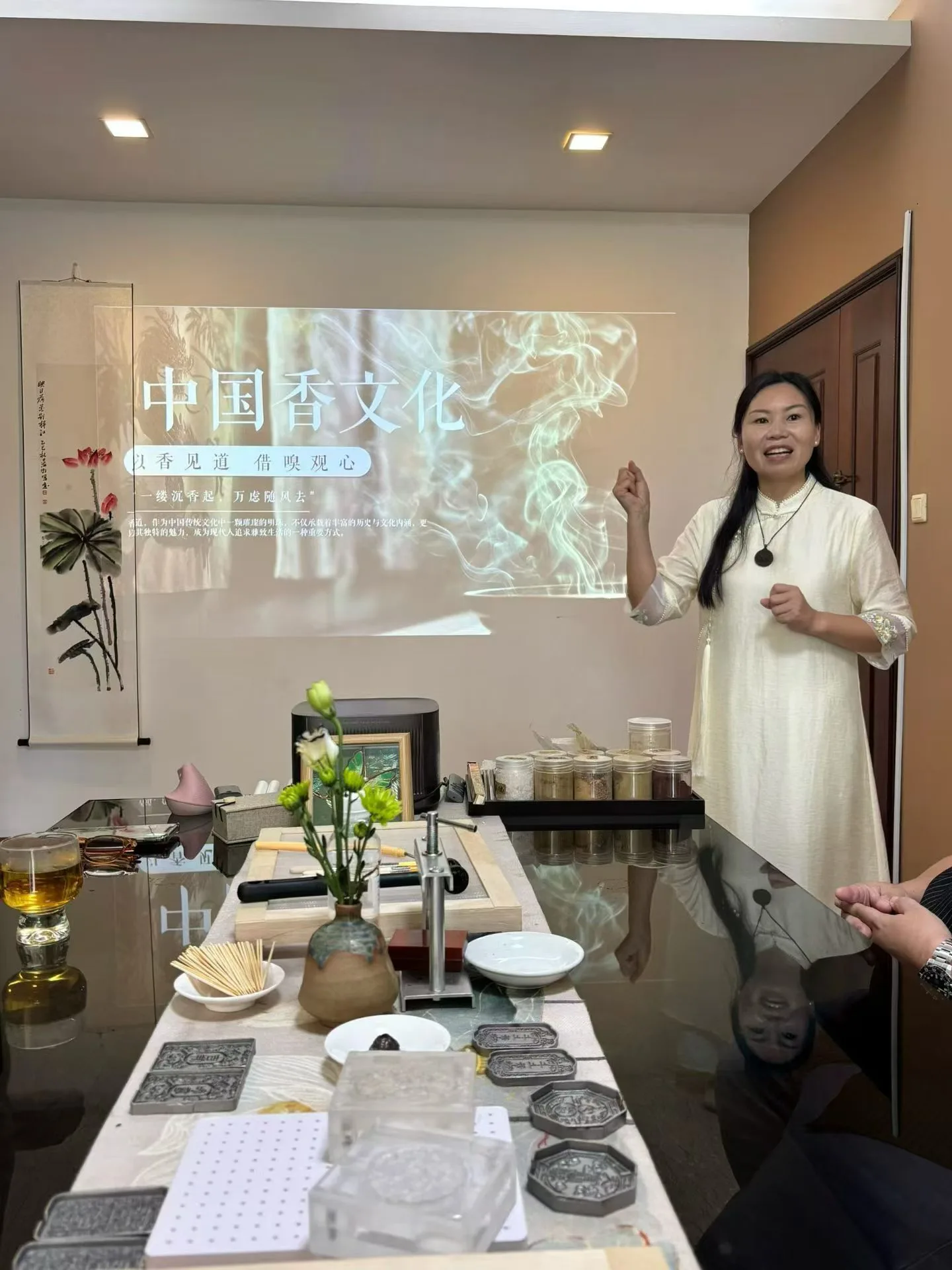
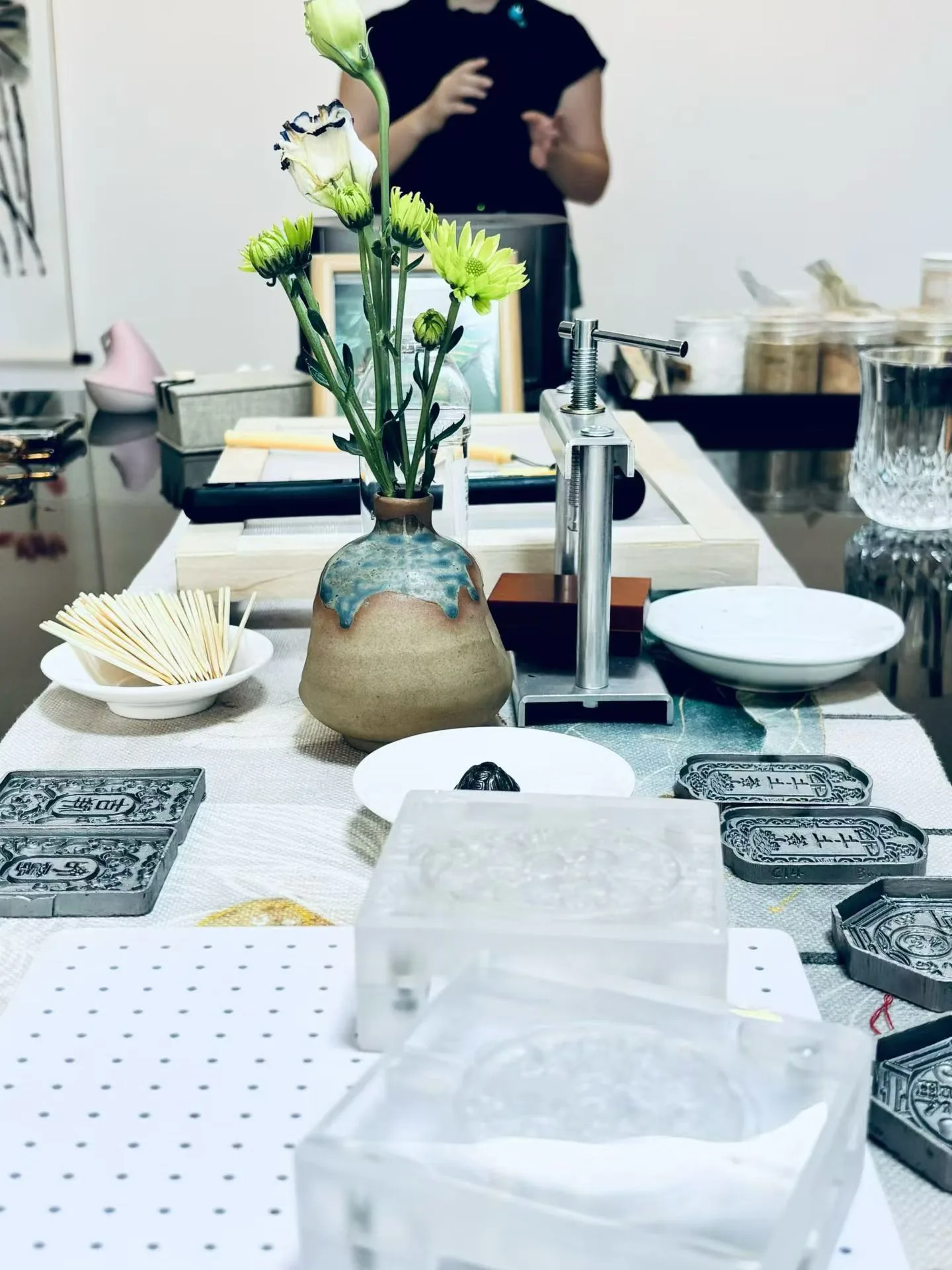
A long table laid for a workshop: jars of fragrant powders, a small screw press, clear moulds, pewter forms carved with auspicious characters, a bowl of toothpicks and a vase of green chrysanthemums. At the head of the room, the teacher stands beside a projected slide that reads 中国香文化, Chinese incense culture, with a line beneath it: 以香见道,借嗅观心, “to see the Way through fragrance, and to observe the mind through scent”.
Making an incense pendant
The day’s project is a 香牌 (xiāngpái), an incense pendant: a small plaque of pressed aromatic powder, worn on a cord, that releases a quiet scent over time. The powders are blended and worked into a dough, then shaped in a mould.
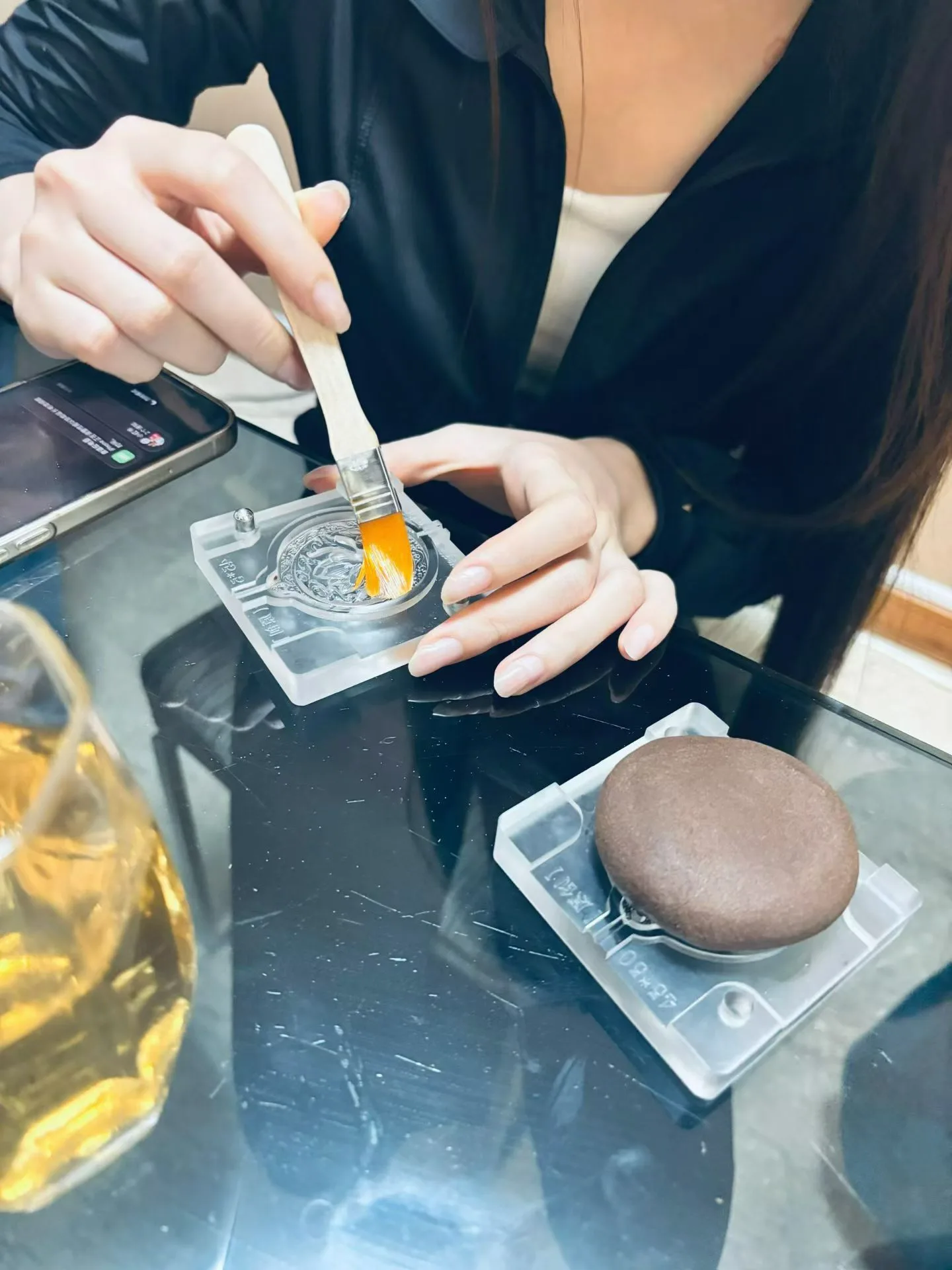
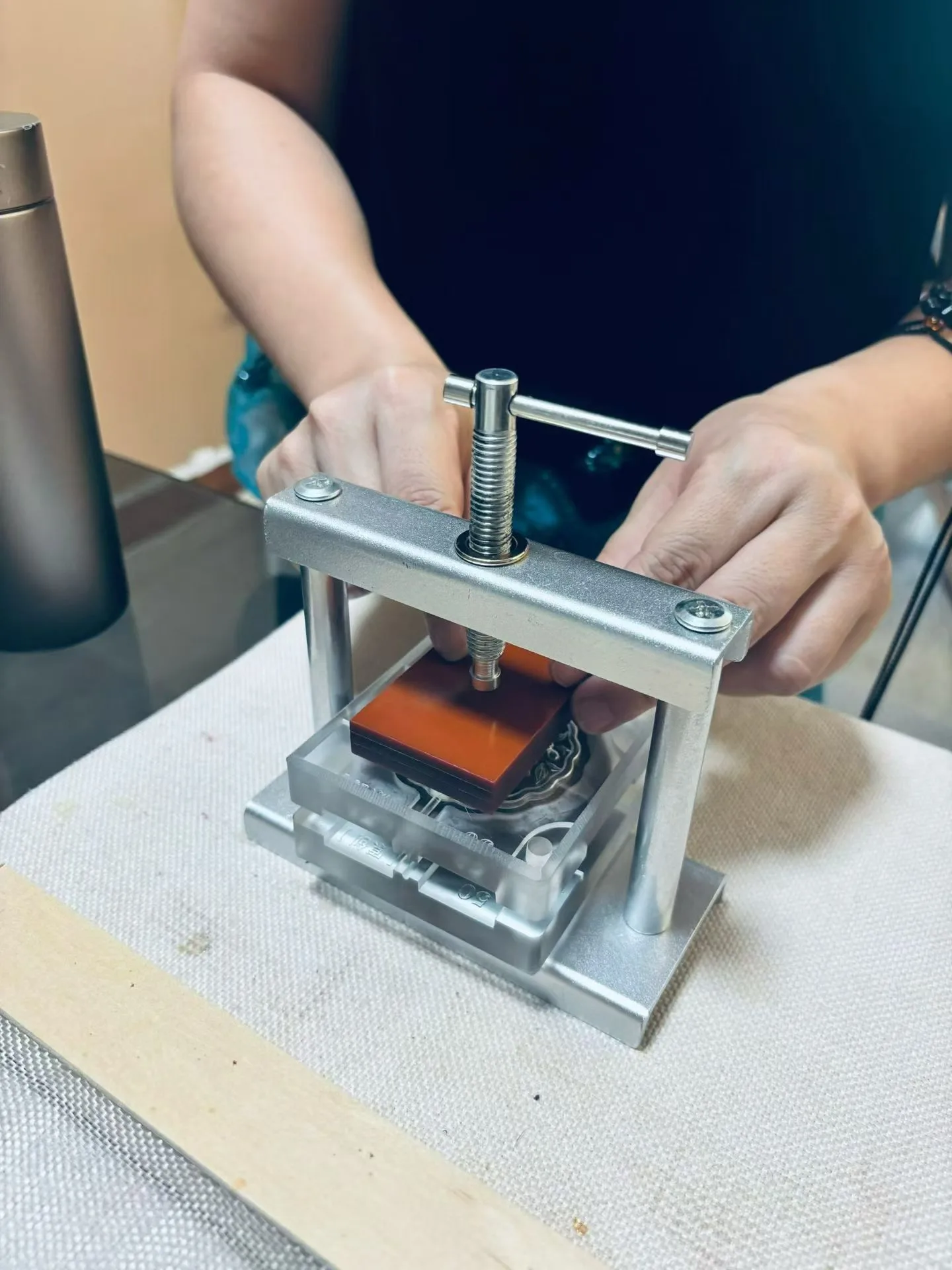
Each participant brushes the carved mould so the dough will release cleanly, presses the dough in, and then turns the handle of the small press until the pattern is set. When the mould opens, the design appears in relief: clouds, flowers, auspicious characters.
Fragrance as a literati art
Incense, 香 (xiāng), has a long place in Chinese culture. It was part of the scholar’s study alongside tea, flowers and painting, and part of Daoist practice as a way of settling the mind before stillness or study. Appreciating fragrance was never only about the smell. It was a way of slowing down and paying attention.
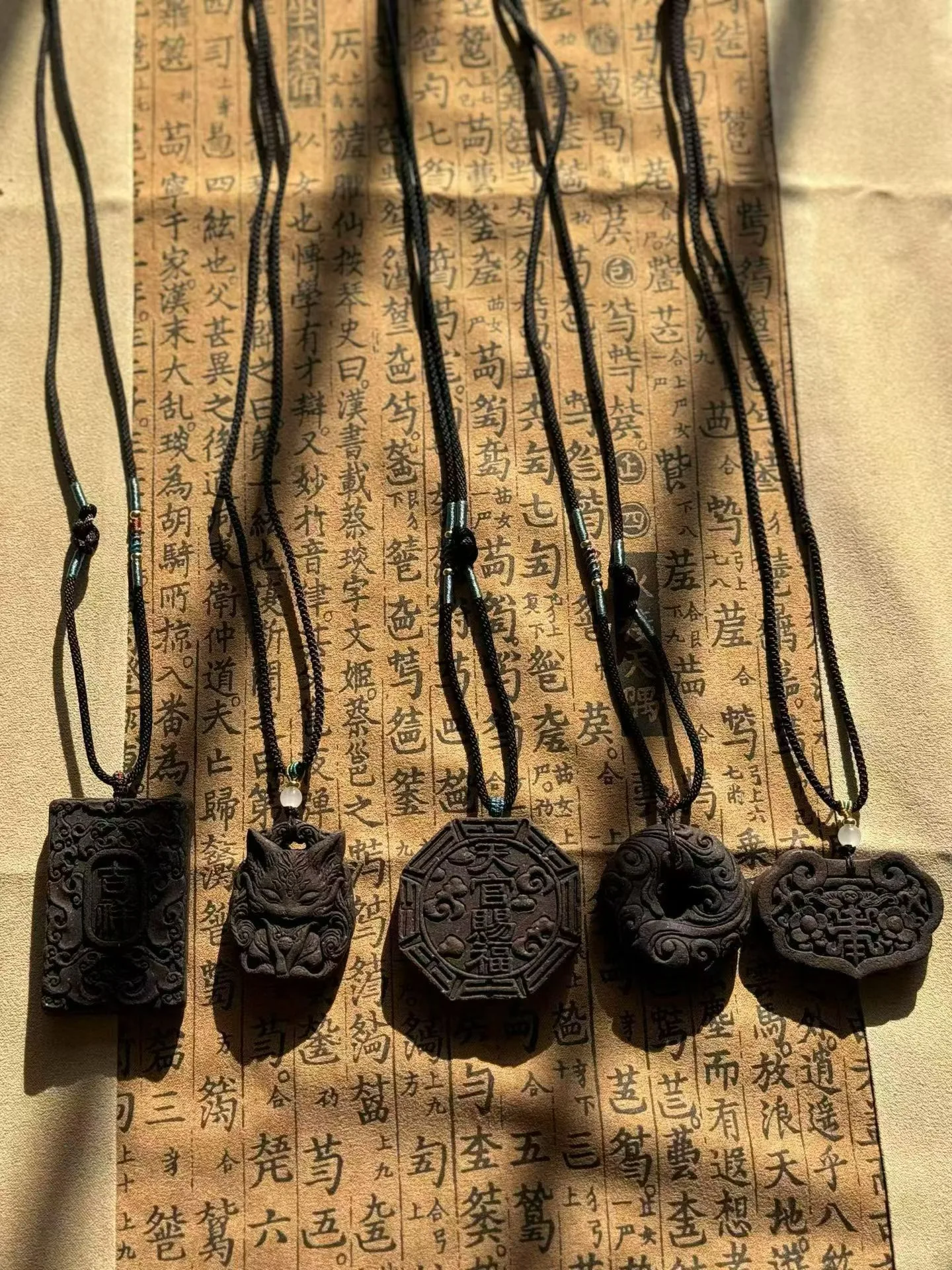
The finished pendants are dark and fine-grained, each on a braided cord: a rectangular plaque, a small fox, an octagon carved with 天官赐福, “blessings granted by the Heavenly Official”, a ring of swirling clouds and a lock-shaped charm. Handmade, each carries a little of the afternoon with it.
An everyday moment
A table of powders and moulds, a room of attentive hands, and a slow craft learned together. Workshops like this keep the literati arts close to daily life: something to make with one’s own hands, wear and quietly enjoy.