Video Note
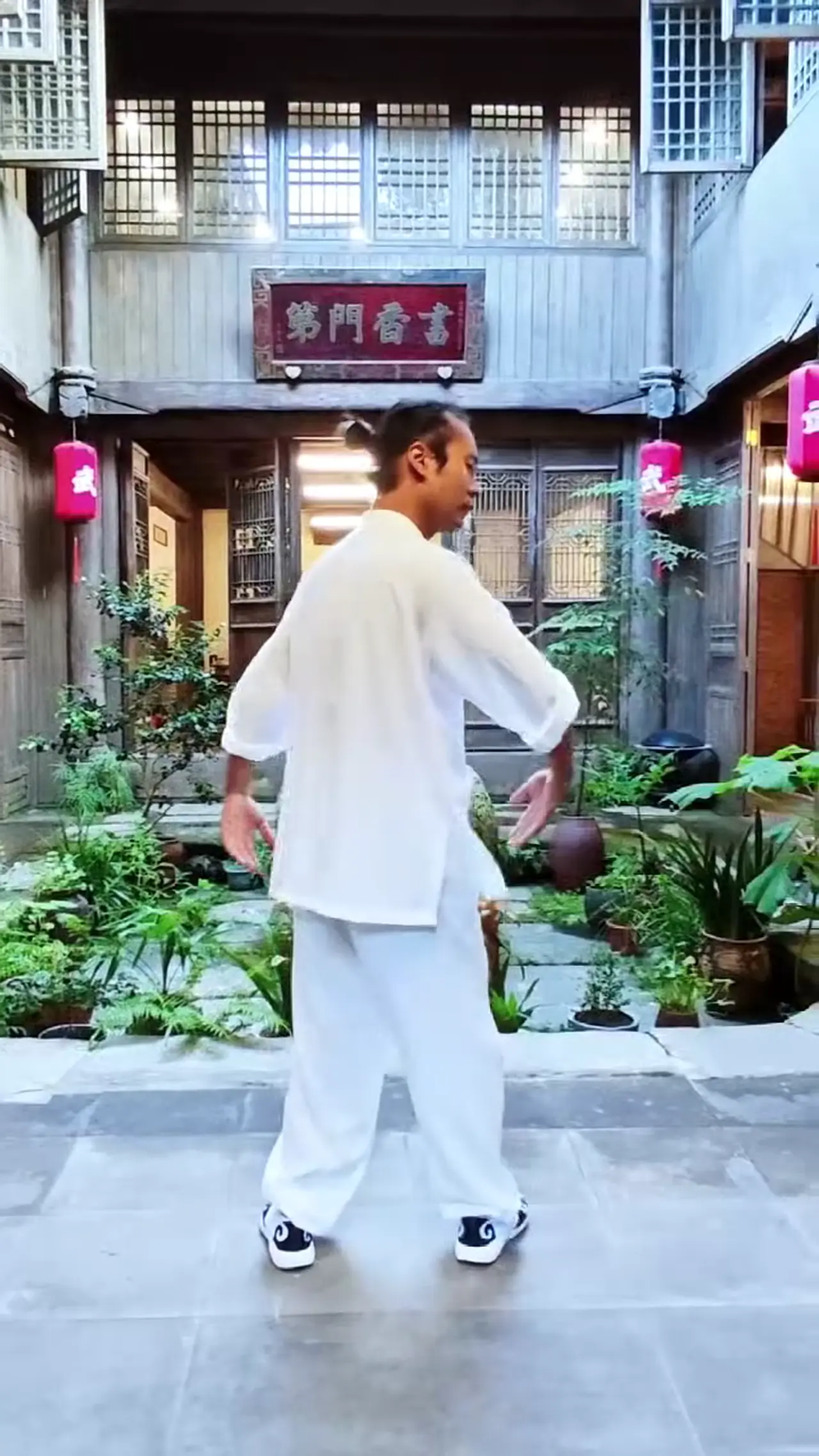
Tai Chi in the Courtyard · 29 August 2026庭院太极 · 2026年8月29日
In a quiet courtyard of dark timber, lanterns and potted plants, 武当-崇恬, in white, moves slowly through Tai Chi.
A small courtyard enclosed by dark timber walls and lattice windows. Red lanterns hang from the eaves, large stone pots and leafy plants line the edges, and above a warmly lit doorway a carved plaque reads 书香门第, "a family of books and learning". In the paved space at the centre, 武当-崇恬, dressed in white with his hair tied up in a knot, practises Tai Chi.
He moves without hurry. Arms float up and settle, the weight passes from one foot to the other, and each step lands softly before the next begins. Now and then he turns fully away and back again, and the courtyard turns with him.
A courtyard for practice
Tai Chi, 太极拳 (tàijíquán), has long been practised in places like this: enclosed, quiet spaces where the world outside falls away. The traditional Chinese courtyard was designed to gather light, air and greenery into the heart of a home, and many practitioners still prefer such settings for their calm.
The plaque above the door points to another thread. 书香门第 describes a household devoted to learning, and in Chinese culture the scholar's life and the practice of movement have often gone together. Both ask for patience, attention and a steady mind, and both are refined slowly, day after day.
An everyday moment
Nothing here is staged: a quiet courtyard, a few minutes of practice, the lanterns overhead. Moments like this are the quiet centre of Wudang practice, a daily return to stillness in the middle of ordinary life.