Video Note
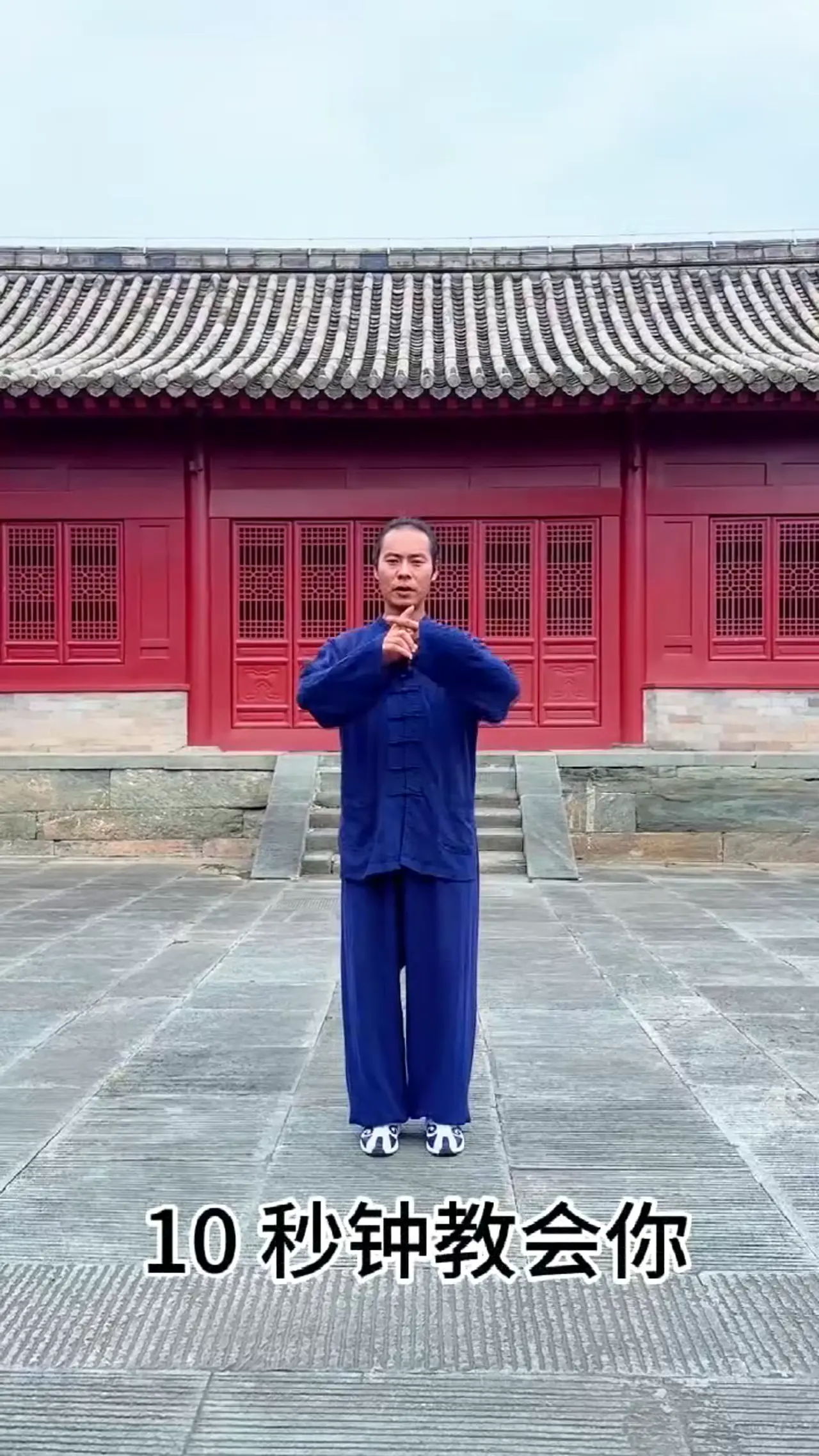
White Crane Spreads Its Wings · 3 September 2026白鹤亮翅 · 2026年9月3日
Before a red hall at Wudang, 武当-崇恬 breaks down one Wudang Tai Chi movement, White Crane Spreads Its Wings, step by step.
A wide stone courtyard in front of a long hall with red timber doors and a grey tiled roof. 武当-崇恬, in a dark blue Tai Chi uniform, stands in the middle and, in a few seconds, walks through a single movement from Wudang Tai Chi: 白鹤亮翅 (báihè liàngchì), White Crane Spreads Its Wings.
The Chinese captions name each stage as he shows it. He bends the knees and opens the stance. The hands rise as the knees settle. The arms draw a circle and gather as if holding a ball. The right foot draws in and steps back while the waist and hips turn. Finally the hands come together and open outward, one palm raised high and the other pressed low, as the weight settles into an empty step.
The crane in Tai Chi
White Crane Spreads Its Wings appears in many styles of Tai Chi, 太极拳 (tàijíquán), and is one of the most recognisable shapes in the art. The name describes the finished posture: one arm lifted like a wing, the other lowered, the body upright and light. The crane has long been a symbol of calm and long life in Chinese culture, and its poised, unhurried stillness suits a movement that ends in balance.
The final stance, 虚步 (xūbù), the empty step, places almost all the weight on the back leg while the front foot rests lightly. It asks for steadiness and relaxation at the same time. Breaking the movement into small parts, as this lesson does, is how most students first learn it, before the parts flow together into one continuous motion.
An everyday moment
A short lesson filmed in a quiet courtyard is an ordinary part of teaching at Wudang. One movement, shown slowly and named clearly, is a small but real starting point, and a reminder that the longest forms are learned one posture at a time.