How to Begin Wudang Practice: A Beginner Pathway 如何开始武当修习:初学者路径
Choose a realistic starting point among Taijiquan, Qigong, standing practice, Baduanjin, sword training and studying at Wudang.
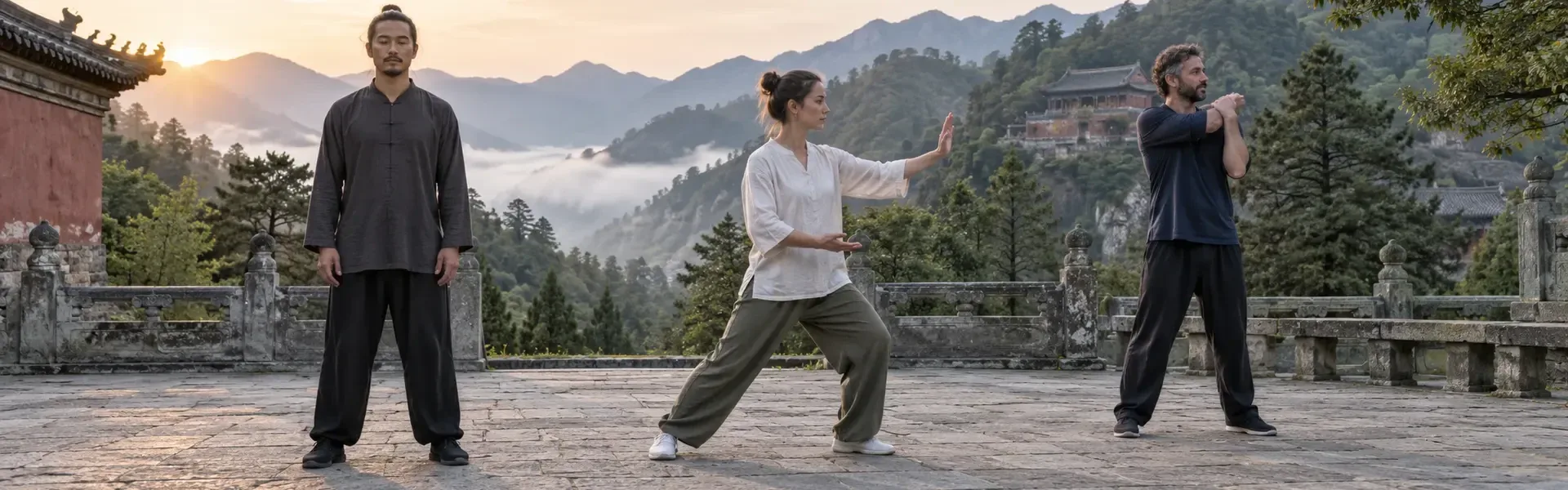
There is no single correct first step into Wudang practice. The best beginning depends on why you want to practise, how much time you can sustain, and whether you are learning alone or with a teacher. A clear beginner pathway helps you start small without mistaking a famous name, difficult form or dramatic weapon routine for a foundation.
Begin with your purpose
Choose the need that is most important now. You can change direction later.
Gentle daily movement and coordination: begin with Baduanjin or an introductory Qigong class.
Posture, balance and quiet attention: explore standing practice with short, carefully aligned sessions.
A long-term martial art: start with Taijiquan foundations and basic skills rather than collecting forms.
Weapons and cultural expression: treat Wudang sword as a later branch supported by footwork, coordination and safe handling.
Immersive mountain training: understand the daily routine, costs and school differences before arranging study at Wudang.
Five practical beginner pathways
1. Baduanjin: the clearest short routine
Baduanjin is often the most manageable entry for someone who wants a defined sequence. Eight sections give the practice a clear beginning and end, while repetition develops familiarity. Learn the order slowly, keep the range comfortable and avoid turning each movement into a test of flexibility.
2. Qigong: learn regulation before variety
Qigong is an umbrella term rather than one exercise. A useful beginner class should explain how posture, breathing and attention are coordinated. Stay with one simple method long enough to recognise what you are actually practising. If you are deciding between common entry points, read Tai Chi vs Qigong.
3. Standing practice: simple shape, demanding detail
Standing can look uneventful, yet small errors become tiring when held. Begin with short durations and receive correction for alignment, unnecessary tension and breathing. Longer is not automatically better. The goal is steady organisation, not endurance for its own sake.
4. Taijiquan: build the body before the choreography
A beginner does not need a long form immediately. Stance work, stepping, weight transfer, relaxed structure and simple repeated movements provide the grammar that makes a form intelligible. The basic skills and stance-training guide explains this foundation.
5. Wudang sword: begin after the hands and feet agree
The straight sword extends errors as well as skill. Basic stepping, turning, distance awareness and control should come first. A responsible teacher introduces safe handling and simple lines before speed, flourish or partner practice.
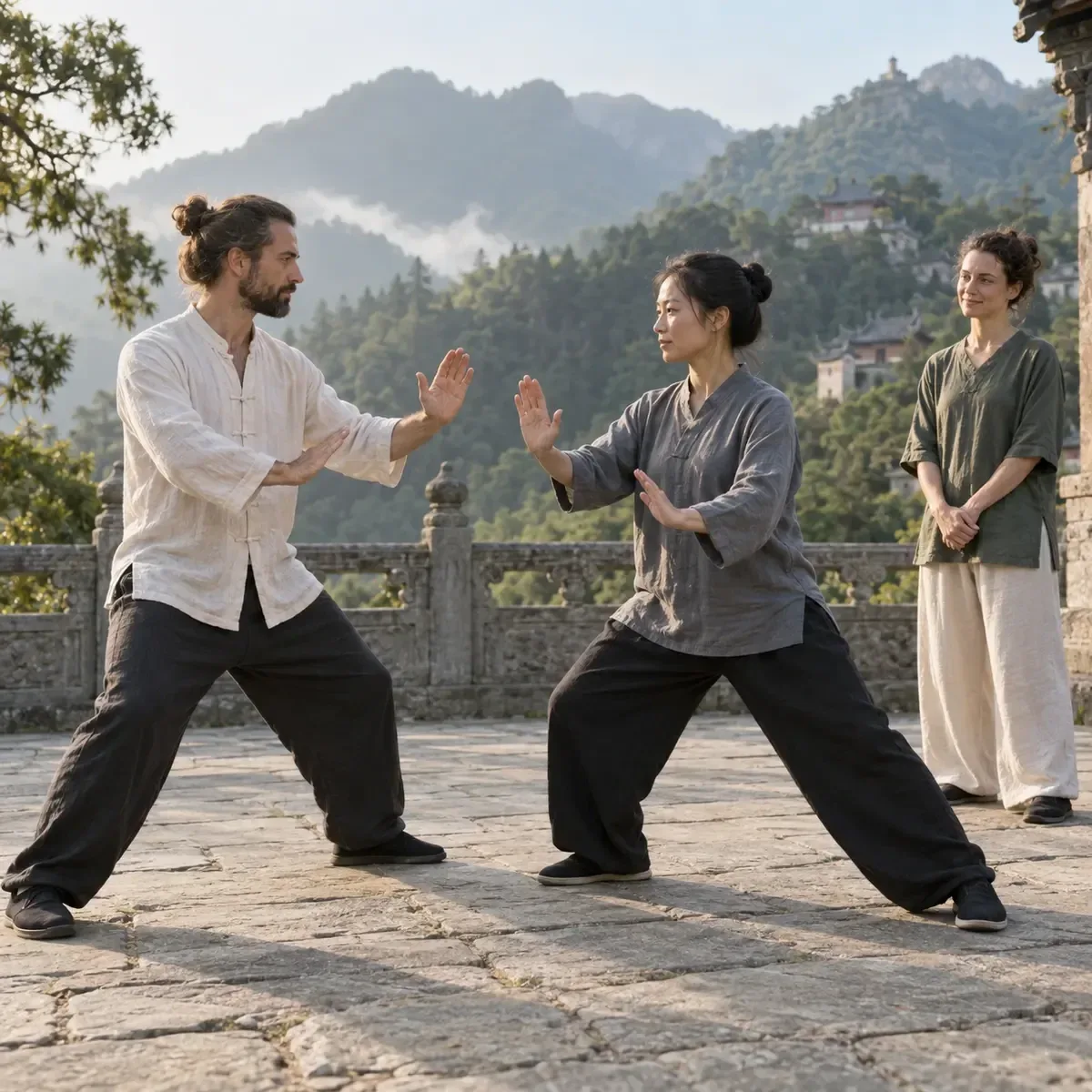
AI-generated editorial illustration of an imagined practice scene; no real teacher, school or event is depicted.
A sustainable first month
Week one: choose one practice. Learn a small amount well enough to repeat without constantly checking what comes next.
Week two: establish frequency. A short session you can repeat is more useful than one ambitious session followed by several inactive days.
Week three: ask for feedback. Check posture, sequence and effort with a qualified teacher where possible. Correcting one clear issue is better than collecting ten new instructions.
Week four: review honestly. Notice whether the practice suits your purpose, schedule and body. Continue, simplify or change direction without treating the first choice as a lifelong commitment.
How to choose a teacher or class
A good beginner environment makes the next step understandable. Look for a teacher who can explain what is being trained, offer a progression for different experience levels and correct students without humiliation. Fees, schedule, class size and cancellation terms should be clear before payment.
Be cautious when a programme relies mainly on secret knowledge, guaranteed health results, unverifiable lineage claims or pressure to pay quickly. Cultural respect and seriousness do not require theatrical mystery.
Common beginner mistakes
Starting several systems at once and never repeating any one of them.
Copying the outward shape while holding the breath or forcing the joints.
Choosing the most advanced-looking class rather than the clearest teacher.
Using pain, shaking or exhaustion as proof that a session was effective.
Buying a sword before learning safe space, grip and basic footwork.
Travelling to Wudang before checking what a school actually teaches.
If you have an injury, significant pain, dizziness or a medical concern, seek appropriate professional advice and tell the instructor before participating. Wudang practice should not be presented as a substitute for medical care.
Choose your next guide
Find a Wudang Practice — compare the main practice families.
Tai Chi vs Qigong — understand two commonly confused starting points.
Forms, drills and applications — see how martial training develops beyond choreography.
Martial ethics and the teacher–student relationship — understand conduct and responsibility.
Studying at Wudang — prepare for an intensive programme on the mountain.