Photo Note
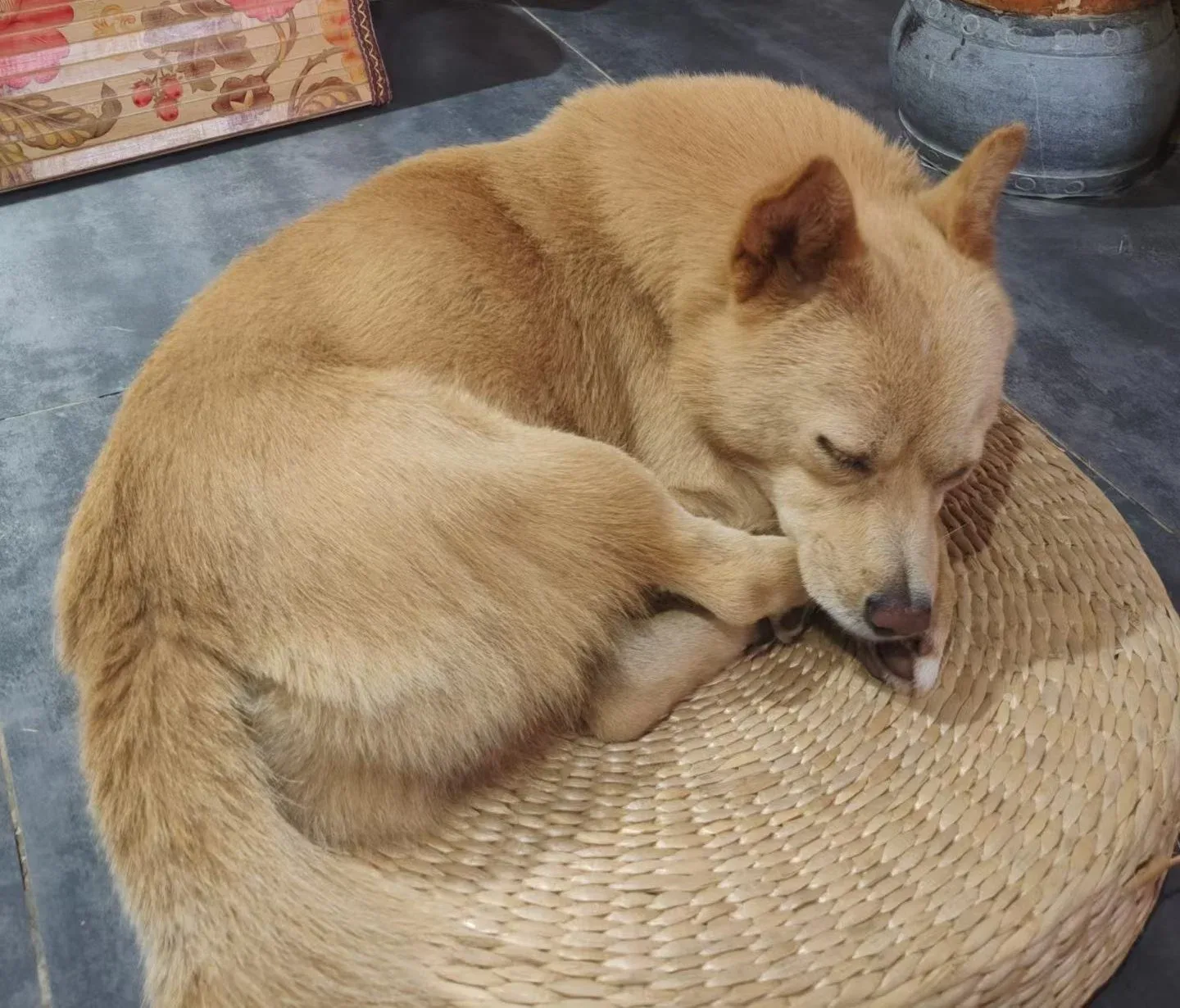
A Day of Great Harmony · 21 September 2026太和一日 · 2026年9月21日
Mist, chestnuts, a slow stretch, a line of ink and a handpan at Wudang Mountain — and a dog on a straw cushion who mastered stillness before anyone else.
Everyone in the room had come a long way to learn how to be still. The dog had not needed to. While the class sat with straight backs and half-closed eyes, working at quiet, it lay on a straw cushion by the pillar, nose tucked into its paws, and was simply asleep. If there was a teacher of stillness that day, it was probably him.
Wudang was once called Taihe Shan, 太和山, the Mountain of Great Harmony. The phrase comes from the Book of Changes, where heaven is said to preserve and join a great harmony so that all things can come right. It is a large idea, and on an ordinary day in September it looks very small: mist, a walk across wet grass, some stretching, some ink, some music, a dog.
Into the mist
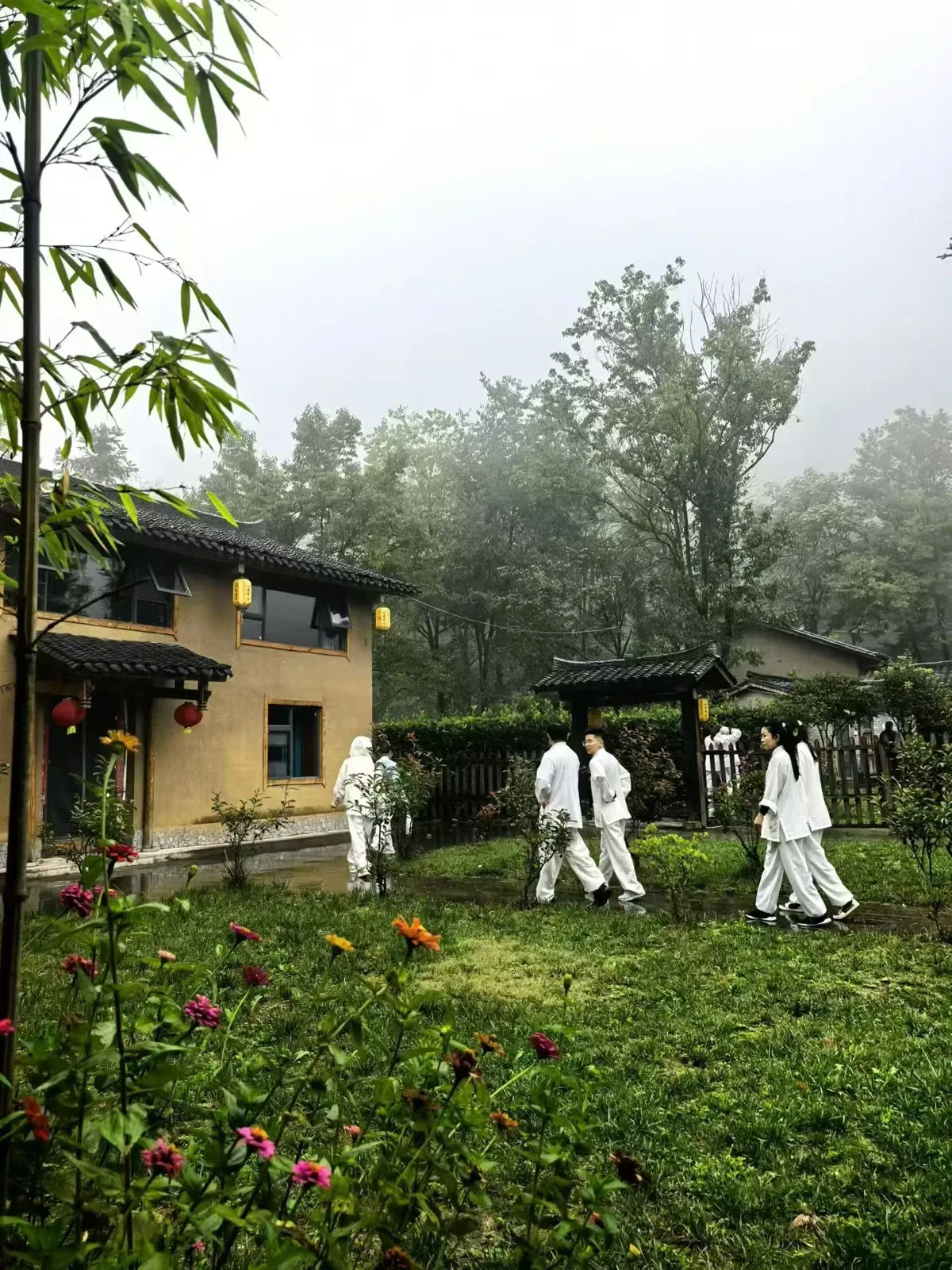
The morning did not so much break as thin out. Cloud sat low over the trees and the lawn was soaked from the night. The class crossed it in their white practice clothes, past an earth-walled house with yellow lanterns under the eaves, past bamboo and a bed of late zinnias still holding their colour in the grey.
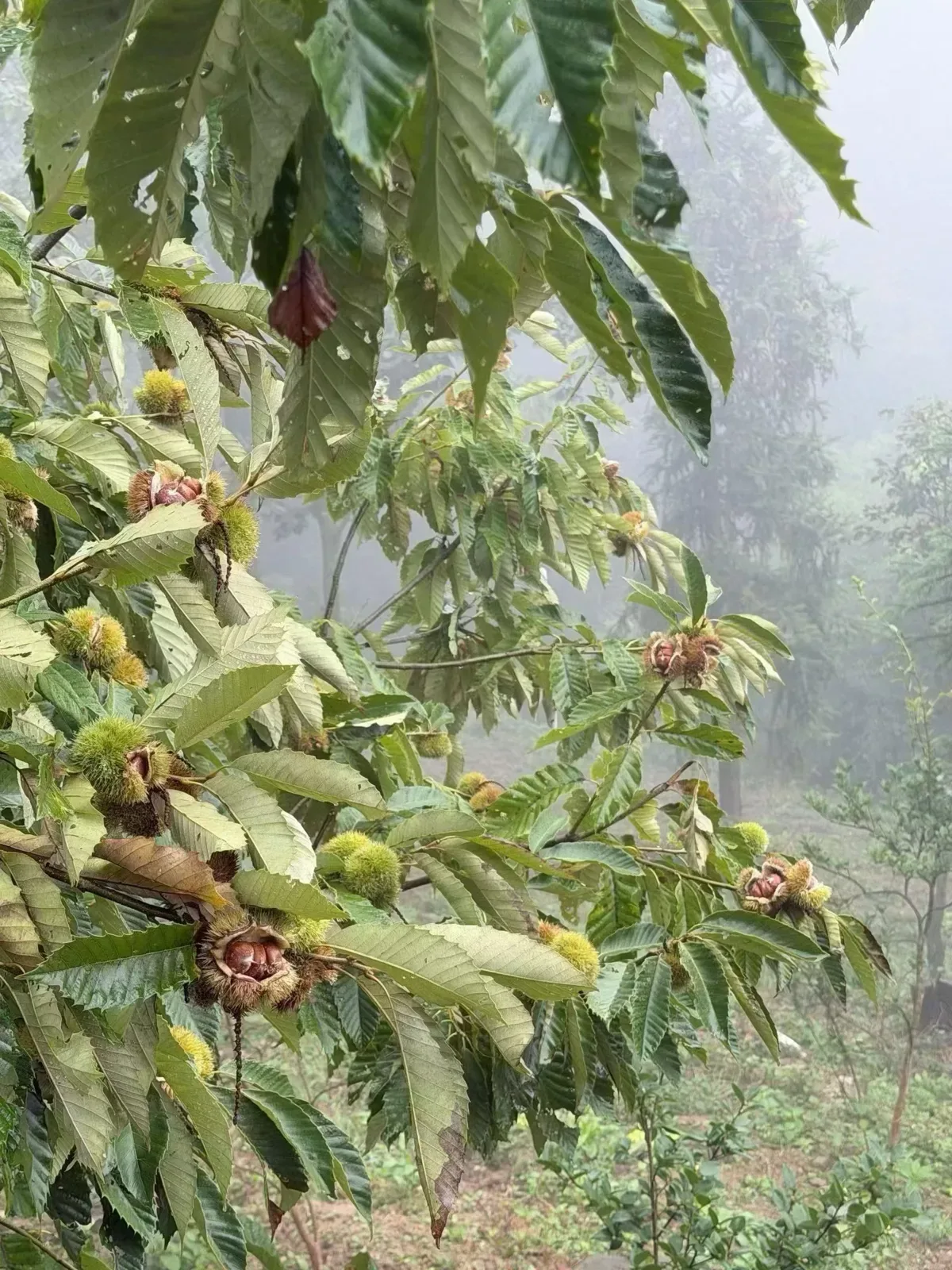
On the hillside, the chestnuts are ripening. The burrs have turned from green to bronze and are splitting open on the branch, showing two or three glossy nuts packed inside. Nobody hurries them. When they are ready they fall.
Waking the body
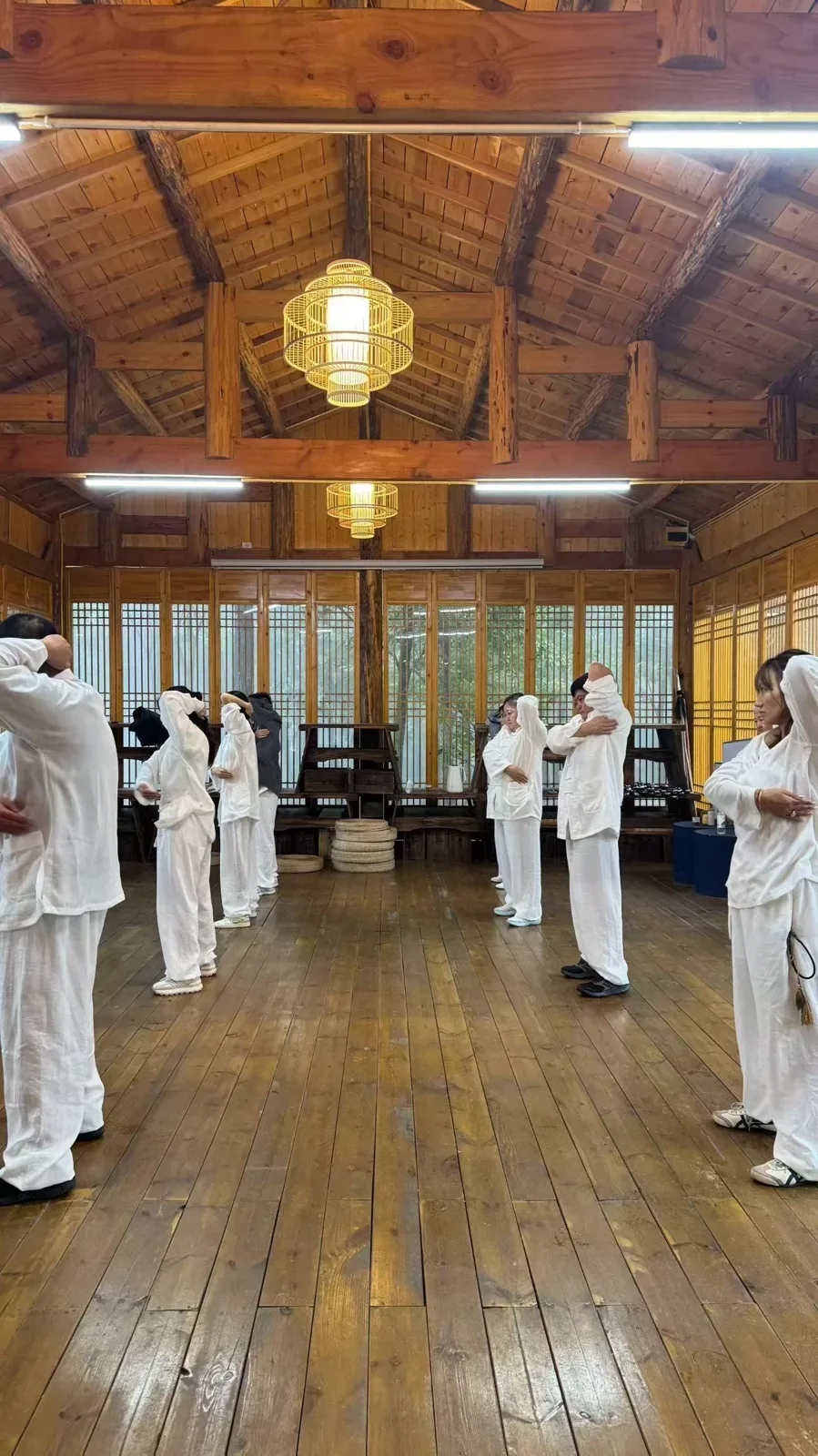
In the timber hall, under round bamboo lanterns, the class stood in two rows facing one another. One arm folded across the chest, the other hand cupping the back of the head, turning slowly to lengthen the side of the neck and open the shoulder. Stretches like these are the unglamorous beginning of every practice here: nothing moves well until the joints have been asked, politely, to wake up.
A line of ink
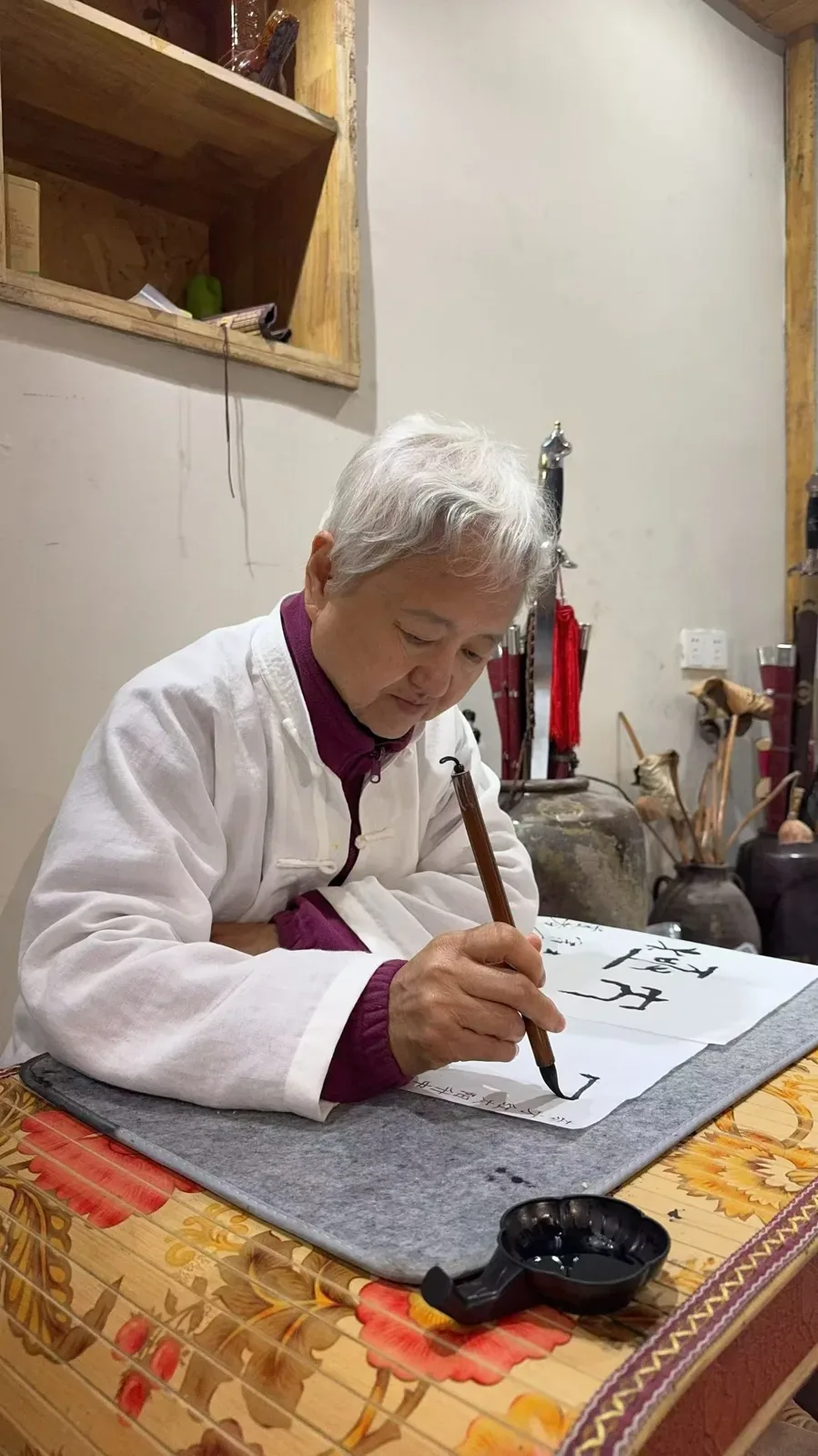
Later came the brushes. At one table an elder with short silver hair wrote with the brush held upright, her wrist lifted off the paper, the strokes coming slowly and without correction. It is a way of writing that cannot be rushed; the ink shows every hesitation.
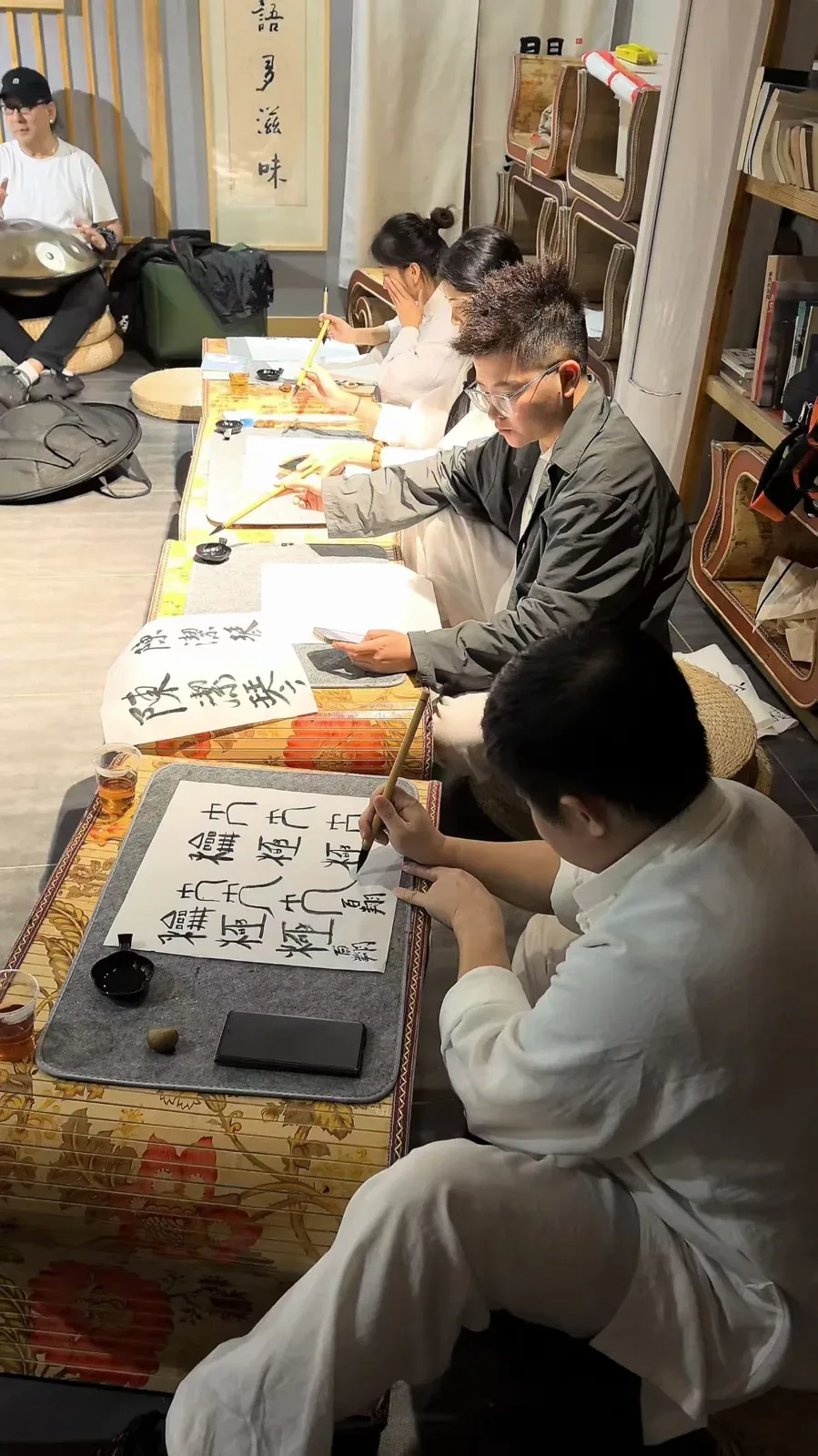
Along the low tables, the students copied characters onto felt-backed paper, glancing at their reference, loading the brush, trying again. Some sheets were tidy, some were brave. Behind them hung a couplet on conduct and speech, a reminder that in this tradition the hand, the character and the person are not treated as separate things.
What the hands know
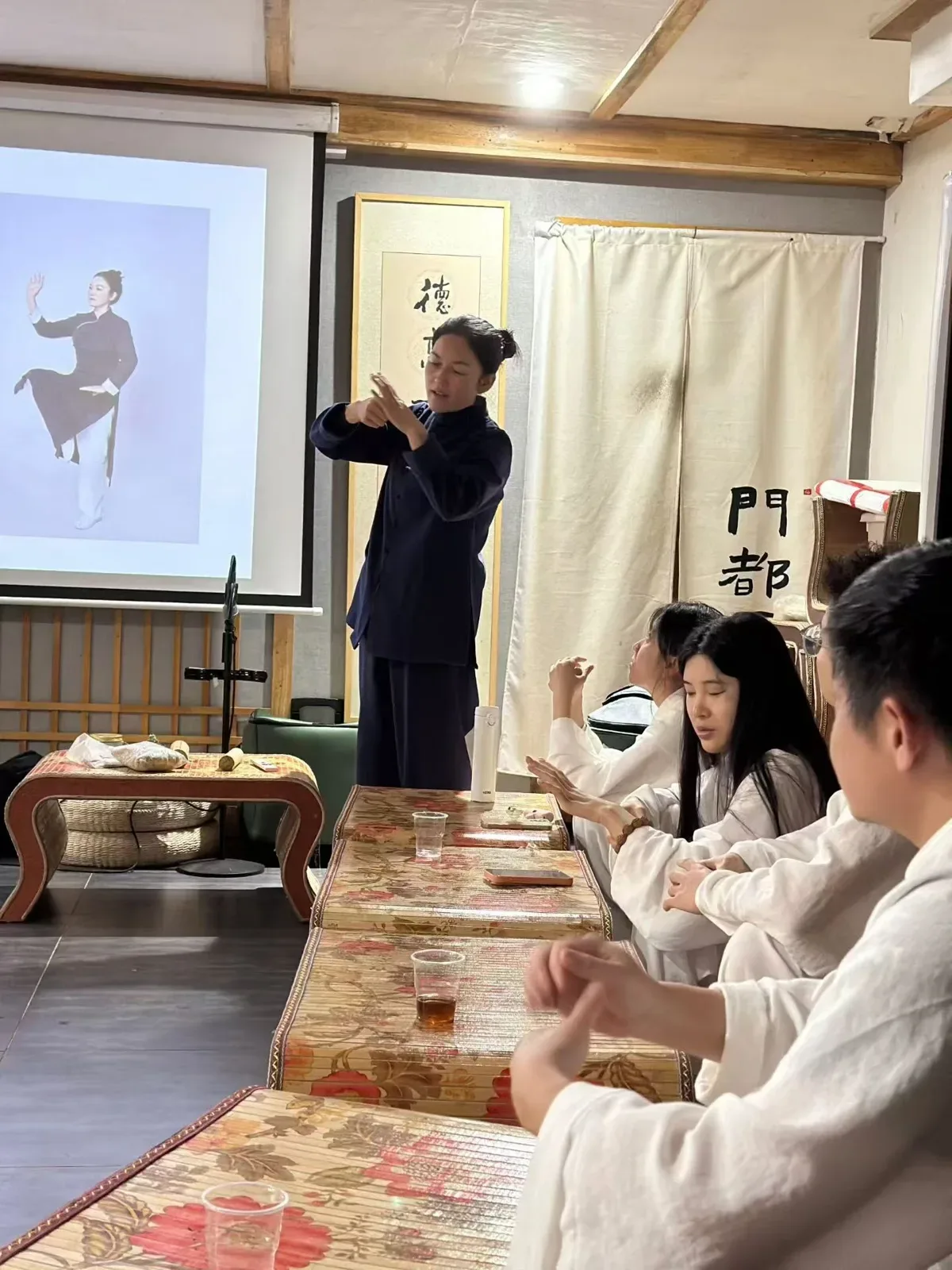
In the afternoon a teacher in dark blue stood before a projected photograph of a Tai Chi posture and showed not the stance but the hand: fingers placed just so, the wrist soft, the shape held without grip. The students followed along from their seats, some watching closely, some with eyes closed, feeling for it instead.
Sound in the room
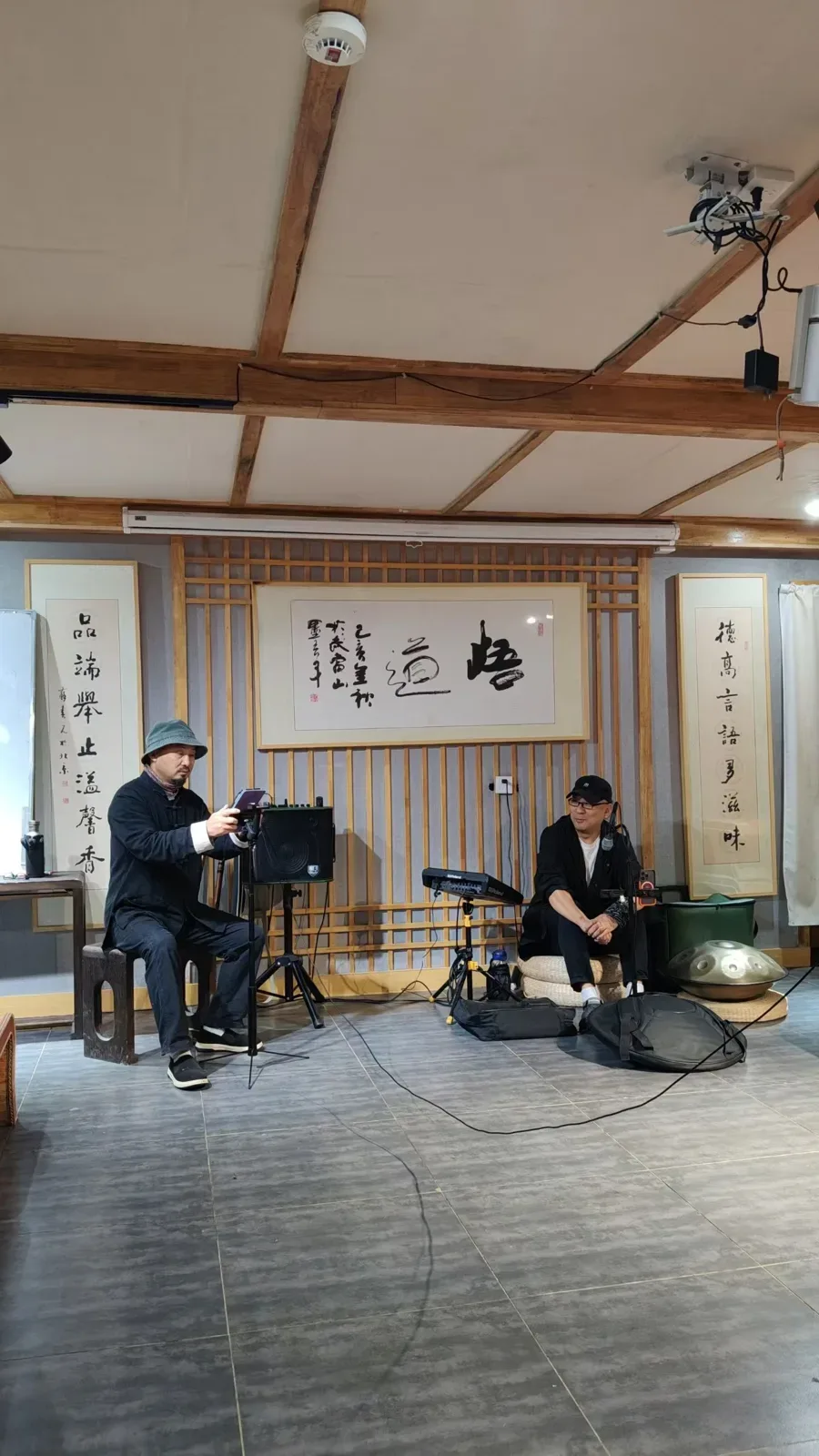
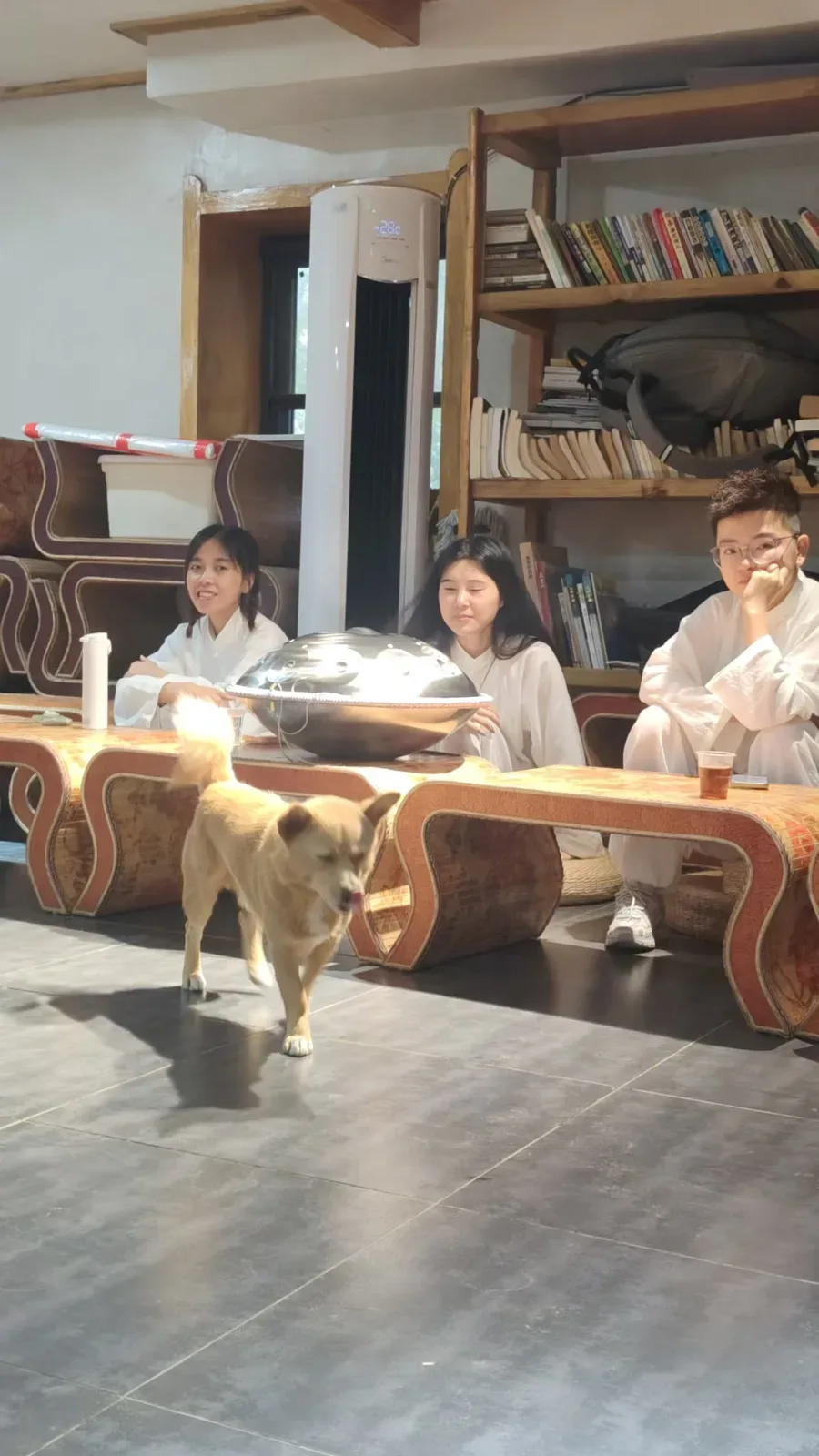
Two musicians set up beneath a large calligraphy of 悟道, awakening to the Dao, with a keyboard, a small speaker and a handpan, the round steel drum whose notes hang in the air long after they are struck. They played the way good accompanists do, leaving space. The class sat and listened. The dog, awake now, wandered past the silver drum on some business of its own.
An ordinary day
Nothing on this day was remarkable. That is rather why it is worth recording. Away from traffic and screens, the mountain offers very plain things: weather, food, movement, a brush, a sound, and time enough to notice them. Great harmony, it turns out, is not something added to a day. It is what is left when the noise is taken away. The dog knew that already.
About this entry
- Place
- Wudang Mountain