Photo Note
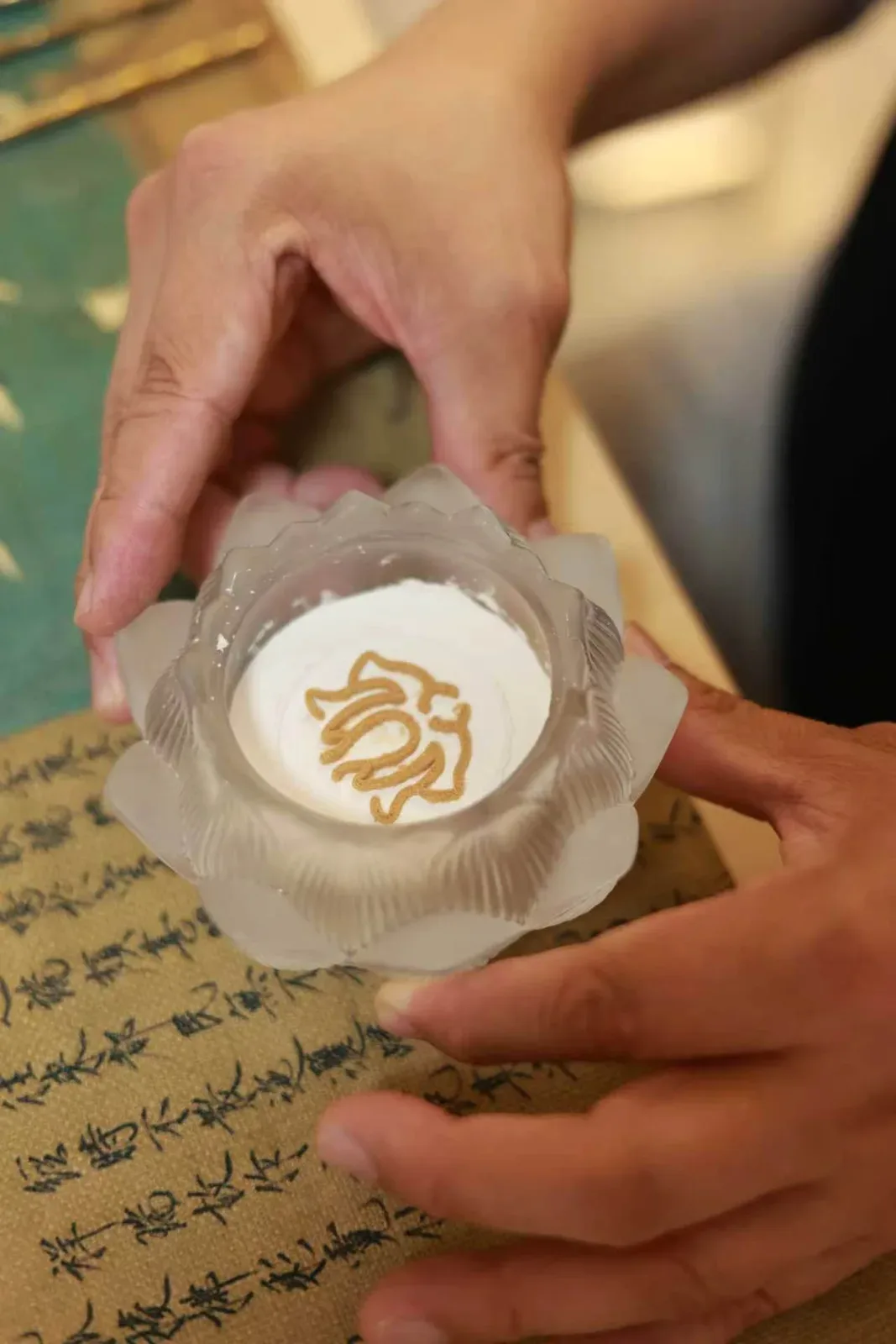
An Incense Seal on the Third Day · 20 September 2026进修营第三天,打一枚香篆 · 2026年9月20日
On the third day of a Tai Chi camp, between sessions, participants sat down to make incense seals: levelling ash, filling a brass mould, and lifting it without a tremor.
By the third day of a Tai Chi camp, the body has begun to argue back. The legs remember the low stances, the shoulders have given up some of their stubbornness, and the mind, which spent the first morning checking the phone between forms, has started to go quiet on its own. It is a good day to sit down and do something small with the hands.
So between sessions, the tables were set for 打香篆: making an incense seal. No incense was lit for most of the hour. That was rather the point.
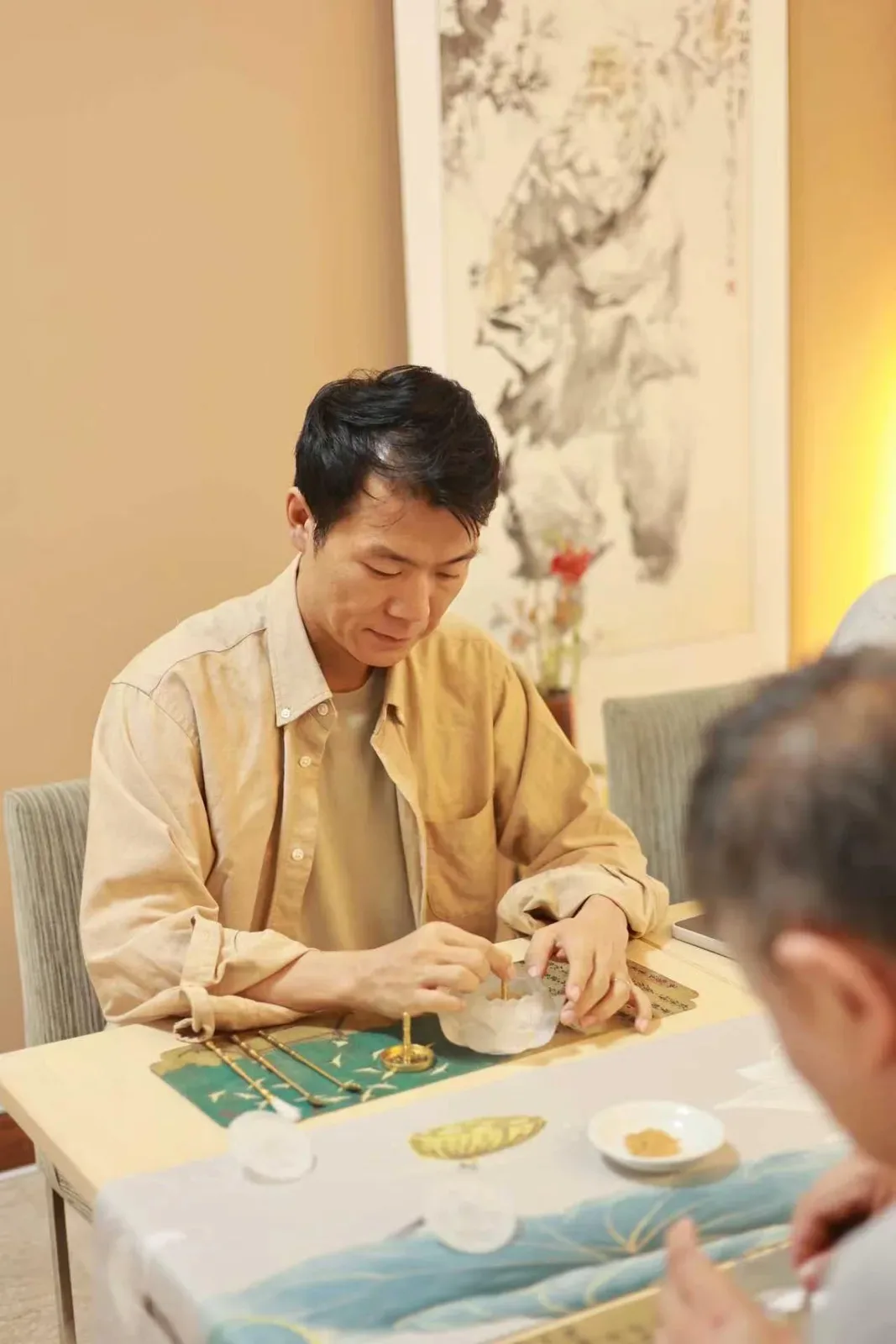
A table set for patience
Each place was laid the same way. A frosted-glass censer shaped like an opening lotus, half filled with fine white ash. A row of slender brass tools on a teal cloth printed with flying cranes: a small spade, a flat press, a soft brush. A brass mould, its lid cut through with a looping pattern. A little dish of golden powdered incense. Under it all, a runner printed with lines of old running script, the kind of calligraphy that looks hurried until you try to write it.
Behind the tables hung an ink painting of an old sage among rocks and trees. Nobody mentioned him. He simply presided.
Level the ash
The work begins with the ash, and most of the skill is in the ash. It has to be loosened, then settled, then pressed flat with the brass press until the surface is smooth and even from rim to rim. Press too hard and it cracks; too lightly and the pattern will sink. The press is round and heavy for its size, and it wants to be used slowly, with the other hand steadying the censer.
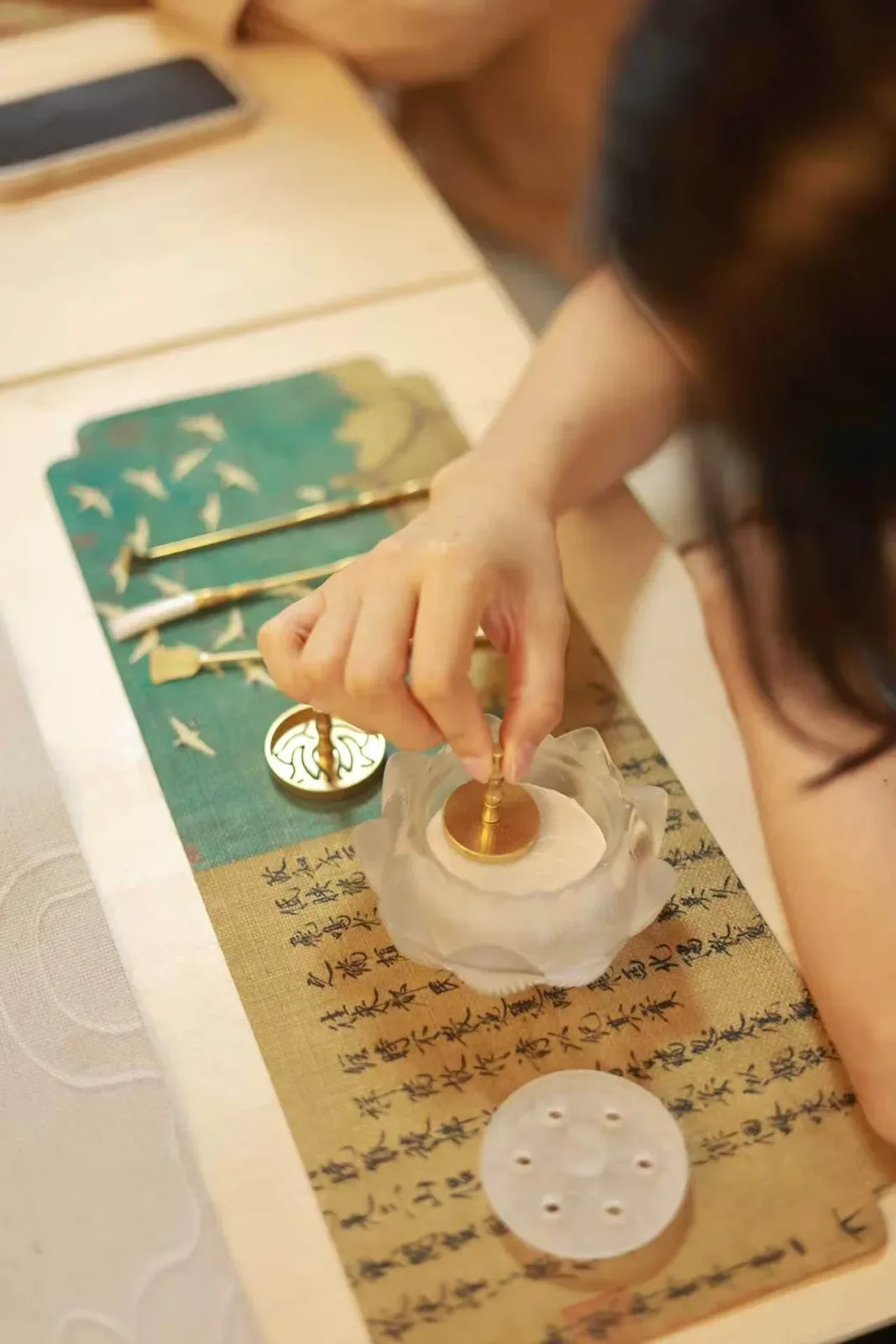
It is surprising how much this resembles the first lesson of Tai Chi. Nothing that comes later works unless the ground is level. A crooked stance ruins a graceful arm; uneven ash ruins a beautiful pattern. Both teach the same thing without saying it: prepare the base, and prepare it more carefully than seems necessary.
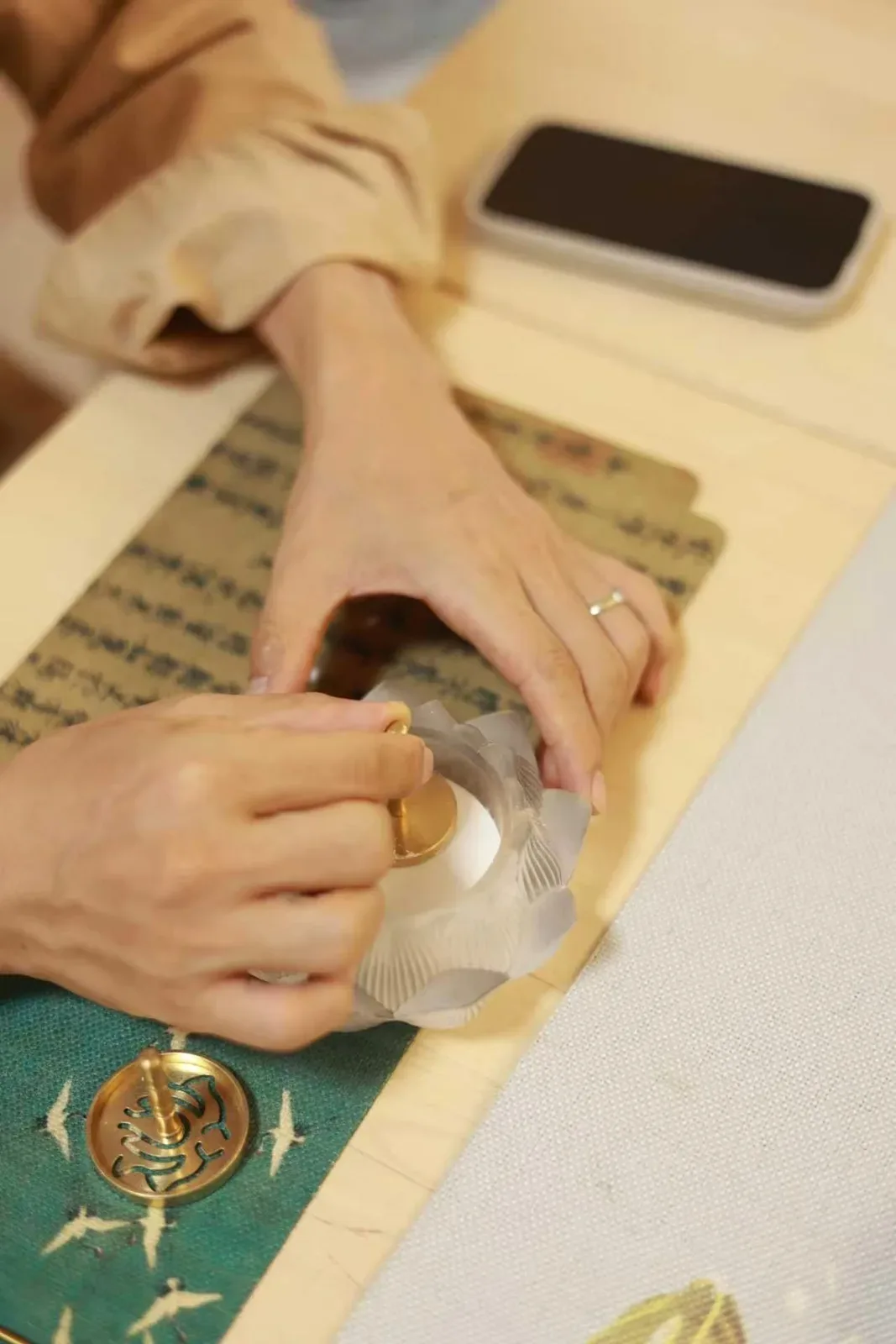
Fill, then lift
Then the mould is laid on the ash and the channels of its pattern are filled with incense powder, spooned in and brushed level with the top so no grain spills outside the lines. A few gentle taps on the mould's edge help the powder settle. Then comes the moment everyone waits for: lifting the mould straight up, without a tremor.
If the hands are steady, what remains is a continuous golden line lying on the white ash, curling back on itself like a character written in a single breath. If the hands waver, the line breaks, and a broken line will not burn through. Around the tables there were small, private sighs of relief, and one or two quiet starts again.
An old way of keeping time
Incense seals, 香篆, go back more than a thousand years in China. Because a pressed line of incense burns at a steady pace from one end to the other, they were used in the Song dynasty to mark the hours through the night: a clock made of scent and ash. Burning incense was also counted among the four quiet pleasures of the Song scholar's life, alongside whisking tea, hanging a painting and arranging flowers.
The pleasure was never only in the fragrance. It was in the doing: the ash, the press, the patient filling of each channel. It is a small practice of attention with a visible result, and the result forgives nothing. You cannot fake a steady hand.
Keeping the moment
When the seals were done, the phones came out, as they always do now. Nobody seemed to mind. A photograph of a thing you made slowly is a different kind of photograph. Then the seals were lit, one end glowing, and the thin line of smoke began its slow walk along the pattern.
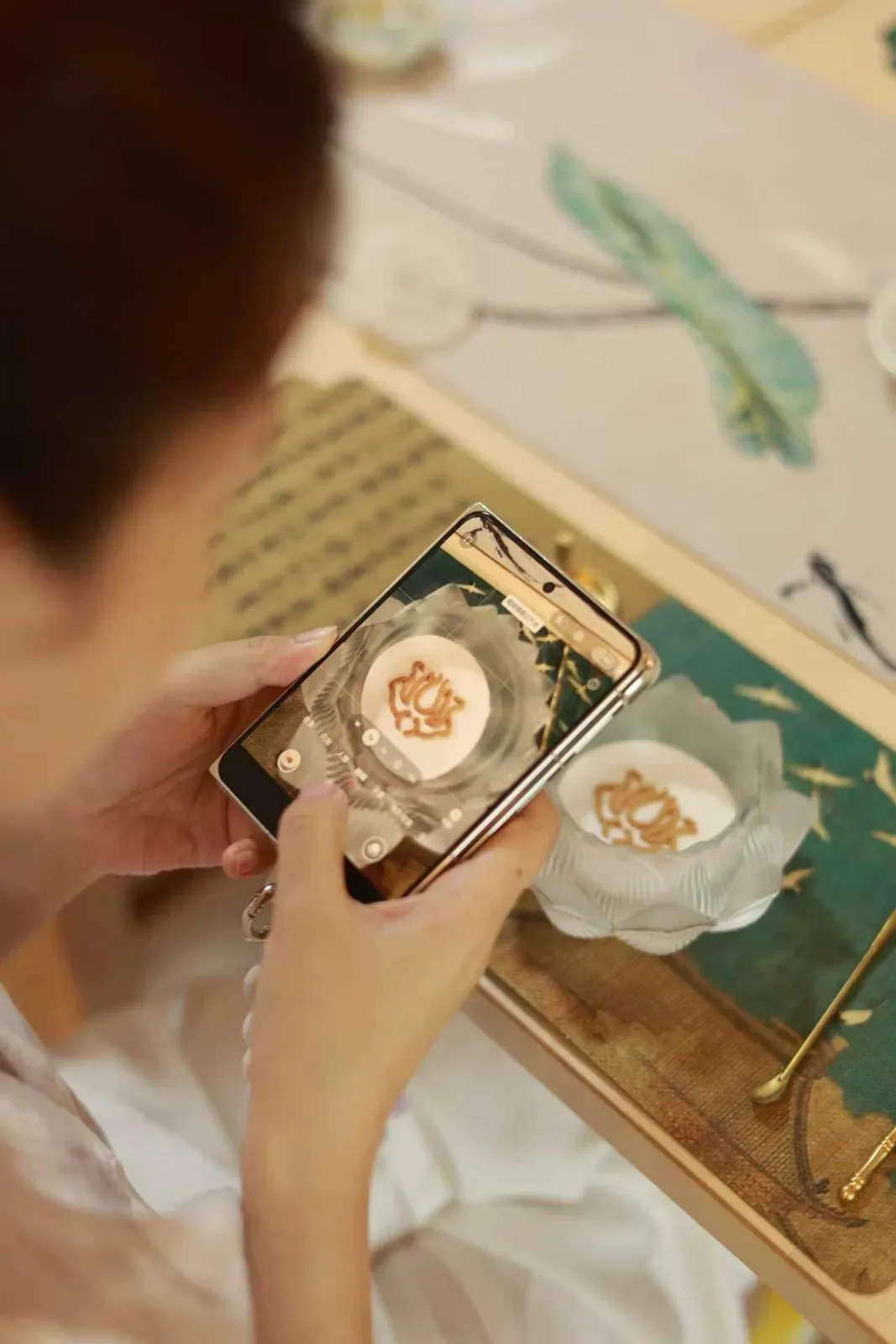
Tai Chi is often described as meditation in motion. Making an incense seal is its mirror: motion so small and careful that it becomes meditation. On the third day of camp, with legs tired and minds settling, it was exactly the right lesson, taught not by a teacher but by a line of powder that only holds its shape if you do.
For another hands-on afternoon with fragrance, see Making Incense Pendants. More from Everyday Wudang and Literati Arts.