Photo Note
Tea at the Hour of Shen · 22 September 2026申时一盏茶 · 2026年9月22日
Have you not seen the clouds of Wudang? Beneath them, at the shen hour, a qin woke, the leaves were named, and a cup of dark tea made the world grow wide.
Have you not seen the clouds of Wudang, pouring over the seventy-two peaks like a river that has forgotten which way is down? The immortals of old rode them. The rest of us, on 22 September, sat beneath them and poured tea.
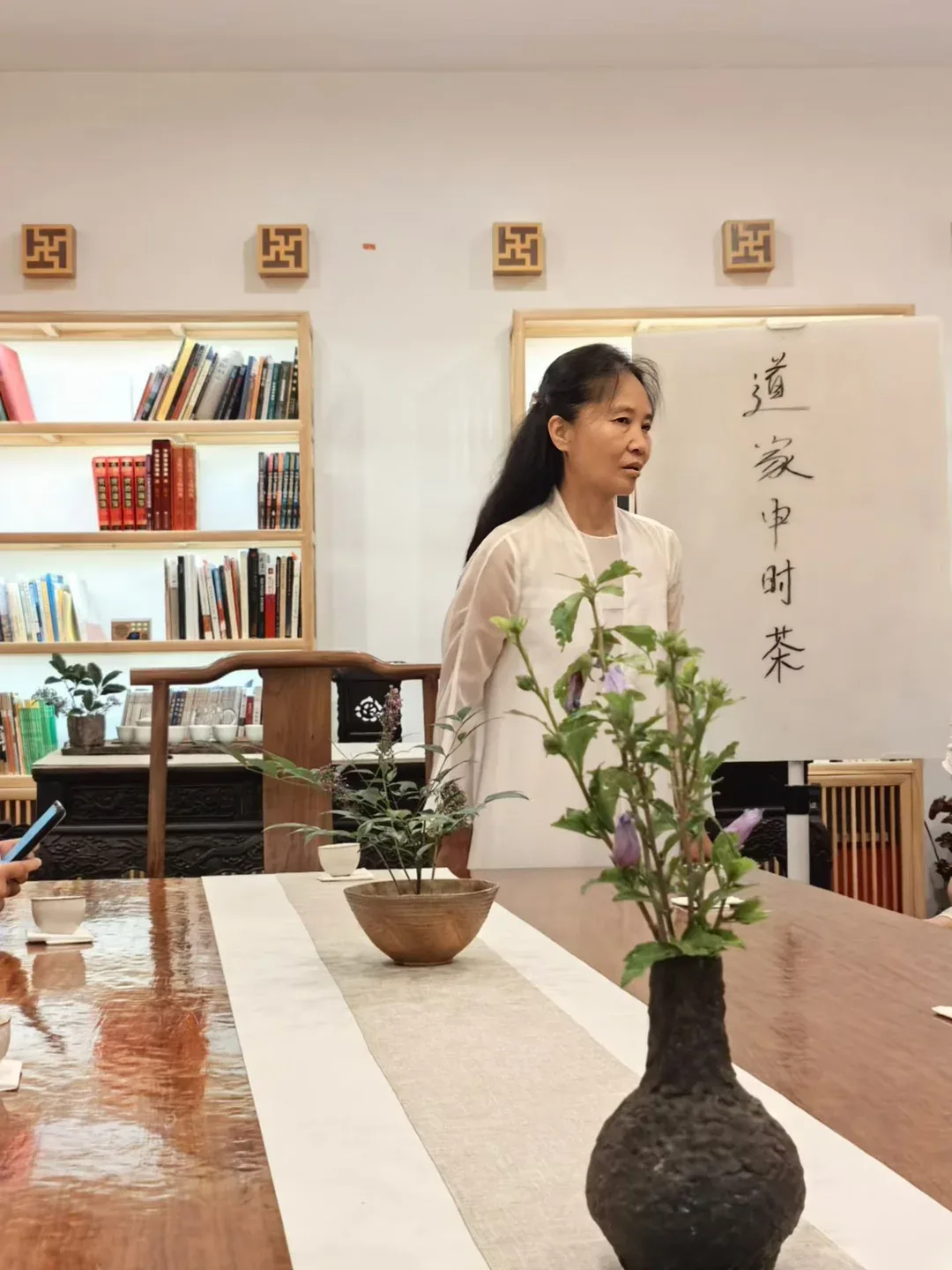
Wine was my old companion, a poet of the Tang might say, raising an empty hand to the sky — but today, let it be tea. It was the hour of 申, shen, three to five in the afternoon, when the sun has spent its fire and begins its long descent to the western hills. The brush had written it plainly on the board: 道家申时茶. Daoist tea at the shen hour. Five characters, and the whole afternoon folded inside them.
A qin in the hall, leaves on the table
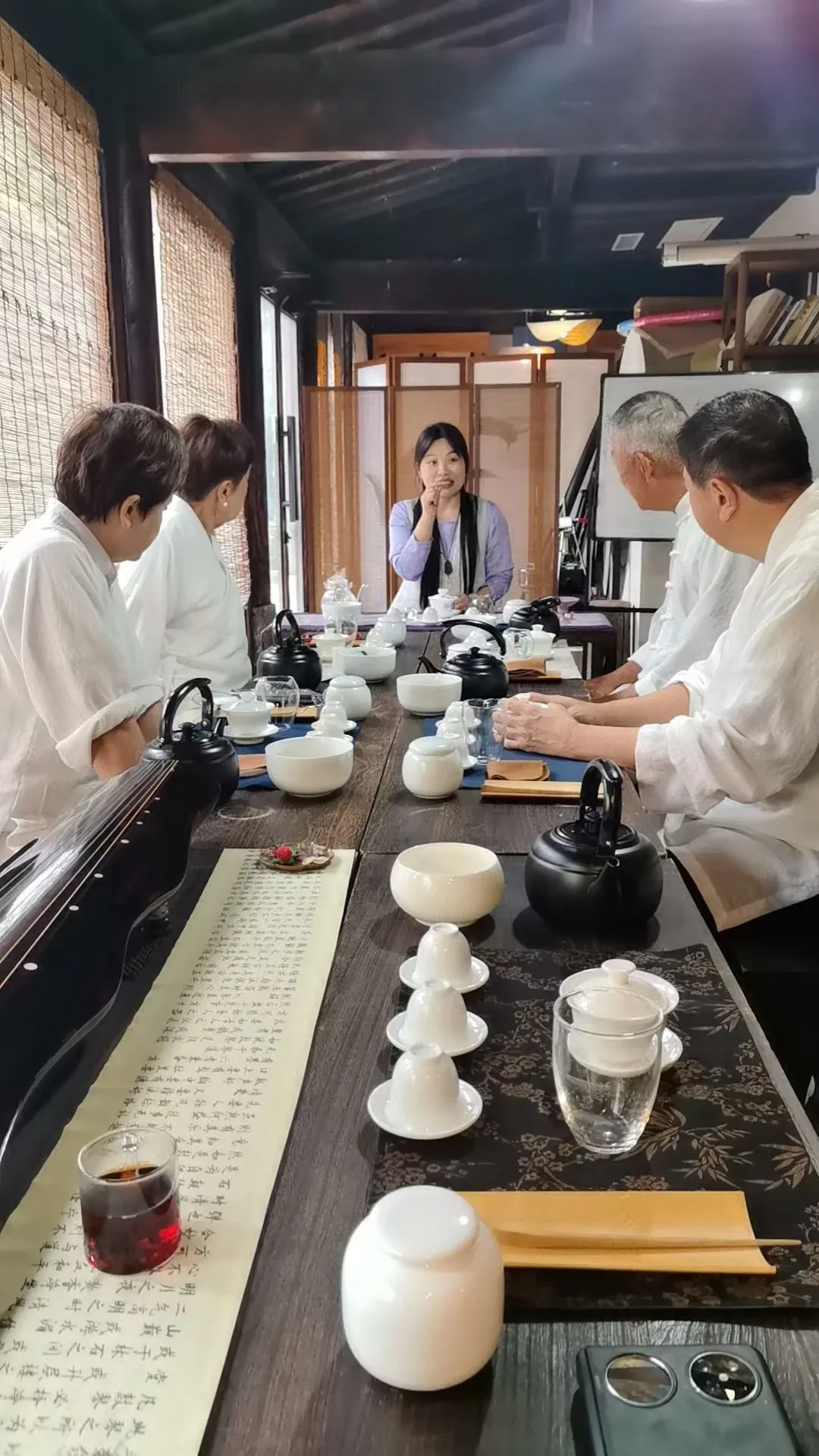
First, the leaves. In a timber hall with beams gone dark as old ink and bamboo blinds drawn half down against the glare, a long table waited, set with white gaiwans like fallen clouds and black kettles squat as mountain boulders. The teacher stood among small cards bearing the names of teas — white tea, yellow tea — and told each one's story: how it is plucked, how long it withers, whether the hand rolls it or leaves it be, and how all of this becomes colour and fragrance in a cup.
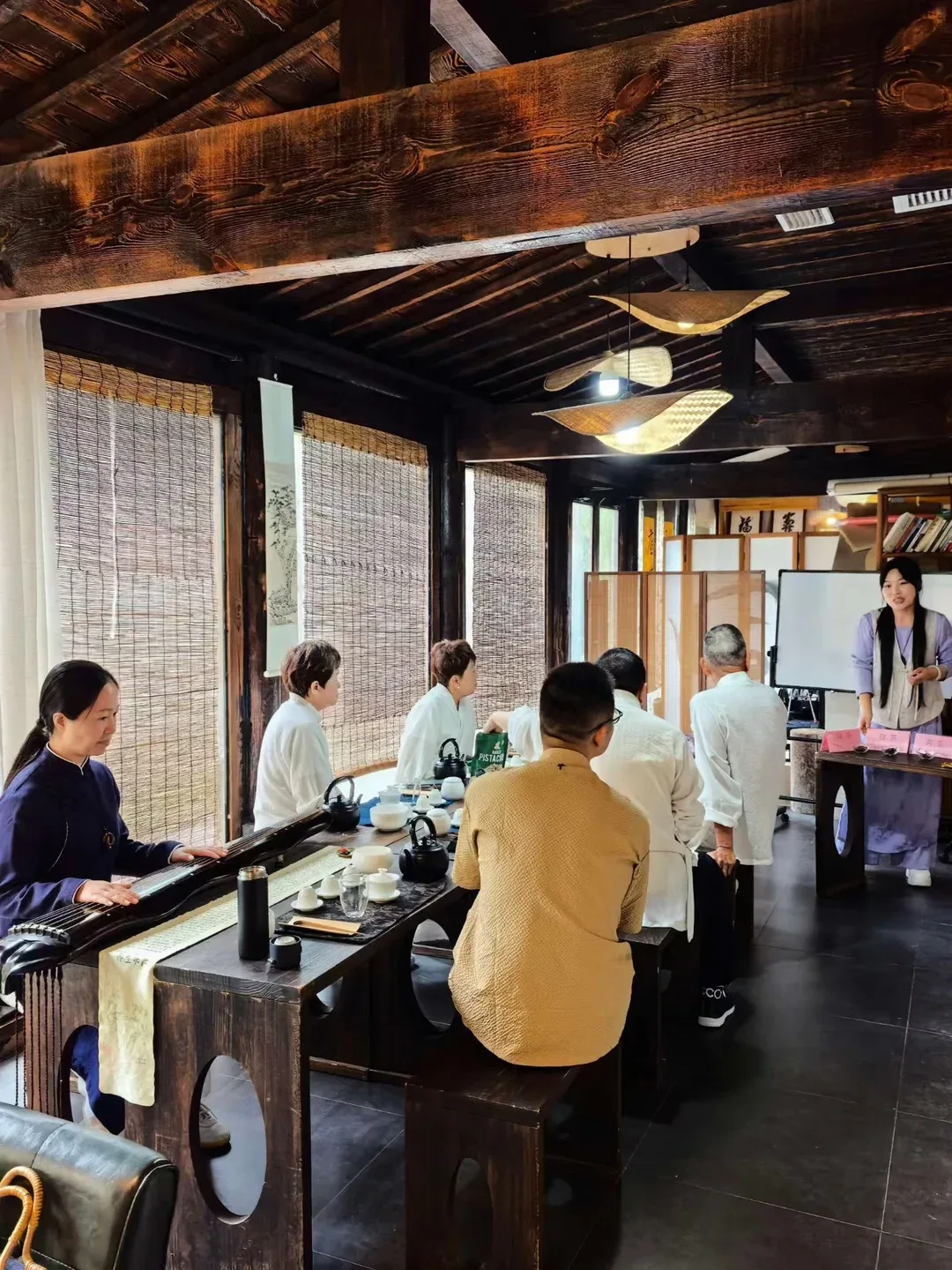
At the table's far end a woman sat at the guqin, and her fingers woke the seven strings. The qin and tea are old friends — both belong to the scholar's quiet room, both are spoiled by haste. The sound drifted out through the blinds and did not ask to be listened to. It simply went, as water goes.
And lest anyone take it all too gravely, a bag of pistachios sat among the kettles. The immortals, too, must have had their snacks.
Ask the hour why it is the hour
Then to a bright room of pale walls and golden shelves, where the teacher in a flowing white robe stood beside the brushed words like someone who had stepped out of a painting. Why this hour? she asked, and answered. The old body-clock teaching gives the shen hour to the bladder channel, the body's great waterway; its counsel is gentle — take something warm, move softly, do not force. A cup of tea, taken slowly, keeps that counsel without trying.
But there is a simpler truth beneath it. By afternoon the heart has galloped all day on the morning's momentum, like a horse that no one remembered to rein in. Here is where you rein it in. Here is where you sit down.
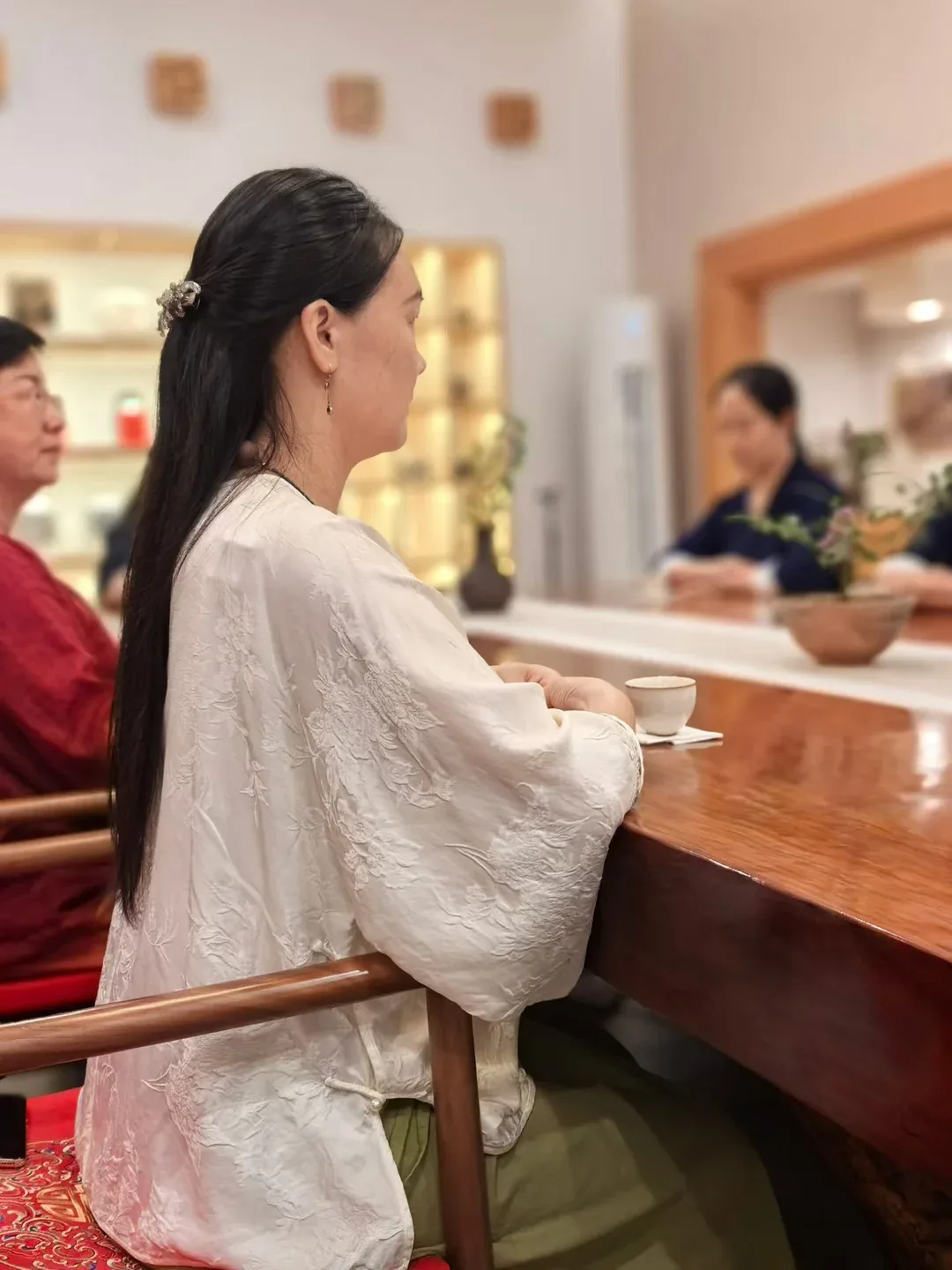
So they sat. The table shone like still water; the linen runner lay across it like a mountain path; branches of hibiscus and wild purple sprays leaned out of rough earthen vases as if they had wandered in from the slopes. No one hurried the pour. Mountains do not hurry, and neither, for an hour, did we.
One cup, and the world grows wide
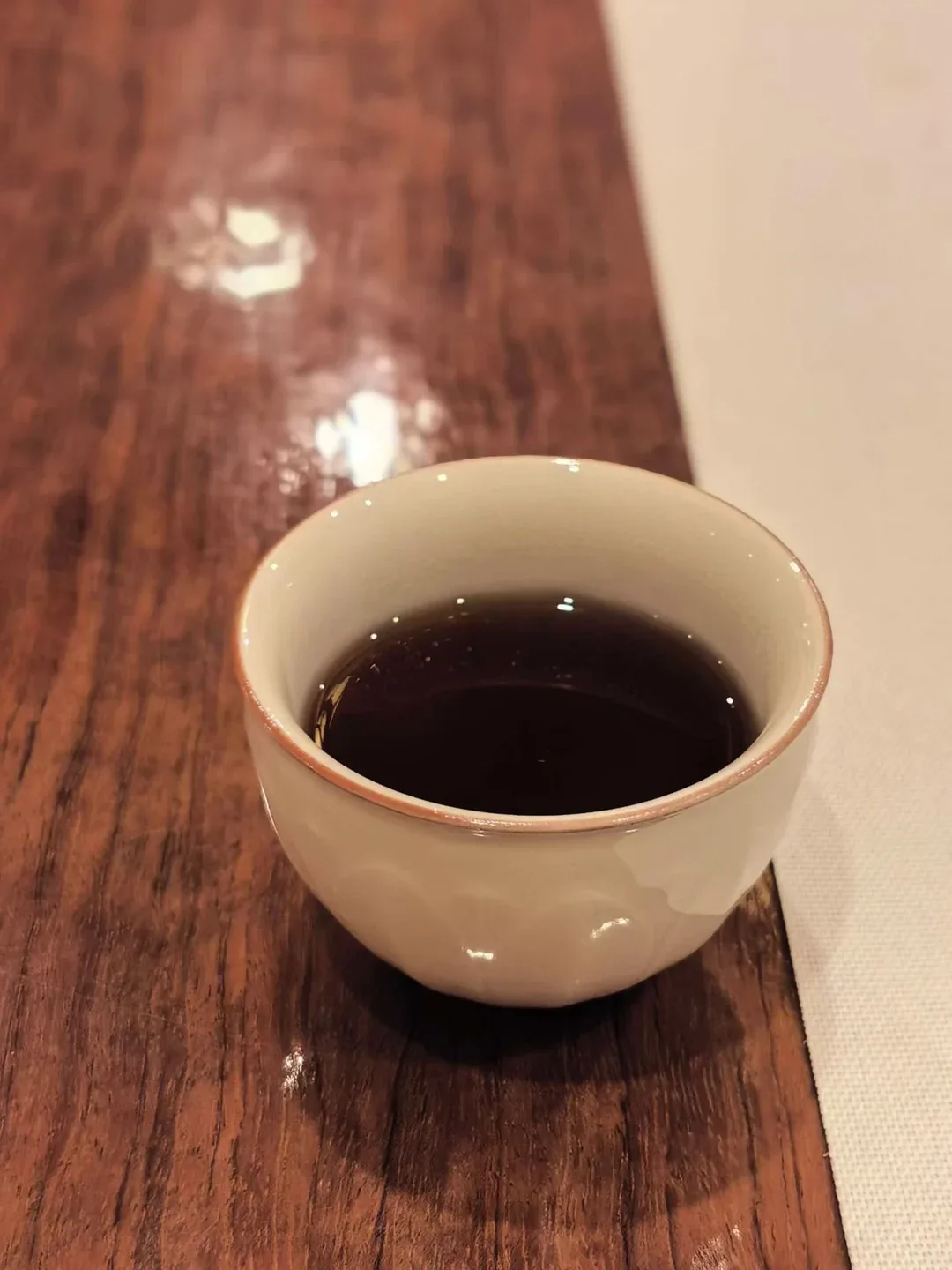
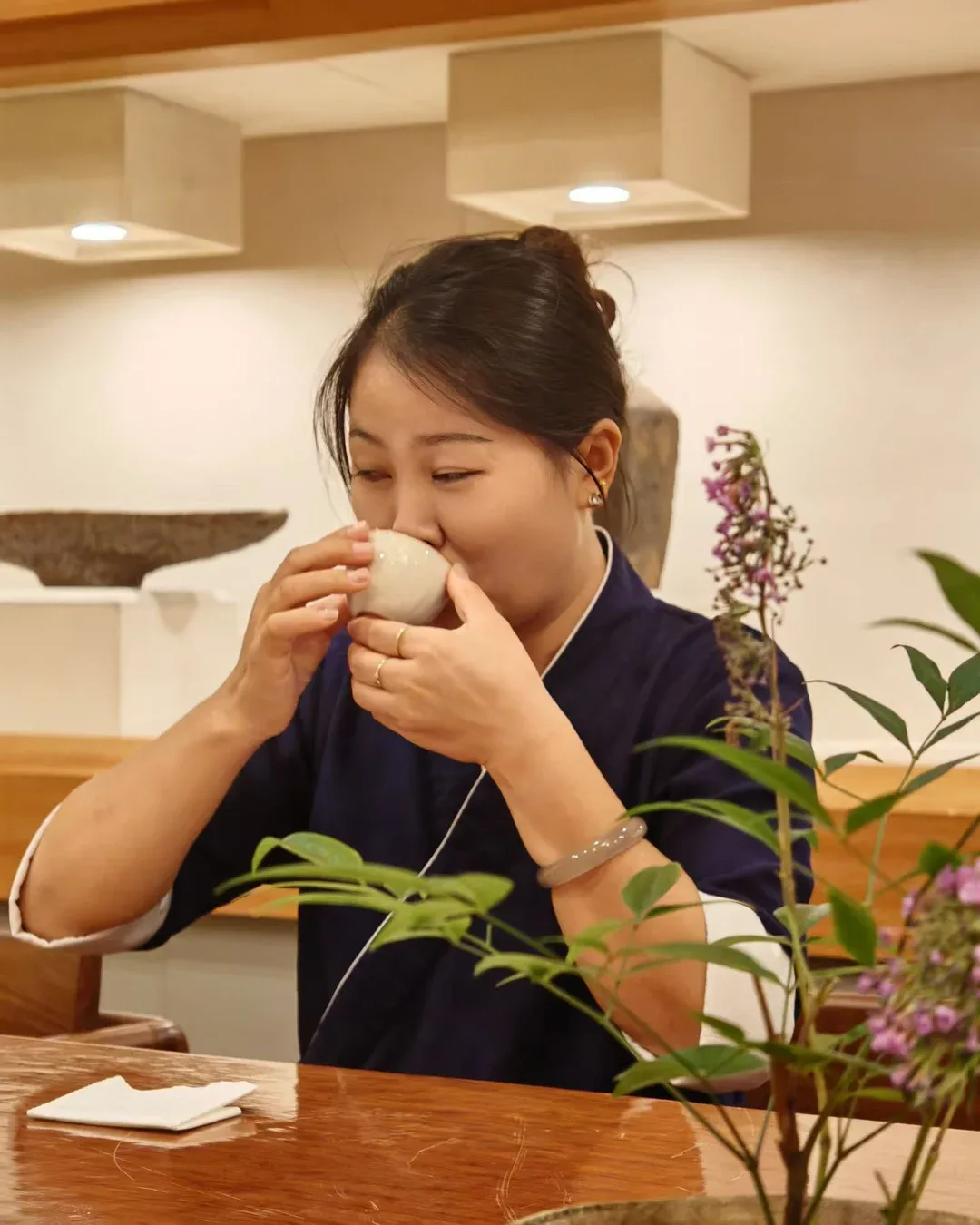
The tea came dark, red-brown as autumn earth, glowing in small cream-glazed cups. Hold it in both hands, the teacher said. Breathe it first. Then a small sip — keep it a moment before you let it go. Eyes closed along the table, one after another, as though each drinker had stepped alone into a cloud. In one mouthful: heat, weight, a flavour that turns after the swallow, and a sweetness that returns in the throat like a friend calling back from the next ridge.
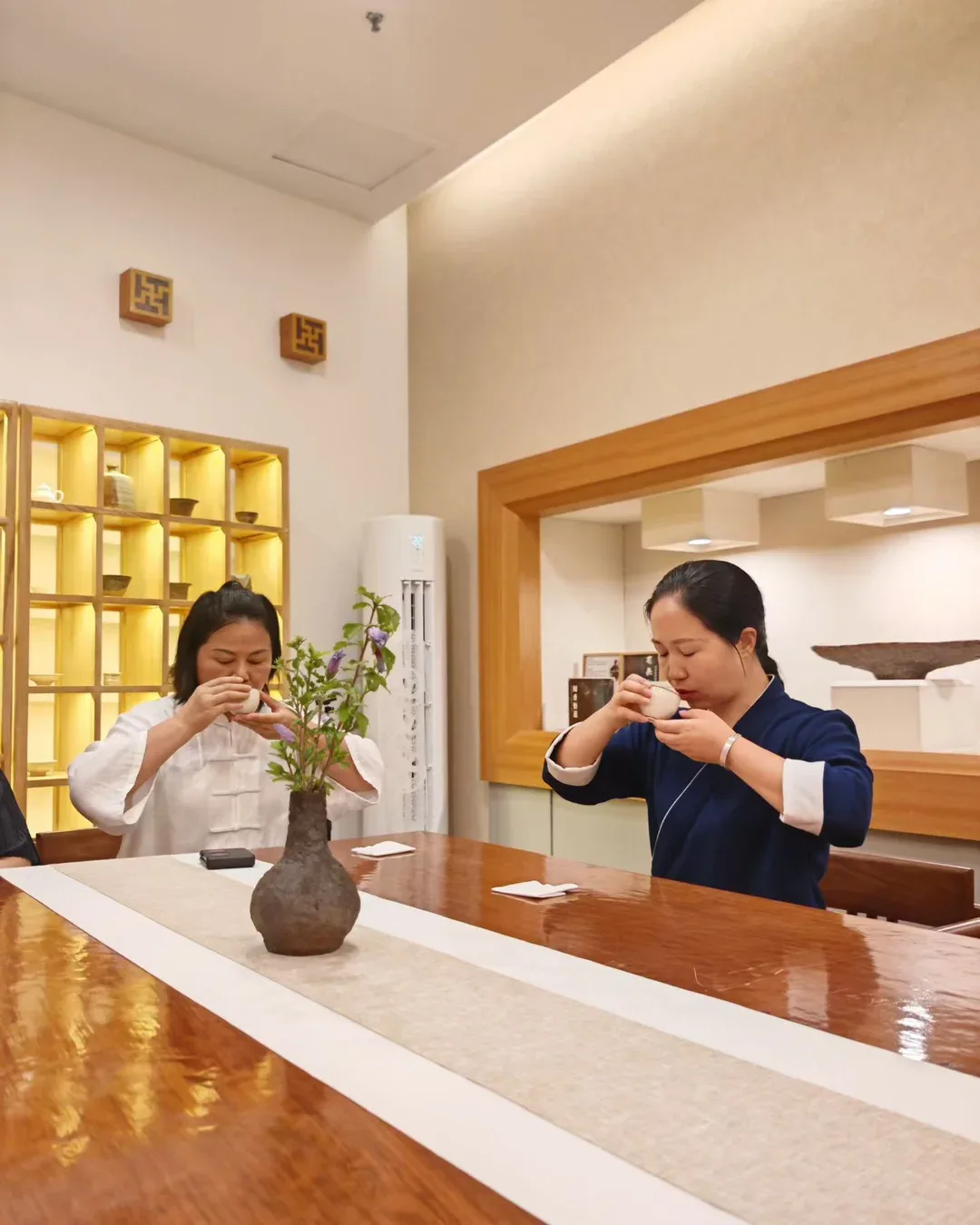
Li Bai once wrote of a tea that grew from mountain rock beside a spring that never stopped flowing. He meant the leaf; he might as well have meant the drinker. Daoists speak of 收心 — gathering in the heart-mind that has scattered to the four directions. A lesson on leaves, a qin in the corner, a warm cup against the lips: small doors, all of them opening onto the same wide sky. No creed is asked of you at the door. Only that you sit.
When the cups are set down
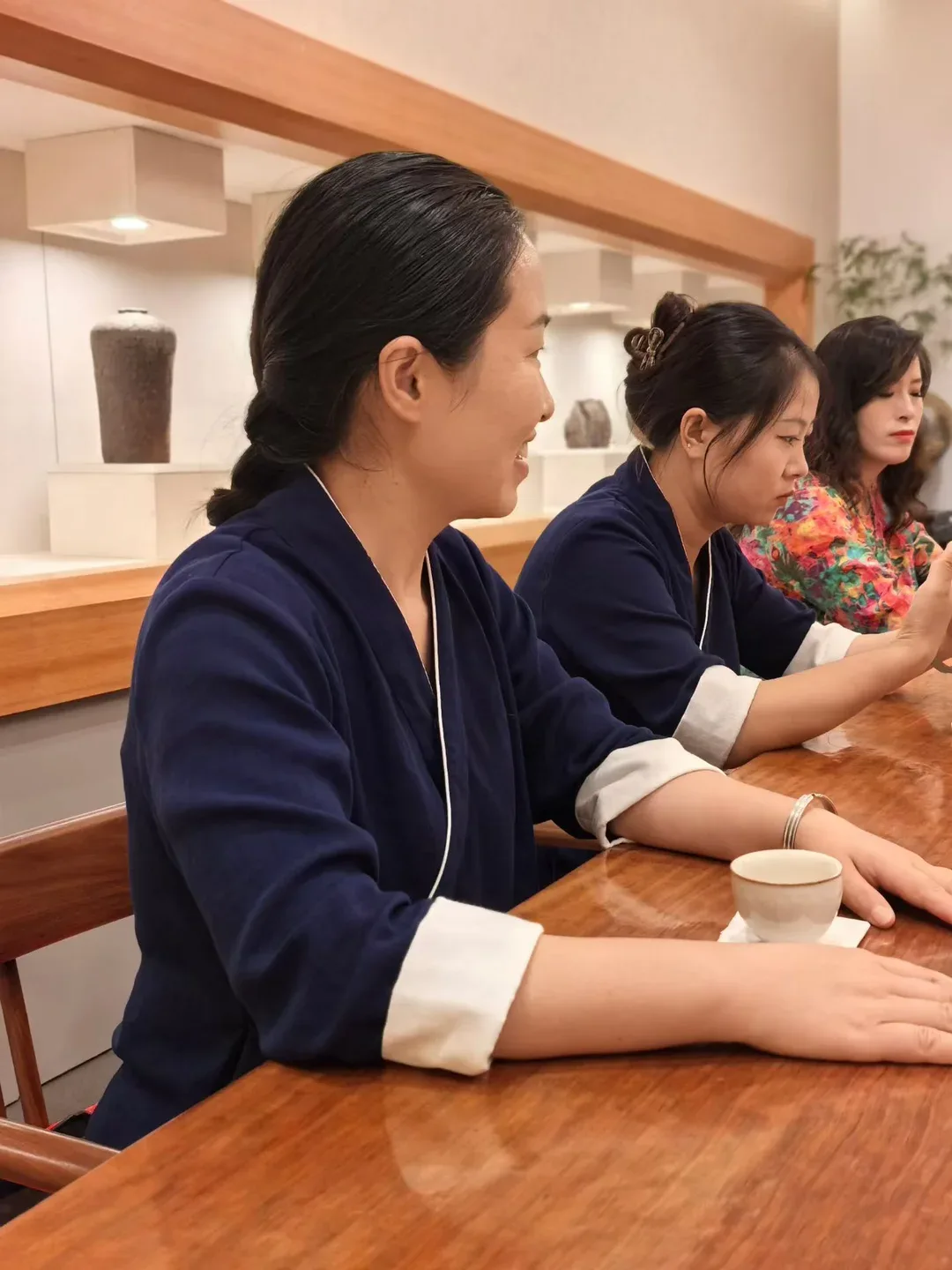
And afterwards — laughter! Cups returned to their paper coasters, and the long table came alive with talk, hands tracing shapes in the air. Stillness is not silence. People who have been quiet together find their words come easily after, the way a stream runs faster below a still pool.
Drink one cup, set down what you are clutching, gather your spirit home — and in the time it takes to empty it, meet the self that never lacked a thing. A great promise for so small a cup! Yet on an ordinary Monday at Wudang, with the sun sliding toward the western hills and the clouds keeping watch, it did not seem too much to ask.
About this entry
- Place
- Wudang Mountain