WU WEI & NATURAL LIVING · 无为与自然生活

Skill Entering the Tao: Cook Ding’s Blade and Effortless Focus 技进乎道:从庖丁解牛看日常工作与专注

Why Cook Ding’s knife stayed sharp for nineteen years—and how finding the natural spaces between obstacles prevents burnout in work and practice.

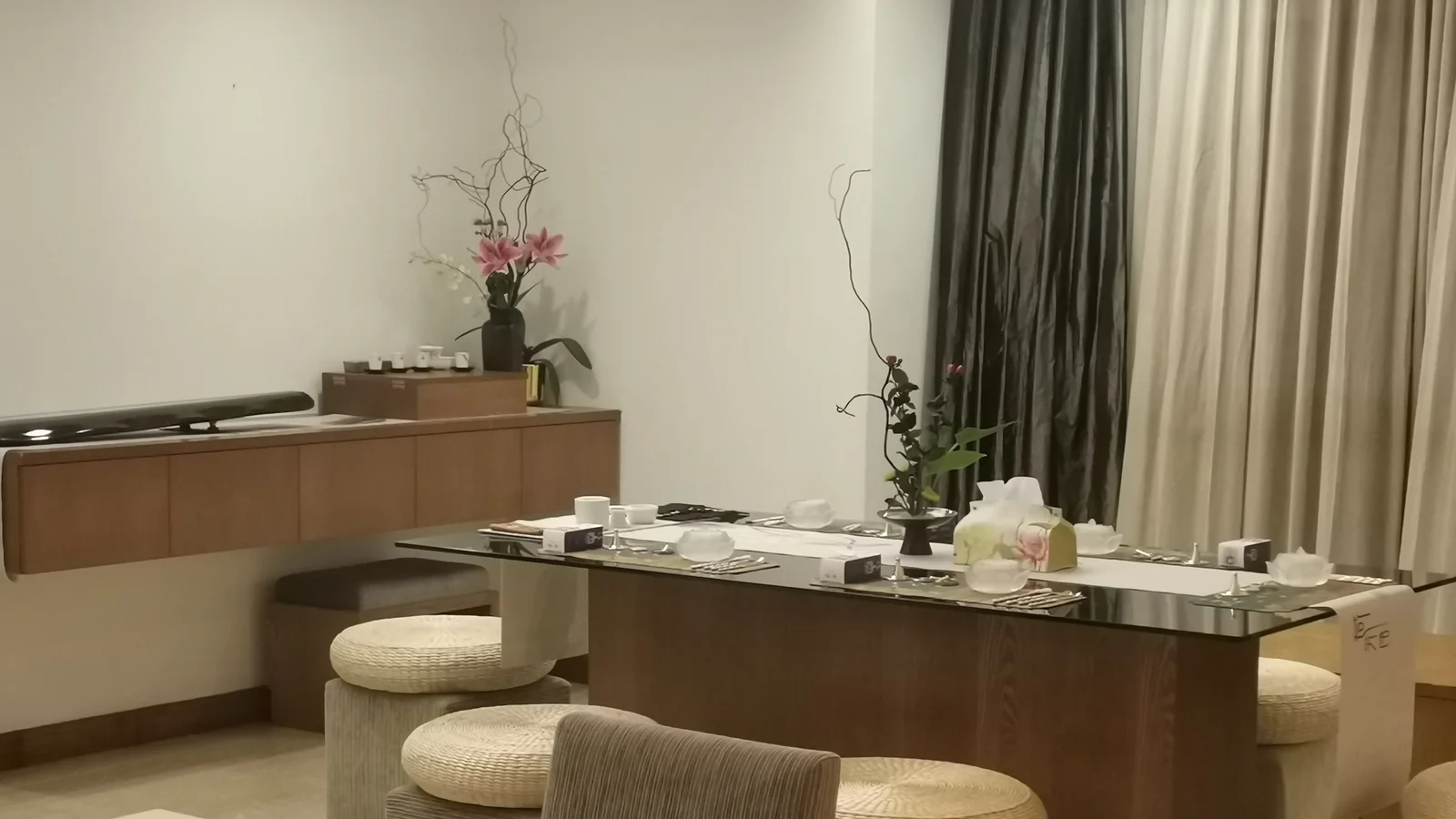
A quiet Taoist study room: a black guqin on a low wooden console beside a pink lily arrangement and tea set, and a dark-glass study table set with white lotus-shaped cups, an incense holder and a floral branch, with straw cushions and a grey curtain.

In Chapter 3 of the Zhuangzi—titled Nourishing the Lord of Life (养生主, Yangshengzhu)—Cook Ding carves an ox for Lord Wenhui with such rhythmic grace that every movement sounds like a classical dance. When Lord Wenhui marvels that technical skill could reach such heights, Cook Ding replies: “What your servant loves is the Tao, which goes beyond mere technique” (臣之所好者道也,进乎技矣).

1. The Three Stages of Learning Any Craft or Practice

Cook Ding describes his own training across three honest stages that apply to everything from Taijiquan and calligraphy to modern professional work:

  1. Seeing Only the Whole Obstacle (所见无非全牛): When he began, all he saw was a massive, solid ox—just as a beginner facing a complex project or martial form sees an overwhelming block of tasks.
  2. Seeing the Internal Structure (未尝见全牛): After three years of patient study, he no longer saw a monolithic mass; he saw the joints, seams, tendons, and natural pathways inside the structure.
  3. Meeting With the Spirit Rather Than Forcing With the Eyes (以神遇而不以目视): In maturity, his senses know when to rest while his Whole-Body awareness follows the natural grain (依乎天理).

2. Why His Blade Stayed Sharp for Nineteen Years

Cook Ding points out a telling contrast: an ordinary cook hacks directly through bone and must replace his knife every month; a good cook cuts through sinew and replaces his knife every year; Cook Ding’s blade has carved thousands of oxen over nineteen years and is still as sharp as if freshly honed from the whetstone.

His secret is simple: “The joints have spaces inside them, and the edge of the blade has no thickness; when you insert what has no thickness into where there is space, there is more than enough room for the blade to move” (彼节者有间,而刀刃者无厚;以无厚入有间,恢恢乎其于游刃必有余地矣).

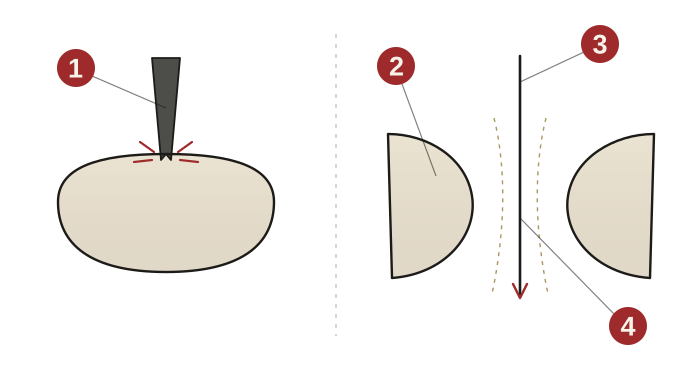
Diagram contrasting a thick blade chipping against solid bone with Cook Ding’s thin blade gliding cleanly through the natural space between joints

Cook Ding’s secret for preserving vitality (Yangshengzhu): forcing against solid bone chips the edge, whereas following natural intervals leaves ample room.

  1. Ordinary forcing: striking solid bone head-on chips and exhausts the blade
  2. Recognizing real structure: discerning the solid joint boundaries on either side
  3. Unforced attention: an edge “without thickness” free of excess tension
  4. Gliding through open intervals (以无厚入有间) with room to spare

3. How Cook Ding Handles Difficult Knots (每至于族)

Notice that Cook Ding does not claim everything is effortless. Whenever he reaches a knotted cluster of tendons and bone (每至于族), he slows right down, gathers his gaze, and moves with micro-precision until the knot parts like earth crumbling onto the ground—and then he stands back, cleans his blade, and puts it away. True Wu Wei in work means respecting natural structure, slowing down with full presence at real bottlenecks, and resting the blade once the work is done.

Seeker’s Q&A · Frequently Asked Questions

Why did Lord Wenhui say he learned “how to nourish life” (养生) from listening to Cook Ding?

Because human vitality is like Cook Ding’s blade: when we force our way head-on against rigid obstacles, we chip and exhaust our spirit; when we follow natural structure, move through open spaces, slow down at complex knots, and rest when finished, our vitality remains whole.


