WU WEI & NATURAL LIVING · 无为与自然生活

Pu and Su: Simplicity, the Uncarved Block and Reducing Excess 见素抱朴与少私寡欲:在繁杂日常中做减法

How “daily subtraction” (Wei Dao Ri Sun) clears sensory overload, performative busyness, and mental clutter.
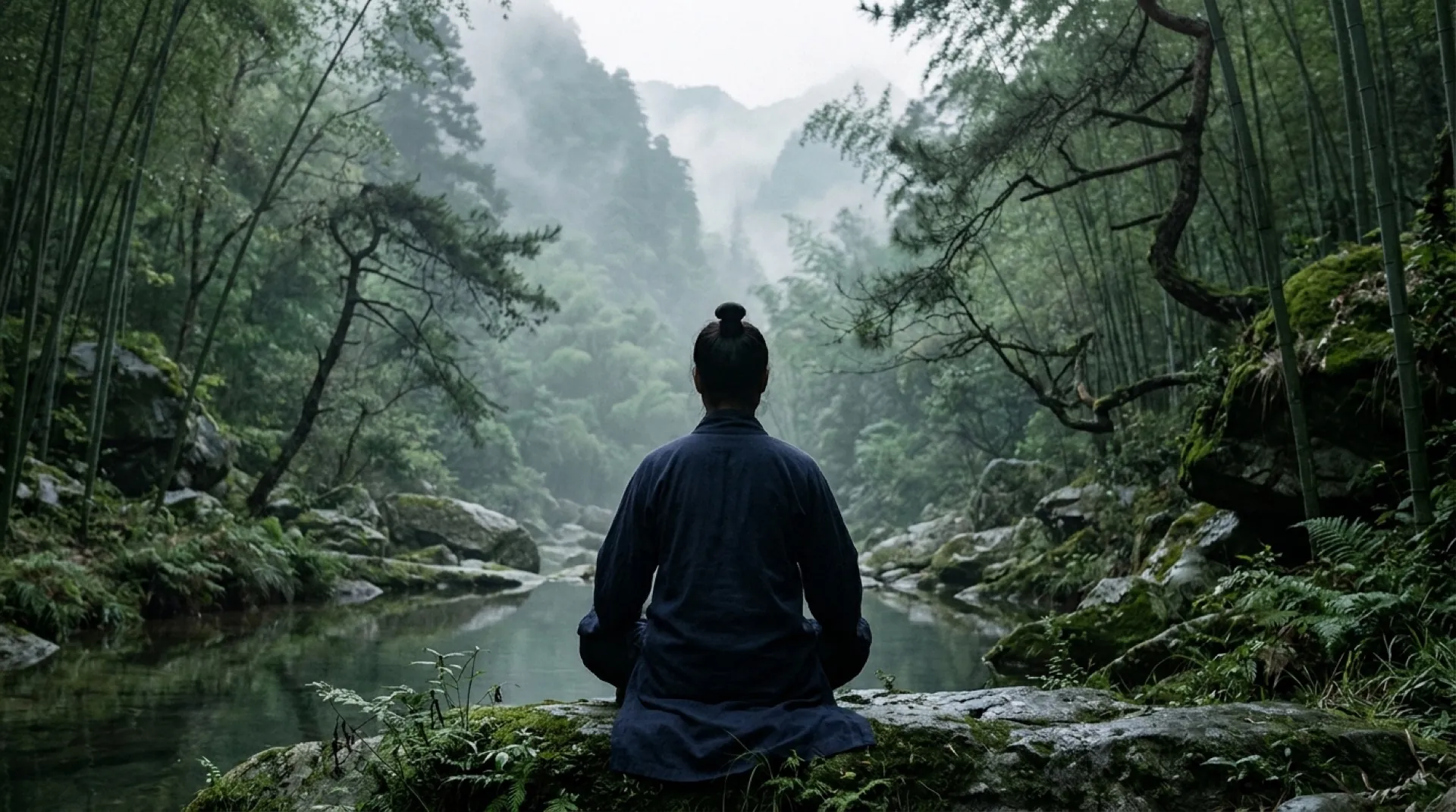
A figure in a dark robe with hair in a topknot, seen from behind, seated cross-legged on a mossy rock beside a still pool in a misty bamboo ravine.

Long before the modern world invented digital notifications and 24-hour news feeds, Chapter 12 of the Tao Te Ching diagnosed the exact mechanics of sensory exhaustion: “The five colours blind the human eye; the five tones deafen the human ear; the five flavours dull the human palate; racing and hunting drive the human heart-mind wild” (五色令人目盲,五音令人耳聋……驰骋畋猎,令人心发狂).

1. Two Tangible Metaphors: Undyed Silk (素) and Uncarved Wood (朴)

To counter this scattering of attention, Chapter 19 offers a four-character practice: “Manifest plainness and embrace the uncarved block; lessen self-centredness and moderate desire” (见素抱朴,少私寡欲, jian su bao pu, shao si gua yu):

  • Su (素 · Undyed Raw Silk): Silk in its natural, unbleached state before gaudy dyes are added for public display.
  • Pu (朴 · Uncarved Wood): Timber still whole in its natural grain before it is chopped andchiselled into specialized, fragile ornaments (Chapter 28: “When the uncarved block is dispersed, it becomes vessels”).

2. “For Learning, Add Daily; For the Tao, Subtract Daily” (为学日益,为道日损)

In Chapter 48, Laozi draws a sharp, practical distinction between two kinds of cultivation:

  • Wei Xue Ri Yi (为学日益): When learning a skill, language, or craft, you add information, vocabulary, and technique day by day.
  • Wei Dao Ri Sun (为道日损): When cultivating clarity of heart-mind and alignment with the Tao, you subtract day by day—releasing unnecessary comparison, performative busyness, anxious control, and sensory clutter until action becomes unforced.

3. Three Everyday Ways to Practice “Daily Subtraction”

  1. Choose “The Belly Over the Eye” (为腹不为目, Chapter 12): When choosing how to spend an hour or a budget, ask whether it genuinely nourishes your energy and relationships (“the belly”) or merely feeds comparison and display (“the eye”).
  2. One Single-Tasked Quiet Anchor Each Day: Whether brewing a bowl of tea in Gongfu tea practice, practising 15 minutes of Baduanjin, or sitting quietly, do one thing daily with zero screens or multitasking.
  3. Simplify Commitments Before Adding New Ones: Before adding a new obligation, subtract one non-essential habit that drains attention.

Seeker’s Q&A · Frequently Asked Questions

What do “Su” (素) and “Pu” (朴) mean in Taoist philosophy?

Su literally means undyed raw silk, and Pu means uncarved natural timber. Together they represent authentic simplicity, wholeness, and freedom from artificial display.


