Photo Note
The Fourth Day of Bigu - 02 September 2026辟谷第四天
The fourth day of a bigu retreat at Wudang Mountain, 2 September 2026: forms in a courtyard, a walk into the hills, and time to sit still.
On 2 September 2026, a note from Wudang Mountain marked the fourth day of a bigu retreat. Bigu (辟谷, bìgǔ), literally “avoiding grains,” is a Daoist practice with a long history, traditionally kept alongside stillness, gentle movement and reflection. The photographs shared that day say little about food. They show how the hours were spent: forms in a courtyard, a slow walk into the hills, time sitting still, and conversation at the end of it.
Morning, in the courtyard
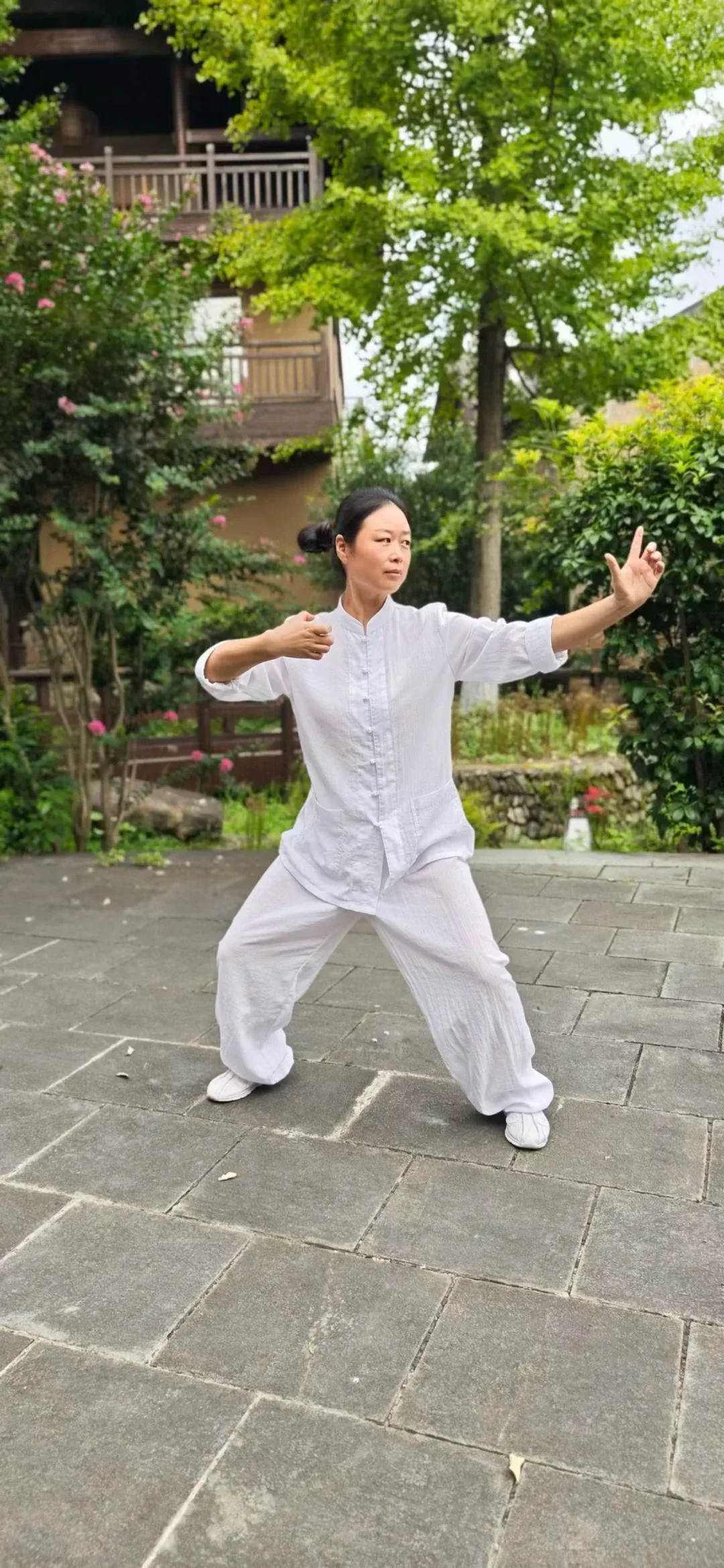
The day opens on a paved courtyard below a timber building with wooden balconies. Ginkgo leaves hang overhead and crape myrtle is still flowering at the edge. One practitioner holds a posture on her own: weight sunk into the back leg, one hand drawn in, the other extended with the fingers raised.
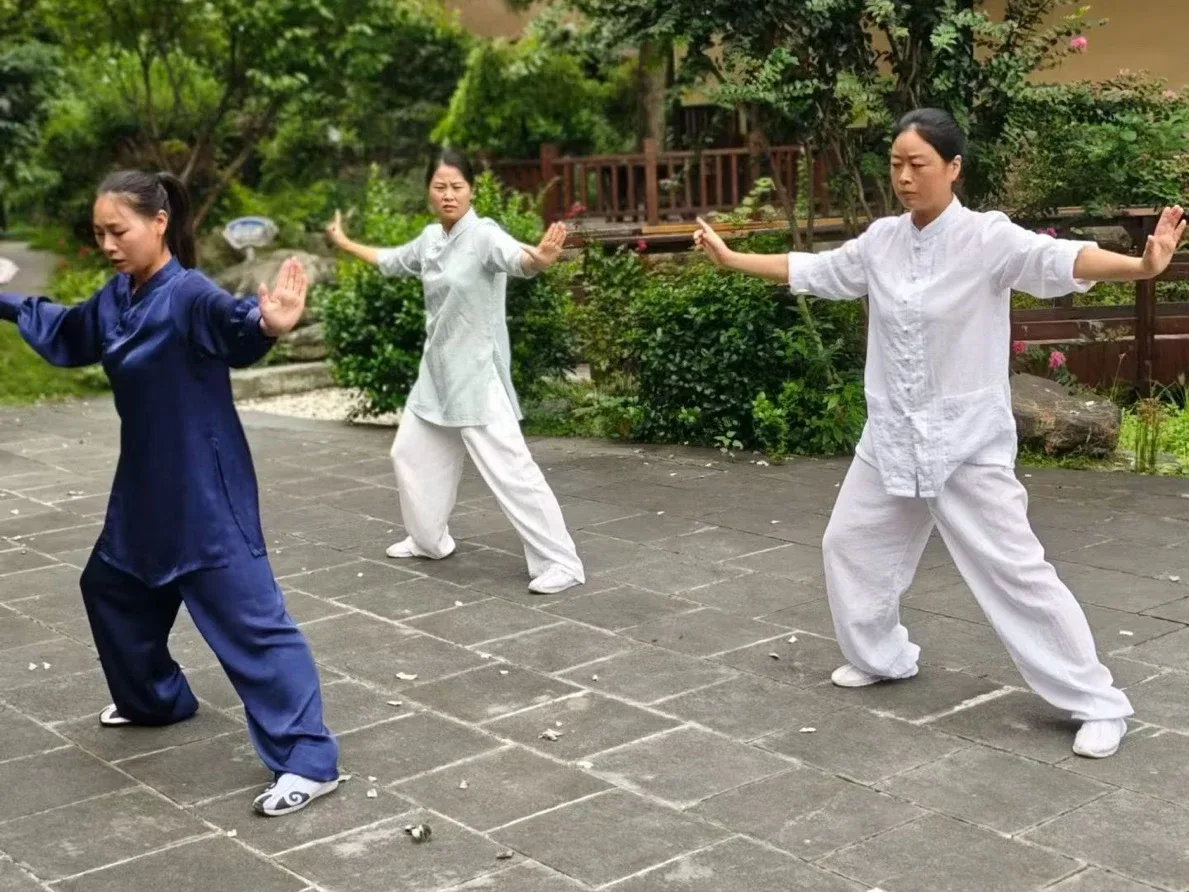
In the photograph at the top of this page, three people work through the same form, spaced well apart, arms opened wide. Each keeps her own pace. The courtyard is large enough that nobody needs to look at anyone else.
Out along the paths
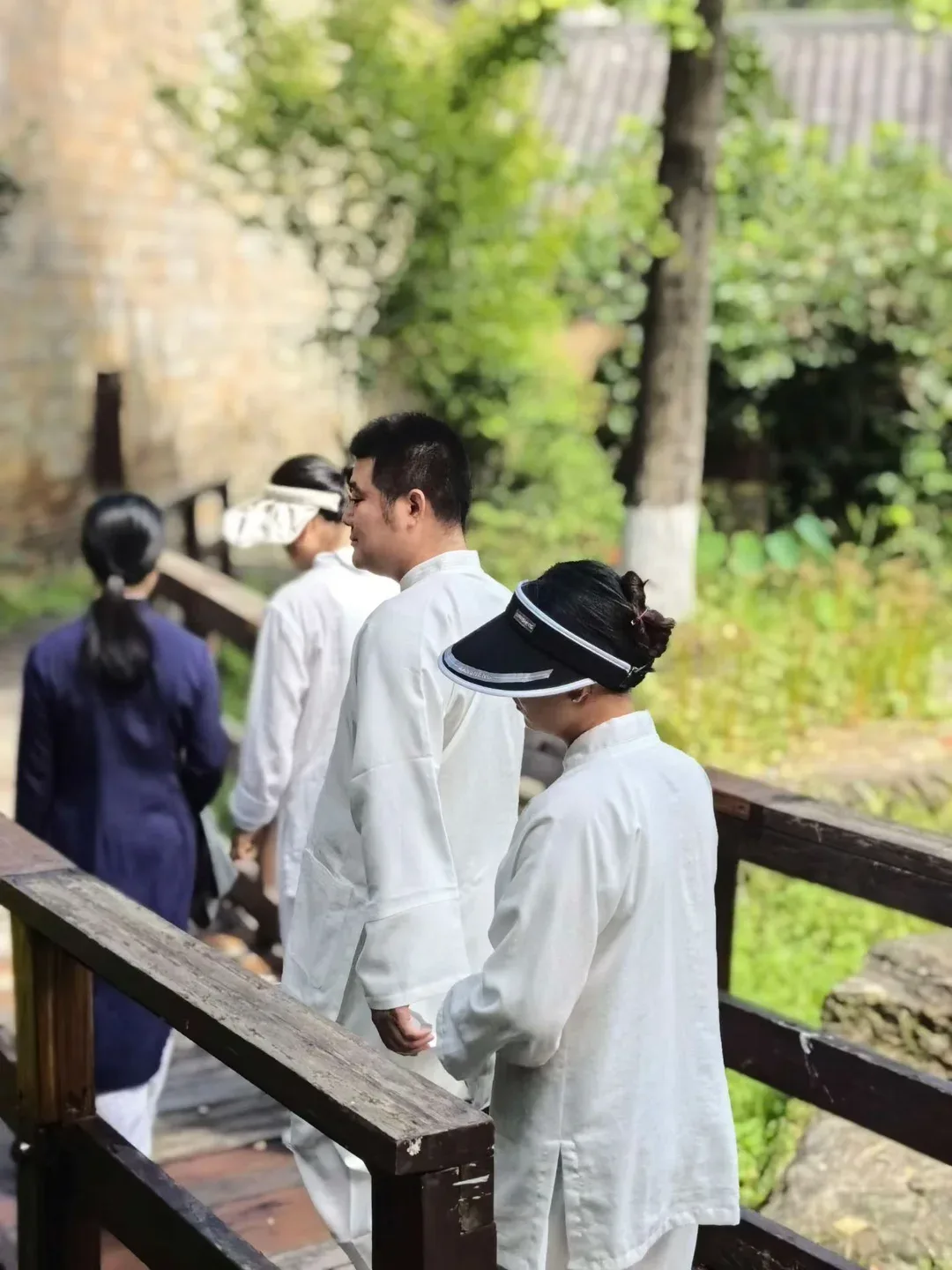
Later the group sets out on foot, most in loose white cotton, sun visors pulled on against the light. They file across a wooden footbridge, past a whitewashed tree trunk and a bank of broad green leaves.
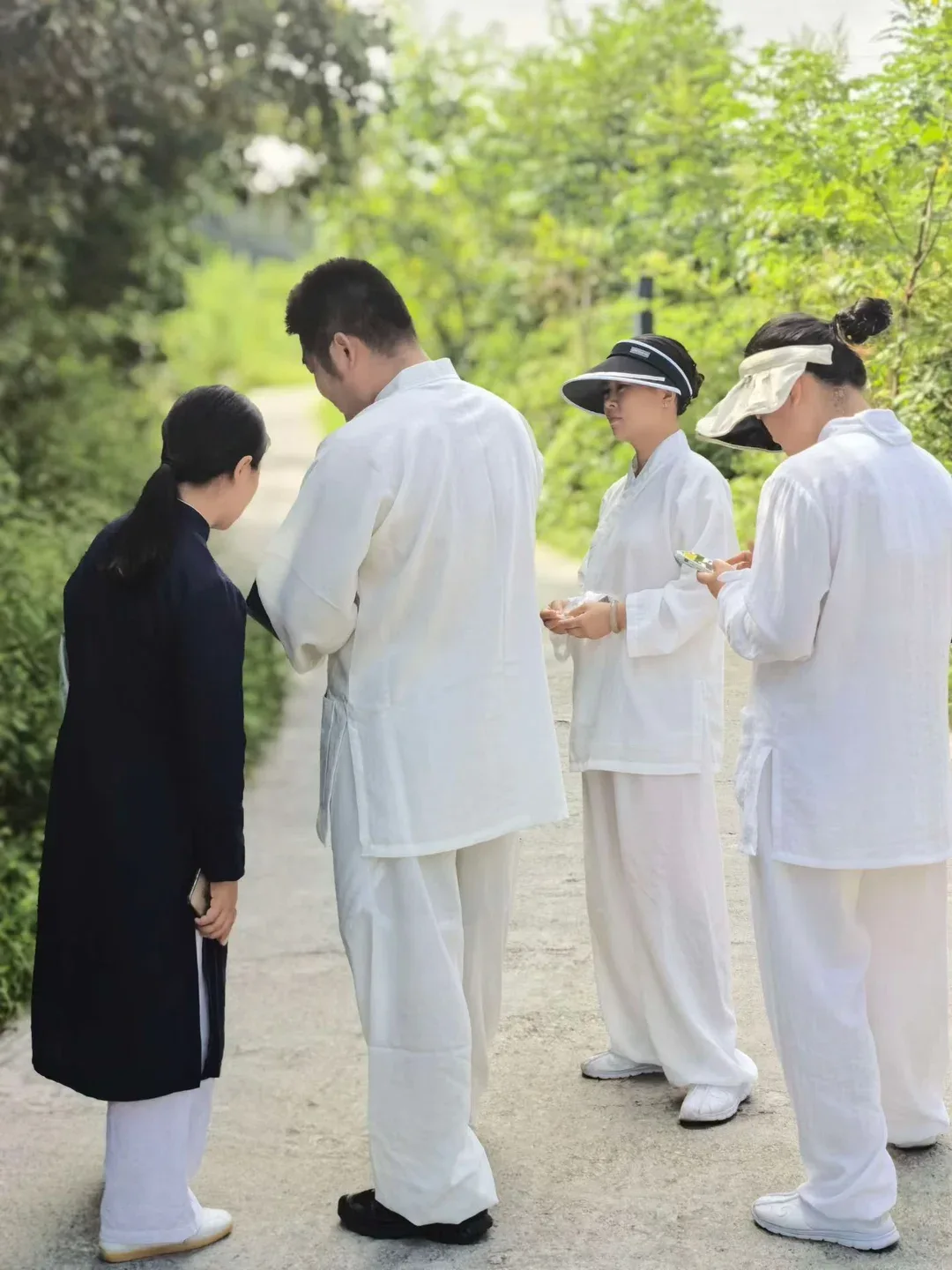
On a lane between hedges they stop and gather round. One figure in a dark robe leans in to hear a companion; another checks a phone; a third holds something small in both hands. Nobody is in a hurry.
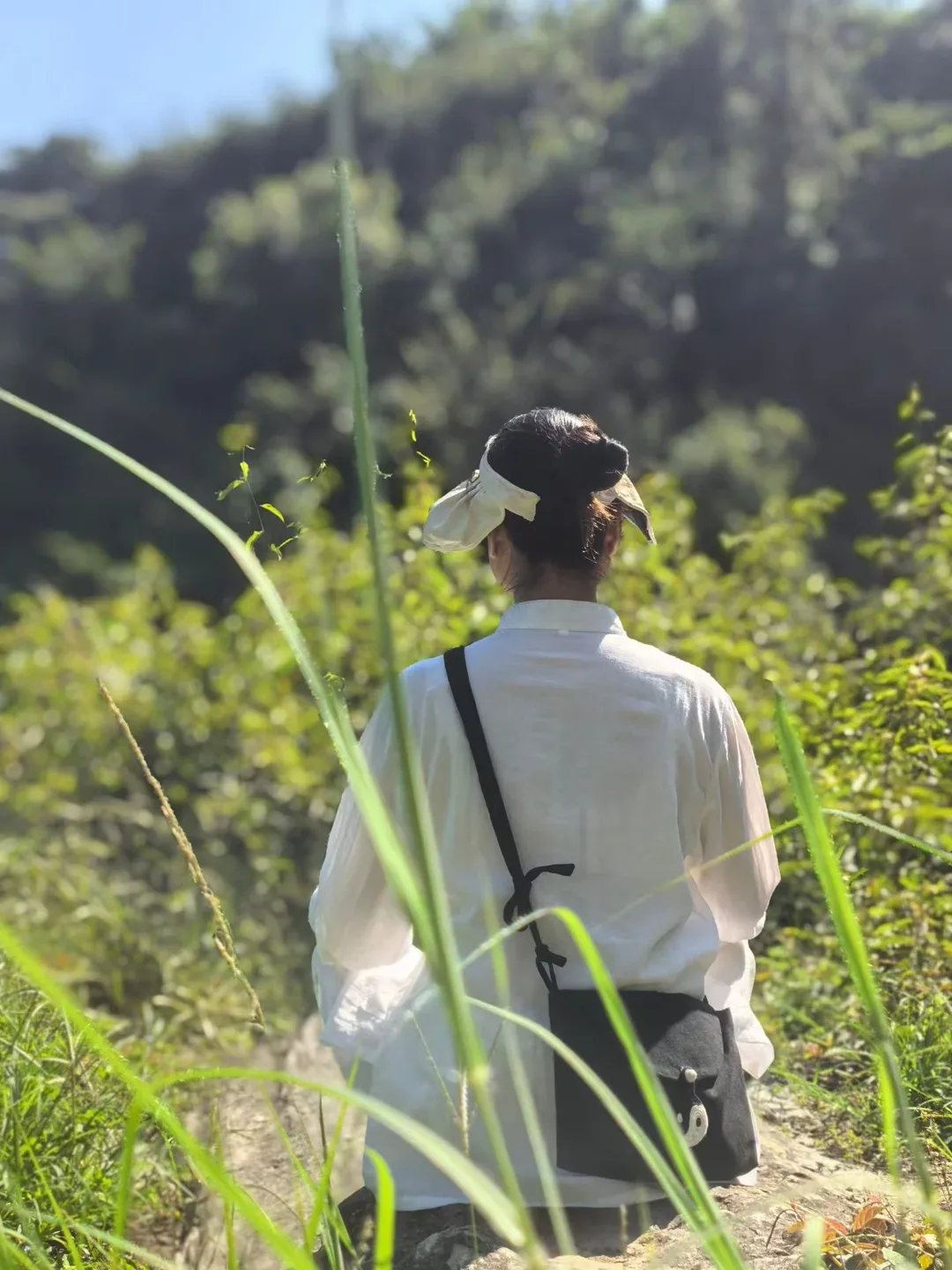
Further up, the path gives way to rock and long grass. One walker, a black cloth bag with a taiji emblem slung across her back, sits and looks out over the slope.
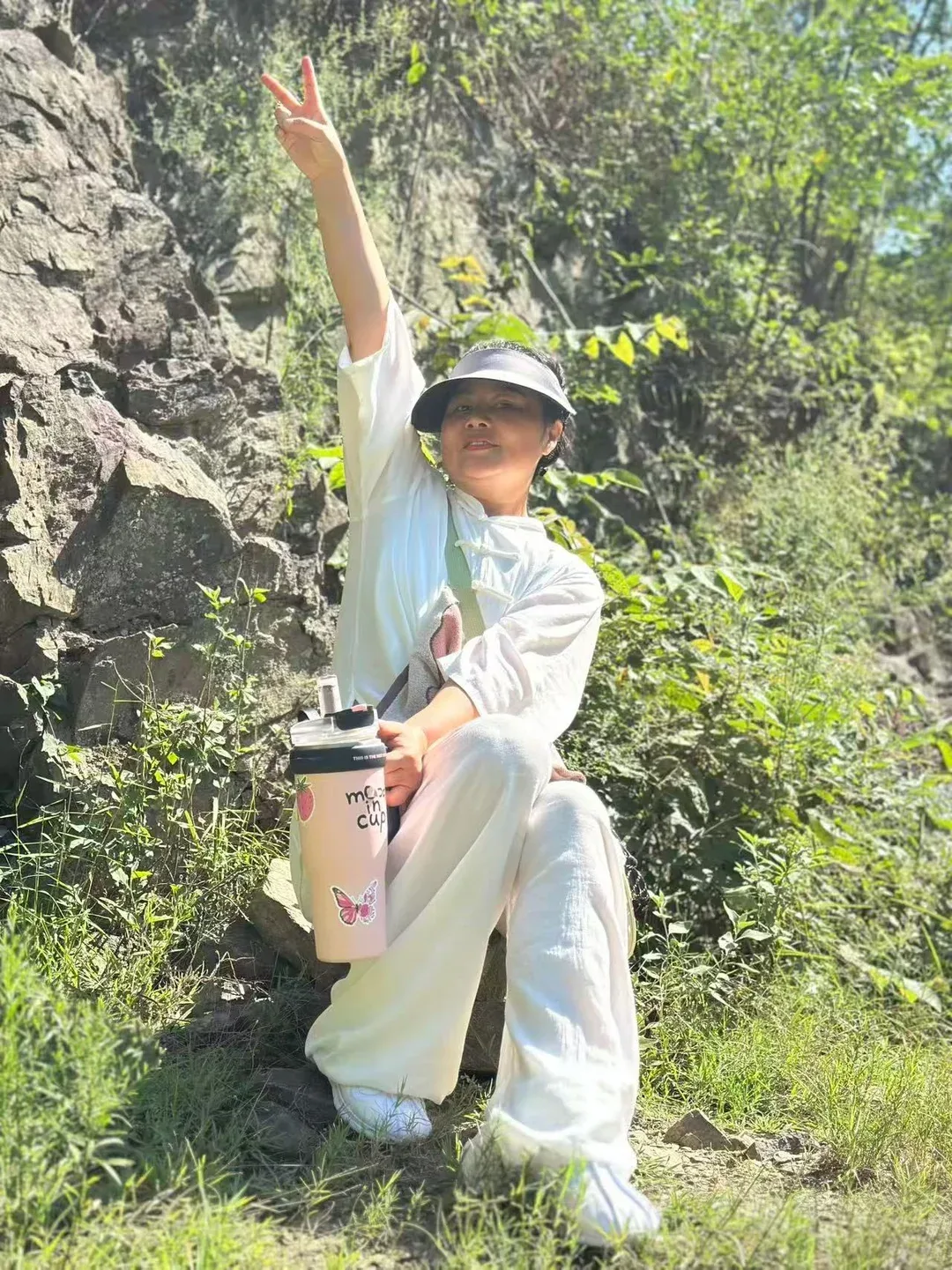
Another leans against a boulder in full sun and raises two fingers at the camera, as cheerful as any hiker at the top of a climb.
Sitting still
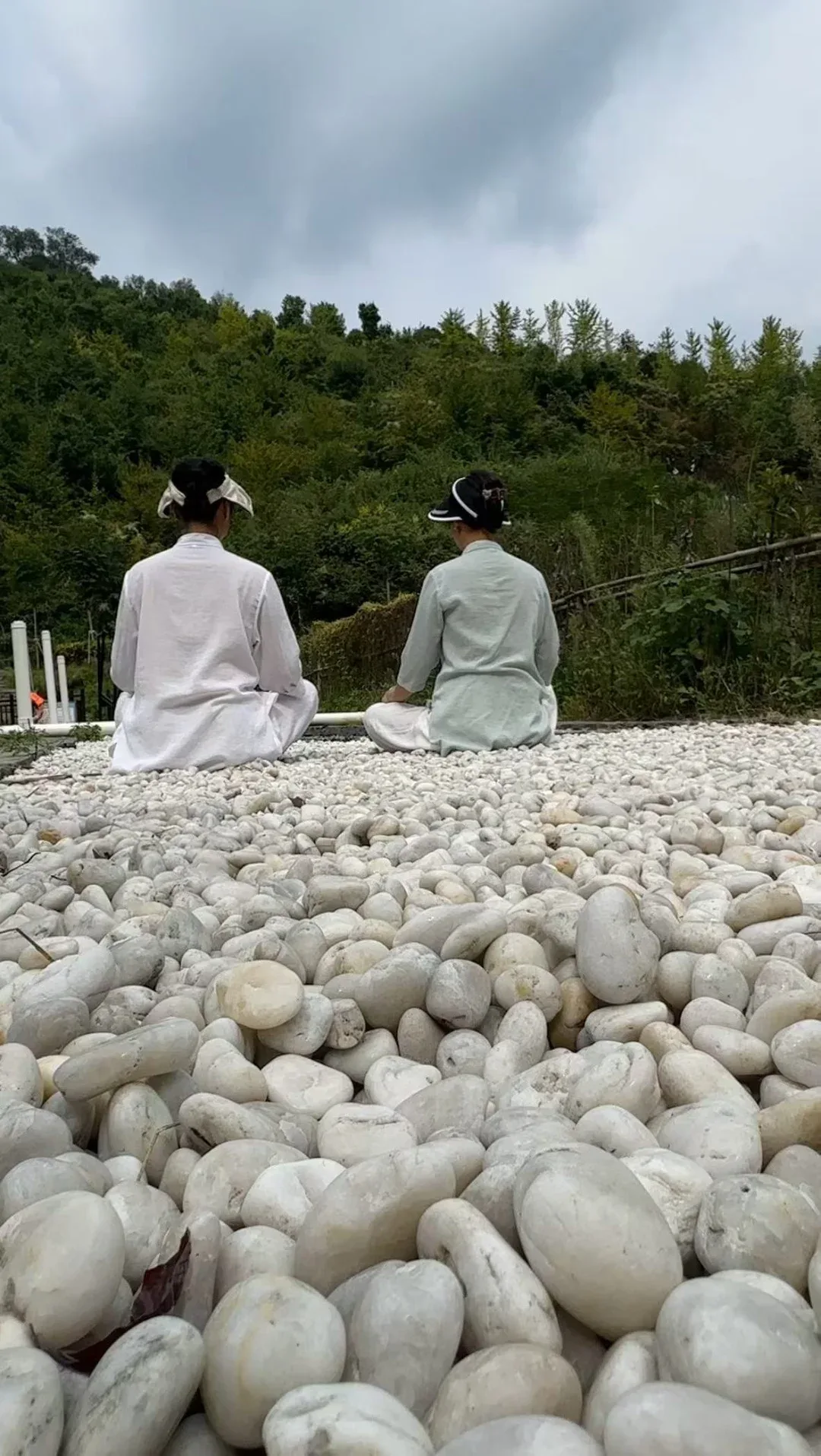
On a bed of smooth white river stones, two people sit cross-legged, facing a wooded hillside under heavy cloud. The stones are uneven and there are no cushions. From behind, only posture tells you anything: shoulders dropped, the two of them a little apart, both turned towards the trees.
The note shared that day described the attitude asked of participants: not to resist what arises, not to cling to sensations, to settle into the present and follow the body’s own rhythm. It also said plainly that everyone’s experience is different. Those lines are less a technique than a way of paying attention, and it is that attention the photographs keep returning to.
Back indoors
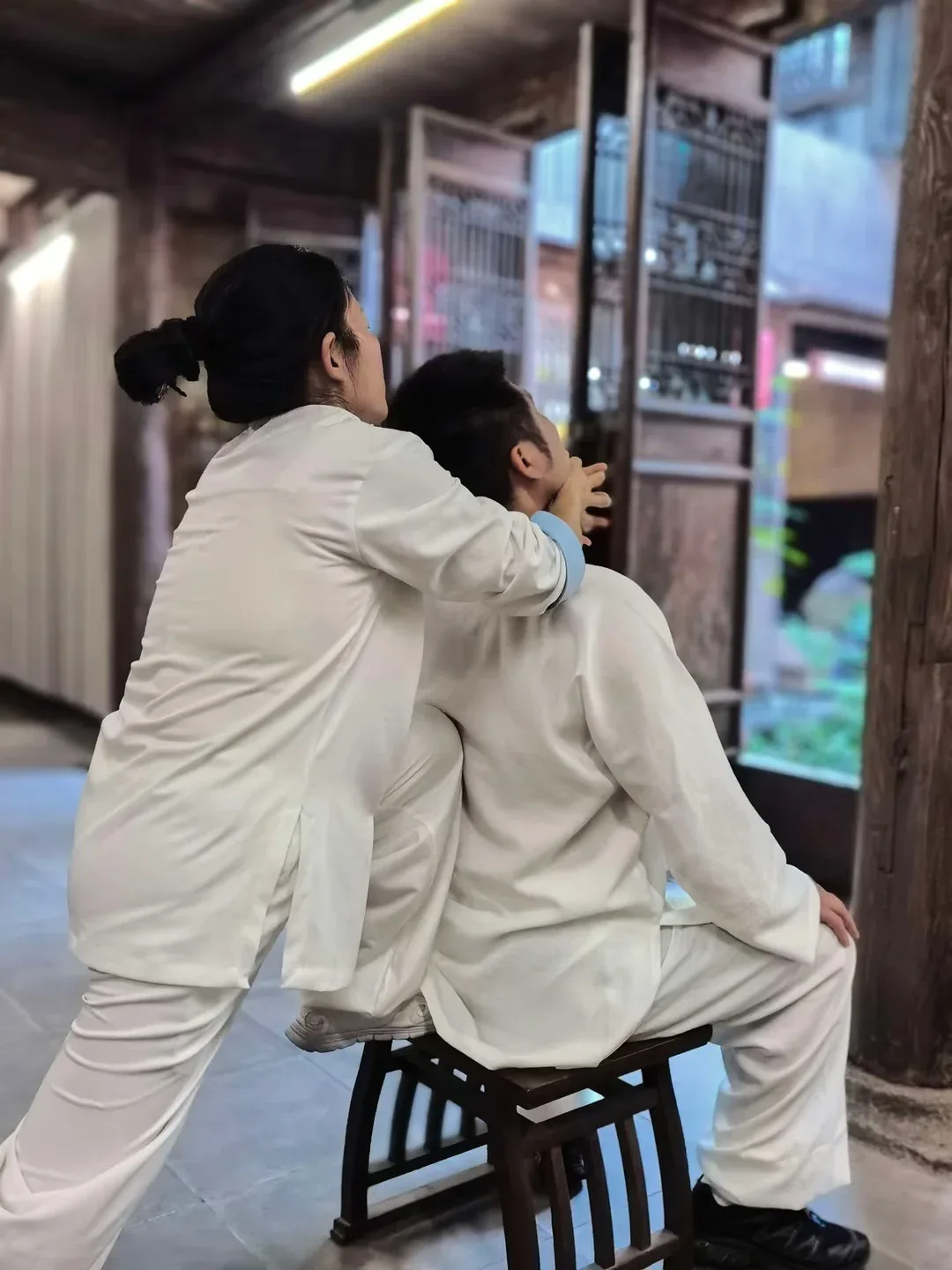
Inside, beside carved lattice doors, one participant braces behind another seated on a low wooden stool and guides his head back into a long stretch through the neck. It is a practical, unglamorous kind of care: one person lending another their weight and steadiness.
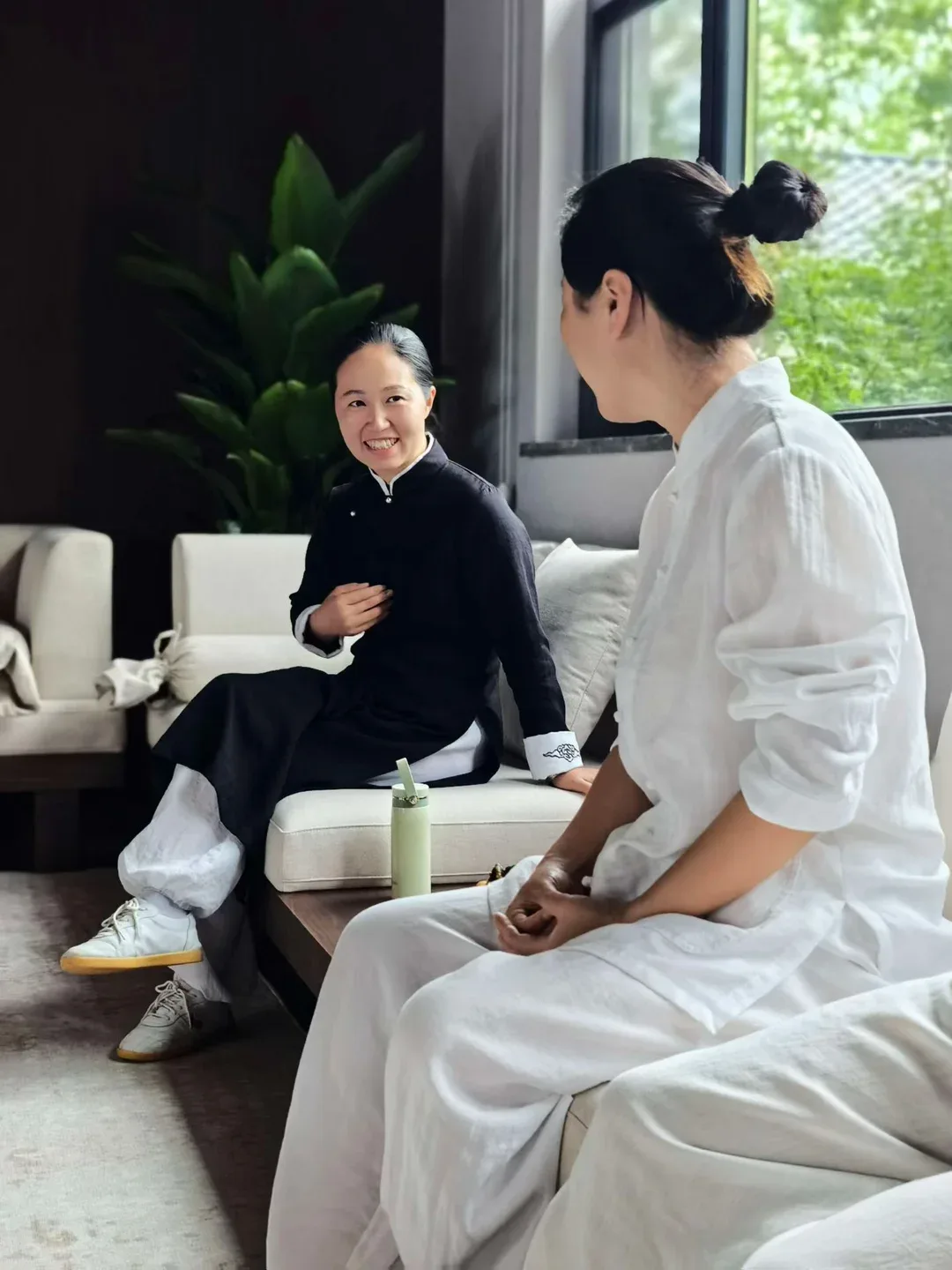
And in a quiet room with a tall plant by the window, two women sit on a pale sofa. One, in a black robe, is smiling mid-sentence; the other, in white, turns to listen. Of all the day’s pictures, it is perhaps the most ordinary, and the most telling. Retreat does not mean silence from morning to night. It means making room, and then filling some of that room with one another.
About these photographs
The photographs and the note that accompanied them were shared on WeChat by 武当 至焕 (Wudang Zhihuan) from Wudang Mountain on 2 September 2026, the fourth day of the retreat. This is a cultural record of one day. It does not describe what participants ate, give instructions for fasting, or offer medical advice; anyone considering a fasting practice should speak to a qualified doctor first.
The First Day of Bigu · The Second Day of Bigu · The Third Day of Bigu · A Lesson on the Fourth Day · Explore Wellness · More from Everyday Wudang
About this entry
- Place
- Wudang Mountain