Photo Note
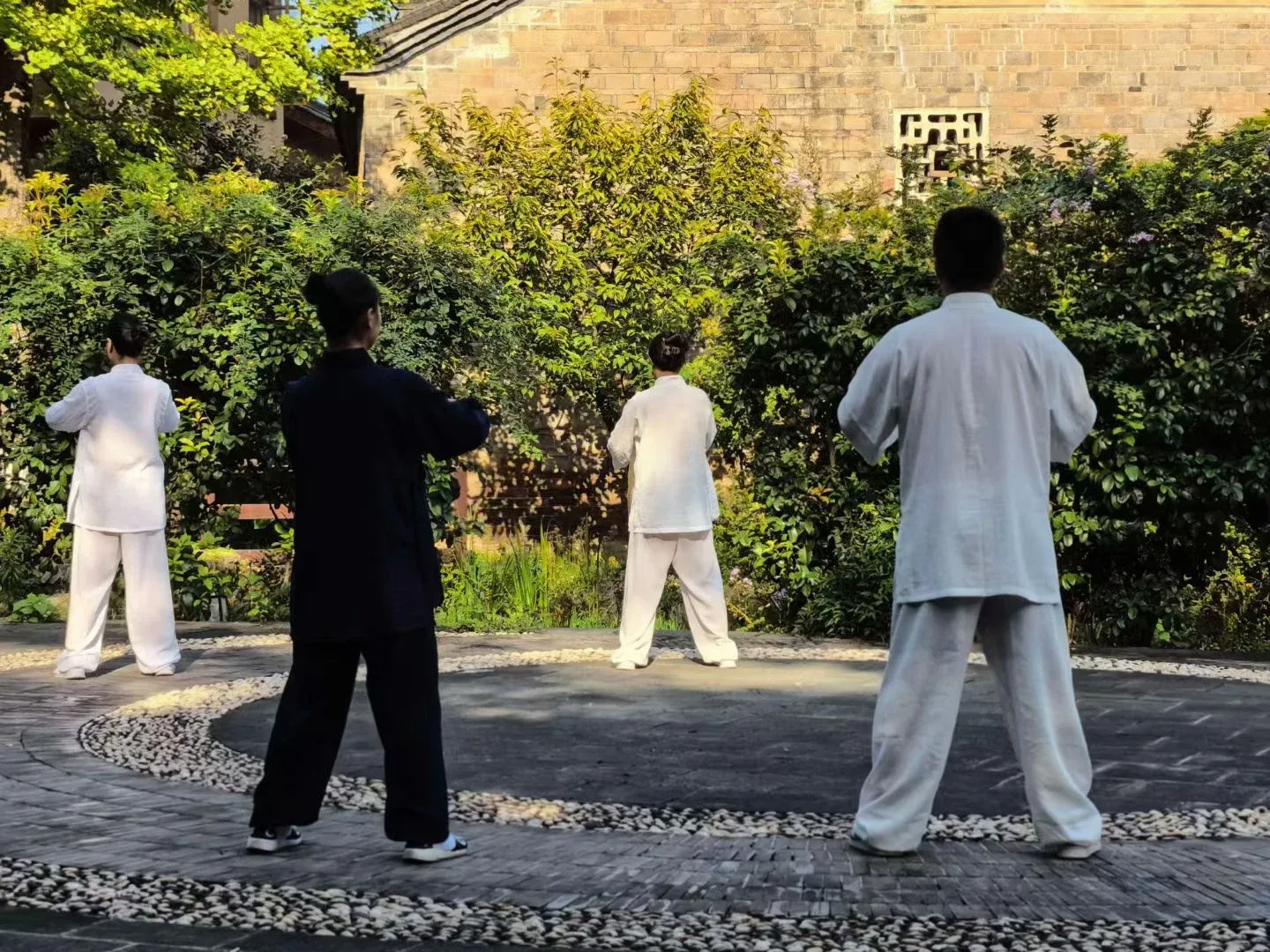
The Third Day of Bigu - 01 September 2026辟谷第三日
The third day of a bigu retreat at Wudang Mountain, 1 September 2026: practice in a courtyard, scripture copied by hand, and a walk to the old gates.
On 1 September 2026, the third day of a bigu retreat at Wudang Mountain, the note shared from the mountain was brief. Everyone was still in good spirits, it said, and the day held three things: practice to cultivate qi, copying scripture to settle the mind, and walking in the hills. The photographs follow that order, from a courtyard in morning light to a writing table, and out along the road towards the old gates and palaces.
Practice in the courtyard
The photograph at the top of this page was taken in a paved courtyard below an old brick building with a tiled roof and a single lattice window. A ring of pebbles is set into the paving. Four people stand spread across it, three in white and one in dark blue, arms rounded in front of the body, each facing the green wall of shrubs. A ginkgo catches the sun at the left edge.
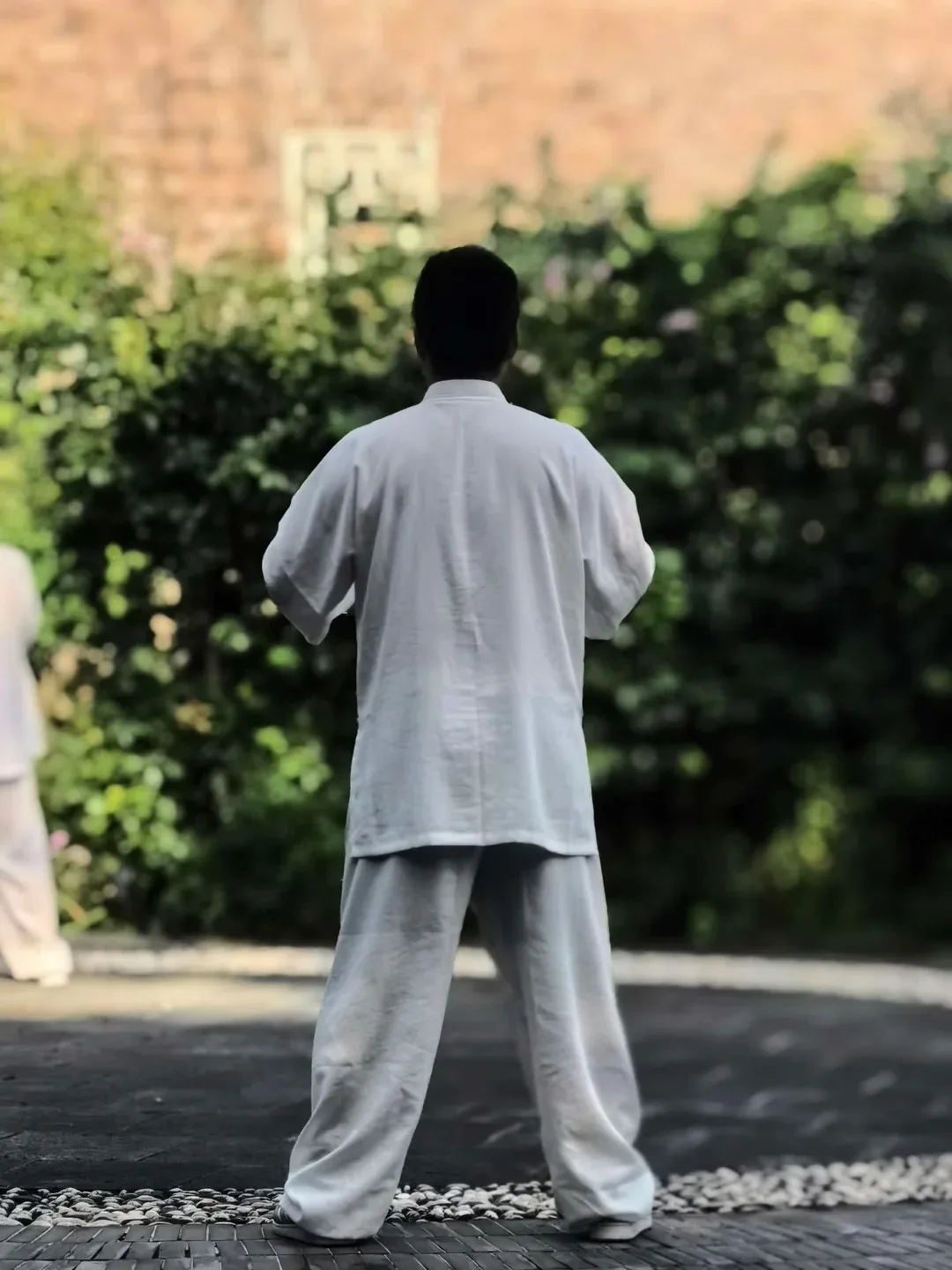
Closer in, one practitioner stands with feet apart and knees soft, sleeves loose, his back to the camera. There is nothing dramatic to photograph. Much of the work is simply in standing.
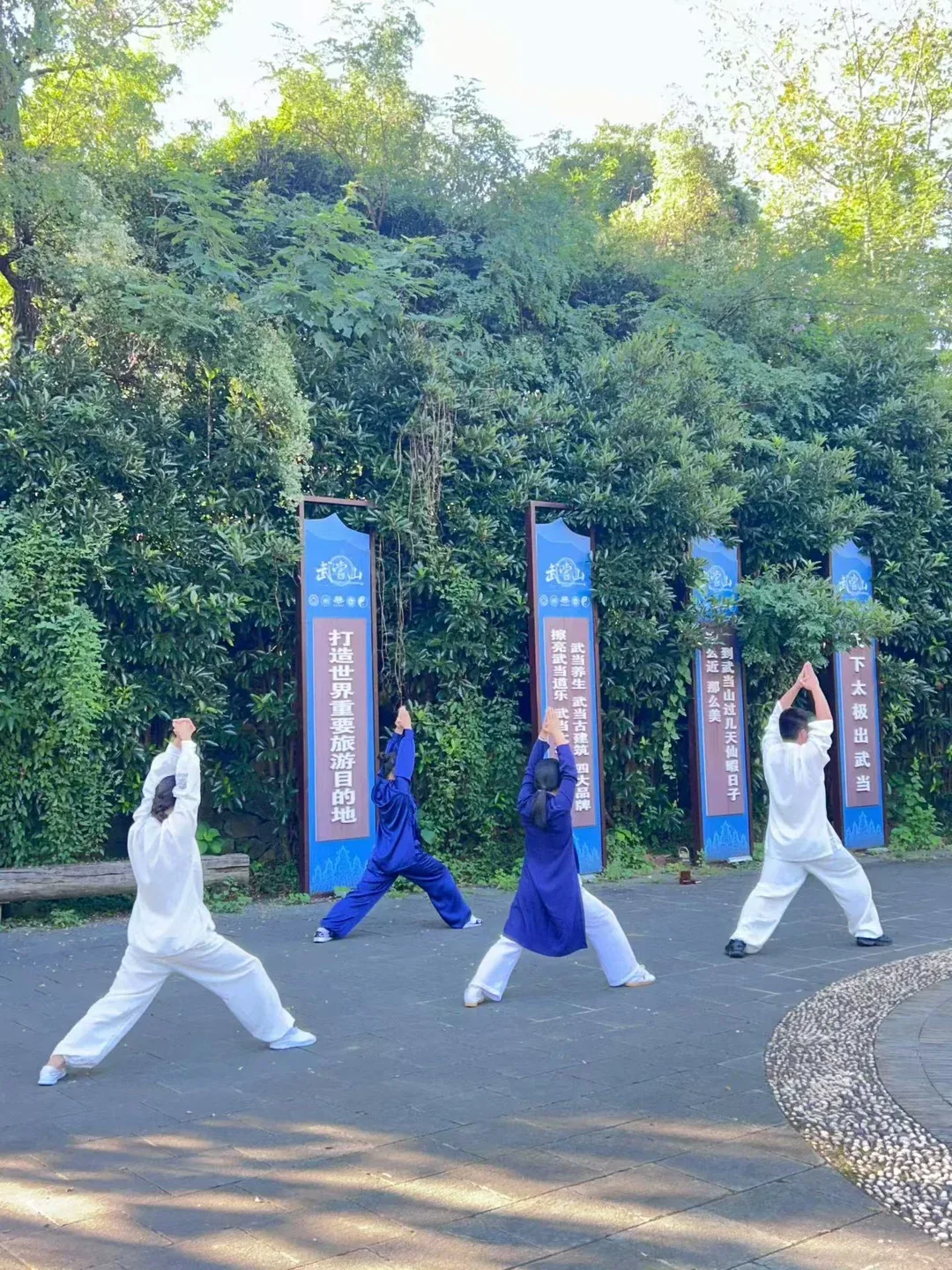
Elsewhere, beside a row of tall blue banners, four of them sink into a long lunge and press their palms together high overhead, the stretch running from the back foot all the way to the fingertips.
Copying scripture
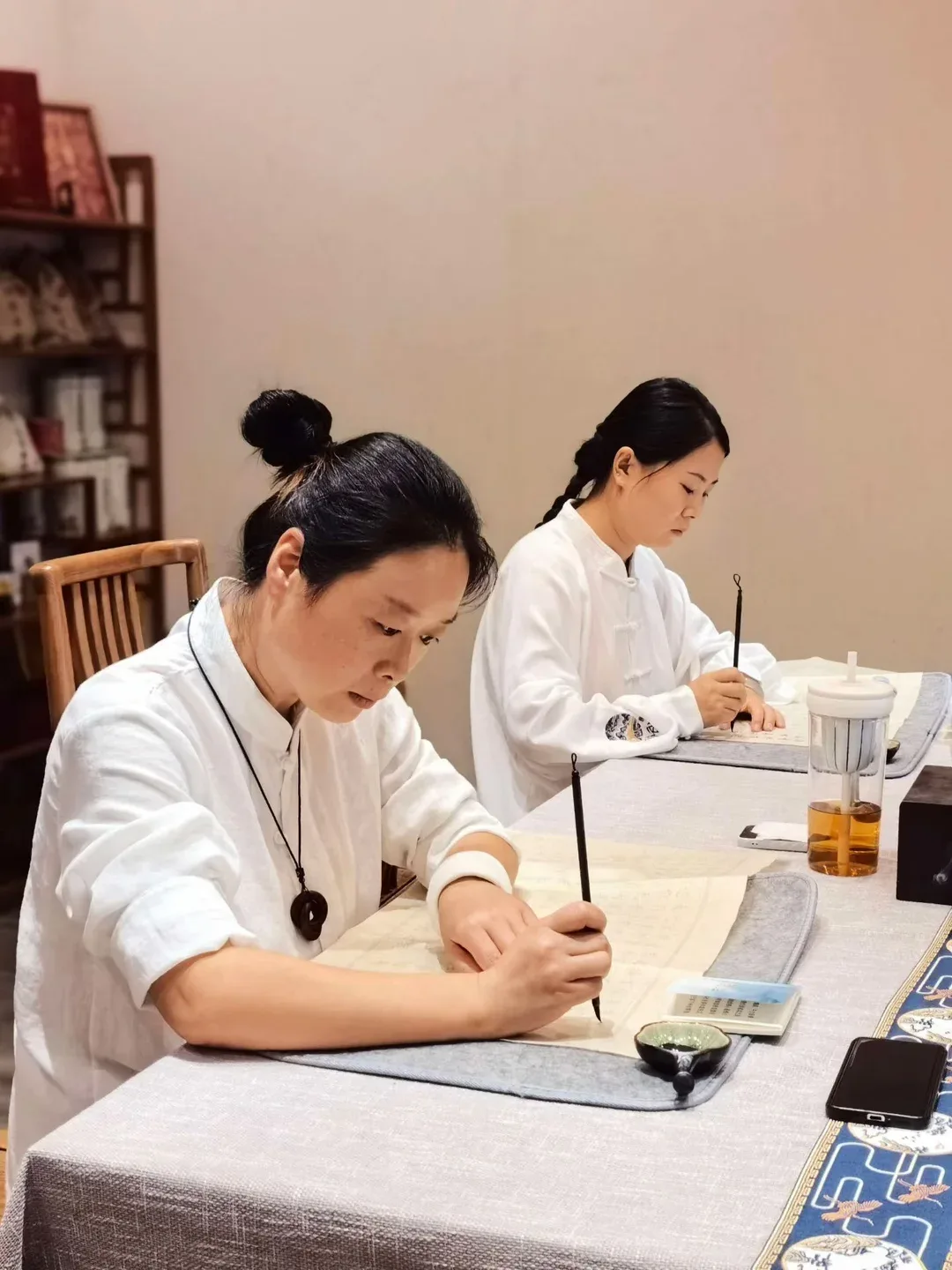
Indoors, the pace changes. Two women sit at a long table covered in grey cloth, each bent over a sheet laid on a felt mat, a fine brush held upright. A small ink dish sits by one hand; a printed booklet of the text lies open nearby. Neither looks up.
抄经 (chāo jīng), copying out a scripture by hand, has a long history in Daoist life. The aim is not fine calligraphy. It is to follow a text slowly, one character at a time, so that attention has somewhere steady to rest.
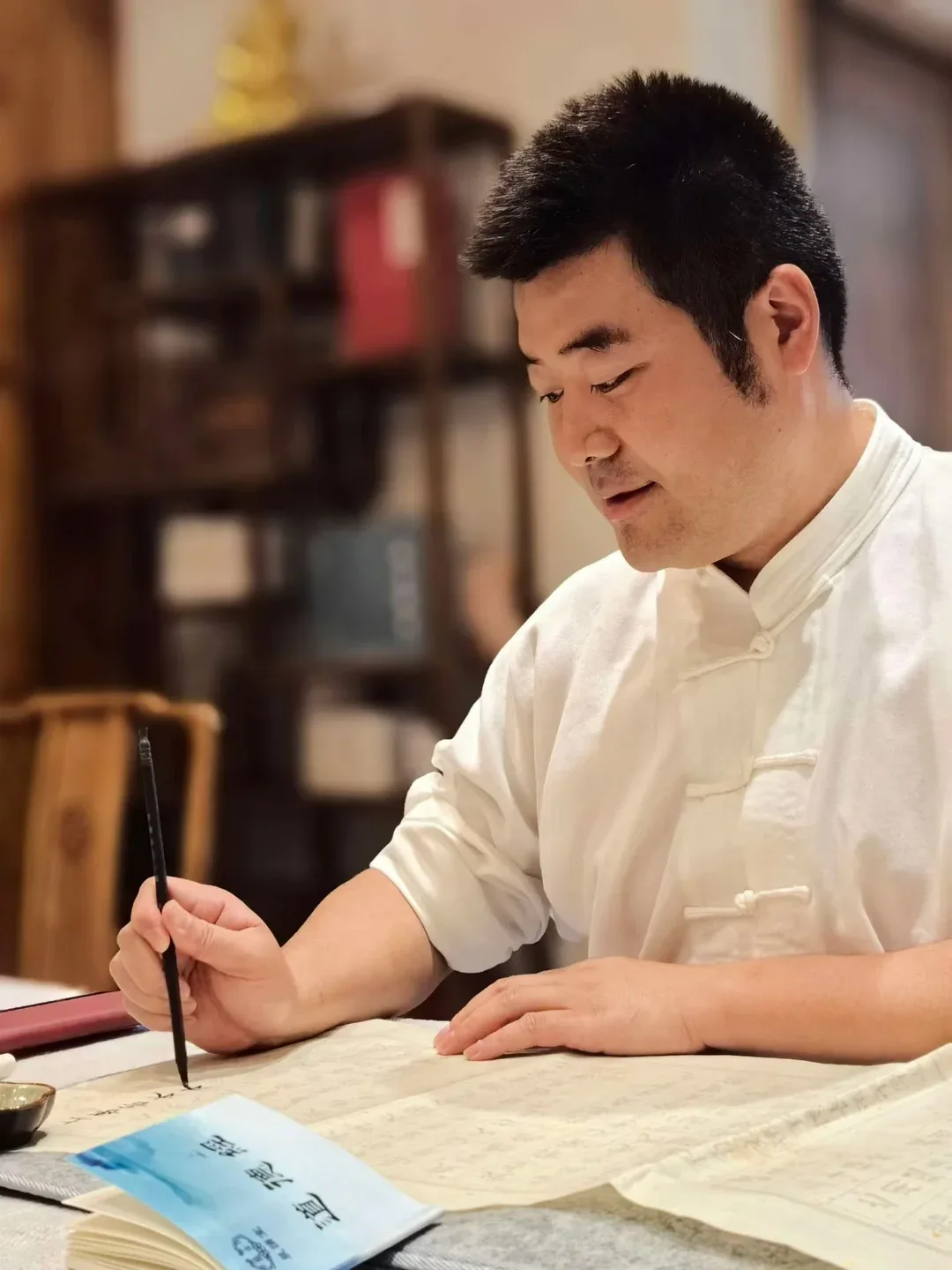
At another table, a man writes with a dark bookcase behind him, the tip of the brush just meeting the paper and his free hand flat to hold the sheet still. The characters are small and set in ruled columns. The work is patient, and a little stubborn, the way copying always is.
Walking in the hills
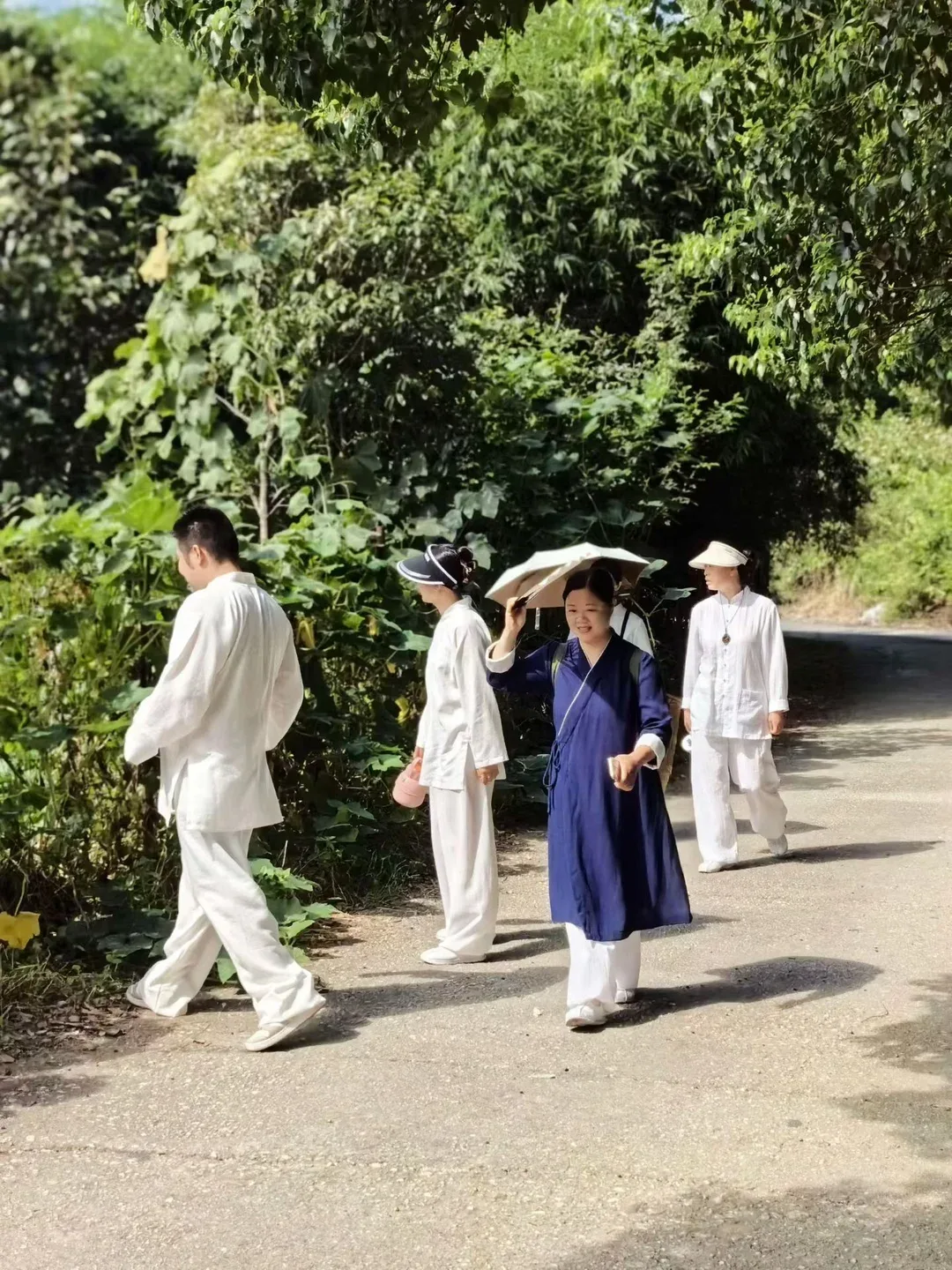
Then the group goes out on foot. On a quiet road under overhanging leaves they walk loosely strung out: one beneath a pale umbrella, others in sun visors, a man at the front already a few steps ahead.
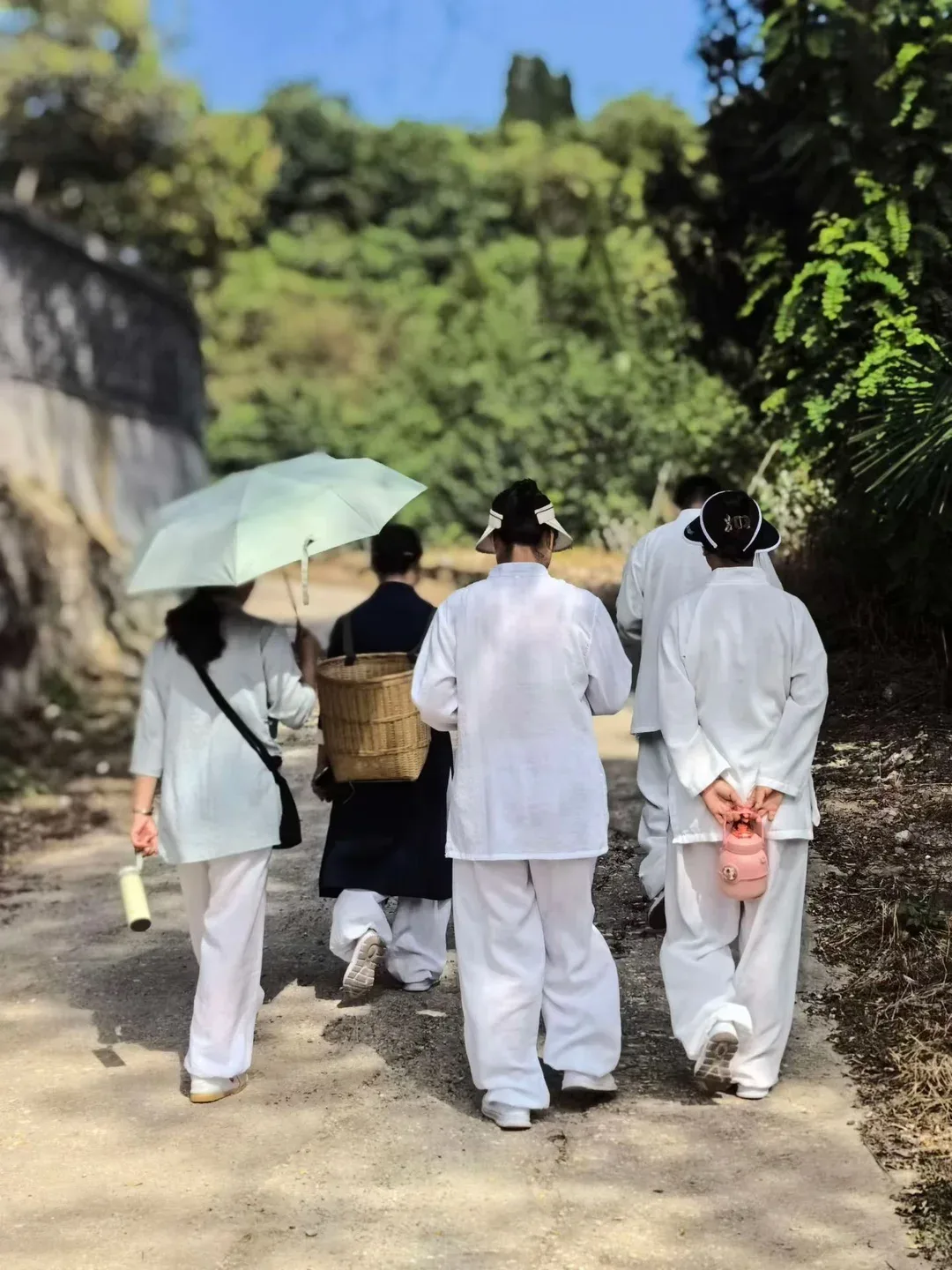
From behind, the details are homely: a bamboo basket on one arm, a pink flask held behind a back, a water bottle swinging from a hand. It is a walk, not a march.
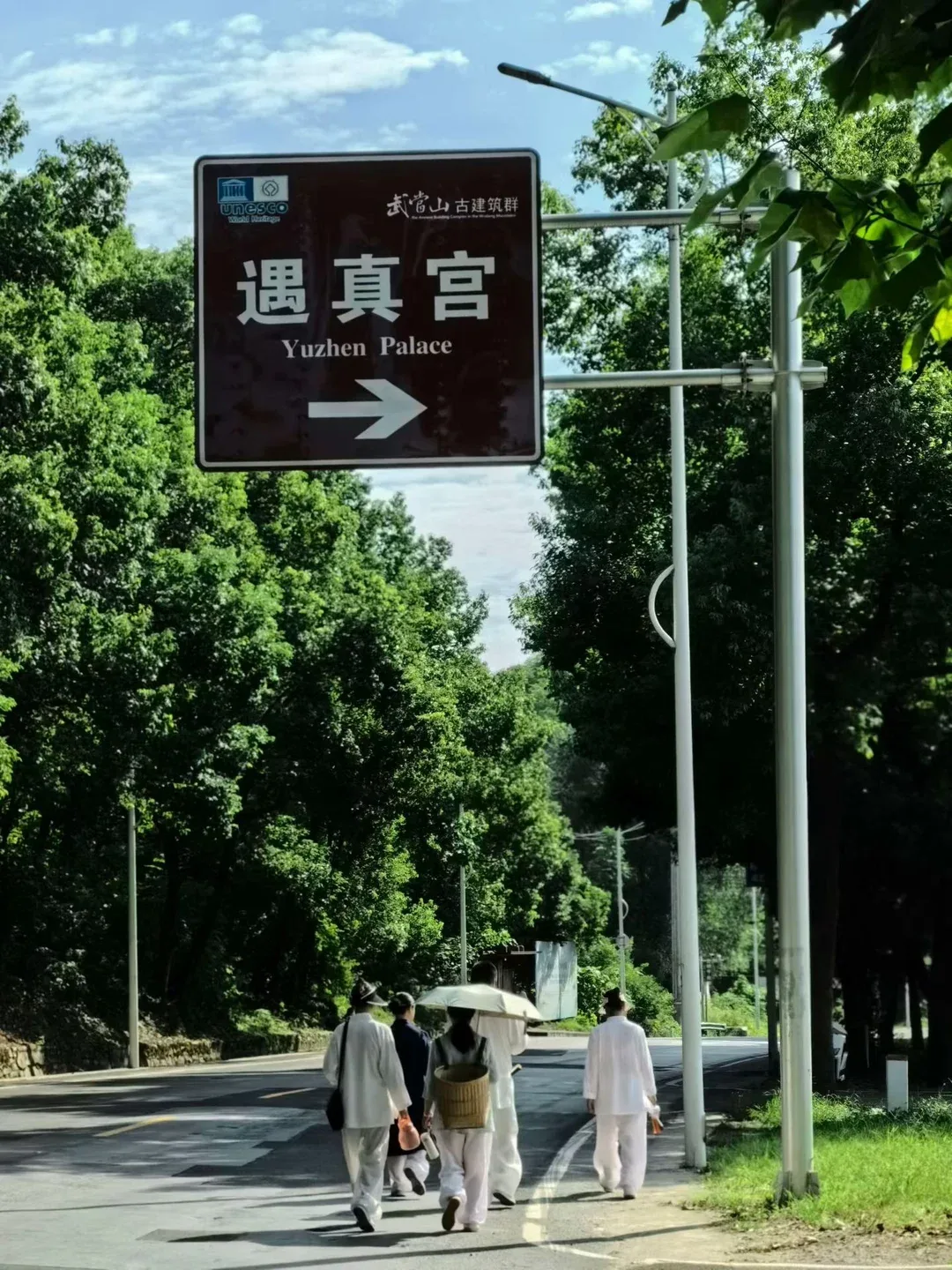
The road passes beneath a brown heritage sign pointing the way to 遇真宫, Yuzhen Palace, part of the Ancient Building Complex in the Wudang Mountains. The palace was built in the early Ming dynasty in honour of the Daoist Zhang Sanfeng, the figure tradition links with the beginnings of Taijiquan.
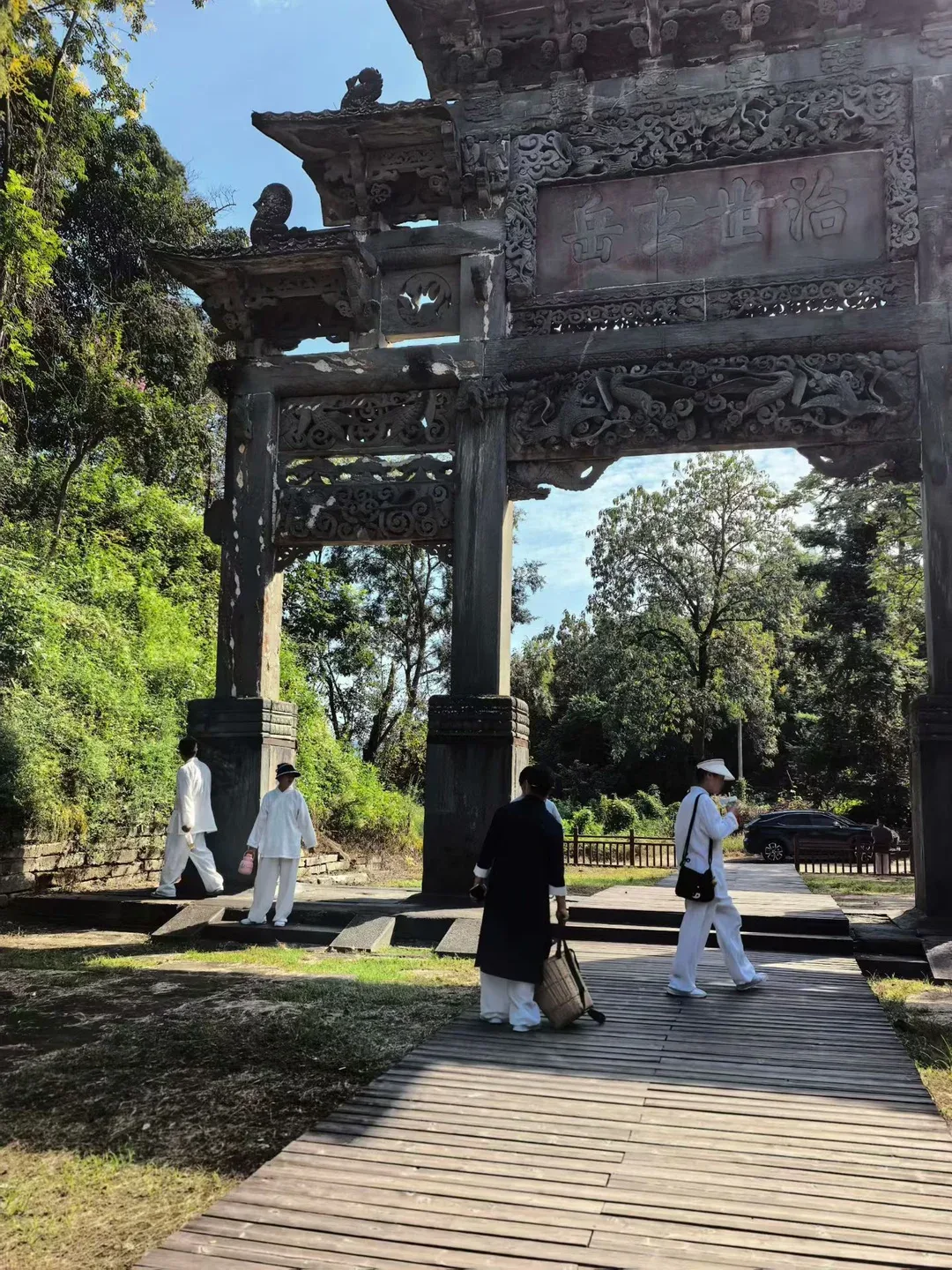
Further on stands the great stone archway inscribed 治世玄岳, built in 1552 under the Jiajing emperor, its beams carved thick with clouds and birds and darkened by more than four centuries of weather. The group drifts through and around it, some pausing, some already moving on along the boardwalk. For pilgrims, a gate like this once marked the beginning of the mountain road. For these walkers it is simply the next stretch of the day.
About these photographs
The photographs and the note that accompanied them were shared on WeChat by 武当 至焕 (Wudang Zhihuan) from Wudang Mountain on 1 September 2026, the third day of the retreat. This is a cultural record of one day. It does not describe what participants ate, give instructions for fasting, or offer medical advice; anyone considering a fasting practice should speak to a qualified doctor first.
The First Day of Bigu · The Second Day of Bigu · The Fourth Day of Bigu · Explore Wellness · More from Everyday Wudang
About this entry
- Place
- Wudang Mountain