A path into the reading
The Central Temple Route at Wudang Mountain
Taizipo, Zixiao Palace, Nanyan and the Golden Summit in their original sequence
Start here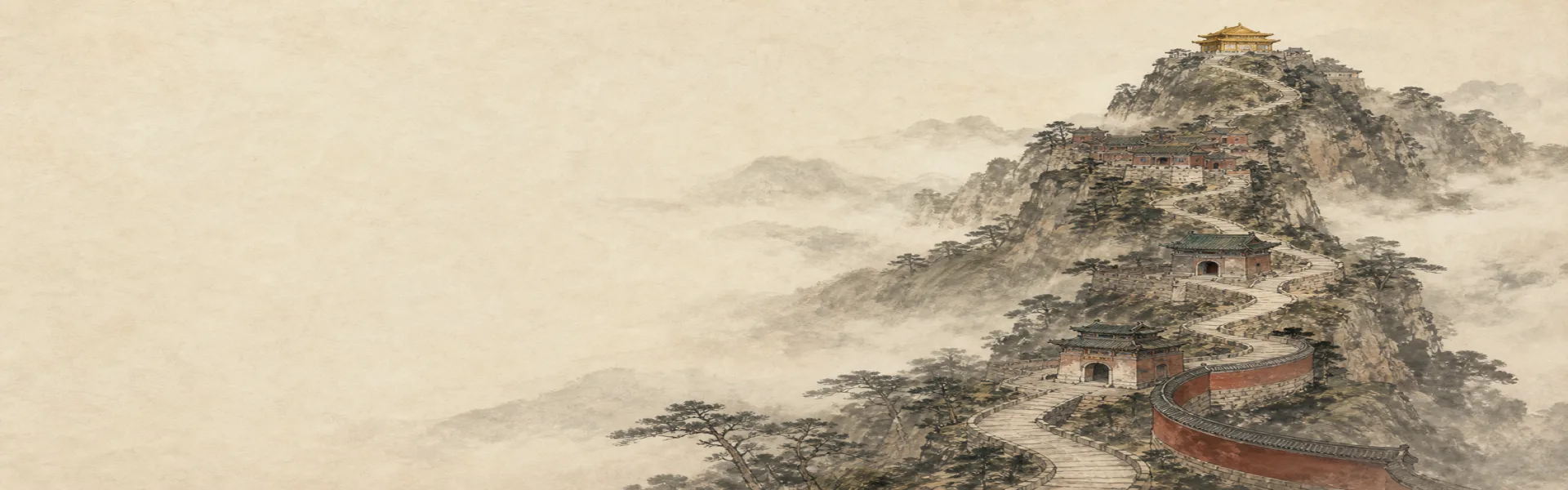
01 Find your bearings
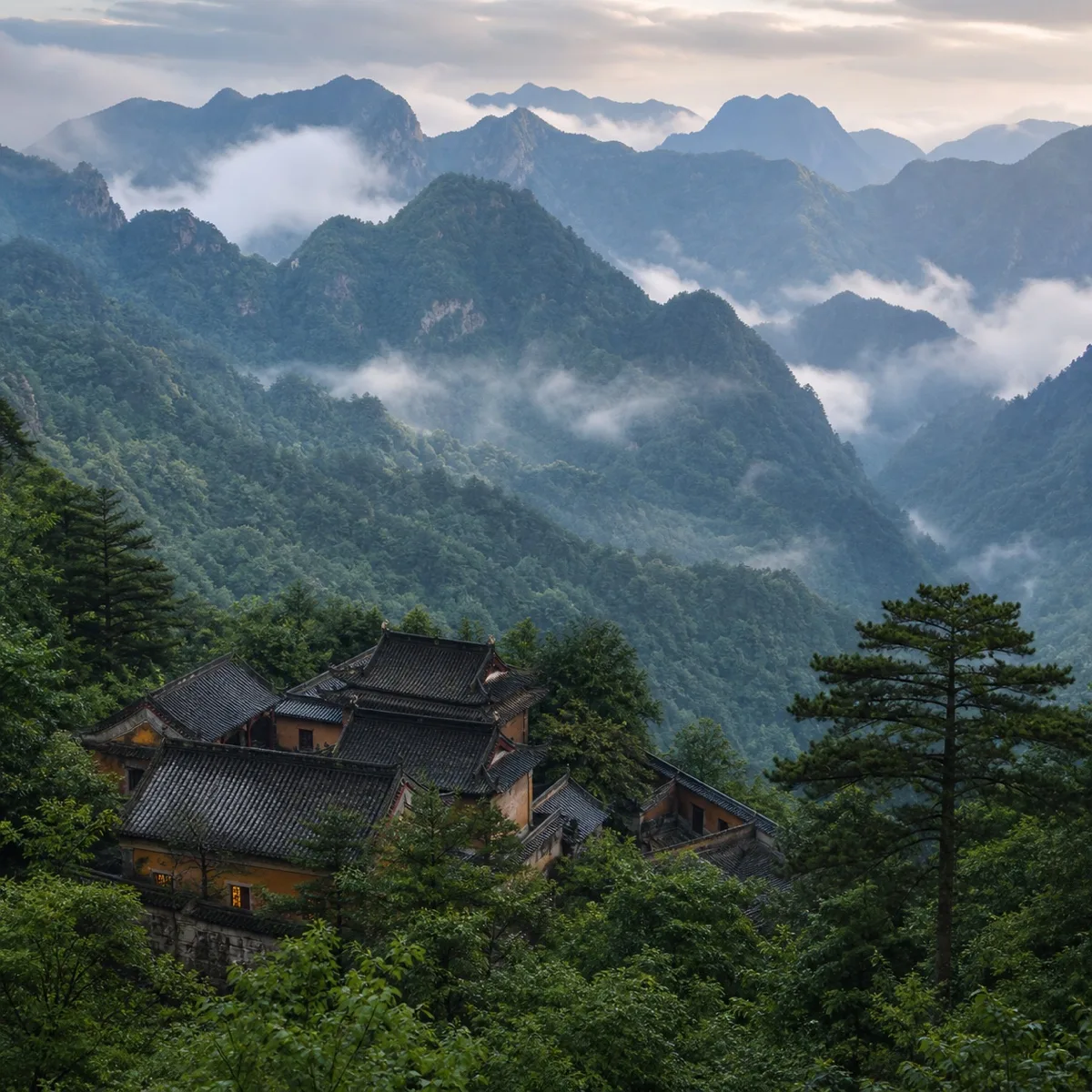
Mozhen Well and Taizipo at Wudang Mountain
The needle-grinding legend, Fuzhen Temple and the architecture of the Prince’s Slope
Explore this section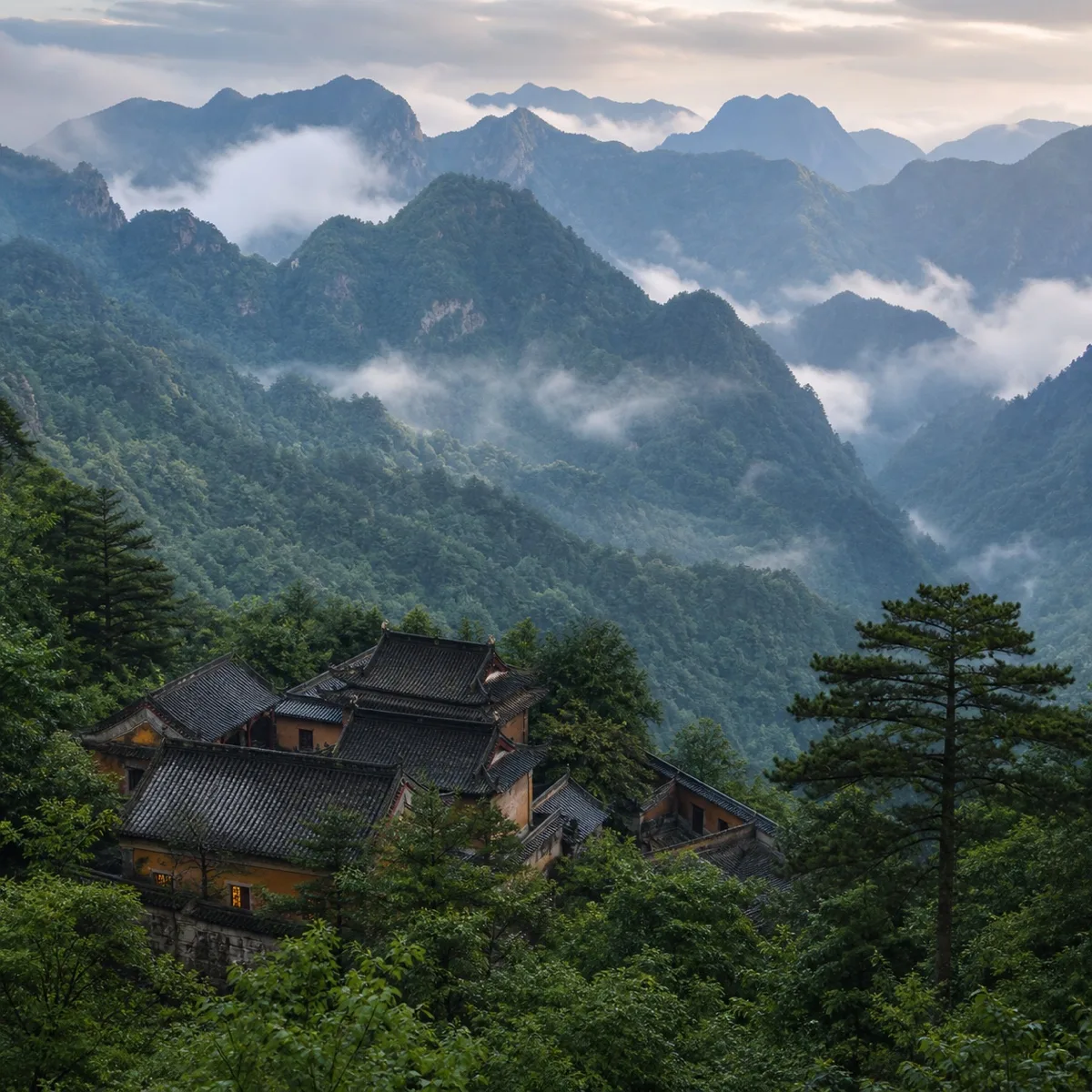
02 Explore the subject
Nanyan Palace at Wudang Mountain: Cliff Temple and Dragon-Head Incense
Stone halls, the southern cliff, a dangerous historic ritual and the site of Zhenwu’s ascent
Explore this sectionGo further
Deeper reading
- Mozhen Well and Taizipo at Wudang MountainThe needle-grinding legend, Fuzhen Temple and the architecture of the Prince’s Slope
- Zixiao Palace at Wudang Mountain: A Visitor’s GuideThe mountain’s most complete temple complex, its Ming hall, resident clergy and practical visit details
- Nanyan Palace at Wudang Mountain: Cliff Temple and Dragon-Head IncenseStone halls, the southern cliff, a dangerous historic ritual and the site of Zhenwu’s ascent
- Wudang Mountain Summit: Taihe Palace and the Golden HallHow to reach the peak, what survives there and why the bronze hall crowns the entire route
The full guide
What should I know before reading further?
The central route is the spine of the mountain: the sequence of major sites running from the lower slopes to the summit, along which the Ming programme placed its most important buildings. Almost every visitor follows some version of it, and it is the part of Wudang that people mean when they say they have been to Wudang.
Read more The complete guide
The central route is the spine of the mountain: the sequence of major sites running from the lower slopes to the summit, along which the Ming programme placed its most important buildings. Almost every visitor follows some version of it, and it is the part of Wudang that people mean when they say they have been to Wudang.
What the central route is
It is the designed ascent. Beginning near the foot of the range, it passes a site associated with the young Zhenwu's decision to persevere, then a slope-side temple complex associated with him as a prince, then climbs to the great mid-mountain palace, then reaches the cliff-side complex on the southern face, and finally arrives at the summit group with its bronze hall on the highest peak.
In the Ming arrangement this was walked, on stone stairways built for the purpose, and the stairways still exist. In the modern arrangement visitors are carried part of the way by vehicle from the entrance, and a cable car covers a portion of the upper mountain, with the final approach to the summit on foot in every case. So the route you travel today is the historic route, taken partly by machine.
Nothing on this line is optional in the sense of being minor. These are the principal buildings of the whole site, and if you see only these you have seen the core of what the emperor built.
Why the order matters
The sequence is not accidental and it is not merely topographic. It follows the life of Zhenwu, and the buildings were placed to stage that life as an ascent.
Low down you meet the story of the young prince who left the palace and almost gave up, turned back by an old woman patiently grinding an iron bar into a needle. Above that is the complex associated with his princely origins, built on a slope with a famously ingenious response to the lack of level ground. Higher again is the great palace of the middle mountain, the setting of the long years of cultivation. On the southern cliff is the place of his ascent, including the rock from which he is said to have risen. At the summit he is enthroned as a god.
Walking this in order gives you a narrative: refusal, perseverance, long labour, transformation, enthronement. Walking it out of order, or arriving at the summit first, gives you a set of buildings. If you have any choice in the matter, go up in sequence and come down by a different way.
What each is actually like
Brief and honest characterisations, since the individual pages go into detail.
The lower site associated with the needle-grinding story is small and quickly seen, and its interest is entirely in the story attached to it. The slope-side princely complex is architecturally the cleverest thing on the mountain for its size: built on a steep gradient, it stacks courtyards up the hill and contains a celebrated hall carried on a single central pillar with many subsidiary supports, which is the detail everyone remembers.
The great mid-mountain palace is the architectural highlight of the visit and the one place where you should not hurry. Its principal hall is a genuine Ming timber structure of the first quality, it sits in a well-preserved multi-courtyard layout on a terraced platform, and it is in active religious use, so with luck you will hear the liturgy rather than only look at the room.
The southern cliff complex is the most dramatic setting, with buildings placed on and against a sheer face, an early stone hall built in stone precisely because of the exposure, and a famous carved stone beam projecting over the drop that visitors are firmly discouraged from climbing onto. The summit group is the smallest in area and the largest in effect: a bronze hall of the early fifteenth century, assembled on the peak, surrounded by walls and reached by steep stairways, usually crowded, and frequently in cloud.
The stairways and what they tell you
The stone stairways are easy to treat as the boring connective tissue between the interesting buildings, and they are in fact one of the most impressive things on the mountain.
They were built as part of the programme, cut and laid across very difficult ground, with retaining walls, drainage, bridges over gullies, and landings placed where a climber needs them. Their width and finish vary deliberately: a broad, well-dressed flight approaching a major palace is telling you that something important is coming, and a narrow rough stretch between minor sites is telling you the opposite. Gateways and arches punctuate the climb, marking thresholds in the way a courtyard wall does on flat ground.
Because masonry survives where timber does not, the stairways are among the most authentic Ming fabric you will touch all day. If you ride past all of them you will have seen the buildings without experiencing the composition, which was designed around the effort of getting between them. Walking even one connected section changes your understanding of the whole site, and it does not have to be the hardest one.
Practical advice for the day
Some structural points, with no figures.
Start early. Crowds build through the morning, the light is better, and the halls in religious use are at their most interesting before the tour groups arrive. Decide in advance whether the summit is your priority, because if it is you should get it done before the heaviest congestion and before afternoon cloud. Carry water and something to eat, since provisioning on the mountain is uneven and concentrated at the busy nodes. Wear footwear with grip, since the stone is worn smooth and often wet. Take layers, because the summit is markedly colder and windier than where you started.
Above all, budget more time than the distances suggest. Everything here takes longer than it looks because everything involves vertical movement, queues at transfer points, and the fact that the interesting buildings deserve more than a walk-through.
Crowds, and how to work around them
Congestion on this route is concentrated rather than spread, and that is good news because concentration can be avoided.
It gathers at the entrance, at vehicle transfer points, at the cable car, and on the summit, which is a small area receiving a large flow. It peaks during national holidays and school vacations, and within any day it builds through the middle hours. The halls themselves are rarely the bottleneck; the movement between them is.
The practical responses are simple. Be on the mountain at the beginning and end of the day rather than in the middle. Stay overnight on the mountain if you can, because that is what puts you in the halls when the day visitors are not there and when the resident clergy are conducting services. Walk sections that others ride, since a stairway carrying pilgrims on foot is far emptier than a queue for a cable car. And accept the summit as the one place you will share with everybody, then leave it and go somewhere quiet rather than lingering.
If the weather closes in
Cloud on the summit is normal rather than exceptional, and ice can close upper sections in winter. Treat a lost summit as a likely outcome rather than a ruined trip.
The mid-mountain palace and the cliff complex are both excellent in mist, arguably better, and neither depends on a view. Interiors, carving, stonework and liturgy are unaffected by cloud. If you have more than one day, keep the summit flexible and go when the mountain lets you. If you have only one day and it is closed in, spend it properly on the mid-mountain and cliff sites rather than queuing hopefully at altitude.
Getting the most out of it
Three habits improve this day disproportionately.
Look at material rather than form, so you can tell the genuine Ming fabric from the renewals: bronze, dressed stone and weathered timber joinery are old, bright paint and crisp new carving are not. Look at position, because a hall's size, its number of courtyards and its roof treatment were set by its rank in the sequence, and reading rank from the outside is a skill you acquire in an hour. And stop moving occasionally; the single commonest mistake is treating the route as a series of photographs rather than a designed experience, which it was built to be.
The four pages
This group has a page for each principal site on the line: the lower approach and the princely slope complex, the great mid-mountain palace, the southern cliff, and the summit. Each covers what is there, what is original, what to look for, and the practical particulars of that specific place.
Sources and limits. Descriptions follow published conservation and architectural material on the site together with the mountain's gazetteers, and characterisations of what is original reflect that material and visible evidence. The narrative reading of the ascent is well attested, though the date at which individual site associations were fixed is not always determinable. Access arrangements, transport stages, opening of individual halls and photography rules change and none are stated here; check on the day.
Key points
The central route is the designed ascent carrying the site's principal buildings, and it is what most people mean by visiting Wudang.
Its order stages the life of Zhenwu: perseverance, princely origins, long cultivation, ascent, enthronement.
Go up in sequence if you can, because out of order the route becomes a set of unrelated buildings.
The slope-side complex is the cleverest architecture for its size; the mid-mountain palace is the architectural highlight and is in religious use.
The southern cliff has the most dramatic setting and an early stone hall; the summit's bronze hall is small, crowded and often in cloud.
Start early, carry water, wear grip, take layers, and budget far more time than distances suggest.
Summit cloud is normal; the mid-mountain and cliff sites are excellent in mist and do not depend on a view.
Judge age by material, read rank from position, and stop moving occasionally.
Recommended next page
Where next?
Zixiao Palace at Wudang Mountain: A Visitor’s GuideThe mountain’s most complete temple complex, its Ming hall, resident clergy and practical visit detailsA few alternatives