Practice
修习入门
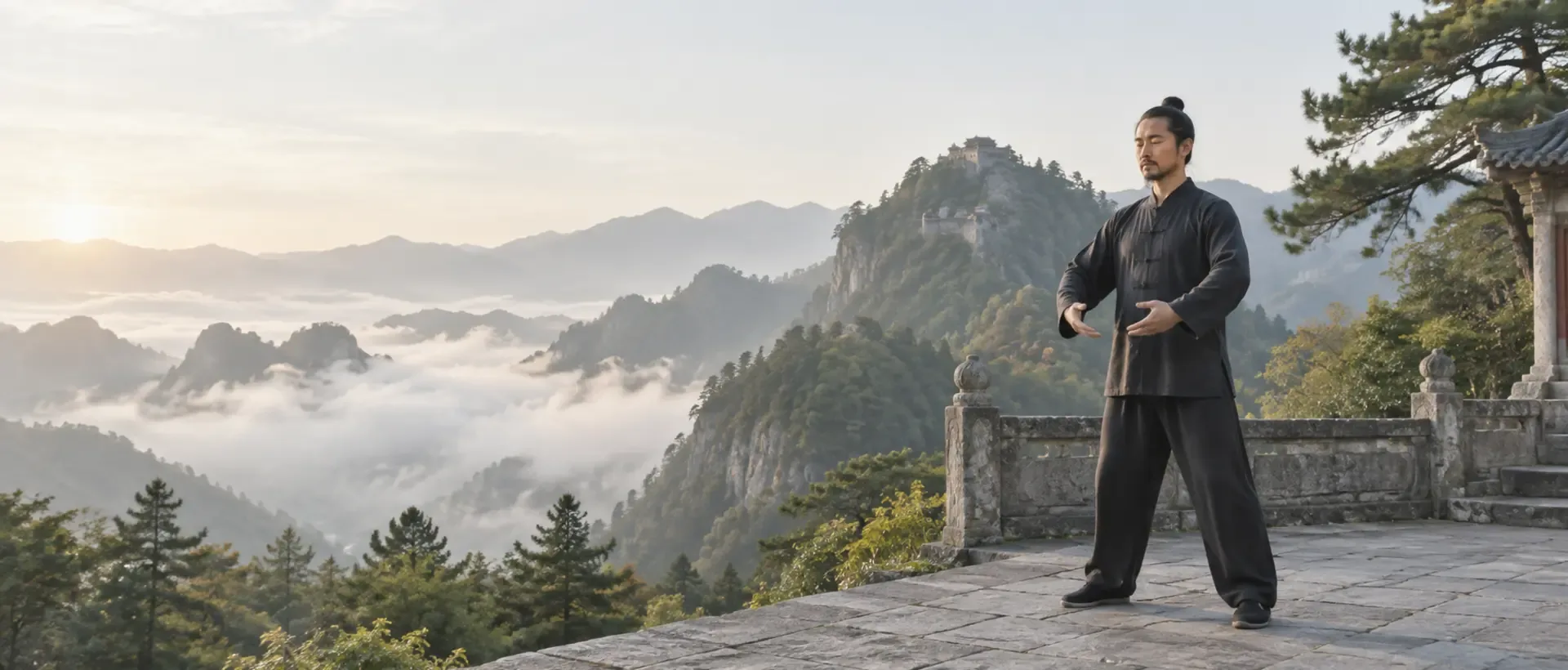
New to Wudang Practice?
Start with the beginner pathway to choose a realistic first practice, understand what to expect in your first month and avoid common mistakes.
Read the Wudang beginner pathway
Wudang practice can begin through movement, stillness, breath, structure, attention or the wish to care for life more steadily. Martial arts and wellness practices often share foundations, but they are not interchangeable. The right starting point depends on what you want to learn, your present condition and the kind of teaching available.
Choose Your Path
Wudang Martial Arts
Explore Taijiquan, Baguazhang, Xingyiquan, sword, foundations and training. Choose this route when you want a martial curriculum, technical movement, forms, partner work, weapons or long-term skill development.
Wellness and Nourishing Life
Explore Qigong, standing practice, Taoist wellness, internal cultivation, moxibustion and the careful study of Bigu. Choose this route when your main interest is daily practice, balance, body awareness, breath, rest or traditional approaches to nourishing life.
Shared Foundations
Posture and structure: organise the body without becoming rigid.
Breath: allow breathing to remain appropriate to the activity rather than forcing a dramatic sensation.
Attention: notice tension, balance, timing, distance, rhythm and change.
Repetition: develop quality through regular, accurate practice instead of collecting techniques.
Adaptation: adjust stance, duration, range or intensity to the person and the purpose.
Guidance: learn from a teacher who can explain the method, observe the student and respond responsibly.
Find a Sensible First Step
I am completely new
Begin with a clear introductory class in Taijiquan foundations, Qigong or standing where the teacher states the level, physical demands and available adaptations.
I want martial depth
Look for a progressive curriculum, foundational work, teacher feedback and an honest explanation of forms, partner practice, applications and safety.
I want a steady daily practice
Choose a small repeatable sequence or standing method that can be learned accurately and adjusted without pressure to practise for excessive durations.
I have an injury, disability or health concern
Ask what adaptations are available and whether the teacher is competent for the situation. A class does not replace diagnosis, rehabilitation or medical care.
I want to train at Wudang
First verify the school, teacher, schedule, language, accommodation, physical demands, fees, insurance and student protections.
What a Responsible Course States
A named teacher, relevant background, teaching method and organiser relationship.
Level, learning purpose, class format, language, duration, physical demands and group size.
What to wear or bring, the venue or platform, accessibility and available adaptations.
The fee, inclusions, schedule, booking status and cancellation terms before payment.
Photography, recording, contact, safeguarding, complaints and emergency arrangements.
Practise without force: sharp or increasing pain, dizziness, faintness, chest discomfort, unusual shortness of breath, loss of sensation or another worrying symptom is a reason to stop and seek appropriate help. A teacher should not shame a student for resting or adapting.
Explore Martial Arts · Begin with Wellness · View Current Courses · Training at Wudang
Core Wudang Practices
Use these guides to understand what each name covers before choosing a class or teacher.
Taijiquan (Tai Chi) — forms, principles, family styles, partner practice and Wudang approaches.
Qigong — posture, breathing and attention across a broad family of practices.
Standing practice — stillness, alignment and the organisation of the body.
Wudang sword and weapons — straight-sword practice, other weapons and their place in martial training.
Baduanjin (Eight Brocades) — an accessible eight-part qigong sequence with several modern variations.
Wudang internal cultivation — how regular practice can shape attention and everyday conduct.
Compare Practices Before You Begin
If you are deciding between movement, standing and breath-led practice, begin with Tai Chi vs Qigong and the foundations of internal martial arts.