How to Use Chinese Divination Responsibly
如何负责任地使用中国占卜
Chinese divination includes the Yijing, milfoil and coin casting, temple lots, oracle traditions and many regional practices. These arts have accompanied decisions, journeys, ceremonies and periods of uncertainty for centuries, offering a formal way to pause and consider change.
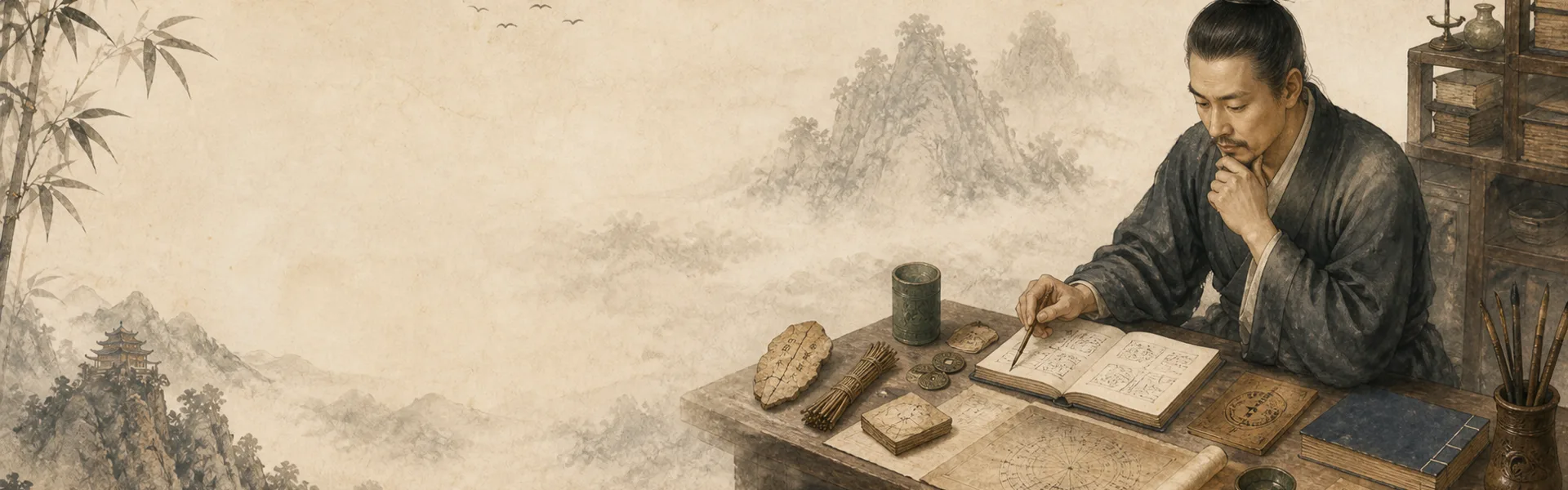
A tradition of asking well
Divination begins with a question, a ritual procedure and an image or text to interpret. The process slows the moment down and asks the participant to describe what matters. In the Yijing especially, the language of change encourages attention to timing, relationship and the consequences of action.
Why people find it useful
An unexpected hexagram or lot can interrupt habitual thinking and reveal an option that had been overlooked. Symbolic language makes room for several perspectives, while ritual creates seriousness and focus. The resulting value often lies in reflection, clarification and renewed willingness to act.
Tradition and perspective
Divination is a traditional interpretive practice rather than guaranteed knowledge of future events. Random procedures select the material for reflection; meaning emerges through the relationship between the text, the question and the reader. Understanding this preserves the ritual and philosophical value without turning a consultation into a fixed decree.
Responsible practice
Responsible readers avoid frightening predictions, repeated consultations driven by anxiety and claims that demand payment for protection. Medical, legal and financial matters should include the relevant professional information. A helpful consultation returns the questioner to life with greater clarity and agency.
Cultural and philosophical significance
The Yijing is more than a forecasting manual: it is a major work on transformation, position and appropriate action. Temple lots and community practices also show how ritual helps people share uncertainty and mark decisions. Studying divination therefore opens a window onto Chinese religion, philosophy, literature and social life.
Key points
Chinese divination includes many methods united by ritual, symbolism and interpretation.
Its strongest value lies in perspective, reflection and engagement with change.
Meaning is shaped by the question, the selected text and the reader.
Responsible practice supports agency and keeps important decisions connected to real-world knowledge.