Neigong: Internal Training, Breath and Attention
内功:内在训练、呼吸与专注
Neigong is often translated as “internal work” or “internal training,” but the name does not identify one universal exercise. In different schools it may describe standing, slow movement, breathing practice, focused attention, partner work or a combination of these.
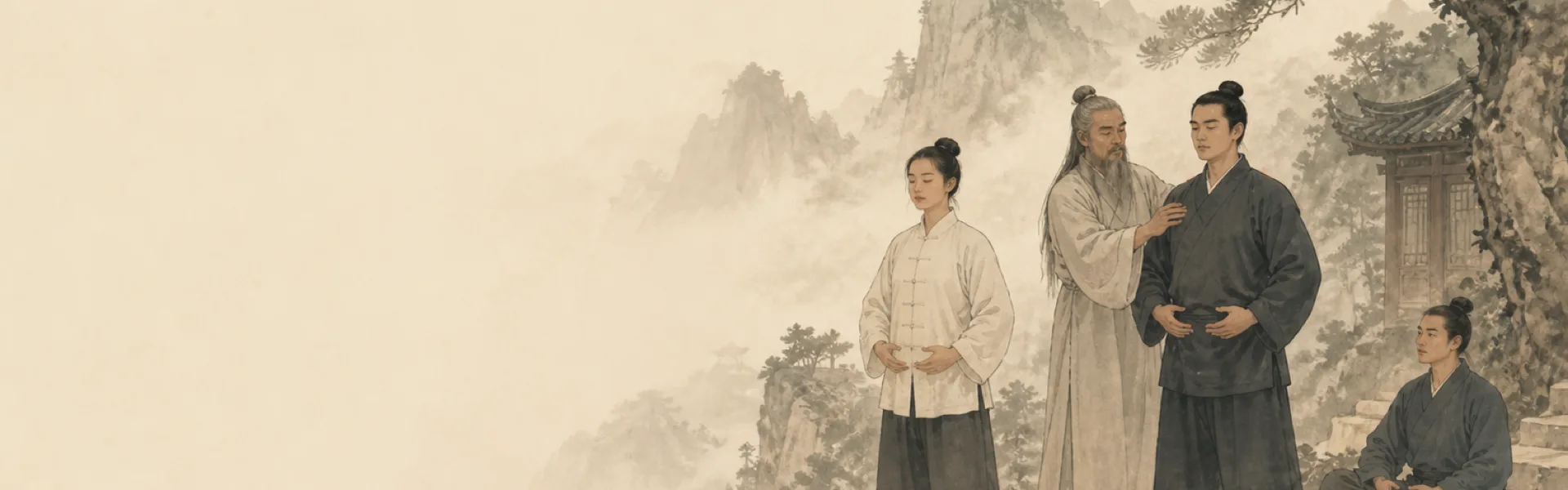
The useful question is therefore not “What is the one true neigong?” but “What does this teacher or curriculum ask the student to practise, and for what purpose?” Clear instructions matter more than a mysterious label.
A Term Defined by Context
The characters 内功 join “internal” with sustained skill or work. That broad wording lets communities use the term differently. Some place it inside martial training; others connect it with health cultivation, meditation or Daoist practice.
These settings overlap, but they are not interchangeable. A drill designed to organise a martial posture should not automatically be treated as therapy, and a contemplative exercise should not be assumed to produce fighting skill.
Martial, Cultivation and Daoist Settings
In a martial class, neigong may develop the ability to keep structure and attention while shifting weight, turning or receiving light pressure. In a cultivation setting, the same word may point instead to quiet sitting, standing or breath-led awareness.
Daoist communities also have their own vocabularies, ritual settings and teacher-led methods. Calling every inward-looking exercise “Daoist neigong” erases important differences in purpose and transmission.
What a Practice May Include
A lesson may combine standing, slow stepping, repeated transitions, relaxed breathing and attention to a chosen area of the body. None of these components is required in every lineage, and their order can change with the student and the goal.
Good instruction makes the task observable: where to place the feet, what should move, what should remain easy, how long to continue and when to stop. That gives the learner something more useful than an instruction to “use internal power.”
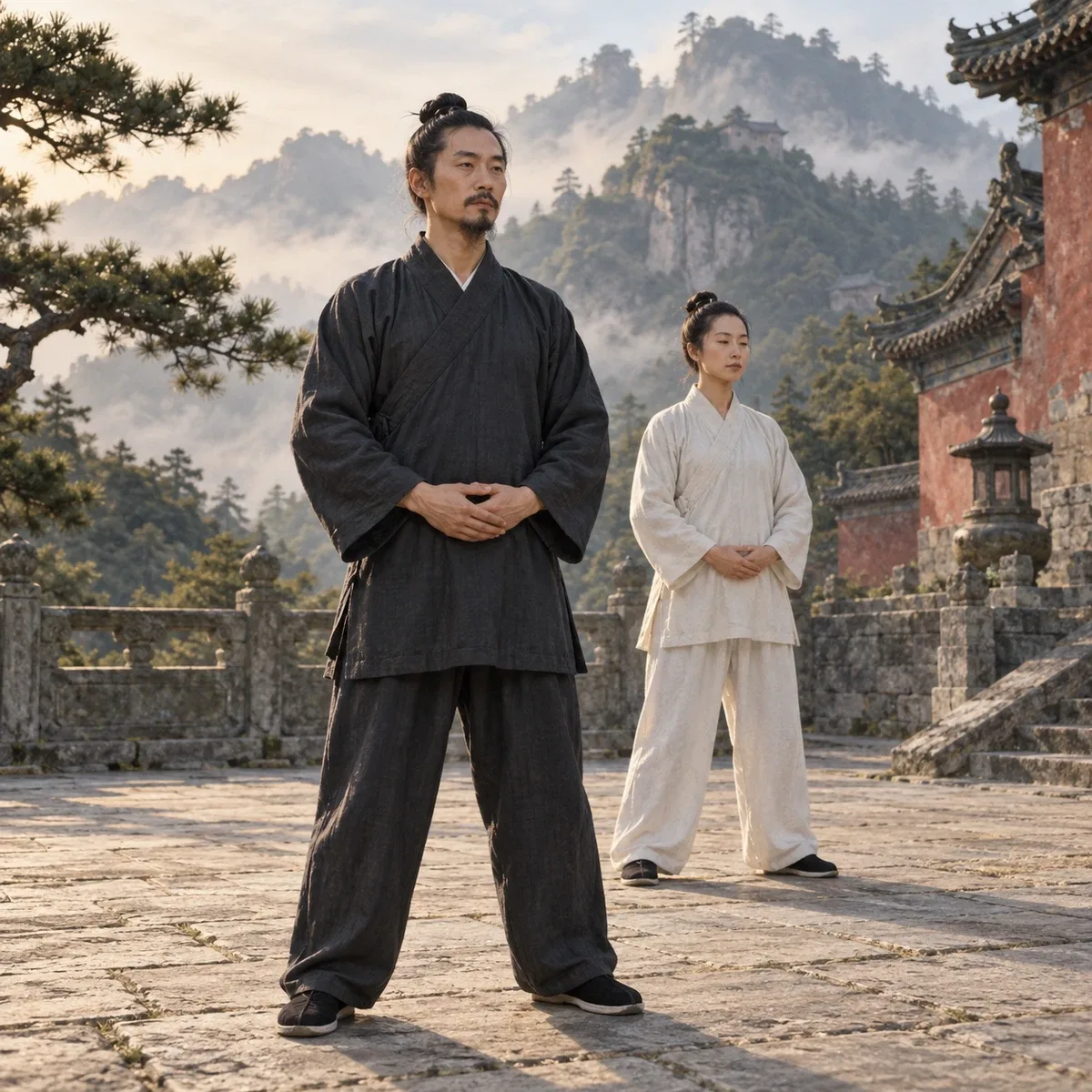
AI-generated editorial illustration of an imagined practice scene; no real teacher, school or event is depicted.
Dantian as Instruction and Map
Many traditions direct attention toward the lower dantian, usually described as a region in the lower abdomen. In practice, this can help a student avoid unnecessary movement in the shoulders and notice how the trunk, pelvis and steps relate.
Dantian is part of an inherited Chinese map of practice, not the name of a discrete anatomical organ. It can be respected as a teaching framework without turning it into a claim about a hidden structure or a guaranteed mechanical advantage.
Breathing Without Force
For beginners, a sound starting point is quiet, continuous breathing that does not compete with the movement. Let the breath remain comfortable; do not chase a larger breath, clamp the throat or add long holds to make the exercise feel more advanced.
Some curricula teach specialised patterns, including coordinated abdominal changes or pauses. Those methods need a clear purpose, gradual progression and close guidance rather than imitation from a brief description.
Sensation Is Information, Not a Rank
Warmth, tingling, heaviness, lightness or pulsing may appear during stillness and concentrated attention. Such sensations can have many ordinary causes. Their presence does not prove attainment, and their absence does not mean that practice has failed.
Notice sensations without amplifying them or using them to diagnose yourself. If an experience becomes painful, frightening, persistent or disruptive, stop the exercise and seek appropriate help rather than trying to push through it.
Observe What Changes
Practical progress is easier to discuss through repeatable tasks. Can you keep the breath unforced while stepping? Can you turn without lifting the shoulders? Can you maintain balance and attention when the drill becomes slightly more complex?
These observations do not prove a hidden power, but they can guide training. Video, a simple practice log and carefully controlled partner feedback can reveal whether ease and coordination remain available across repetitions.
Dose, Recovery and Stop Conditions
Begin with a short period and finish while posture and breathing are still comfortable. Increase only one variable at a time—duration, stance depth, movement complexity or partner pressure—and leave room for recovery.
Stop and settle safely if you become dizzy, faint, unusually short of breath or develop chest pain, sudden weakness or other concerning symptoms. Recurring or severe symptoms require qualified medical assessment; neigong instruction is not a substitute for it.
Questions for a Teacher
Ask what a drill is intended to train, how effort should feel, which errors are common and what the next progression will be. If touch or partner pressure is used, consent, intensity and the signal to stop should be agreed before beginning.
A responsible learning environment allows questions and adaptations. It distinguishes traditional explanations from health promises and gives students observable ways to judge whether a practice remains controlled.
A Small Introductory Session
Try three to five minutes in a comfortable upright stance. Let the knees remain soft, rest the hands near the lower abdomen, breathe normally and notice whether the face, throat and shoulders can stay quiet. Finish with a few easy steps.
Treat this as attention and posture practice, not as a complete neigong system. For a broader sequence that connects solo work, drills and recovery, return to Training and Practice.