Wild Edible Plants at Wudang: Food, Pilgrimage and Living Knowledge
武当山野菜:饮食、朝山与活态知识
A meal can be one way of reading a mountain. At Wudang, dishes described as yecai—often translated as “wild vegetables”—have connected seasonal plants, village livelihoods and the experience of pilgrimage. The term, however, is a food and cultural category, not a reliable species identification. It may cover ingredients gathered, tended, cultivated or purchased through changing local supply networks.
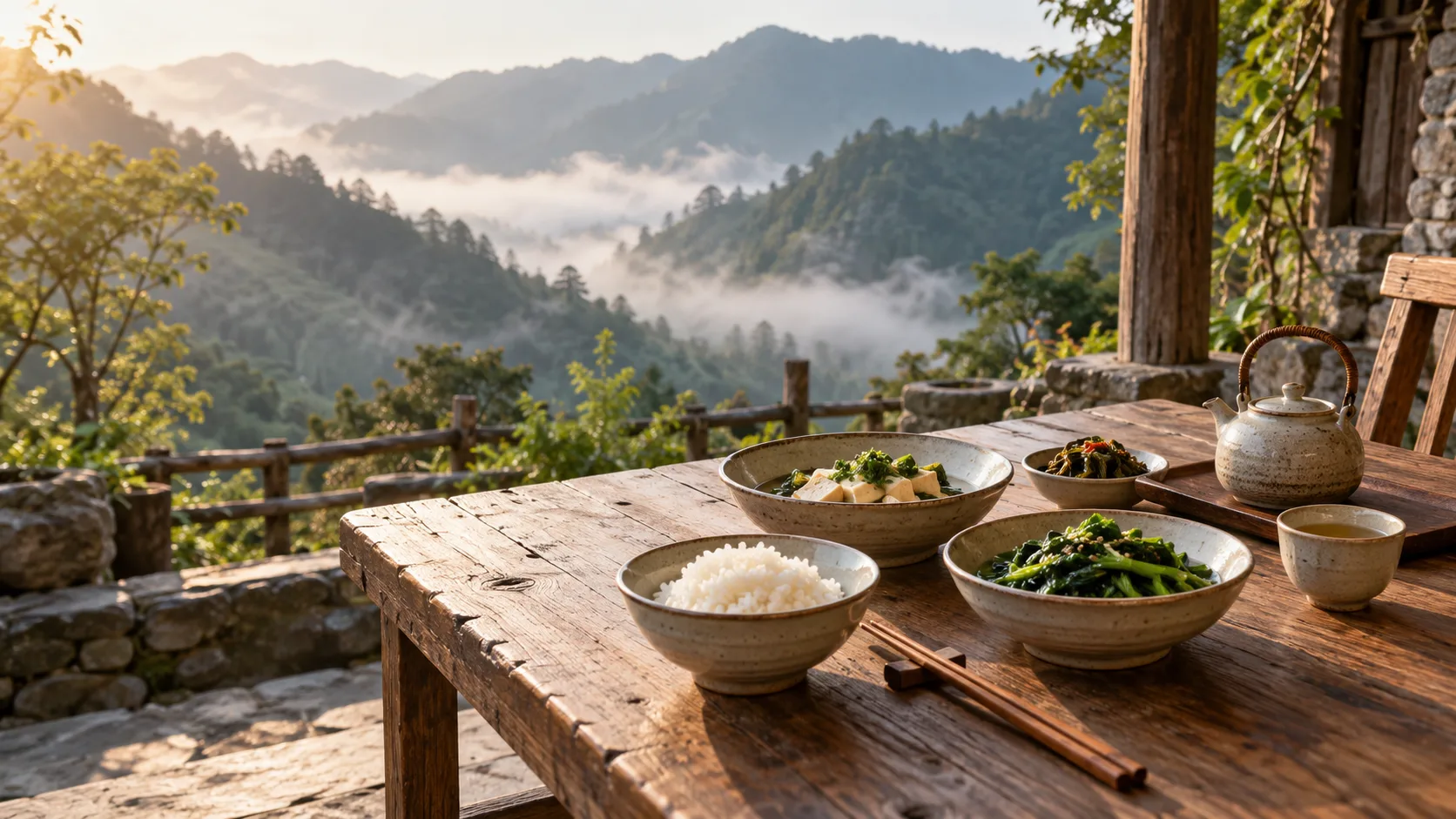
This article interprets that relationship without offering a foraging guide. The safest and most respectful approach is to encounter these foods through responsible local cooks, ask how ingredients were sourced, and leave plants in the landscape untouched. For the wider ecological setting, begin with Wudang’s natural landscape.
From mountain plants to a meal
“Wild vegetable” is a menu category
Chinese diners may see the broad label yecai rather than a botanical name. In restaurants around Wudang, the category can signal seasonality, mountain character or a link with rural food knowledge. It does not prove that every ingredient was recently gathered from uncultivated forest, nor does a familiar-looking leaf establish that it is edible.
Sources and seasons can change
Ethnographic research at Wudang described ingredients coming from forest edges and abandoned farmland and entering restaurants serving visitors. Tourism, access rules, cultivation and market supply can all change that picture. A dish should therefore be understood in its present context: where it came from, who prepared it, and whether its name is local, commercial or botanical.
Preparation is part of the knowledge
Edibility is not just a property of a plant. Correct identification, the part used, the season, cleaning, soaking, cooking and portion all matter. Knowledge held by gatherers and cooks cannot be reconstructed safely from a photograph or translated menu. Visitors interested in meals on the mountain can also read the practical guide to eating at Wudang.
Food, pilgrimage and living heritage
A multisensory mountain
A 2015 study of Wudang’s wild-food restaurants found that meals helped visitors experience the sacred landscape through taste, smell, conversation and story. Food did not merely follow a pilgrimage route; it helped people imagine relationships between mountain, community and tradition.
Villagers as interpreters
The same research presented villagers as active mediators rather than a decorative background to tourism. By choosing names, recipes and stories, they made local knowledge legible to visitors while adapting to economic change. A 2012 Chinese study likewise examined participation in the wild-vegetable industry and the transmission of related knowledge.
A tradition that continues to change
Those studies are valuable snapshots, not proof of an unchanged ancient cuisine. Restaurants, ingredients and visitor expectations evolve. Living heritage survives through choices and revision, and claims of “authenticity” should remain specific about place, date and source. The same principle guides how we read Wudang’s old trees as living heritage.
Respect begins with not picking
Appearance is not identification
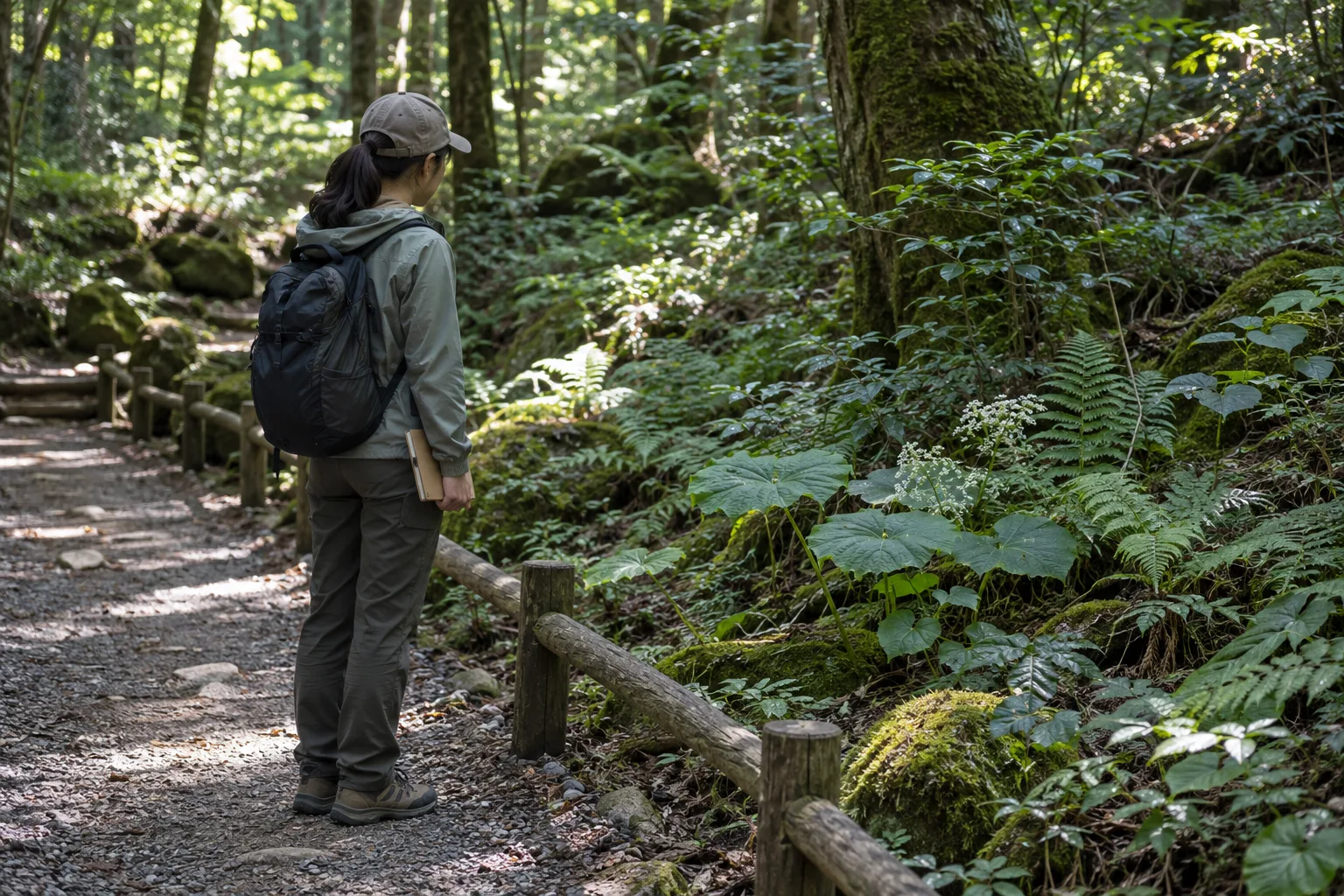
Wild plants can be misidentified, and edible species may resemble harmful ones. Apps, photographs and common names are not adequate safeguards. This page deliberately provides no species list, harvesting locations or identification cues, and it should never be used to decide what to eat.
Protected land and protected plants
China’s wild-plant rules distinguish levels of protection and regulate collection of nationally protected species; scenic areas may also have their own management requirements. Not every wild food is legally protected, but a visitor cannot infer legal status from appearance. Do not collect seeds, roots, leaves or flowers, and follow posted instructions and staff guidance.
Choose a responsible table
Order cooked food from an established venue, disclose allergies, and ask where ingredients came from. Avoid dishes whose source cannot be explained, and do not assume “wild” means healthier, medicinal or environmentally benign. A meal is most meaningful when it supports careful sourcing rather than pressure on the forest.
A six-question way to read the meal
Ask before assuming
- What is the local name? Treat it as a cultural name, not automatically a scientific identification.
- Where did it come from? Ask whether it was gathered, tended, cultivated or bought.
- Is it seasonal? Availability and preparation may vary through the year.
- How was it prepared? Cooking knowledge matters; do not copy a method from appearance alone.
- What remains uncertain? Decline health, antiquity or sustainability claims that cannot be supported.
- How can I leave no trace? Observe plants on the trail, photograph without trampling, and never pick.
Connect the table to the route. After the meal, notice how paths, settlements and temple approaches organize encounters with vegetation. The guide to landscape, temples and routes helps place food within that larger cultural geography. What matters is not finding an exotic ingredient, but learning how people continually negotiate nourishment, livelihood and care for a sacred mountain.
Sources and limits. This interpretation draws on Xu Wu’s 2015 ethnographic article and 2012 Chinese study, together with China’s wild-plant regulation and travel-health guidance on plant misidentification. The two Wudang studies describe particular research periods; they do not certify today’s restaurant sourcing or identify plants for consumption.
Further reading
Xu Wu, “Wild Edible Plants and Pilgrimage on Wudang Mountain” · 徐武,武当山“仙山野菜”研究 · China’s Regulation on Wild Plant Protection · CDC Yellow Book: plant poisoning and misidentification