Learning Chinese Incense: Reading and Practice
学习中国香文化:阅读与实践
Learning incense culture is not a race to acquire rare wood or memorize a hierarchy of grades. A better beginning is to observe one material at a time, record what actually happens, and keep the object, the historical source and the seller’s story separate.
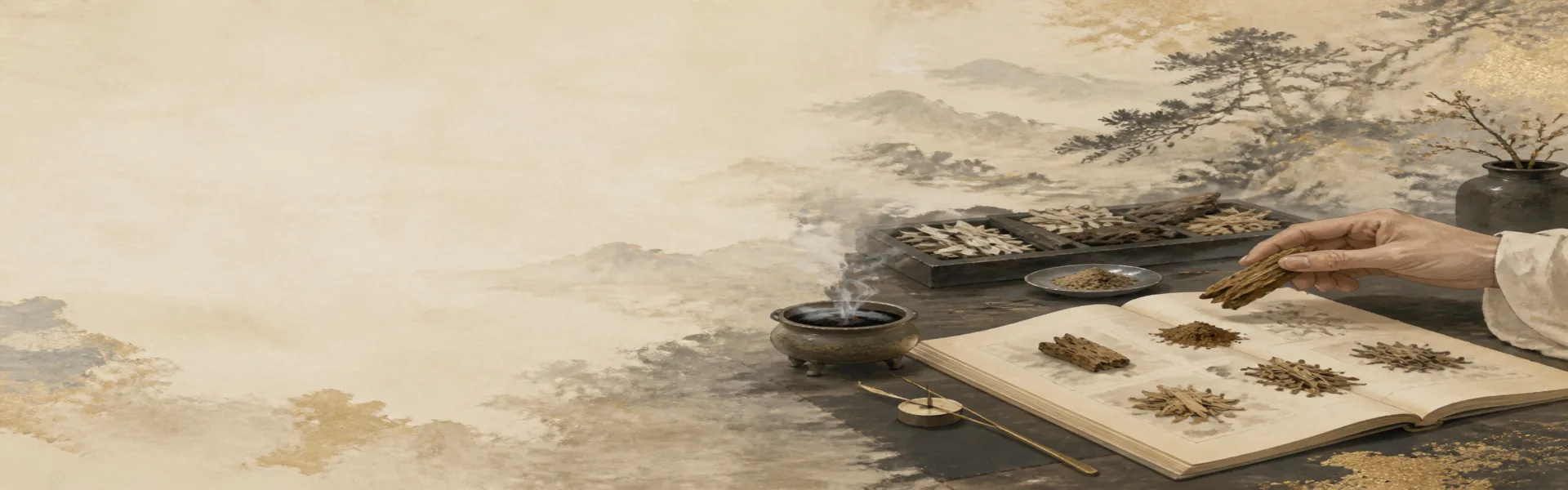
This guide joins practical study to a reading path. It does not teach a temple rite, certify authenticity or offer investment advice. The aim is a repeatable way to ask better questions about fragrance, objects, texts, trade and use.
Choose a modest learning question
Start with a question narrow enough to answer: how does one sample change as it warms, how do two forms burn differently, or what does a museum label actually say about an object? A small question keeps attention on evidence instead of prestige.
Write the question before opening a book or lighting anything. At the end, record what you observed, what came from another source and what remains uncertain. This simple distinction prevents interpretation from hardening into fact.
Begin with observation, not shopping
Use what is already available before buying a collection. Look closely at colour, texture, cut and packaging; smell the unheated material; then, if it is safe and permitted, test a very small amount. One sample can support several sessions when the purpose is comparison rather than consumption.
Price, poetic names and claims of age or origin can shape expectation. Cover the label during a blind comparison or ask another person to code the samples. The exercise will not authenticate them, but it can reveal how strongly prior information affects description.
Keep the equipment minimal and safe
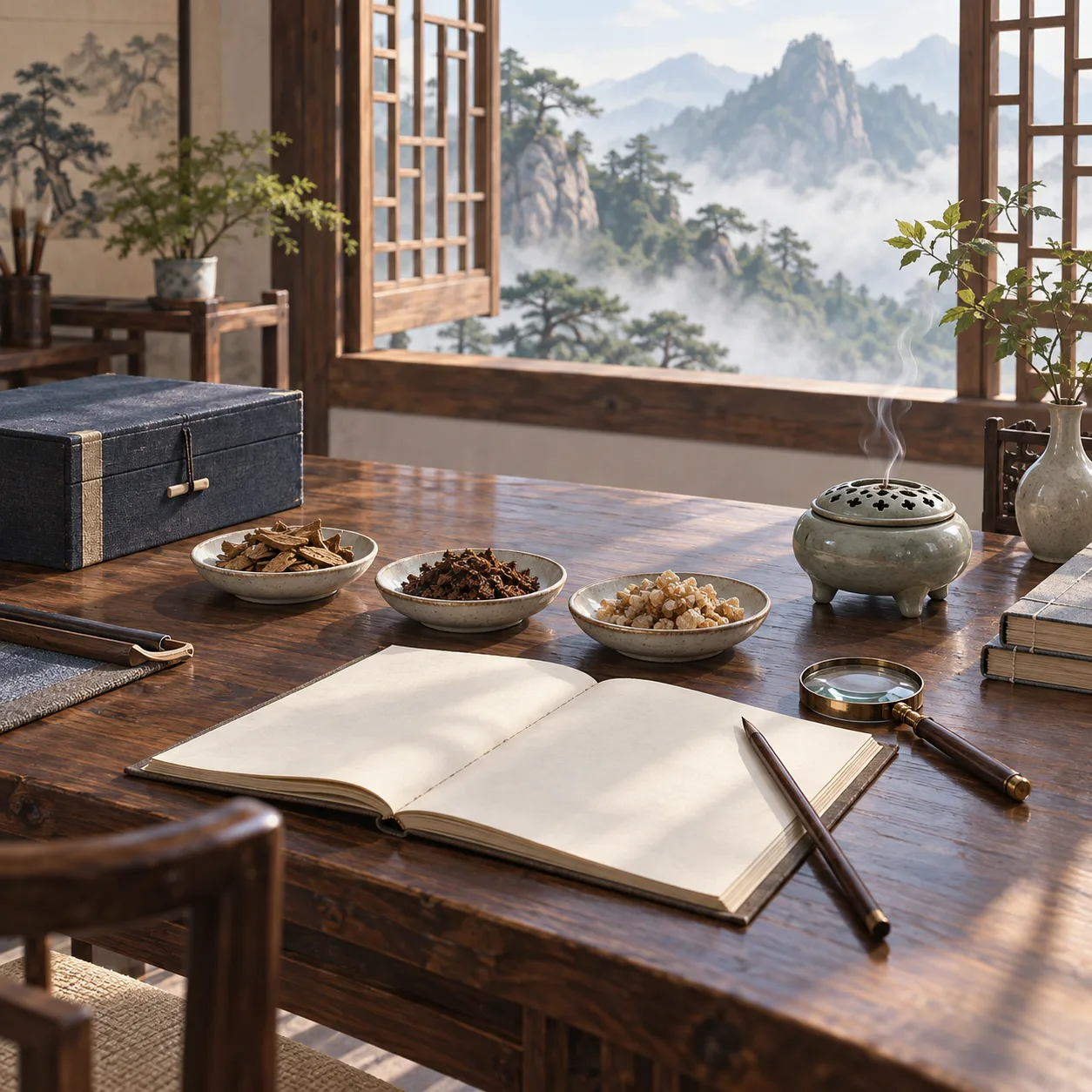
A beginner needs a stable, heat-resistant surface, a suitable holder or warmer, a way to handle hot material, and a notebook. Follow the product instructions and building rules. Ventilate, keep the source away from the breathing space and never leave flame or embers unattended.
Different forms require different equipment, so there is no universal starter kit. Do not improvise with flammable bowls, food utensils or unknown electrical heaters. Fragrance-free study—reading, object comparison and note review—is also part of the practice.
Compare one variable at a time
Keep the amount, distance and session length steady while changing only one condition, such as the material or heat setting. Describe intensity, change over time, comfort and any physical reaction in ordinary words before reaching for inherited scent labels.
Repeat the comparison on another day. A single session is easily shaped by ventilation, humidity, fatigue, food and expectation. Consistent notes are more useful than a dramatic verdict, and stopping because of irritation is valid data rather than a failed session.
Read classical compilations as historical sources
Chinese incense literature includes works commonly known as Xiangpu, Chen shi xiangpu and Xiangsheng. Editions, authorship, dating and contents can differ, so consult a reliable catalogue or annotated edition before treating a title as a single stable text.
These compilations preserve names, recipes, quotations and practices from particular times and editorial settings. They are not automatically modern safety manuals, universal ritual rules or proof that a present-day product matches an old name. Read prefaces, notes and source attributions as carefully as the main text.
Build a reading path by scope
Begin with a museum exhibition or collection catalogue, where objects, dates and provenance are visible. The National Palace Museum’s Scents to the Heavens exhibition is useful for agarwood, courtly collecting and incense utensils, while also showing that the surviving objects represent selected contexts.
For Tang-period imported aromatics, Edward H. Schafer’s The Golden Peaches of Samarkand offers a broad study of exotics and includes a chapter on aromatics. It is a historical interpretation, not a practical incense handbook. No single book covers every period, region, religious setting and material equally well.
Learn from objects without inventing their use
Censers, boxes, tongs, burners and moulds can reveal materials, workmanship and traces of use. Their shape may suggest possibilities, but an object alone rarely proves the exact substance, temperature, gesture or social setting in which it was used.
Read the accession record, excavation report or catalogue entry and note which statements are observations and which are curatorial interpretation. Compare several securely dated objects before claiming a continuous tradition. A modern reproduction should be identified as such.
Buy small samples and document provenance
When buying, ask for the botanical or material name when known, country or region of origin, product form, batch information and any relevant permits or declarations. Keep the receipt and photograph the label. A careful seller should be willing to distinguish documented facts from sensory or trade descriptions.
Avoid health promises, guaranteed spiritual effects, investment language and grades presented as universal standards. Buy small quantities until the supplier and material are better understood. For protected species or cross-border purchases, check current official rules for the exact species, product and jurisdiction before ordering.
Store, revisit and revise
Keep samples sealed separately, clearly labelled and protected from heat, strong light, moisture and contamination. Follow supplier instructions for products with special needs; do not assume that every wood, resin, powder or blended stick benefits from the same container or temperature.
Revisit an early sample after several months using the same note format. Your vocabulary may become more precise, or the material may have changed. Amend the record instead of defending the first impression. Good study leaves room for correction.
Use a four-session starter plan
Session one: examine one unheated sample and write a neutral description. Session two: test the smallest safe amount and record change over time. Session three: repeat under similar conditions. Session four: compare your notes with a museum record or scholarly discussion and mark agreement, difference and open questions.
Continue through the guides to incense history, aromatic materials, forms and appreciation, ritual and temple life, and meditation and Taoist practice. Each addresses a different kind of evidence. Return to the Chinese Incense Culture gateway when you need the wider map rather than forcing every question into one exercise.