Chinese Incense Burners: Bronze, Ceramic, Form and Context
中国香炉:青铜、陶瓷、形制与使用语境
An incense burner can be a practical vessel, a ritual furnishing, a scholar’s object or a work collected long after its first setting disappeared. “Censer” names a broad category rather than one timeless shape. A careful reading begins with the object in front of us—its body, openings, material, dimensions and documented history—before assigning a dynasty, function or symbolic meaning.
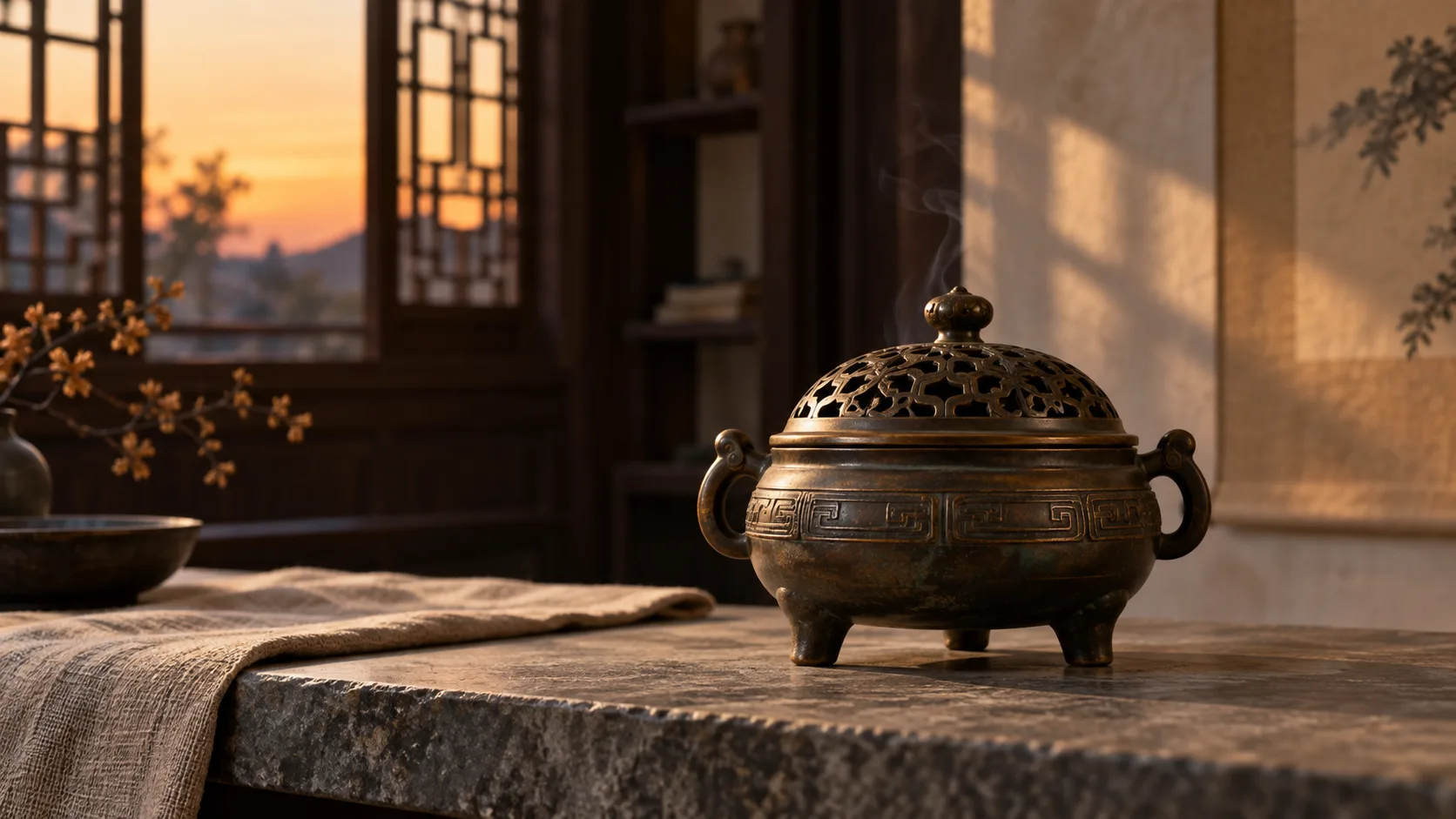
This guide is about looking at bronze and ceramic burners in museum records. It does not teach ritual or recommend burning incense in an antique. For aromatic materials, tools and safe modern practice, begin with Chinese Incense Culture.
Name the object before interpreting it
“Incense burner” covers many constructions
Catalogues use terms such as incense burner, censer and xianglu for vessels of very different periods and forms. Some are open bowls; others have pierced lids, chimneys, animal bodies, handles, feet or separate stands. The National Palace Museum’s Ming duck-shaped cloisonné censer, for example, releases smoke through the bird’s neck and bill. That ingenious construction should not become a template for every burner.
Separate body, lid, support and later additions
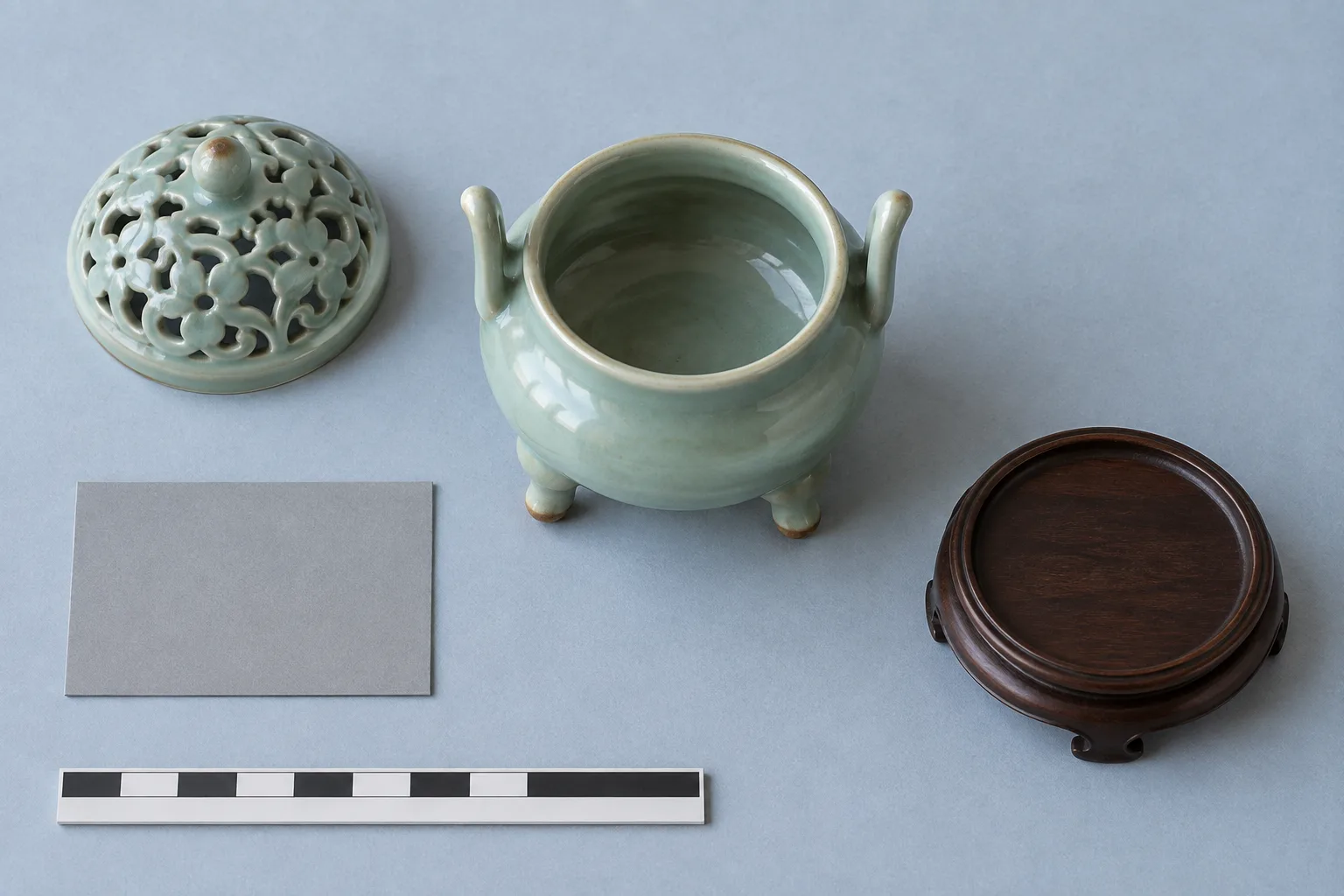
Look for joins before reading decoration. Record whether the lid lifts from the body, whether the feet are integral, whether a liner survives, and whether a stand belongs to the original conception. The same museum notes that the duck censer’s gilt base was probably added later. Present appearance can therefore combine parts with different histories.
Start with the catalogue’s measurable facts
Copy the museum’s title, date or range, material, dimensions, accession number and condition notes before paraphrasing them. The Smithsonian’s blue-and-white porcelain censer is described as wheelmade and hand-finished, with a flared rim, clear glaze and documented provenance. Such particulars are stronger evidence than an attractive silhouette alone.
Read material and form together
Bronze can quote much older vessel types
A later censer may deliberately recall an ancient ritual or wine vessel. The Metropolitan Museum’s twelfth- to thirteenth-century copper-alloy burner adapts a Han bronze wine-warmer type at a smaller scale, replacing elaborate ornament with restrained horizontal bands. Resemblance is evidence of artistic reference, not proof that two objects had the same original use. Compare the site’s guide to reading Wudang bronze.
Ceramic makers translated metal shapes
Potters could recast bronze-associated profiles in stoneware or porcelain. A British Museum tripod burner is modelled on the ancient bronze ding, while its Guan-type stoneware censer adapts an old bronze form in a different material. Compare rim, handles, feet, wall thickness and glaze rather than collapsing “archaic style” into one look; the guide to Chinese teaware, clay and glaze offers a useful comparison in material reading.
Lids and openings belong to both design and function
Perforation can guide airflow while also organising a surface. The National Palace Museum’s Kangxi openwork wucai burner was made in three sections, with pierced walls, a lid, relief dragons and tripod feet. Describe what the openings do physically and visually; do not infer a precise recipe, ceremony or room from them alone.
Restore context without inventing certainty
Temple, court and studio are not interchangeable labels
Burners appear in religious, courtly, domestic and scholarly settings, but form by itself rarely proves one exact context. The National Palace Museum’s essay on objects of the scholar’s studio places bronze and porcelain censers among writing utensils, flower vases and collected antiquities. That documented setting expands the possibilities; it does not turn every small censer into a scholar’s possession.
Sets and companions need their own evidence
A censer may have been displayed with a vase, incense box, tools or stand. Record whether the museum catalogues the group as an original set, a later association or separate objects shown together. Repetition in later display photographs is not by itself proof of a universal historical arrangement.
Marks, patina and soot are clues, not certificates
Reign marks, collector’s marks, inscriptions, surface colour, repairs and residues can all inform research. None authenticates an object by itself. Marks can be copied or added; metal surfaces can change through burial, polishing and restoration; soot can result from later use. Preserve the catalogue’s qualifiers, provenance gaps and revised dates. The object-led guide to Chinese scholars’ rocks offers a parallel way to separate visible clues from ownership legends.
Use a six-pass museum method
Read the record before the legend
Begin with the institution, object number, material, measurements, date wording, provenance and bibliography. Distinguish “Ming dynasty,” “Ming style,” “with a later stand” and “traditionally attributed.” The record may change as research advances; keep the access date in notes.
Move through six questions
- Parts: Which elements are body, lid, liner, handle, foot, base, stand or later mount?
- Material: What does the catalogue identify—copper alloy, bronze, stoneware, porcelain, enamel or mixed media?
- Construction: Where are joins, casting seams, thrown walls, carved openings, glaze boundaries or repairs?
- Model: Does the record identify an older vessel type, animal form or historical style being quoted?
- Context: What evidence connects the object to a temple, court, studio, tomb, household or later collection?
- Afterlife: How have additions, use, cleaning, restoration, collecting and display shaped what survives?
Study antiques; practise only with suitable modern equipment
Never light incense, add ash, clean residue or test a historic object. Heat and smoke can damage surfaces, and provenance questions require trained curators and conservators. For personal use, choose a stable modern burner made for the intended incense, place it on a heatproof surface, ventilate the room and keep flame away from textiles, children and animals. For another example of separating a work from its later support and display, continue with how to read a Chinese hanging scroll.