Choosing Flower Vessels and Tools: Form, Support and Care
选择花器与工具:形制、支撑和养护
A flower vessel changes what a branch can do. Its opening gathers or releases stems; its weight resists a long reach; its colour alters how leaves and petals are seen. The useful question is therefore not “Which vase is traditionally correct?” but “What can this vessel safely hold, and what relationship will it make with the plant and the room?”
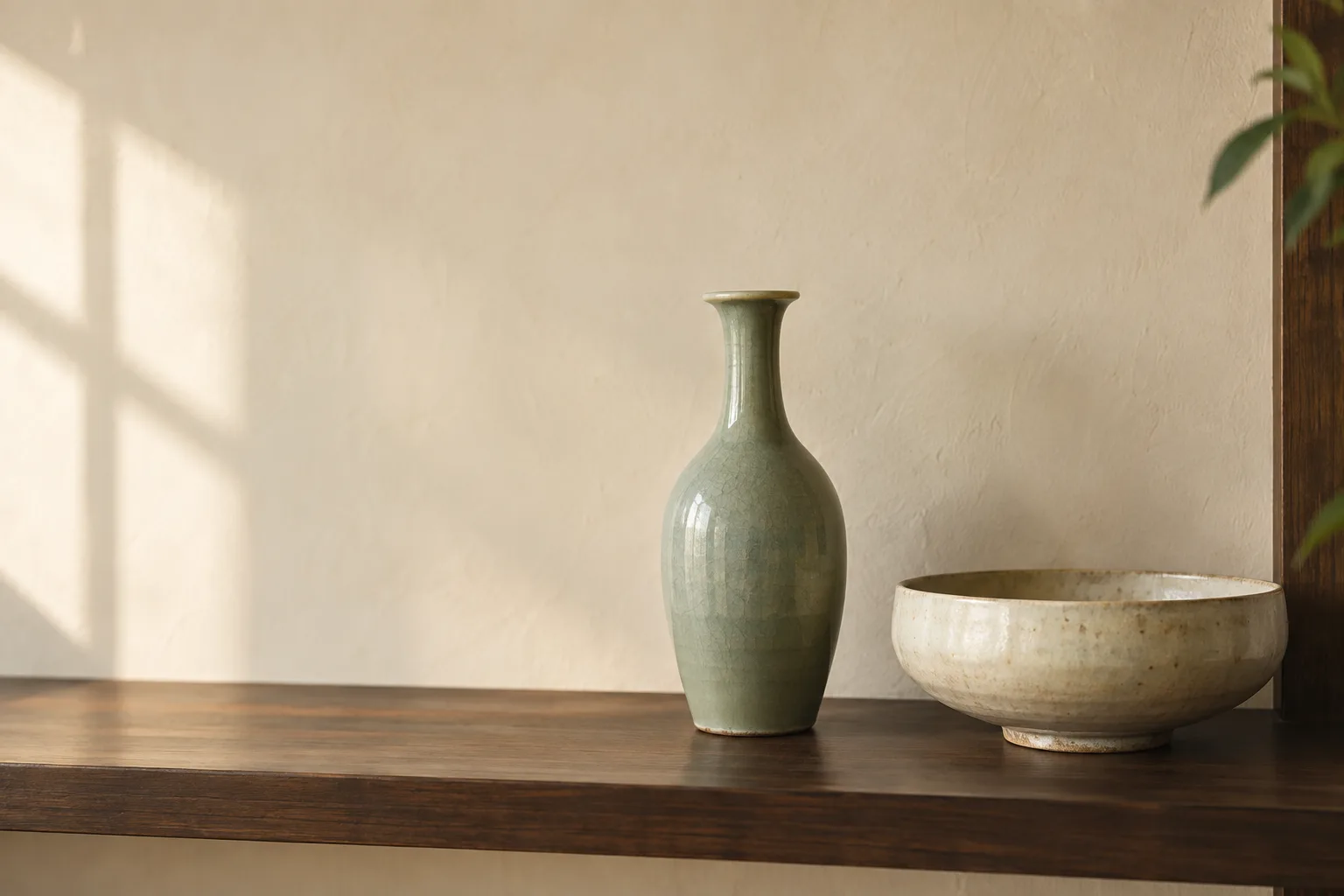
This guide follows our history of Chinese flower arrangement and composition guide. It separates preferences recorded by particular writers from present-day design choices and plant care. The historical texts can sharpen observation, but they do not make every old vessel safe for water or every old technique suitable for beginners.
Begin with the place and the plant
Choose a manageable scale
Decide where the arrangement will be seen before selecting a container. A narrow shelf asks for a secure footprint and a silhouette that does not catch passing sleeves. A shared table needs clear sightlines. A long woody branch produces leverage: if its centre of mass extends beyond the base, a visually graceful result may still topple.
Use a stable, watertight container on a level surface and test it with clean water before bringing in flowers. Do not rely on an object's age, price or material as proof that it is sound. Protect furniture from condensation and leaks. Large hall arrangements, antique vessels and unfamiliar supports belong with people who can assess the object, the plant and the setting safely.
Look at opening, body and base
A narrow neck brings stems together and limits their movement. A broad opening permits a low or spreading composition but may need a suitable support. A deep body offers water volume; a shallow bowl makes the water surface and support system more visible. A broad, heavy base can help stability, but no shape cancels the leverage of an overextended branch.
Try the material beside several empty vessels before cutting. Compare the branch's reach with the vessel's height, the flower's scale with the opening, and the combined outline with the available space. There is no universal ban on glass, bright glaze or a centred stem. Use each deliberately, and notice whether the vessel reveals, competes with or quietly supports what you want the reader to see.
Read a vessel before naming a tradition
Historical preferences belong to historical voices
Late-Ming writers did not produce one timeless catalogue of “Chinese rules.” In Zhang Qiande's Pinghua pu (《瓶花谱》), discussions of bronze and ceramic vessels sit beside recommendations about room scale and proportion. Yuan Hongdao's Pingshi (《瓶史》) expresses his own preferences and exceptions. Their words tell us how two writers judged objects; they do not prove that every period or household agreed.
Names also require care. A modern label such as “plum vase” does not by itself prove the original function of every similarly shaped object. Shape, date, material, inscription, excavation context and collection history may answer different questions. When an object's function matters, use a precise museum or archaeological record; when that evidence is absent, describe the form you can actually see.
Proportion is advice, not a hidden law
Zhang gives numerical suggestions linking vessel height and the flowers above its mouth, and he distinguishes a great hall from a small study. That corrects the claim that Ming texts never discuss proportions. It does not turn one passage into a compulsory ratio for every contemporary arrangement. A container, plant and viewpoint still have to be judged together.
Use ratios as comparison tools. Make one version with a branch about one and a half times the visible vessel height, then shorten or turn it and compare from the intended viewpoint. Record what changed: stability, emphasis, empty space or relation to the room. The exercise matters more than obedience to the starting number.
Support stems and handle tools safely
Support is part of the material problem
There was no universal historical ban on mechanical help. Zhang describes binding in one context; Shen Fu's Qing account in Six Records of a Floating Life includes plates, pins and wire for supported bowl arrangements; Yuan objects to tying in his own discussion. These differences are evidence of varied methods, not a reason to reproduce sharp historical constructions at home.
Today, choose a purpose-made support compatible with the container, plant and users of the space. It should remain stable, avoid damaging a valued vessel and stay inaccessible to children and animals. If a stem must be forced, the safer answer may be a different opening, a shorter branch or a revised composition. Concealing a support is an aesthetic choice, not proof of authenticity.
Use a small, appropriate tool set
For many arrangements, the useful kit is modest: clean sharp secateurs suited to the stem, a stable work surface, a cloth for spills and the chosen support if one is needed. Follow the tool maker's instructions, cut away from the body and keep blades and loose supports secure. A specialist tool is not automatically better; suitability and control matter.
Avoid turning picturesque historical prescriptions into blanket care advice. Routine hammering or crushing of woody stem ends is usually unnecessary and may encourage bacterial infection, according to the Royal Horticultural Society's current guidance. Plant species differ, and irritating sap or unusual conditioning needs expert, species-specific instructions rather than improvised flame, boiling-water or chemical treatments.
Care for living material and the next viewer
Clean water is a practical foundation
Start with a clean vessel, clean tools and fresh water. Remove foliage that would sit below the waterline, check the water level and remove declining material. Where appropriate, use a proprietary cut-flower food according to its label. These habits are more dependable than universal claims about rainwater, copper coins, sugar, vinegar or the first ten minutes deciding the entire life of the arrangement.
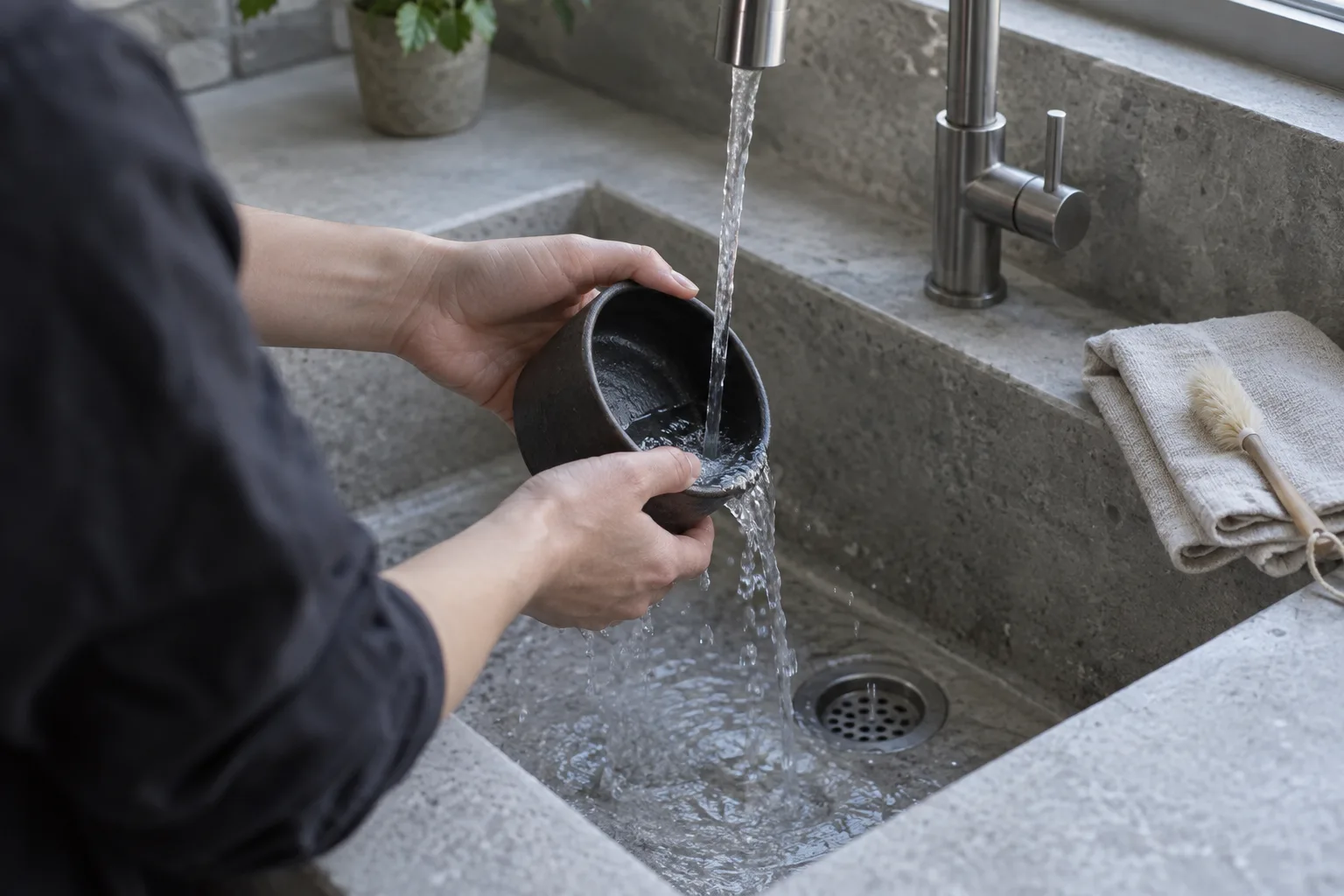
Rinse and clean the vessel between uses, including the inner shoulder that can be difficult to reach. Inspect glazed ceramics for cracks and old metal vessels for corrosion or liners that may fail. Never assume an antique or decorative container is watertight or food-safe. If in doubt, use a discreet modern liner that does not strain the object.
Let change inform the composition
Flowers open, leaves turn and water levels fall. Observe those changes without making decay a compulsory aesthetic. Remove material that has deteriorated, and decide whether the remaining relationship still works. Replacing one stem, rebuilding the arrangement or ending it are all legitimate choices; none automatically betrays Chinese cultural practice.
Return to the Chinese flower-arrangement gateway and compare vessels across the history and composition guides. Ask four questions: Is it stable? Can it be cleaned? Does it support the plant's line and water needs? Does it make sense in this place? Those questions connect material culture with attentive everyday practice more honestly than a list of forbidden objects.