Chapter Six: Li Ming 力命
第六篇:力命
Li Ming, “Effort and Circumstance,” examines the uncomfortable fact that ability, virtue, planning, and outcome do not line up reliably. Good people may struggle, harmful people may prosper, careful plans may fail, and unplanned actions may succeed. The chapter calls the part that exceeds deliberate control ming—often translated as fate, allotted circumstance, or what has come to be so without anyone fully directing it.
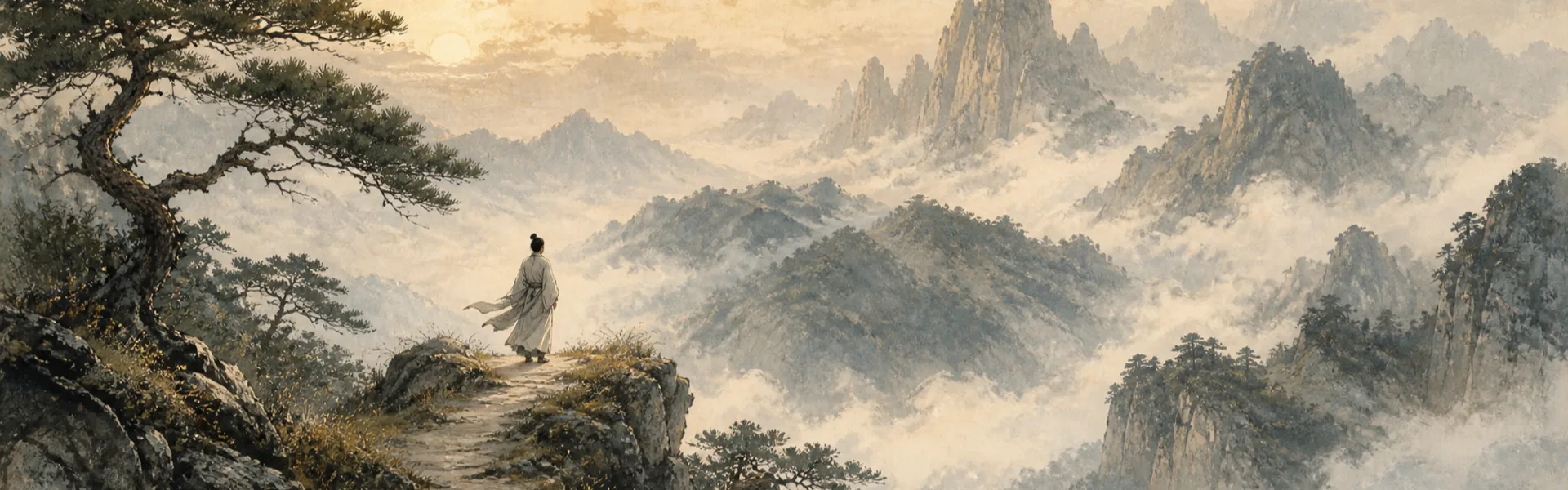
This is not a useful excuse for passivity. The stories still value good judgement, loyal friendship, medical inquiry, honest succession, and timely work. Their warning is narrower and more demanding: act responsibly without claiming ownership of every result; do not convert success into proof of superior character, or hardship into proof of personal failure. In modern terms, distinguish agency from control, and accountability from the fantasy that everything is controllable.
1. Effort and Fate Argue over the Results
Classical text
力謂命曰:「若之功奚若我哉?」命曰:「汝奚功於物而欲比朕?」力曰:「壽夭、窮達,貴賤、貧富,我力之所能也。」命曰:「彭祖之智不出堯舜之上,而壽八百;顏淵之才不出衆人之下,而壽十八。仲尼之德不出諸侯之下,而困於陳蔡;殷紂之行不出三仁之上,而居君位。季札無爵於吳,田恆專有齊國。夷齊餓於首陽,季氏富於展禽。若是汝力之所能,柰何壽彼而夭此,窮聖而達逆,賤賢而貴愚,貧善而富惡邪?」力曰:「若如若言,我固無功於物,而物若此邪,此則若之所制邪?」命曰:「既謂之命,柰何有制之者邪?朕直而推之,曲而任之。自壽自夭,自窮自達,自貴自賤,自富自貧,朕豈能識之哉?朕豈能識之哉?」
English reading
Effort claims credit for long life, success, rank, and wealth. Fate answers with counterexamples: wisdom does not guarantee longevity, virtue does not guarantee political success, and wrongdoing does not prevent power. If effort controlled outcomes, the distribution would look morally orderly.
When Effort hands control to Fate, Fate refuses it too. Ming is not a hidden manager awarding results; it is a name for the way outcomes emerge without any single agent fully governing them. The dialogue prevents both self-congratulation and the belief that a cosmic official deliberately arranged every inequality.
Practical meaning
Evaluate action by preparation, conduct, learning, and consequences you could reasonably influence—not by outcome alone. Success includes luck and support; failure may include conditions no individual could master.
2. Beigongzi Stops Comparing His Life
Classical text
北宮子謂西門子曰:「朕與子並世也,而人子達;並族也,而人子敬;並貌也,而人子愛;並言也,而人子庸;並行也,而人子誠;並仕也,而人子貴;並農也,而人子富;並商也,而人子利。朕衣則裋褐,食則粢糲,居則蓬室,出則徒行。子衣則文錦,食則粱肉,居則連欐,出則結駟。在家熙然有棄朕之心,在朝諤然有敖朕之色。請謁不相及,遨遊不同行,固有年矣。子自以德過朕邪?」西門子曰:「予無以知其實。汝造事而窮,予造事而達,此厚薄之驗歟?而皆謂與予並,汝之顏厚矣。」北宮子無以應,自失而歸。中塗遇東郭先生,先生曰:「汝奚往而反,偊偊而步,有深愧之色邪?」北宮子言其狀。東郭先生曰:「吾將舍汝之愧,與汝更之西門氏而問之。」曰:「汝奚辱北宮子之深乎?固且言之。」西門子曰:「北宮子言世族、年貌、言行與予並,而賤貴、貧富與予異。予語之曰:『予無以知其實。汝造事而窮,予造事而達,此將厚薄之驗歟?而皆謂與予並,汝之顏厚矣。』」東郭先生曰:「汝之言厚薄不過言才德之差,吾之言厚薄異於是矣。夫北宮子厚於德,薄於命;汝厚於命,薄於德。汝之達,非智得也;北宮子之窮,非愚失也。皆天也,非人也。而汝以命厚自矜,北宮子以德厚自愧,皆不識夫固然之理矣。」西門子曰:「先生止矣!予不敢復言。」北宮子既歸,衣其裋褐,有狐貉之溫;進其茙菽,有稻粱之味;庇其蓬室,若廣廈之蔭;乘其篳輅,若文軒之飾。終身逌然,不知榮辱之在彼也、在我也。東郭先生聞之曰:「北宮子之寐久矣,一言而能寤,易悟也哉!」
English reading
Beigongzi and Ximenzi seem equal in background and ability, yet one lives poorly while the other is admired and wealthy. Ximenzi treats success as evidence of greater merit and humiliates his neighbour. Dongguo reverses the comparison: Beigongzi may be rich in character but poor in circumstance; Ximenzi rich in circumstance but poor in character.
The point is not that deprivation becomes luxurious through positive thinking. Beigongzi still wears rough cloth and eats coarse food. What changes is the extra wound of using another person’s fortune as a verdict on his own worth. He can experience what he has directly, without translating it through status.
Practical meaning
Compare conditions when it helps identify injustice or improve policy, but do not use comparison to calculate human worth. Privilege is not proof of virtue, and hardship is not proof of incompetence.
3. Guan Zhong, Bao Shuya, and the Conditions of Friendship
Classical text
管夷吾、鮑叔牙二人相友甚戚,同處於齊。管夷吾事公子糾,鮑叔牙事公子小白。齊公族多寵,嫡庶並行,國人懼亂。管仲與召忽奉公子糾奔魯,鮑叔奉公子小白奔莒。既而公孫無知作亂,齊無君,二公子爭入。管夷吾與小白戰於莒,道射中小白帶鉤。小白既立,脅魯殺子糾,召忽死之,管夷吾被囚。鮑叔牙謂桓公曰:「管夷吾能,可以治國。」桓公曰:「我讐也,願殺之。」鮑叔牙曰:「吾聞賢君無私怨,且人能爲其主,亦必能爲人君。如欲霸王,非夷吾其弗可。君必舍之!」遂召管仲。魯歸之,齊鮑叔牙郊迎,釋其囚。桓公禮之,而位於高國之上,鮑叔牙以身下之,任以國政,號曰仲父。桓公遂霸。管仲嘗歎曰:「吾少窮困時,嘗與鮑叔賈,分財多自與,鮑叔不以我爲貪,知我貧也。吾嘗爲鮑叔謀事而大窮困,鮑叔不以我爲愚,知時有利不利也。吾嘗三仕,三見逐於君,鮑叔不以我爲不肖,知我不遭時也。吾嘗三戰三北,鮑叔不以我爲怯,知我有老母也。公子糾敗,召忽死之,吾幽囚受辱,鮑叔不以我爲無恥,知我不羞小節而恥名不顯於天下也。生我者父母,知我者鮑叔也!」此世稱管鮑善交者,小白善用能者。然實無善交,實無用能也。實無善交、實無用能者,非更有善交、更有善用能也。召忽非能死,不得不死;鮑叔非能舉賢,不得不舉;小白非能用讐,不得不用。及管夷吾有病,小白問之,曰:「仲父之病病矣,可不諱。云至於大病,則寡人惡乎屬國而可?」夷吾曰:「公誰欲歟?」小白曰:「鮑叔牙可。」曰:「不可。其爲人也,潔廉善士也,其於不己若者不比之人,一聞人之過,終身不忘。使之理國,上且鉤乎君,下且逆乎民。其得罪於君也,將弗久矣。」小白曰:「然則孰可?」對曰:「勿已,則隰朋可。其爲人也,上忘而下不叛,愧其不若黃帝而哀不己若者。以德分人謂之聖人,以財分人謂之賢人。以賢臨人,未有得人者也;以賢下人者,未有不得人者也。其於國有不聞也,其於家有不見也。勿已,則隰朋可。」然則管夷吾非薄鮑叔也,不得不薄;非厚隰朋也,不得不厚。厚之於始,或薄之於終;薄之於終,或厚之於始。厚薄之去來,弗由我也。
English reading
Bao Shuya understands Guan Zhong’s poverty, failed plans, dismissed offices, retreats, and survival in context rather than reducing them to greed, stupidity, disloyalty, cowardice, or shame. He even persuades Duke Huan to employ the former enemy and places himself below his friend. Their relationship deserves admiration because recognition makes ability usable.
Yet Guan Zhong later refuses to recommend Bao as successor. Personal integrity does not automatically fit every public role; Bao’s intolerance of others’ faults would make governing difficult. The chapter describes even friendship and appointment as meeting conditions rather than permanent moral labels. Supporting a friend at one time does not require declaring that friend best for every task.
Practical meaning
Interpret a person’s record with context, then match roles to present requirements. Loyalty should tell the truth about fit. A good friend can advocate for you and still decline to recommend you for work that would harm you or others.
4. Deng Xi, Zichan, and Actions Shaped by Position
Classical text
鄧析操兩可之說,設無窮之辭,當子產執政,作《竹刑》。鄭國用之,數難子產之治。子產屈之。子產執而戮之,俄而誅之。然則子產非能用《竹刑》,不得不用;鄧析非能屈子產,不得不屈;子產非能誅鄧析,不得不誅也。
English reading
Deng Xi develops arguments that can support opposing sides and produces a written code that repeatedly challenges Zichan’s government. Zichan eventually executes him, while the code remains in use. The text portrays each actor as constrained by the situation created through the others’ actions.
This description should not erase responsibility for state violence. “There was no alternative” is often the language institutions use to hide choices. The philosophical value lies in seeing that decisions are conditioned; ethical work then asks which constraints were real, which were constructed, and which alternatives were excluded too early.
Practical meaning
When someone claims necessity, map the decision path. What rule, threat, incentive, deadline, or earlier choice produced it? Conditioned action is still open to accountability, especially when power can redesign the conditions.
5. Life and Death beyond Calculation
Classical text
可以生而生,天福也;可以死而死,天福也。可以生而不生,天罰也;可以死而不死,天罰也。可以生,可以死,得生得死,有矣;不可以生,不可以死,或死或生,有矣。然而生生死死,非物非我,皆命也,智之所無柰何。故曰:窈然無際,天道自會;漠然無分,天道自運。天地不能犯,聖智不能干,鬼魅不能欺。自然者默之成之,平之寧之,將之迎之。
English reading
Sometimes a person lives when life seems possible and dies when death seems timely; sometimes the opposite occurs. The text calls both outcomes beyond the final reach of intelligence. Natural processes gather and move without a visible boundary or administrator.
The language of blessing and punishment expresses ease or painful contradiction, not a reliable moral reward system. Human beings can improve safety and care, but they cannot make mortality fully obey calculation.
Practical meaning
Use evidence and treatment where they help; avoid promising certainty they cannot provide. Planning for illness, ageing, and death is not surrender. It allows care and dignity even when the final course remains unknown.
6. Jiliang and the Three Doctors
Classical text
楊朱之友曰季梁。季梁得病,七日大漸。其子環而泣之,請醫。季梁謂楊朱曰:「吾子不肖如此之甚,汝奚不爲我歌以曉之?」楊朱歌曰:「天其弗識,人胡能覺?匪祐自天,弗孽由人。我乎汝乎,其弗知乎!醫乎巫乎,其知之乎?」其子弗曉,終謁三醫,一曰矯氏,二曰俞氏,三曰盧氏,診其所疾。矯氏謂季梁曰:「汝寒溫不節,虛實失度,病由飢飽色欲。精慮煩散,非天非鬼。雖漸,可攻也。」季梁曰:「衆醫也。亟屏之!」俞氏曰:「女始則胎氣不足,乳湩有餘。病非一朝一夕之故,其所由來漸矣,弗可已也。」季梁曰:「良醫也。且食之!」盧氏曰:「汝疾不由天,亦不由人,亦不由鬼。稟生受形,既有制之者矣,亦有知之者矣。藥石其如汝何?」季梁曰:「神醫也。重貺遣之!」俄而季梁之疾自瘳。
English reading
Three physicians offer different causal stories. One blames lifestyle and promises treatment; one traces the illness to gradual constitutional development and calls it incurable; one places it beyond heaven, people, spirits, and medicine. Jiliang ranks the most sweeping uncertainty as the highest wisdom—and then recovers on his own.
The recovery does not prove medicine useless, nor the third doctor correct. It exposes hindsight: whichever prediction the course later matches can look wise. The causes and prognosis of illness may remain uncertain even when change is real.
Practical meaning
For medical decisions, seek qualified care, evidence, a differential diagnosis, and a second opinion when stakes are high. Distinguish “unknown,” “untreatable,” and “no treatment has yet worked.” A surprising recovery should invite study, not a universal claim.
7. Valuing Life Cannot Command Heaven
Classical text
生非貴之所能存,身非愛之所能厚;生亦非賤之所能夭,身亦非輕之所能薄。故貴之或不生,賤之或不死;愛之或不厚,輕之或不薄。此似反也,非反也;此自生自死,自厚自薄。或貴之而生,或賤之而死;或愛之而厚,或輕之而薄。此似順也,非順也;此亦自生自死,自厚自薄。鬻熊語文王曰:「自長非所增,自短非所損。算之所亡若何?」老聃語關尹曰:「天之所惡,孰知其故?」言迎天意,揣利害,不如其已。
English reading
Valuing life does not guarantee its continuation; neglecting it does not guarantee an early end. When outcomes agree with intention, that agreement is not proof that intention ruled them. A naturally tall person was not increased by praise, nor a short person reduced by contempt.
The passage rejects attempts to flatter heaven or calculate hidden favour. It does not say care has no effect. It says effect is not command: prudent action changes probabilities without turning the world into an obedient machine.
Practical meaning
Care for health, safety, and relationships because those actions matter, not because they guarantee protection. Avoid blaming people for every misfortune as if perfect behaviour purchased immunity.
8. Yang Bu Asks Why Similar People Receive Different Lives
Classical text
楊布問曰:「有人於此,年兄弟也,言兄弟也,才兄弟也,貌兄弟也,而壽夭父子也,貴賤父子也,名譽父子也,愛憎父子也。吾惑之。」楊子曰:「古之人有言,吾嘗識之,將以告若。不知所以然而然,命也。今昏昏昧昧,紛紛若若,隨所爲,隨所不爲。日去日來,孰能知其故?皆命也夫。信命者,亡壽夭;信理者,亡是非;信心者,亡逆順;信性者,亡安危。則謂之都亡所信,都亡所不信。真矣慤矣,奚去奚就?奚哀奚樂?奚爲奚不爲?黃帝之書云:『至人居若死,動若械。』亦不知所以居,亦不知所以不居;亦不知所以動,亦不知所以不動。亦不以衆人之觀易其情貌,亦不謂衆人之不觀不易其情貌。獨往獨來,獨出獨入,孰能礙之?」
English reading
Yang Bu is puzzled that people alike in age, speech, talent, and appearance receive radically different lifespans, rank, reputation, and affection. Yangzi names the unexplained difference ming: what is so without our knowing why.
He then describes freedom from fastening identity to longevity, rightness, approval, safety, or even a doctrine of fate. This is not blank indecision. It is action no longer rearranged merely because others are watching, and stillness no longer performed to create an image.
Practical meaning
Notice which external verdict silently controls your self-concept: popularity, promotion, security, or being seen as correct. Keep reasons and values, but loosen the demand that the world confirm them before you can act with integrity.
9. Many Temperaments, One Larger Process
Classical text
墨杘、單至、嘽咺、憋懯四人相與游於世,胥如志也。窮年不相知情,自以智之深也。巧佞、愚直、婩斫、便辟四人相與游於世,胥如志也。窮年而不相語術,自以巧之微也。㺒㤉、情露、𧮈極、凌誶四人相與游於世,胥如志也。窮年不相曉悟,自以爲才之得也。眠娗、諈諉、勇敢、怯疑四人相與游於世,胥如志也。窮年不相讁發,自以行無戾也。多偶、自專、乘權、隻立四人相與游於世,胥如志也。窮年不相顧眄,自以時之適也。此衆態也,其貌不一,而咸之於道,命所歸也。
English reading
The difficult names gather contrasting dispositions: dull and sharp, flattering and blunt, open and guarded, brave and hesitant, sociable and solitary. Each group manages to live together while remaining convinced of its own depth, technique, talent, innocence, or timeliness.
From a wider view, all these temperaments belong to the same process even though their appearances differ. The passage does not erase the harm particular traits may cause. It reduces the temptation to treat one personality style as the universal shape of the Way.
Practical meaning
Design teams and communities for real differences in pace, expression, risk tolerance, and sociability. Shared standards of conduct are more useful than demanding identical personalities.
10. Near-Success, Near-Failure, and the Shock of Outcomes
Classical text
佹佹成者,俏成也,初非成也;佹佹敗者,俏敗者也,初非敗也。故迷生於俏,俏之際昧然。於俏而不昧然,則不駭外禍,不喜內福,隨時動,隨時止,智不能知也。信命者於彼我無二心。於彼我而有二心者,不若揜目塞耳,背坂面隍亦不墜仆也。故曰:死生自命也,貧窮自時也。怨夭折者,不知命者也;怨貧窮者,不知時者也。當死不懼,在窮不戚,知命安時也。其使多智之人量利害,料虛實,度人情,得亦中,亡亦中。其少智之人不量利害,不料虛實,不度人情,得亦中,亡亦中。量與不量,料與不料,度與不度,奚以異?唯亡所量,亡所不量,則全而亡喪。亦非知全,亦非知喪。自全也,自亡也,自喪也。
English reading
What appears almost certain to succeed may fail; what appears almost certain to fail may succeed. Confusion arises when probability is mistaken for possession of the result. A person who understands the narrow threshold is less shocked by misfortune and less intoxicated by good fortune.
The text provocatively says both clever calculation and lack of calculation sometimes hit or miss. It does not make analysis worthless. It removes the belief that analysis purchases certainty. Planning remains a practice within uncertainty, not an escape from it.
Practical meaning
Use forecasts as ranges, state assumptions, and plan for failure modes. After the result, avoid rewriting the past as if the outcome had always been obvious. Learn from the process without demanding that every lesson eliminate uncertainty.
11. Yanzi Laughs at a Ruler Who Does Not Want to Die
Classical text
齊景公游於牛山,北臨其國城而流涕曰:「美哉國乎!鬱鬱芊芊,若何滴滴去此國而死乎?使古無死者,寡人將去斯而之何?」史孔、梁丘據皆從而泣曰:「臣賴君之賜,疏食惡肉可得而食,駑馬稜車可得而乘也,且猶不欲死,而況吾君乎?」晏子獨笑於旁。公雪涕而顧晏子曰:「寡人今日之游悲,孔與據皆從寡人而泣。子之獨笑,何也?」晏子對曰:「使賢者常守之,則太公桓公將常守之矣;使有勇者而常守之,則莊公靈公將常守之矣。數君者將守之,吾君方將被蓑笠而立乎畎畝之中,唯事之恤,行假念死乎?則吾君又安得此位而立焉?以其迭處之迭去之,至於君也,而獨爲之流涕,是不仁也。見不仁之君,見諂諛之臣。臣見此二者,臣之所爲獨竊笑也。」景公慙焉,舉觴自罰,罰二臣者各二觴焉。
English reading
Duke Jing weeps because he must one day leave his beautiful state. Two courtiers imitate his grief. Yanzi laughs: if worthy or brave former rulers had remained forever, Jing would never have inherited the throne and might be labouring in the fields. He accepts succession when it benefits him, then calls the same succession unbearable when it requires his departure.
Yanzi also exposes flattery. The courtiers reinforce the ruler’s self-centred sorrow instead of reminding him that office is temporary. Jing’s willingness to accept the correction is the healthiest act in the scene.
Practical meaning
Treat leadership as stewardship with an exit, not possession. Build succession, preserve institutional memory, and keep at least one adviser able to challenge the emotional story power tells about itself.
12. Dongmen Wu Does Not Grieve as Expected
Classical text
魏人有東門吳者,其子死而不憂。其相室曰:「公之愛子,天下無有。今子死不憂,何也?」東門吳曰:「吾常無子,無子之時不憂。今子死,乃與嚮無子同,臣奚憂焉?」
English reading
Dongmen Wu deeply loved his son but does not show grief at the son’s death. He remembers that before the child existed he lived without grief; death has returned him to that earlier condition.
The story offers one way a mind makes sense of loss, not a rule for bereavement. Love during a relationship is not cancelled by accepting the condition before and after it. Another parent may mourn differently without being less wise.
Practical meaning
Do not measure grief by visible intensity or a timetable. Support the bereaved person’s actual needs, and watch for dangerous isolation or inability to function, while allowing diverse forms of mourning.
13. Occupation Follows Conditions; Outcome Remains Uncertain
Classical text
農赴時,商趣利,工追術,仕逐勢,勢使然也。然農有水旱,商有得失,工有成敗,仕有遇否,命使然也。
English reading
Farmers follow seasons, merchants seek advantage, craftspeople pursue technique, and officials respond to political opportunity. Roles and conditions shape what each person must attend to. Yet rain and drought, profit and loss, success and failure, recognition and exclusion remain partly beyond intention.
The final sentence gives the chapter its proportion: situational demands call for effort, while outcome still contains contingency. Work is necessary; total control is unavailable.
Practical meaning
Prepare according to the real conditions of your field, then build reserves for what cannot be predicted. Judge yourself and others with attention to both effort and environment.
The Chapter in Practice
Separate agency from control. Take responsibility for conduct without claiming every result.
Do not moralize fortune. Wealth, health, status, and recognition are not simple measures of virtue.
Read records in context. A failure, retreat, or gap may have causes a label hides.
Use planning without worshipping prediction. Work with ranges, contingencies, and revisable assumptions.
Match people to roles honestly. Affection and integrity do not make one person suitable for every responsibility.
Prepare to hand over what you hold. Position, health, and life are conditions of stewardship, not permanent property.
Questions for Reflection
Which success have you treated as proof of merit when circumstance also played a part?
Which hardship have you wrongly turned into a judgement of your own worth?
Where does loyalty require an honest statement that someone is not suited to a role?
What uncertainty should your current plan acknowledge more clearly?
What can you responsibly influence today, even though you cannot guarantee the result?
Continue Reading
Previous: Chapter Five, Tang Wen 汤问 · Liezi overview · Next: Chapter Seven, Yang Zhu 杨朱 · Classical Library