Chapter Seven: Yang Zhu 杨朱
第七篇:杨朱
Yang Zhu is the Liezi’s most provocative chapter. It questions the pursuit of posthumous fame, compulsory sacrifice, anxious longevity, status, and wealth, while defending the value of the life and body actually present. Some passages use deliberate extremes—unrestrained pleasure, rulers who enjoy themselves while sages suffer, or refusal to lose even one hair for the world—to expose moral language that demands a person’s whole life for an abstract reputation.
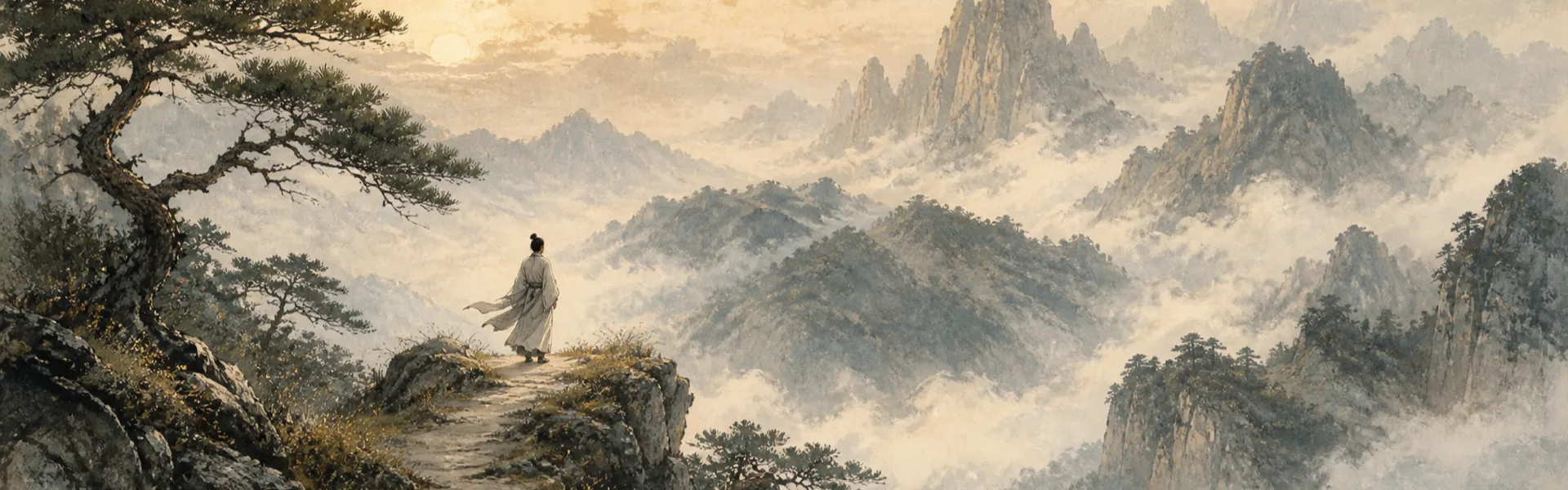
These arguments should not be simplified into “do whatever feels good.” Desire can become addiction, coercion, waste, or harm, and the chapter’s own stories sometimes make those dangers visible even when their speakers do not. A responsible modern reading keeps its central challenge while adding necessary ethical limits: protect embodied life, refuse empty self-destruction, enjoy enough, respect consent and the lives of others, share surplus, and do not let either pleasure or reputation become a new master.
1. What Does a Name Give the Living?
Classical text
楊朱游於魯,舍於孟氏。孟氏問曰:「人而已矣,奚以名爲?」曰:「以名者爲富。」「既富矣,奚不已焉?」曰:「爲貴。」「既貴矣,奚不已焉?」曰:「爲死。」「既死矣,奚爲焉?」曰:「爲子孫。」「名奚益於子孫?」曰:「名乃苦其身,燋其心。乘其名者,澤及宗族,利兼鄉黨,況子孫乎?」「凡爲名者必廉,廉斯貧;爲名者必讓,讓斯賤。」曰:「管仲之相齊也,君淫亦淫,君奢亦奢。志合言從,道行國霸。死之後,管氏而已。田氏之相齊也,君盈則己降,君歛則己施。民皆歸之,因有齊國;子孫享之,至今不絕。若實名貧,僞名富。」曰:「實無名,名無實。名者,僞而已矣。昔者堯舜僞以天下讓許由、善卷,而不失天下,享祚百年。伯夷、叔齊實以孤竹君讓,而終亡其國,餓死於首陽之山。實、僞之辯,如此其省也。」
English reading
A conversation follows the chain behind reputation: name is pursued for wealth, wealth for rank, rank for benefits after death, and those benefits for descendants. Yet the person who builds the name may exhaust body and mind while others inherit the advantage. Public virtue can also become performance; actual self-denial may leave a person poor, while a convincing appearance of virtue attracts power.
The argument does not prove that all reputation is false. It shows that “a good name” mixes conduct, public perception, institutions, and later storytelling. A name cannot replace the reality from which it should arise.
Practical meaning
Before sacrificing for recognition, ask who receives the benefit, what present good the sacrifice creates, and whether the same purpose can be achieved without damaging health or integrity. Let reputation follow useful work rather than become the work.
2. A Short Life Spent Preparing to Be Remembered
Classical text
楊朱曰:「百年,壽之大齊。得百年者千無一焉。設有一者,孩抱以逮昏老,幾居其半矣。夜眠之所弭,晝覺之所遺,又幾居其半矣。痛疾哀苦,亡失憂懼,又幾居其半矣。量十數年之中,逌然而自得亡介焉之慮者,亦亡一時之中爾。則人之生也奚爲哉?奚樂哉?爲美厚爾,爲聲色爾,而美厚復不可常厭足,聲色不可常翫聞,乃復爲刑賞之所禁勸,名法之所進退,遑遑爾競一時之虛譽,規死後之餘榮,偊偊爾順耳目之觀聽,惜身意之是非,徒失當年之至樂,不能自肆於一時。重囚纍梏,何以异哉?太古之人知生之暫來,知死之暫往,故從心而動,不違自然所好;當身之娛非所去也,故不爲名所勸。從性而游,不逆萬物所好;死後之名非所取也,故不爲刑所及。名譽先後,年命多少,非所量也。」
English reading
Even a long life contains childhood, old age, sleep, illness, grief, fear, and loss. The remaining untroubled time is small, yet people surrender it to reward, punishment, status, and the hope of posthumous praise. Yang Zhu compares such self-confinement to wearing chains.
His alternative is to remember that life comes temporarily and death also passes in its time. Natural enjoyment should not be rejected merely for reputation. This does not require constant stimulation. The deeper target is a life postponed until approval arrives.
Practical meaning
Protect recurring time for rest, relationship, movement, beauty, and unmeasured attention now. Do not wait for retirement, recognition, or perfect conditions to begin living. Sustainable joy is usually ordinary and repeatable.
3. Death Equalizes Reputation without Excusing Conduct
Classical text
楊朱曰:「萬物所異者生也,所同者死也。生則有賢愚、貴賤,是所異也;死則有臭腐、消滅,是所同也。雖然,賢愚、貴賤非所能也,臭腐、消滅亦非所能也。故生非所生,死非所死;賢非所賢,愚非所愚;貴非所貴,賤非所賤。然而萬物齊生齊死,齊賢齊愚,齊貴齊賤。十年亦死,百年亦死;仁聖亦死,凶愚亦死。生則堯舜,死則腐骨;生則桀紂,死則腐骨。腐骨一矣,孰知其異?且趣當生,奚遑死後?」
English reading
Life displays distinctions of talent, rank, character, and duration; death returns bodies to decay. The remains of admired sages and condemned tyrants do not announce their former identities. Yang Zhu therefore directs attention from imagined posthumous experience back to present life.
Physical equality in death does not make conduct equal while people are alive. Cruelty still creates suffering, and care still supports life. The point is that later praise or blame cannot be enjoyed or suffered by the dead as if reputation were another body.
Practical meaning
Choose conduct for its effects on living beings and the world they share, not for an imagined audience after death. Mortality can sharpen ethics instead of dissolving it.
4. When Purity and Constancy Become Self-Harm
Classical text
楊朱曰:「伯夷非亡欲,矜清之郵,以放餓死。展季非亡情,矜貞之郵,以放寡宗。清貞之誤善之若此!」
English reading
Bo Yi still had desire but clung to the identity of purity until he starved. Zhan Ji still had affection but clung to constancy in a way that left few descendants. A virtue made absolute can betray the living purpose that once made it good.
The criticism is not of integrity. It is of protecting an image of integrity after circumstances have changed, even when the result destroys body, relationship, or future.
Practical meaning
Ask whether a principle still serves life, fairness, and trust in the present case. A boundary should be firm enough to protect what matters and flexible enough not to become needless punishment.
5. Between Deprivation and Accumulation
Classical text
楊朱曰:「原憲窶於魯,子貢殖於衛。原憲之窶損生,子貢之殖累身。」「然則窶亦不可,殖亦不可,其可焉在?」曰:「可在樂生,可在逸身。故善樂生者不窶,善逸身者不殖。」
English reading
Severe poverty damages life; endless accumulation burdens it. The way between is described as enjoying life and allowing the body ease. A person who understands enjoyment does not romanticize deprivation, while a person who understands ease does not let possession become a second occupation.
“Enough” is neither a fixed quantity nor automatic comfort. It is the point at which resources support life without requiring life to serve their expansion.
Practical meaning
Define sufficiency for housing, health, time, dependants, and resilience. Then decide which further gains are worth their cost in attention, stress, and freedom. Poverty needs material remedy, not a lesson in contentment.
6. Care for the Living; Keep Death Simple
Classical text
楊朱曰:「古語有之:『生相憐,死相捐。』此語至矣。相憐之道,非唯情也;勤能使逸,飢能使飽,寒能使溫,窮能使達也。相捐之道,非不相哀也;不含珠玉,不服文錦,不陳犧牲,不設明器也。晏平仲問養生於管夷吾。管夷吾曰:『肆之而已,勿壅勿閼。』晏平仲曰:『其目柰何?』夷吾曰:『恣耳之所欲聽,恣目之所欲視,恣鼻之所欲向,恣口之所欲言,恣體之所欲安,恣意之所欲行。夫耳之所欲聞者音聲,而不得聽,謂之閼聰;目之所欲見者美色,而不得視,謂之閼明;鼻之所欲向者椒蘭,而不得嗅,謂之閼顫;口之所欲道者是非,而不得言,謂之閼智;體之所欲安者美厚,而不得從,謂之閼適;意之所欲爲者放逸,而不得行,謂之閼性。凡此諸閼,廢虐之主。去廢虐之主,熙熙然以俟死,一日、一月、一年、十年,吾所謂養。拘此廢虐之主,錄而不舍,戚戚然以至久生,百年、千年、萬年,非吾所謂養。』管夷吾曰:『吾既告子養生矣,送死柰何?』晏平仲曰:『送死略矣,將何以告焉?』管夷吾曰:『吾固欲聞之。』平仲曰:『既死,豈在我哉?焚之亦可,沈之亦可,瘞之亦可,露之亦可,衣薪而棄諸溝壑亦可,袞衣繡裳而納諸石椁亦可,唯所遇焉。』管夷吾顧謂鮑叔黃子曰:『生死之道,吾二人進之矣。』」
English reading
Care for living people means more than feeling: relieve exhaustion, hunger, cold, and blocked opportunity. Letting go of the dead does not mean absence of grief; it means refusing to bury value in jewels, luxury cloth, sacrifice, and display that can no longer help the deceased.
The dialogue then praises unblocked senses, speech, bodily ease, and intention. Taken literally without limits, such release could become harmful excess. Read in context, the target is life made miserable by unnecessary repression and funeral display. Care must still include consent, health, reciprocity, and the fact that another person’s body is not an instrument of one’s desire.
Practical meaning
Direct care toward present needs and the wishes of the person involved. Discuss end-of-life preferences early. A meaningful funeral can be simple; grief does not need financial display to be real.
7. Zichan’s Brothers and the Limits of Pleasure
Classical text
子產相鄭,專國之政。三年,善者服其化,惡者畏其禁,鄭國以治,諸侯憚之。而有兄曰公孫朝,有弟曰公孫穆。朝好酒,穆好色。朝之室也聚酒千鍾,積麴成封,望門百步,糟漿之氣逆於人鼻。方其荒於酒也,不知世道之安危,人理之悔吝,室內之有亡,九族之親疏,存亡之哀樂也。雖水火兵刃交於前,弗知也。穆之後庭比房數十,皆擇稚齒婑媠者以盈之。方其耽於色也,屏親昵,絕交遊,逃於後庭,以晝足夜;三月一出,意猶未愜。鄉有處子之娥姣者,必賄而招之,媒而挑之,弗獲而後已。子產日夜以爲戚,密造鄧析而謀之,曰:「僑聞治身以及家,治家以及國,此言自於近至於遠也。僑爲國則治矣,而家則亂矣。其道逆邪?將奚方以救二子?子其詔之!」鄧析曰:「吾怪之久矣,未敢先言。子奚不時其治也,喻以性命之重,誘以禮義之尊乎?」子產用鄧析之言,因閒以謁其兄弟,而告之曰:「人之所以貴於禽獸者,智慮;智慮之所將者,禮義。禮義成,則名位至矣。若觸情而動,耽於嗜慾,則性命危矣。子納僑之言,則朝自悔而夕食祿矣。」朝穆曰:「吾知之久矣,擇之亦久矣,豈待若言而後識之哉?凡生之難遇而死之易及。以難遇之生,俟易及之死,可孰念哉?而欲尊禮義以夸人,矯情性以招名,吾以此爲弗若死矣。爲欲盡一生之歡,窮當年之樂,唯患腹溢而不得恣口之飲,力憊而不得肆情於色;不遑憂名聲之醜,性命之危也。且若以治國之能夸物,欲以說辭亂我之心,榮祿喜我之意,不亦鄙而可憐哉?我又欲與若別之。夫善治外者,物未必治,而身交苦;善治內者,物未必亂,而性交逸。以若之治外,其法可暫行於一國,未合於人心;以我之治內,可推之於天下,君臣之道息矣。吾常欲以此術而喻之,若反以彼術而教我哉?」子產忙然無以應之。他日,以告鄧析。鄧析曰:「子與真人居而不知也,孰謂子智者乎?鄭國之治偶耳,非子之功也。」
English reading
Zichan governs a state but cannot govern his brothers. One is consumed by alcohol; the other isolates himself in sexual pursuit, using wealth and pressure to obtain young women. They defend themselves by saying life is rare, death arrives easily, and inner enjoyment is better than public virtue and office.
Their criticism of reputation has force, but their conduct reveals the failure of pleasure without limits. Addiction makes one unaware of danger and relationship; the other treats people as objects and ignores the conditions of consent. Deng Xi’s praise of them as “true persons” is deliberately unsettling. A reader need not accept the narrator’s irony as ethical approval.
Practical meaning
Pleasure is life-supporting when it preserves health, consent, reciprocity, awareness, and the freedom to stop. When desire erases other people or destroys the capacity to choose, it has become another form of bondage.
8. Duanmu Shu Spends and Gives Away a Fortune
Classical text
衛端木叔者,子貢之世也。藉其先貲,家累萬金。不治世故,放意所好。其生民之所欲爲,人意之所欲玩者,無不爲也,無不玩也。牆屋臺榭,園囿池沼,飲食車服,聲樂嬪御,擬齊楚之君焉。至其情所欲好,耳所欲聽,目所欲視,口所欲嘗,雖殊方偏國,非齊土之所產育者,無不必致之,猶藩牆之物也。及其游也,雖山川阻險,塗逕修遠,無不必之,猶人之行咫步也。賓客在庭者日百住,庖廚之下不絕煙火,堂廡之上不絕聲樂。奉養之餘,先散之宗族;宗族之餘,次散之邑里;邑里之餘,乃散之一國。行年六十,氣幹將衰,棄其家事,都散其庫藏、珍寶、車服、妾媵。一年之中盡焉,不爲子孫留財。及其病也,無藥石之儲;及其死也,無瘞埋之資。一國之人受其施者,相與賦而藏之,反其子孫之財焉。禽骨釐聞之,曰:「端木叔,狂人也,辱其祖矣。」段干生聞之,曰:「端木叔,達人也,德過其祖矣。其所行也,其所爲也,衆意所驚,而誠理所取。衛之君子多以禮教自持,固未足以得此人之心也。」
English reading
Duanmu Shu uses inherited wealth for extensive pleasure, hospitality, travel, and then distribution to relatives, neighbours, and the wider state. At sixty he gives away the remainder, leaving no reserve for illness, burial, or descendants. The community that benefited later pays for his funeral and restores property to his children.
One observer calls him mad and shameful; another calls him more generous than his ancestor. The story challenges hoarding, but it also shows his dependence on collective rescue. Generosity and consumption are not automatically wise simply because they oppose accumulation.
Practical meaning
Use wealth while alive and share genuine surplus, but keep transparent provision for health, dependants, commitments, and emergencies. Generosity is stronger when it does not secretly transfer foreseeable costs to others.
9. Wanting Life Is Not the Same as Clinging to It
Classical text
孟孫陽問楊朱曰:「有人於此,貴生愛身,以蘄不死,可乎?」曰:「理無不死。」「以蘄久生,可乎?」曰:「理無久生。生非貴之所能存,身非愛之所能厚。且久生奚爲?五情好惡,古猶今也;四體安危,古猶今也;世事苦樂,古猶今也;變易治亂,古猶今也。既聞之矣,既見之矣,既更之矣,百年猶厭其多,況久生之苦也乎?」孟孫陽曰:「若然,速亡愈於久生,則踐鋒刃,入湯火,得所志矣。」楊子曰:「不然。既生,則廢而任之,究其所欲,以俟於死。將死,則廢而任之,究其所之,以放於盡。無不廢,無不任,何遽遲速於其閒乎?」
English reading
Longing for immortality cannot remove death, but that does not make an early death preferable. Yang Zhu rejects rushing into blades or fire. While alive, allow life to complete its course; when death comes, allow dying to complete its course. Do not turn either delay or haste into an obsession.
The distinction matters: accepting mortality is not self-destruction. Love of embodied life can coexist with refusal to make indefinite survival the only value.
Practical meaning
Support health and safety while accepting that lifespan is finite. If thoughts of hastening death are personal rather than philosophical, seek immediate human and professional support; acceptance should protect life, not isolate a person in danger.
10. One Hair, the Whole World, and the Boundary of Sacrifice
Classical text
楊朱曰:「伯成子高不以一毫利物,舍國而隱耕。大禹不以一身自利,一體偏枯。古之人損一毫利天下不與也,悉天下奉一身不取也。人人不損一毫,人人不利天下,天下治矣。」禽子問楊朱曰:「去子體之一毛以濟一世,汝爲之乎?」楊子曰:「世固非一毛之所濟。」禽子曰:「假濟,爲之乎?」楊子弗應。禽子出語孟孫陽。孟孫陽曰:「子不達夫子之心,吾請言之。有侵若肌膚獲萬金者,若爲之乎?」曰:「爲之。」孟孫陽曰:「有斷若一節得一國,子爲之乎?」禽子默然有閒。孟孫陽曰:「一毛微於肌膚,肌膚微於一節,省矣。然則積一毛以成肌膚,積肌膚以成一節。一毛固一體萬分中之一物,奈何輕之乎?」禽子曰:「吾不能所以答子。然則以子之言問老聃、關尹,則子言當矣;以吾言問大禹、墨翟,則吾言當矣。」孟孫陽因顧與其徒說他事。
English reading
The famous “not one hair for the world” argument is often treated as selfishness. Here it defends a boundary against reasoning that begins with a trivial bodily sacrifice and can escalate to skin, limb, and entire person. If everyone neither injured others nor demanded injury in the name of saving all, the world would already be less disordered.
The debate ends without a universal answer. A tiny cost may be reasonable when benefit is real and consent is free; the danger lies in institutions repeatedly declaring another person’s body negligible. Self-protection and public care must correct one another.
Practical meaning
Before asking for sacrifice, verify the benefit, necessity, consent, distribution of cost, and stopping point. Do not build collective good on people who are never allowed to say no.
11. Saints Suffer and Tyrants Enjoy: A Deliberate Moral Shock
Classical text
楊朱曰:「天下之美歸之舜、禹、周、孔,天下之惡歸之桀、紂。然而舜耕於河陽,陶於雷澤,四體不得暫安,口腹不得美厚;父母之所不愛,弟妹之所不親。行年三十,不告而娶。及受堯之禪,年已長,智已衰。商鈞不才,禪位於禹,戚戚然以至於死。此天人之窮毒者也。鮌治水土,績用不就,殛諸羽山。禹纂業事讐,惟荒土功,子產不字,過門不入;身體偏枯,手足胼胝。及受舜禪,卑宮室,美紱冕,戚戚然以至於死。此天人之憂苦者也。武王既終,成王幼弱,周公攝天子之政。邵公不悅,四國流言。居東三年,誅兄放弟,僅免其身,戚戚然以至於死。此天人之危懼者也。孔子明帝王之道,應時君之聘,伐樹於宋,削迹於衛,窮於商周,圍於陳蔡,受屈於季氏,見辱於陽虎,戚戚然以至於死。此天民之遑遽者也。凡彼四聖者,生無一日之歡,死有萬世之名。名者,固非實之所取也。雖稱之弗知,雖賞之不知,與株塊無以異矣。桀藉累世之資,居南面之尊,智足以距羣下,威足以震海內;恣耳目之所娛,窮意慮之所爲,熙熙然以至於死。此天民之逸蕩者也。紂亦藉累世之資,居南面之尊;威無不行,志無不從;肆情於傾宮,縱欲於長夜;不以禮義自苦,熙熙然以至於誅。此天民之放縱者也。彼二凶也,生有從欲之歡,死被愚暴之名。實者,固非名之所與也。雖毀之不知,雖稱之弗知,此與株塊奚以異矣?彼四聖雖美之所歸,苦以至終,同歸於死矣。彼二凶雖惡之所歸,樂以至終,亦同歸於死矣。」
English reading
The passage contrasts sages who labour and suffer with tyrants who enjoy power before death. Posthumous praise cannot comfort dead sages, and condemnation cannot punish dead tyrants. The comparison is designed to shock readers who assume later fame compensates automatically for a ruined life.
It is not a defensible endorsement of tyranny. The tyrants’ pleasures depended on violence and the suffering of others; those effects belong to lived reality, not merely to later names. The strongest conclusion is therefore not “choose evil,” but “do not demand misery from the good by paying them only with future praise.”
Practical meaning
Do not build institutions that reward service with burnout and memorial language. Protect the health, time, safety, and material support of people doing necessary work now, while holding harmful power accountable now.
12. Governing a Flock Is Not Governing Each Sheep
Classical text
楊朱見梁王,言治天下如運諸掌。梁王曰:「先生有一妻一妾而不能治,三畝之園而不能芸,而言治天下如運諸掌,何也?」對曰:「君見其牧羊者乎?百羊而羣,使五尺童子荷箠而隨之,欲東而東,欲西而西。使堯牽一羊,舜荷箠而隨之,則不能前矣。且臣聞之:吞舟之魚,不游枝流;鴻鵠高飛,不集汙池。何則?其極遠也。黃鐘大呂,不可從煩奏之舞。何則?其音疏也。將治大者不治細,成大功者不成小,此之謂矣。」
English reading
King Liang mocks Yang Zhu for claiming that governing the world is easy when his household and garden are unmanaged. Yang Zhu answers that a child can guide a flock by influencing its direction, while two sages concentrating on one sheep may obstruct it. Large-scale coordination uses different patterns from detailed control.
The argument rightly distinguishes systems skill from personal tidiness, but it can also become an excuse for neglect. Good scale-sensitive leadership knows which details must be delegated, which signals reveal the whole, and which “small” lives cannot be treated as expendable.
Practical meaning
Match management method to scale. Set direction and feedback for the whole, assign local authority, and identify a small number of details—safety, rights, quality—that leaders must never ignore.
13. How Little of the Past Survives
Classical text
楊朱曰:「太古之事滅矣,孰誌之哉?三皇之事若存若亡,五帝之事若覺若夢,三王之事或隱或顯,億不識一。當身之事或聞或見,萬不識一。目前之事或存或廢,千不識一。太古至于今日,年數固不可勝紀。但伏羲已來三十餘萬歲,賢愚、好醜,成敗、是非,無不消滅,但遲速之間耳。矜一時之毀譽,以焦苦其神形,要死後數百年中餘名,豈足潤枯骨?何生之樂哉?」
English reading
Ancient events fade into fragments; even present events are only partly seen and remembered. Praise and blame, beauty and ugliness, success and failure disappear at different speeds. A person who sacrifices body and spirit for a few centuries of unstable memory has exchanged living reality for a fragile archive.
This does not make history worthless. It makes preservation selective and reputation uncertain. Work can serve future people without requiring the fantasy of being permanently known by them.
Practical meaning
Document what others need, share knowledge, and accept that your name may detach from the contribution. Build durable access and stewardship rather than a monument to personal permanence.
14. The Body and Things Are Held, Not Absolutely Owned
Classical text
楊朱曰:「人肖天地之類,懷五常之性,有生之最靈者也。人者,爪牙不足以供守衛,肌膚不足以自捍禦,趨走不足以從利逃害,無毛羽以禦寒暑,必將資物以爲養,任智而不恃力。故智之所貴,存我爲貴;力之所賤,侵物爲賤。然身非我有也,既生,不得不全之;物非我有也,既有,不得而去之。身固生之主,物亦養之主。雖全生,不可有其身;雖不去物,不可有其物。有其物,有其身,是橫私天下之身,橫私天下之物。不橫私天下之身,不橫私天下物者,其唯聖人乎!公天下之身,公天下之物,其唯至人矣!此之謂至至者也。」
English reading
Humans lack natural armour, speed, fur, and claws, so they depend on intelligence and shared things for survival. Wisdom is valued when it preserves life; force is degraded when it invades other beings. Yet body and property are not absolute possessions. They are conditions entrusted through birth and circumstance.
The passage creates a productive tension with the defence of bodily boundaries: care for the body precisely because it is living and vulnerable, but do not turn “mine” into a licence to dominate all other bodies and things. Use and stewardship are not the same as unlimited ownership.
Practical meaning
Treat health, land, tools, knowledge, and wealth as resources carrying obligations. Personal consent remains essential; shared dependence also requires that ownership account for effects on other lives and future users.
15. Longevity, Fame, Rank, and Wealth as External Masters
Classical text
楊朱曰:「生民之不得休息,爲四事故:一爲壽,二爲名,三爲位,四爲貨。有此四者,畏鬼,畏人,畏威,畏刑。此謂之遁民也。可殺可活,制命在外。不逆命,何羨壽?不矜貴,何羨名?不要勢,何羨位?不貪富,何羨貨?此之謂順民也。天下無對,制命在內。故語有之曰:人不婚宦,情欲失半;人不衣食,君臣道息。周諺曰:『田父可坐殺。』晨出夜入,自以性之恆;啜菽茹藿,自以味之極;肌肉麤厚,筋節𦝘急,一朝處以柔毛綈幕,薦以粱肉蘭橘,心㾓體煩,內熱生病矣。商魯之君與田父侔地,則亦不盈一時而憊矣。故野人之所安,野人之所美,謂天下無過者。昔者宋國有田夫,常衣縕黂,僅以過冬。暨春東作,自曝於日,不知天下之有廣廈隩室,綿纊狐貉。顧謂其妻曰:『負日之暄,人莫知者。以獻吾君,將有重賞。』里之富室告之曰:『昔人有美戎菽、甘枲莖芹萍子者,對鄉豪稱之。鄉豪取而嘗之,蜇於口,慘於腹,衆哂而怨之。其人大慙。子此類也。』」
English reading
Anxious pursuit of longevity, reputation, office, and wealth places the control of life outside oneself. The chapter contrasts this with release from needing those four verdicts. It then shows how comfort and pleasure are conditioned: a farmer accustomed to hard labour and plain food may become ill in luxury, while a ruler would collapse in the farmer’s field.
The farmer who discovers the warmth of sunlight thinks the ruler must reward such a treasure because he cannot imagine the ruler’s different world. Experience is real but not automatically universal. What feels natural, delicious, or unbearable is partly trained by a way of life.
Practical meaning
Identify desires borrowed from a social environment and test whether they improve your actual life. When recommending a practice, ask for whom, under what conditions, and with what adaptation it works.
16. Enjoyment, Reputation, and the Reality beneath the Name
Classical text
楊朱曰:「豐屋、美服、厚味、姣色,有此四者,何求於外?有此而求外者,無厭之性。無厭之性,陰陽之蠹也。忠不足以安君,適足以危身;義不足以利物,適足以害生。安上不由於忠,而忠名滅焉;利物不由於義,而義名絕焉。君臣皆安,物我兼利,古之道也。鬻子曰:『去名者無憂。』老子曰:『名者實之賓。』而悠悠者趨名不已。名固不可去,名固不可賓邪?今有名則尊榮,亡名則卑辱;尊榮則逸樂,卑辱則憂苦。憂苦,犯性者也;逸樂,順性者也。斯實之所係矣。名胡可去?名胡可賓?但惡夫守名而累實。守名而累實,將恤危亡之不救,豈徒逸樂憂苦之間哉?」
English reading
A comfortable home, clothing, food, and attraction should be enough; still reaching outward without limit reveals an appetite that no object can satisfy. The text also questions loyalty and righteousness when their labels fail to protect rulers, people, or life. A name should be a guest of reality, not its substitute.
Reputation cannot simply be ignored because it affects dignity, opportunity, comfort, and suffering. The wiser target is not all public standing, but the decision to preserve an image while the underlying life, relationship, or institution collapses.
Practical meaning
Maintain credibility through real conduct, then let evidence revise the image. If protecting a brand, title, or appearance prevents repair, choose the reality that the name was supposed to serve.
The Chapter in Practice
Let the living purpose lead. Do not sacrifice body, relationship, or useful work merely to preserve an image of virtue.
Define enough. Seek material security and ordinary joy without letting accumulation become endless work.
Place ethical limits around pleasure. Consent, health, reciprocity, awareness, and the freedom to stop are essential.
Question compulsory sacrifice. Verify benefit, necessity, distribution, and the right to refuse.
Support contributors while they live. Future praise is not compensation for present burnout or deprivation.
Keep name attached to reality. Reputation matters, but should follow and remain answerable to actual conduct.
Questions for Reflection
Which part of your life is being postponed for a future reputation or milestone?
What is “enough” for your security, dependants, time, and capacity to enjoy life?
Does a recurring pleasure leave you more alive and connected, or less able to choose?
Who is expected to sacrifice repeatedly for a collective good while others keep the benefit?
Which public image is now preventing you or an institution from repairing the underlying reality?
Continue Reading
Previous: Chapter Six, Li Ming 力命 · Liezi overview · Next: Chapter Eight, Shuo Fu 说符 · Classical Library