Chapter Three: Zhou Mu Wang 周穆王
第三篇:周穆王
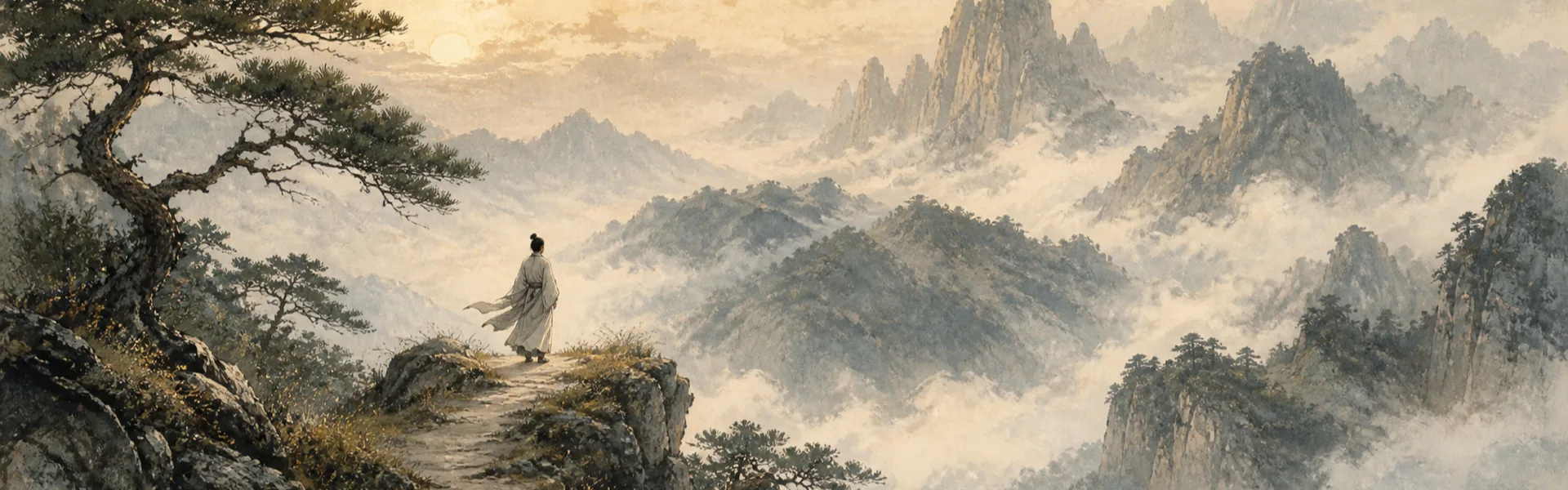
Zhou Mu Wang, “King Mu of Zhou,” explores the uncertain border between waking, dreaming, memory, imagination, and what people agree to call real. Its nine passages do not simply claim that everything is an illusion. They show that human experience is always shaped by attention, bodily condition, expectation, language, and memory—and that certainty becomes dangerous when we forget those influences.
The chapter moves from King Mu’s dazzling spiritual journeys to ordinary people who exchange wealth and hardship in their dreams, quarrel over a deer whose discovery may itself have been dreamed, or suffer when memory returns. Its practical lesson is not to distrust all experience. It is to hold experience carefully, compare it with consequences and shared evidence, and remain humble about the stories through which the mind organises life.
1. King Mu and the Master of Transformations
Classical text
周穆王時,西極之國有化人來,入水火,貫金石;反山川,移城邑;乘虛不墜,觸實不硋。千變萬化,不可窮極。既已變物之形,又且易人之慮。穆王敬之若神,事之若君。推路寢以居之,引三牲以進之,選女樂以娛之。化人以爲王之宮室卑陋而不可處,王之廚饌腥螻而不可饗,王之嬪御膻惡而不可親。穆王乃爲之改築。土木之功,赭堊之色,無遺巧焉。五府爲虛,而臺始成。其高千仞,臨終南之上,號曰中天之臺。簡鄭衛之處子娥媌靡曼者,施芳澤,正娥眉,設笄珥,衣阿錫,曳齊紈。粉白黛黑,珮玉環。雜芷若以滿之,奏《承雲》《六瑩》《九韶》《晨露》以樂之。月月獻玉衣,旦旦薦玉食。化人猶不舍然,不得已而臨之。居亡幾何,謁王同游。王執化人之袪,騰而上者,中天迺止。暨及化人之宮,化人之宮構以金銀,絡以珠玉,出雲雨之上,而不知下之據,望之若屯雲焉。耳目所觀聽,鼻口所納嘗,皆非人間之有。王實以爲清都、紫微、鈞天、廣樂,帝之所居。王俯而視之,其宮榭若累塊積蘇焉。王自以居數十年不思其國也。化人復謁王同游,所及之處,仰不見日月,俯不見河海。光影所照,王目眩不能得視;音響所來,王耳亂不能得聽。百骸六藏,悸而不凝。意迷精喪,請化人求還。化人移之,王若殞虛焉。既寤,所坐猶嚮者之處,侍御猶嚮者之人。視其前,則酒未清,肴未昲。王問所從來,左右曰:「王默存耳。」由此穆王自失者三月而復,更問化人。化人曰:「吾與王神遊也,形奚動哉?且曩之所居,奚異王之宮?曩之所游,奚異王之圃?王閒恆有,疑蹔亡。變化之極,徐疾之間,可盡模哉?」王大悅。不恤國事,不樂臣妾,肆意遠游。命駕八駿之乘,右服𧄪騮而左綠耳,右驂赤驥而左白𣚘,主車則造父爲御,𧮼𠱛爲右;次車之乘,右服渠黃而左踰輪,左驂盜驪而右山子,柏夭主車,參百爲御,奔戎爲右。馳驅千里,至於巨蒐氏之國。巨蒐氏乃獻白鵠之血以飲王,具牛馬之湩以洗王之足,及二乘之人。已飲而行,遂宿於崑崙之阿,赤水之陽。別日升於崑崙之丘,以觀黃帝之宮,而封之以詒後世。遂賓於西王母,觴於瑤池之上。西王母爲王謠,王和之,其辭哀焉。西觀日之所入。一日行萬里。王乃歎曰:「於乎!予一人不盈於德而諧於樂,後世其追數吾過乎!」穆王幾神人哉!能窮當身之樂,猶百年乃徂,世以爲登假焉。
English reading
A master of transformations came from the far west and could pass through elements, alter forms, and change people’s thoughts. King Mu treated him as a god. The king exhausted his treasury building a magnificent tower, gathering delicacies, performers, fragrances, and luxury, yet the visitor remained unimpressed. The lesson began before any miracle: desire escalates when value depends on astonishing someone who cannot be satisfied.
The visitor then took the king on journeys through palaces above the clouds and realms beyond ordinary sight and sound. To the king they lasted decades; when he awoke, the food and wine before him had scarcely changed. The visitor said their spirits had travelled while their bodies had not, and asked how these realms differed from the king’s palace and garden except through the mind’s judgement of duration and reality.
King Mu became devoted to travel and pleasure. He journeyed to Kunlun, met the Queen Mother of the West, and finally wondered whether later generations would count his excesses. The chapter neither simply praises nor condemns him: his expanded experience did not automatically become wisdom or public responsibility.
Practical meaning
Powerful experiences—travel, ceremony, meditation, art, altered states, or new technology—can change perception without resolving character. After any extraordinary experience, ask what changed in conduct, responsibility, and care. Wonder is valuable; using wonder to escape neglected duties is another form of intoxication.
2. Learning the Meaning of Illusion
Classical text
老成子學幻於尹文先生,三年不告。老成子請其過而求退。尹文先生揖而進之於室,屏左右而與之言曰:「昔老聃之徂西也,顧而告予曰:『有生之氣,有形之狀,盡幻也。造化之所始,陰陽之所變者,謂之生,謂之死。窮數達變,因形移易者,謂之化,謂之幻。造物者其巧妙,其功深,固難窮難終。因形者其巧顯,其功淺,故隨起隨滅。知幻化之不異生死也,始可與學幻矣。』吾與汝亦幻也,奚須學哉?」老成子歸,用尹文先生之言,深思三月,遂能存亡自在,憣校四時,冬起雷,夏造冰;飛者走,走者飛,終身不箸其術,故世莫傳焉。子列子曰:「善爲化者,其道密庸,其功同人。五帝之德,三王之功,未必盡智勇之力,或由化而成。孰測之哉?」
English reading
Laochengzi studied illusion for three years without being taught a visible technique. When he asked to leave, Master Yinwen explained that birth, death, transformation, and illusion all involve forms arising, changing, and disappearing. Natural transformation is deep and difficult to trace; performed illusion is obvious and short-lived. Until the student understood their continuity, learning tricks would only strengthen a shallow distinction between “real” life and “mere” appearance.
After contemplating this, Laochengzi was said to reverse seasons and transform creatures, yet never displayed or recorded his art. Liezi remarks that the finest transformation is hidden in ordinary results. Great achievements attributed to force or intelligence may also depend on subtle changes no one notices.
Practical meaning
Change is most effective when it alters conditions rather than stages a spectacle. A teacher, designer, healer, or leader may produce results through timing, framing, trust, and environment. Judge transformation by durable effects, not by how dramatic the intervention appears.
3. Waking Signs and Dream Conditions
Classical text
覺有八徵,夢有六候。奚謂八徵?一曰故,二曰爲,三曰得,四曰喪,五曰哀,六曰樂,七曰生,八曰死。此者八徵,形所接也。奚謂六候?一曰正夢,二曰蘁夢,三曰思夢,四曰寤夢,五曰喜夢,六曰懼夢。此六者,神所交也。不識感變之所起者,事至則惑其所由然;識感變之所起者,事至則知其所由然。知其所由然,則無所怛。一體之盈虛消息,皆通於天地,應於物類。故陰氣壯,則夢涉大水而恐懼;陽氣壯,則夢涉大火而燔焫;陰陽俱壯,則夢生殺。甚飽則夢與,甚饑則夢取。是以以浮虛爲疾者,則夢揚;以沈實爲疾者,則夢溺;藉帶而寢則夢蛇,飛鳥銜髮則夢飛;將陰夢火,將疾夢食;飲酒者憂,歌儛者哭。子列子曰:「神遇爲夢,形接爲事。故晝想夜夢,神形所遇。故神凝者想夢自消。信覺不語,信夢不達,物化之往來者也。古之真人,其覺自忘,其寢不夢,幾虛語哉?」
English reading
The text classifies waking experience through causes, actions, gain, loss, sorrow, joy, life, and death; dreams through ordinary, startling, thought-born, waking-edge, joyful, and fearful forms. It then links dreams to bodily and emotional conditions: hunger dreams of taking, fullness of giving; pressure on the body may become snakes, falling, flying, drowning, heat, or cold within a dream.
Its ancient physiology should not be treated as a diagnostic manual. The useful insight is that dreams are not isolated messages dropped into the mind. They can be shaped by daytime preoccupation, bodily sensation, mood, environment, and memory. Knowing a likely source reduces unnecessary fear.
Practical meaning
Record a dream before interpreting it. Note sleep quality, stress, food, illness, medication, recent events, and recurring emotions. A dream can reveal what the mind is processing without predicting the future. If nightmares are frequent or disruptive, practical sleep and health support matters more than symbolic certainty.
4. Three Countries, Three Ideas of Reality
Classical text
西極之南隅有國焉,不知境界之所接,名古莽之國。陰陽之氣所不交,故寒暑亡辨;日月之光所不照,故晝夜亡辨。其民不食不衣而多眠。五旬一覺,以夢中所爲者實,覺之所見者妄。四海之齊謂中央之國,跨河南北,越岱東西,萬有餘里。其陰陽之審度,故一寒一暑;昏明之分察,故一晝一夜。其民有智有愚。萬物滋殖,才藝多方。有君臣相臨,禮法相持。其所云爲不可稱計。一覺一寐,以爲覺之所爲者實,夢之所見者妄。東極之北隅有國曰阜落之國。其土氣常燠,日月餘光之照。其土不生嘉苗。其民食草根木實,不知火食,性剛悍,彊弱相藉,貴勝而不尚義;多馳步,少休息,常覺而不眠。
English reading
One imagined country sleeps for fifty days at a time and regards dream life as real, waking life as illusion. The central country alternates waking and sleep and calls only waking experience real. A third country never sleeps and values restless strength and victory. Each society mistakes its own rhythm for the universal measure.
The passage uses fantasy to expose cultural confidence. What seems obviously real, productive, civilised, or healthy may partly reflect the schedule and values into which a person was trained.
Practical meaning
When another culture, profession, or generation organises time differently, do not immediately call it laziness, obsession, or irrationality. Compare actual outcomes: health, relationships, sustainability, learning, and harm. Shared evidence can correct both sides without pretending one habit is nature itself.
5. The Servant and the Master Exchange Lives in Dreams
Classical text
周之尹氏大治產,其下趣役者侵晨昏而弗息。有老役夫筋力竭矣,而使之彌勤。晝則呻呼而即事,夜則昏憊而熟寐。精神荒散,昔昔夢爲國君,居人民之上,總一國之事,遊燕宮觀,恣意所欲,其樂無比,覺則復役。人有慰喻其懃者,役夫曰:「人生百年,晝夜各分。吾晝爲僕虜,苦則苦矣;夜爲人君,其樂無比,何所怨哉?」尹氏心營世事,慮鍾家業,心形俱疲,夜亦昏憊而寐,昔昔夢爲人僕,趨走作役,無不爲也;數罵杖撻,無不至也。眠中啽囈呻呼,徹旦息焉。尹氏病之,以訪其友。友曰:「若位足榮身,資財有餘,勝人遠矣。夜夢爲僕,苦逸之復,數之常也。若欲覺夢兼之,豈可得邪?」尹氏聞其友言,寬其役夫之程,減己思慮之事,疾並少間。
English reading
A wealthy master drove an old servant to labour from before dawn until dark. Each night the exhausted worker dreamed he was a king enjoying complete freedom. He accepted the day’s hardship because night brought another life. The master, consumed by property and business, dreamed each night that he was a servant, beaten and ordered about. Wealth and rank did not protect his inner life.
A friend advised the master that pleasure and hardship alternate, and that he could not possess advantage in both waking and dreaming. The master reduced the servant’s workload and his own anxious management; both improved. The practical reform—not a theory about which state was real—resolved the suffering.
Practical meaning
Status does not measure total well-being. Workplaces should consider sleep, control, mental load, and recovery, not only pay or rank. When both leader and worker are exhausted, reducing unreasonable demands can improve the whole system.
6. The Woodcutter, the Deer, and the Lawsuit
Classical text
鄭人有薪於野者,偶駭鹿,御而擊之,斃之。恐人見之也,遽而藏諸隍中,覆之以蕉,不勝其喜。俄而遺其所藏之處,遂以爲夢焉,順塗而詠其事。傍人有聞者,用其言而取之。既歸,告其室人曰:「向薪者夢得鹿而不知其處,吾今得之,彼直真夢矣。」室人曰:「若將是夢見薪者之得鹿邪?詎有薪者邪?今真得鹿,是若之夢真邪?」夫曰:「吾據得鹿,何用知彼夢我夢邪?」薪者之歸,不厭失鹿。其夜真夢藏之之處,又夢得之之主。爽旦,案所夢而尋得之,遂訟而爭之,歸之士師。士師曰:「若初真得鹿,妄謂之夢;真夢得鹿,妄謂之實。彼真取若鹿,而與若爭鹿。室人又謂夢仞人鹿,無人得鹿。今據有此鹿,請二分之。」以聞鄭君。鄭君曰:「嘻!士師將復夢分人鹿乎?」訪之國相。國相曰:「夢與不夢,臣所不能辨也。欲辨覺夢,唯黃帝孔丘。今亡黃帝孔丘,孰辨之哉?且恂士師之言可也。」
English reading
A woodcutter killed a startled deer, hid it, forgot the location, and decided the event must have been a dream. A passer-by overheard him, found the deer, and wondered whether he had dreamed the woodcutter. That night the woodcutter dreamed the hiding place and the person who had taken it, then used the dream to find both. They went to court.
The judge could not untangle which parts were waking and which dreaming, but there was one deer and two competing claims. He divided it. The ruler joked that perhaps the division was also a dream; the minister replied that perfect certainty was unavailable, so a workable judgement based on present evidence was still required.
Practical meaning
Decisions often must be made with incomplete memory and conflicting stories. Separate metaphysical certainty from practical evidence: what exists now, what can be corroborated, what harm is at stake, and what remedy is proportionate? Humility does not remove the duty to decide.
7. Huazi Recovers His Memory—and Misses Forgetting
Classical text
宋陽里華子中年病忘,朝取而夕忘,夕與而朝忘;在塗則忘行,在室則忘坐;今不識先,後不識今。闔室毒之,謁史而卜之,弗占;謁巫而禱之,弗禁;謁醫而攻之,弗已。魯有儒生自媒能治之,華子之妻子以居產之半請其方。儒生曰:「此固非卦兆之所占,非祈請之所禱,非藥石之所攻。吾試化其心,變其慮,庶幾其瘳乎!」於是試露之,而求衣;飢之,而求食;幽之,而求明。儒生欣然告其子曰:「疾可已也。然吾之方密,傳世不以告人。試屏左右,獨與居室七日。」從之,莫知其所施爲也,而積年之疾一朝都除。華子既悟,迺大怒,黜妻罰子,操戈逐儒生。宋人執而問其以,華子曰:「曩吾忘也,蕩蕩然不覺天地之有無。今頓識既往,數十年來存亡、得失、哀樂、好惡,擾擾萬緒起矣。吾恐將來之存亡、得失、哀樂、好惡之亂吾心如此也,須臾之忘,可復得乎?」子貢聞而怪之,以告孔子。孔子曰:「此非汝所及乎!」顧謂顏回紀之。
English reading
Huazi developed profound forgetfulness. Divination, prayer, and medicine did not help. A scholar tested whether basic responses remained—cold led him to seek clothing, hunger to seek food, darkness to seek light—then treated him privately for seven days. His memory returned.
Instead of gratitude, Huazi became furious. When he had forgotten, he was free of decades of gain and loss, joy and sorrow, liking and dislike. Restored memory brought the whole burden back at once, and he longed for even a moment of forgetting. The story does not romanticise cognitive illness; his family’s distress and vulnerability are real. It asks why ordinary memory is assumed to be an unmixed good.
Practical meaning
Memory supports identity, safety, and relationship, but rumination can turn memory into repeated injury. The answer is not forced forgetting. It is learning to remember without reliving everything: through boundaries, therapy, ritual, writing, forgiveness where appropriate, and attention to present conditions.
8. When Everyone Shares the Same Confusion
Classical text
秦人逢氏有子,少而惠,及壯而有迷罔之疾,聞歌以爲哭,視白以爲黑,饗香以爲朽,嘗甘以爲苦,行非以爲是;意之所之,天地、四方,水火、寒暑,無不倒錯者焉。楊氏告其父曰:「魯之君子多術藝,將能已乎?汝奚不訪焉?」其父之魯,過陳,遇老聃,因告其子之證。老聃曰:「汝庸知汝子之迷乎?今天下之人皆惑於是非,昏於利害。同疾者多,固莫有覺者。且一身之迷不足傾一家,一家之迷不足傾一鄉,一鄉之迷不足傾一國,一國之迷不足傾天下。天下盡迷,孰傾之哉?向使天下之人其心盡如汝子,汝則反迷矣。哀樂、聲色、臭味、是非,孰能正之?且吾之此言未必非迷,而況魯之君子迷之郵者,焉能解人之迷哉?榮汝之糧,不若遄歸也。」
English reading
A man’s son experienced songs as crying, white as black, fragrance as rot, sweetness as bitterness, and wrong as right. His father sought a cure. Laozi asked how the father knew only the son was confused. Whole societies may share distorted ideas of right, benefit, and normality; because the confusion is common, no one recognises it.
If everyone perceived as the son did, the father would appear abnormal. Yet Laozi includes his own speech in the uncertainty: even this critique may be mistaken. The point is not that every judgement is equal, but that popularity alone cannot establish truth.
Practical meaning
For perceptual or cognitive symptoms, seek appropriate medical evaluation. Philosophically, also test shared assumptions through evidence, consequences, comparison, and dissent. A belief held by everyone can still cause harm; a belief held by one person can still require careful examination.
9. Grief Rehearsed by a False Homecoming
Classical text
燕人生於燕,長於楚,及老而還本國。過晉國,同行者誑之,指城曰:「此燕國之城。」其人愀然變容。指社曰:「此若里之社。」乃喟然而歎。指舍曰:「此若先人之廬。」乃涓然而泣。指壠曰:「此若先人之冢。」其人哭不自禁。同行者啞然大笑,曰:「予昔紿若,此晉國耳。」其人大慙。及至燕,真見燕國之城社,真見先人之廬冢,悲心更微。
English reading
A man born in Yan but raised in Chu returned home in old age. While passing through Jin, his companions deceived him, pointing to ordinary places as his native city, ancestral shrine, family house, and graves. His emotion rose from solemnity to uncontrollable grief. When they revealed the trick, he was ashamed. On finally reaching the real places, his grief was weaker.
The false encounter had already activated the memories, bodily responses, and ritual form of mourning. Emotion was genuine even though its immediate object was mistaken. Repetition changed what followed.
Practical meaning
Feelings are real events, but they are not infallible proof about their cause. Before acting on intense emotion, check the interpretation that produced it. Rehearsal, anticipation, media, and suggestion can strengthen or exhaust a response long before the actual event arrives.
The Chapter in Practice
Hold extraordinary experience accountable to ordinary life. Ask how insight changes conduct, care, and responsibility.
Investigate conditions before symbols. Sleep, stress, memory, the body, and recent events can shape dreams and perception.
Do not confuse shared belief with certainty. Compare assumptions with evidence, outcomes, and viewpoints outside the group.
Decide humbly when certainty is unavailable. Practical judgement can be necessary even when every story cannot be proved.
Remember without being ruled by memory. The past should inform present care, not endlessly replace the present.
Questions for Reflection
What powerful experience in your life still needs to be translated into daily conduct?
Which recurring dream or emotion might be connected to a bodily or daytime condition?
What belief seems obvious mainly because everyone around you shares it?
Where must you make a fair decision despite incomplete information?
Which memory teaches something useful, and which one repeatedly takes you away from the present?
Continue Reading
Previous: Chapter Two, Huang Di 黄帝 · Liezi overview · Next: Chapter Four, Zhong Ni 仲尼 · Classical Library