A TAOIST VIEW OF LIFE · 道家人生观

Softness and Vitality: Nourishing Life Without Overstraining It 贵柔守雌与摄生:为何越紧绷越易折损

How Tao Te Ching Chapters 10, 55, and 76 connect supple breath, relaxed joints, and long-term vitality.

A practitioner seen from behind, standing on one leg with both arms spread wide like wings on a grassy summit among pines, above a sea of clouds at dawn.

When people think of strength, they usually picture clenched muscles, unyielding willpower, and high intensity. Yet when Laozi looks at living nature in Chapter 76 of the Tao Te Ching, he notices a striking fact: “Human beings are soft and supple at birth, and stiff and rigid at death; plants and trees are tender and pliant when alive, and dry and brittle when dead” (人之生也柔弱,其死也坚强;草木之生也柔脆,其死也枯槁).

1. Why the Infant Is Laozi’s Emblem of Vitality (Chapters 10 & 55)

In Chapter 10 (“In concentrating your breath to reach suppleness, can you be like an infant?” 专气致柔,能婴儿乎) and Chapter 55 (“One who holds deep virtue may be compared to an infant”), Laozi points to the newborn child not for immaturity, but for three physiological and mental qualities:

  • Soft, Unlocked Bones and Sinews (骨弱筋柔而握固): An infant’s joints and connective tissues are completely supple, yet its grip is firm and whole.
  • Unforced, Deep Breath (终日号而不嗄,和之至也): Because the throat and chest are not constricted by mental tension, an infant can cry all day without losing its voice—harmony of breath (和) is intact.
  • Warning Against Forced Intensity (益生曰祥,心使气曰强): Chapter 55 adds a crucial warning for health seekers: “Artificially forcing life to over-expand is an ill omen; using the willful mind to force the breath is called stiffness; things that grow over-rigid quickly age” (物壮则老,谓之不道).
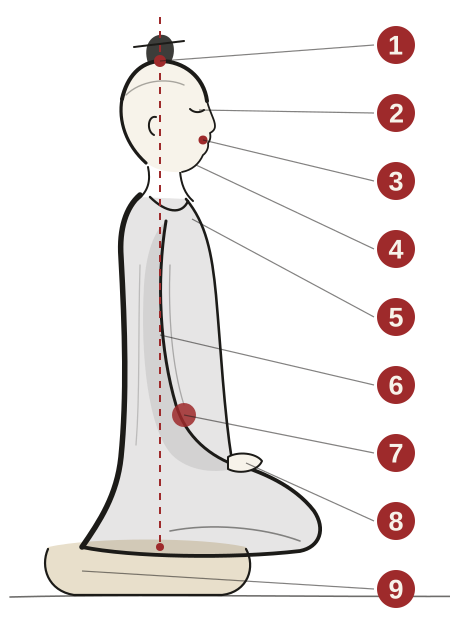
Diagram of relaxed upright posture and deep abdominal breathing in Taoist cultivation
Concentrating the breath into suppleness (Zhuan Qi Zhi Rou): releasing chronic shoulder, jaw, and chest tension allows breath to settle naturally.

2. What “Valuing Softness” Means in Daily Health and Practice

Whether in Qigong’s Three Regulations, Baduanjin, or everyday desk work, chronic tightness in the neck, jaw, and diaphragm drains energy all day long. Checking in three times a day to soften the shoulders, exhale fully, and conserve energy early (Chapter 59: 深根固柢,长生久视之道) keeps body and mind resilient over decades.

Seeker’s Q&A · Frequently Asked Questions

What does “using the mind to force the breath is called stiffness” (心使气曰强) mean in Tao Te Ching Chapter 55?

It warns against using aggressive willpower or emotional agitation to force the breath and body beyond their natural harmony—a habit that creates stiffness and accelerates exhaustion rather than nourishing vitality.