Chapter 59 — Deep Roots and Conservation

第五十九章 深根固柢

The key word suggests conservation, thrift, and not wasting what sustains life. Good governance and reverence for heaven begin before crisis, when resources, attention, and trust can still be stored. Virtue becomes effective through long accumulation rather than heroic repair after neglect.
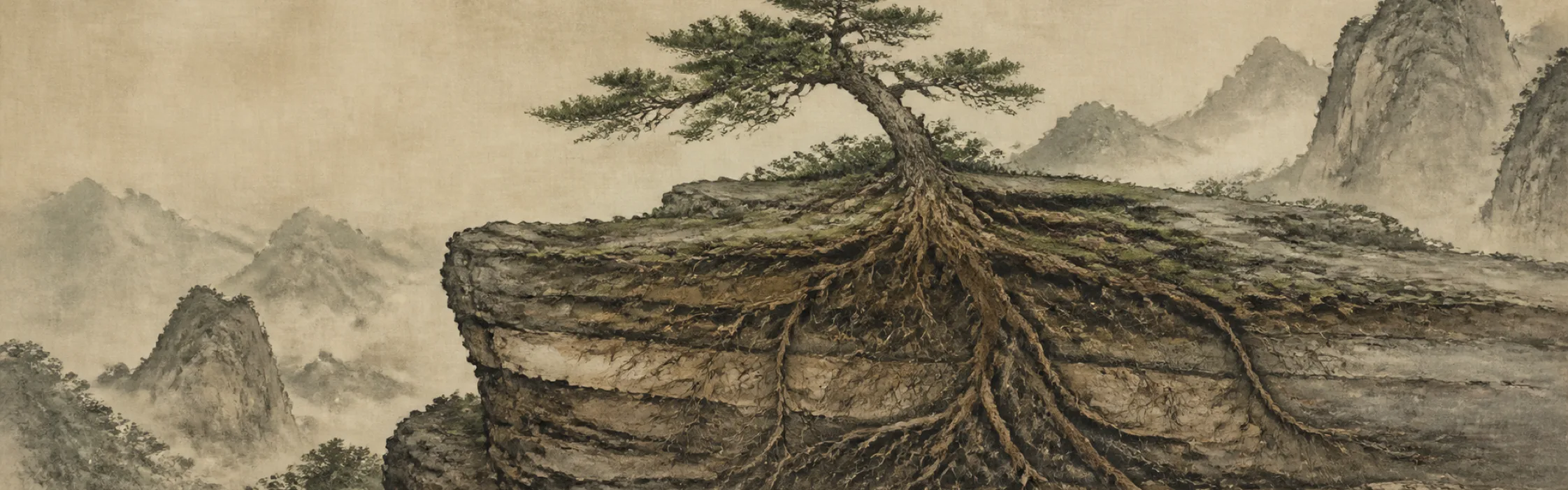
Chapter 59 — Deep Roots and Conservation

Classical text

治人事天,莫若啬。夫唯啬,是谓早服;早服谓之重积德。重积德则无不克;无不克则莫知其极;莫知其极,可以有国;有国之母,可以长久。是谓深根固柢,长生久视之道。

Original rendering

In governing people and serving heaven, nothing is better than conservation. Conservation is called preparing early; preparing early is called accumulating virtue heavily. With heavily accumulated virtue, nothing cannot be overcome. When nothing cannot be overcome, no one knows the limit of one’s capacity. With capacity beyond measure, one can care for a state. Possessing the mother of the state, one can endure. This is called deep roots and a firm base: the way of long life and enduring vision.

Beginner’s guide

Long life here can include personal longevity, institutional continuity, and the enduring view of a culture. It is not a guaranteed lifespan. The teaching is practical: protect foundations before visible trouble, and do not spend every reserve for present display.

Key ideas

  • Prevention begins with conserving what sustains life.

  • Virtue gains strength through repeated accumulation.

  • Deep roots create capacity for uncertain conditions.

Reading it in modern life

Maintain sleep, savings, equipment, soil, trust, and training before emergency. Leave reserves in budgets and schedules. Treat small acts of reliability as deposits that make later leadership possible.

A question to carry

Which root needs nourishment now, before the next difficult season?


Continue reading the complete Tao Te Ching overview, Chapter 58 or continue to Chapter 60.