Chapter 76 — The Living Are Soft

第七十六章 柔弱处上

A living body breathes, bends, and adjusts; a dead body becomes rigid. Fresh plants are tender, while dead wood dries and hardens. Laozi turns this physical contrast into an ethical and strategic teaching about flexibility.
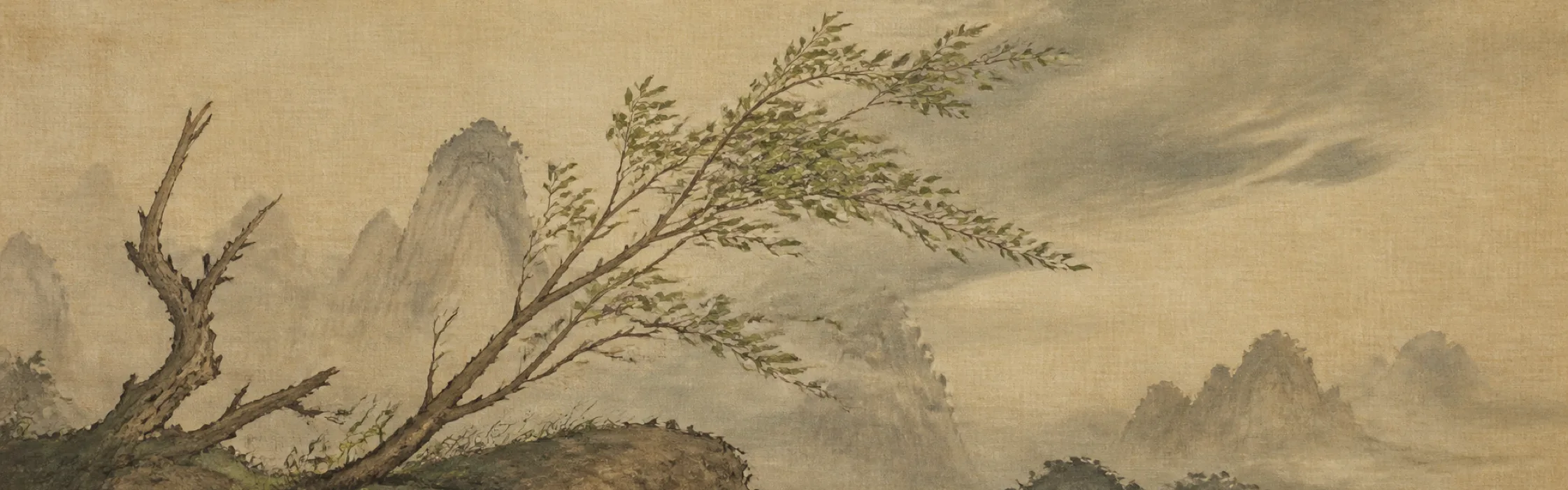
Chapter 76 — The Living Are Soft

Classical text

人之生也柔弱,其死也坚强。万物草木之生也柔脆,其死也枯槁。故坚强者,死之徒;柔弱者,生之徒。是以兵强则不胜,木强则共。强大处下,柔弱处上。

Original rendering

A person in life is soft and yielding; in death, hard and rigid. Plants and trees in life are soft and fragile; in death, withered and dry. Therefore the hard and strong belong to the followers of death; the soft and weak belong to the followers of life. Thus an army relying on strength does not prevail, and a rigid tree is cut down. The hard and great take the lower place; the soft and yielding take the higher.

Beginner’s guide

Softness is not the absence of structure. Living flexibility needs boundaries, bones, and roots, but none are completely rigid. The warning is against strength that cannot receive information or change direction.

Key ideas

  • Adaptability is a sign of living strength.

  • Rigidity grows when response and renewal have stopped.

  • Force that cannot change becomes vulnerable.

Reading it in modern life

Build plans with review points and alternatives. In the body, train strength across comfortable ranges rather than turning every movement into tension. In disagreement, keep the principle firm while allowing the method to change.

A question to carry

Where has firmness stopped serving life and become rigidity?


Continue reading the complete Tao Te Ching overview, Chapter 75 or continue to Chapter 77.