Reading Wudang’s Stone Inscriptions: Steles, Dates and Imperial Memory
读懂武当碑刻:碑石、年代与皇家记忆
At Wudang, stone often outlives timber. A hall can burn, be rebuilt or disappear; a stele may remain beside its platform, still carrying a date, a patron’s name and the reason a project was undertaken. Cliff inscriptions add another kind of record by fixing words directly into the landscape. Read carefully, these texts help separate a building’s present appearance from the many historical moments that produced it.
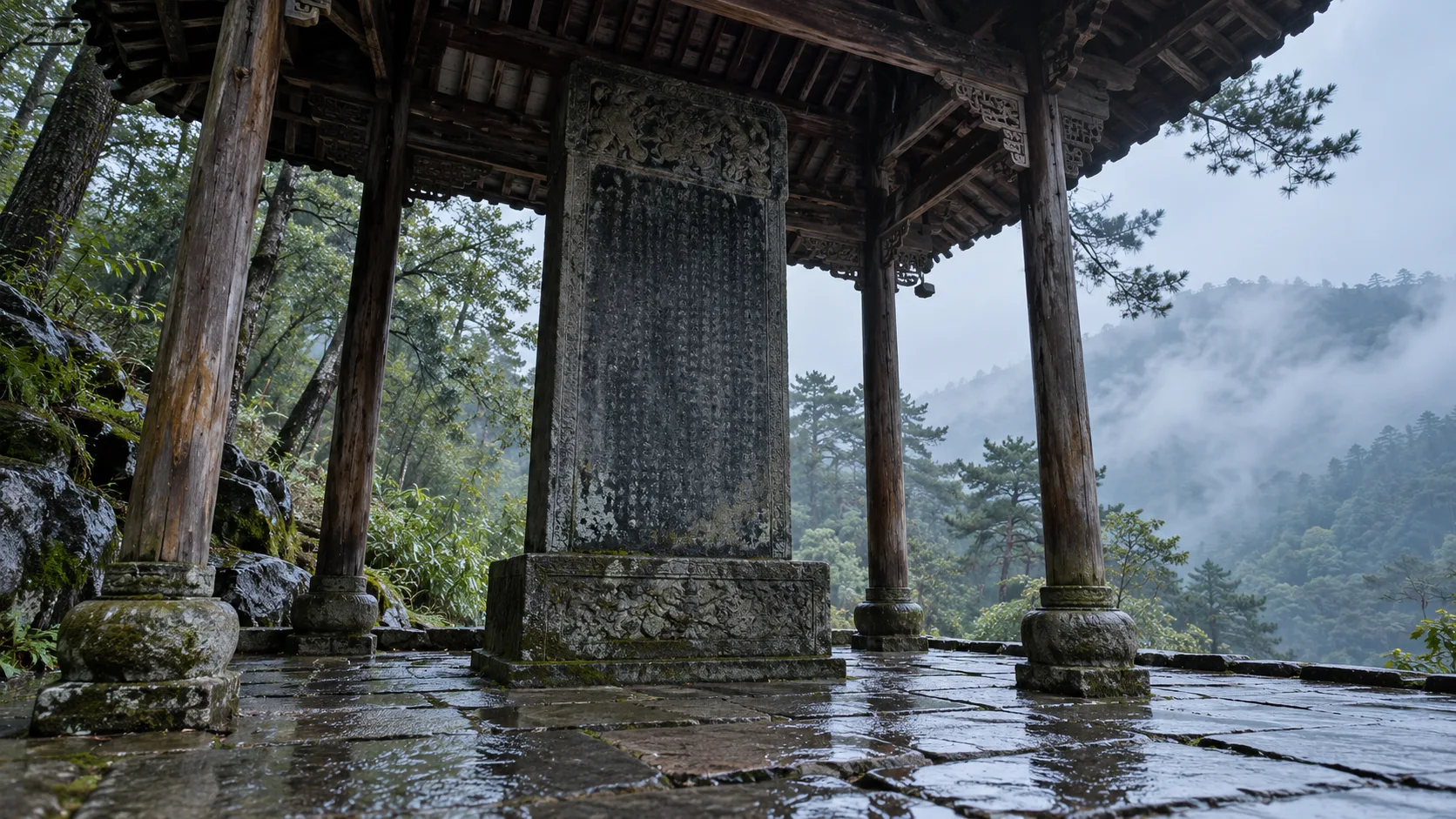
This is not a catalogue of every inscription on the mountain. It is a method for looking: first at the object, then at its words, and finally at the interests of the people who caused those words to be cut.
Three kinds of writing in stone
Steles: texts made into public monuments
A stele is more than a page in durable material. Its height, base, shelter and position can declare rank before anyone reads a character. Large imperial steles placed in dedicated pavilions turn a text into part of the architecture. Smaller records may commemorate repairs, waterworks, land, donations or the careers of temple officials. The object and its setting are therefore part of the message.
Cliff inscriptions: place becomes the writing surface
Characters cut into a cliff do not stand apart from the mountain. Their location can mark a route, rename a rock, associate a place with a person or tradition, or record a visit. The dated inscription at Yinxian Rock, for example, matters because it ties words to a precise formation and historical moment. A cliff inscription should be read together with the path, cave, view and earlier or later names around it.
Plaques and inscriptions are not all the same
A horizontal name plaque identifies or ranks a hall; a commemorative stele explains and records; a short cliff inscription may name a scene; a donor list preserves a social network. Treating every carved character as “calligraphy” misses these different jobs. The first question is not “Is it beautiful?” but “What kind of object is this, and what was it meant to do?”
Read the object before translating the text
Begin with material, location and condition
Note whether the writing is on a freestanding slab, a boulder, a wall or an architectural member. Look for a tortoise-shaped base, a carved crown, a pavilion, traces of pigment, weathering, breaks and recut surfaces. Ask whether the inscription still stands where it was first erected. A relocated stone can remain historically important, but its current surroundings no longer explain its original audience.
Separate composition, calligraphy and carving
“Imperially composed” does not necessarily mean that an emperor personally wrote the visible characters, and neither phrase means that he carved them. A text could be authored under imperial authority, written out by a court calligrapher, transferred to stone and cut by skilled artisans. Those roles may be named separately—or not at all. The cut line preserves a designed script through another maker’s hand.
A rubbing is evidence, not the stone itself
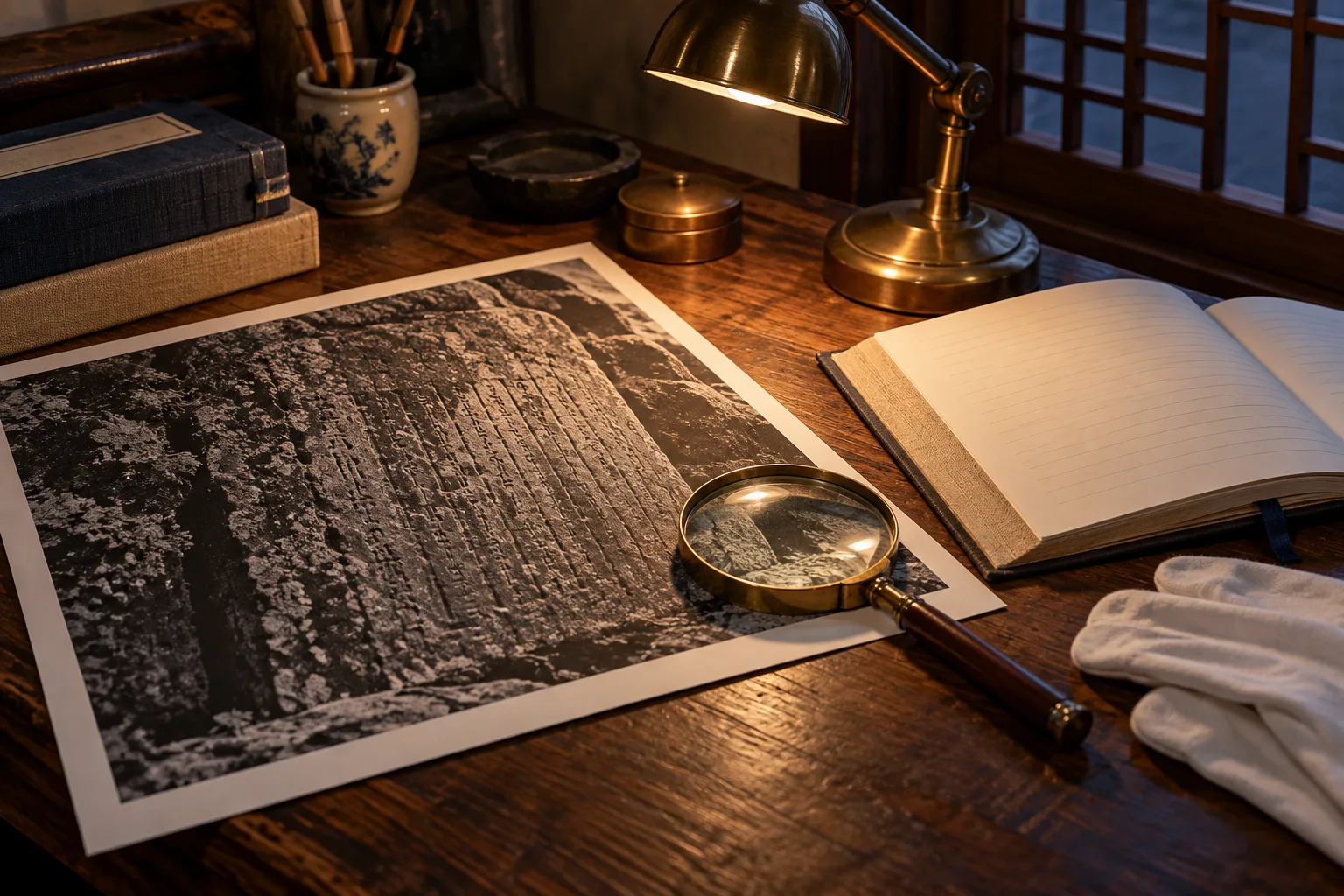
Ink rubbings can make worn strokes legible and carry an inscription into libraries far from its site. They also flatten depth, reverse the balance of black and white, and may reflect damage or repair at the time they were made. Compare a rubbing with photographs and the object whenever possible. On protected heritage, do not make a rubbing, chalk grooves or touch fragile surfaces without explicit conservation permission.
What a date can establish—and what it cannot
From a 1328 water record to the great Ming programme
A record associated with Zixiao Palace dates repairs to pools and the digging of wells to 1328 and names temple officers connected with the work. Such a text can establish that an institution, a practical water project and particular officeholders were present by that date. It does not prove that every nearby structure is equally old.
The Veritable Records of the Ming state that the Wudang palaces were completed in 1418, name major complexes and say that the Yongle emperor composed a stele text to commemorate more than 1,500 bays of buildings and their endowment. The entry is powerful evidence for how the court described the programme. It is not a neutral inventory of everything visible today.
Later inscriptions reveal continued patronage
A stone dated 1502, documented by Wudang researchers, records a court mission that carried offerings, conducted rites and coordinated officials along the route. It fills out a process that official histories summarize briefly. It also shows why epigraphy matters: a later inscription can reveal the continuing life of a sacred centre after its famous construction phase. The finding should still be checked against the stone, a reliable transcription and related archival records.
Public memory is argued, not merely stored
Imperial steles praise divine protection and dynastic beneficence. Temple records commemorate meritorious works. Donor lists make support visible. These are invaluable sources precisely because they show how patrons wanted actions remembered. Their claims should be compared with gazetteers, court records, archaeology, building fabric and inscriptions from other moments.
A practical reading sequence at Wudang
Use seven questions
Where is the inscription, and is that its original position?
What physical form does it take: stele, cliff text, plaque or building inscription?
Is there a date, and which calendar or reign title is used?
Who composed, wrote, carved, commissioned and erected it?
What action does it record: construction, repair, ritual, donation, appointment or visit?
Who was meant to see it, and what response did it invite?
Which independent sources agree, qualify or contradict it?
Connect the text to the mountain
Begin with the administrative scale and imperial records at Yuxu Palace, then compare inscriptions protected within a working complex such as Zixiao with words cut directly into cliffs. Continue to the history of Chinese calligraphy to understand script, copying and rubbings. For the larger architectural frame, read what the World Heritage inscription actually covers.
Sources and limits. This guide draws on UNESCO’s account of the Ancient Building Complex, the 1418 entry in the Veritable Records of Ming Taizong, Noelle Giuffrida’s study of Ming patronage and surviving objects, and Wudang researchers’ 2026 report on the 1502 stele. Dates establish the inscription or recorded act, not automatically the age of every surrounding building. Translations of official or devotional texts should be checked against a full transcription before being quoted as exact wording.
Further reading: UNESCO World Heritage Centre; Noelle Giuffrida, “Ming Imperial Patronage of the Wudang Mountains and the Daoist God Zhenwu”; Wudang researchers’ report on the 1502 stele.