How Chinese Poetry Anthologies Shape What We Read
中国诗歌选本怎样塑造我们的阅读
An anthology is never only a container. It preserves poems, but it also chooses, excludes, groups and explains them. A reader who opens a Chinese poetry anthology therefore meets at least two histories at once: the history of the poems and the later history of people deciding which poems should represent a genre, dynasty, community or idea of literature. Learning to see that editorial layer makes familiar poems richer and unfamiliar collections less intimidating.

1. An Anthology Is a Made Object
Selection creates emphasis
No anthology can include everything. A compiler works within a purpose, available sources, space, patronage and an intended readership. A court-sponsored collection, an examination reader, a family manuscript and a modern classroom selection may preserve different parts of the same literary field. Inclusion can give a poem renewed circulation; omission may make another work difficult to find without proving that it lacked quality or readers in its own time.
This is why the word “canonical” should describe a historical result, not an eternal rank. A poem may become central because it was copied, commented on, taught and reprinted. Another may survive in a local collection or a writer’s individual anthology but remain outside later general histories. The anthology records taste, but it also helps manufacture the taste that later readers inherit.
Order turns poems into an argument
Arrangement matters. Poems may be grouped by genre, author, period, topic, rhyme, social category or perceived quality. Chronological order suggests development; grouping by form teaches distinctions; placing one poet first can announce a model. A Library of Congress record for the 1819 Du quan Tang shi chao, for example, describes famous poets arranged by birth order with a biography for each. The poems are accompanied by a historical pathway through poets’ lives rather than presented as a loose heap.
Read the table of contents as carefully as a poem. Ask where an editor begins, what divisions recur and which categories appear near the margins. The sequence may reveal the compiler’s map of literature before the preface says anything explicit.
Prefaces, biographies and notes train the reader
Paratext is not decoration. A preface can state why a collection was made, name earlier models, defend a neglected group or define good writing. Brief biographies connect poems to offices, places and reputations. Headnotes and commentary can supply allusions, variants and judgements, but they can also narrow interpretation by presenting one reading as obvious. When possible, separate the poem, the early transmitted text, the compiler’s framing and a modern editor’s notes.
2. Different Collections Perform Different Jobs
From transmitted classic to literary model
The Book of Songs is not simply a modern “best of” collection. Its transmitted status as a classic, its layered commentarial traditions and its ritual and educational afterlives give it a different authority from later literary selections. Readers should resist treating every anthology as if it were created by the same institution or for the same purpose.
The sixth-century Wen xuan, compiled under Xiao Tong, offers another model. It organizes refined writing by genre and combines poetry with several kinds of prose. Modern scholarship describes it as an influential standard anthology whose choices helped define exemplary writing. Its structure reminds us that modern boundaries between “poetry” and “prose” do not automatically reproduce premodern classifications.
Comprehensive collections and teaching selections
A large collection aims at breadth; a compact selection aims at manageability. Neither is neutral. Imperial or scholarly projects that gather thousands of works can preserve an enormous textual reservoir while still depending on earlier sources, editorial decisions and surviving editions. A small teaching anthology can make a tradition approachable while repeating a narrow group of famous authors.
The Berkeley East Asian Library’s digitized 1477 edition of Tang shi pin hui and the Library of Congress’s 1819 Tang selection show two physical witnesses separated by centuries. They do not give us an untouched Tang original. They show later readers classifying, printing and transmitting Tang poetry. Compare such witnesses with the site’s guide to the Tang poetic canon and its practical account of regulated verse.
Personal, regional and community collections
Not every important collection tries to represent a dynasty. A poet’s collected works, a lineage compilation, a local anthology or a network of friends may preserve different social relations. Dedications and prefaces can show who helped circulate the text. The absence of a poem from a prestigious general anthology may be balanced by repeated copying within another community. “Minor” collections often answer questions that a national canon cannot.
3. Canons Have Edges—and Those Edges Move
Genre hierarchies change
Forms do not enter the literary canon at the same moment or with equal prestige. The history of ci lyrics is especially useful: song lyrics associated with performance and entertainment could be judged differently from forms tied to formal education, yet ci later acquired an immense critical and literary afterlife. An anthology that omits a genre may reveal the hierarchy of its own period more than the lasting value of the omitted writing.
Dynastic labels also simplify. “Tang poetry” or “Song ci” can be useful doors, but they can become misleading if readers assume that each form belongs to one golden age and then declines. Compilers and literary historians repeatedly reshape these period stories.
Women’s poetry exposes the difference between survival and recognition
Open-access research on Ming–Qing women’s poetry gives a vivid example. Numerous women wrote, circulated and collected poetry, yet many standard histories and general anthologies reduced that activity to a few familiar names. Separate collections could preserve a rich literary community without guaranteeing entry into the general canon. The later recovery of these writings shows that absence from a famous anthology is not evidence of absence from literary life.
The Harvard-Yenching Library’s Ming–Qing women’s writings collection and the digital archive discussed in recent scholarship allow readers to encounter materials beyond a short inherited list. They also encourage a more precise question: not “Why were there no women poets?” but “Which institutions, categories and later histories made some poets visible and others hard to see?”
Digitization changes access, not the past
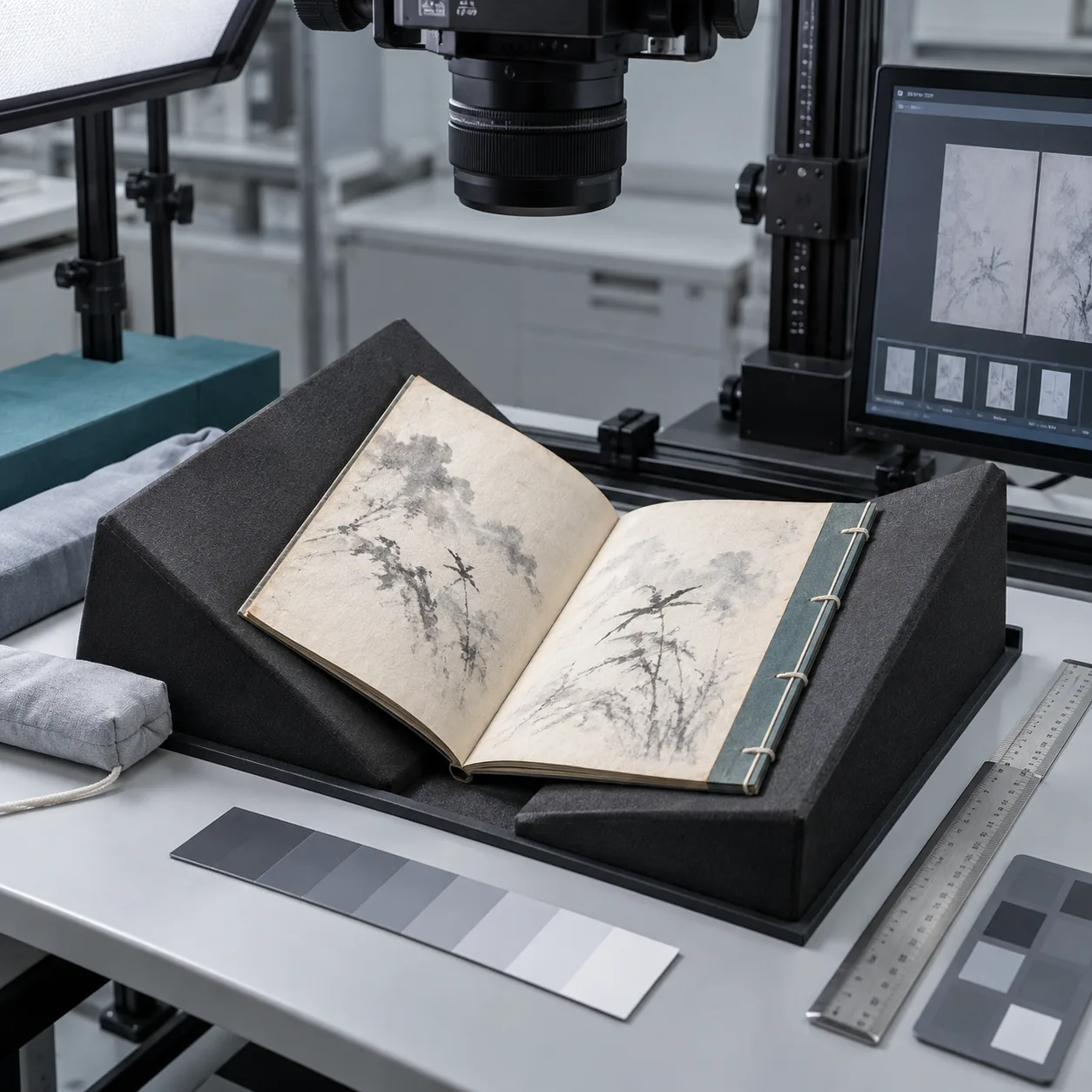
Digital collections can reunite dispersed books, enlarge images, search names and compare editions. They do not erase missing volumes, uncertain attributions or editorial choices. A scan preserves the photographed copy; a transcription introduces another textual layer; search results reflect metadata and technical decisions. Treat digital access as an extraordinary new reading room, not as a guarantee that every surviving poem has become equally findable.
4. A Six-Step Method for Reading an Anthology
Identify the edition before judging the selection
Begin with the title page, catalogue record and preface. Record the compiler, approximate date, place or sponsor if known, edition, stated scope and present holding institution. Do not collapse the date of the poems into the date of the copy. A Ming or Qing edition of Tang poetry is evidence for the transmission of Tang poems and for later editorial history.
- Name the purpose. Is the collection comprehensive, exemplary, educational, local, personal or devoted to a group?
- Map its scope. Note periods, forms, authors and sources it claims to include.
- Read the order. Follow sections, first and last positions, biographies and internal labels.
- Separate layers. Distinguish poem, compiler, commentator, later editor, translator and digital catalogue.
- Compare one case. Track one poem or poet across two collections and note changes in title, wording, placement and notes.
- Investigate the gaps. Ask which voices, regions, social groups or genres require another archive rather than filling silence with guesses.
Compare one poem without chasing a single “perfect” text
Differences between witnesses may include character variants, titles, author attributions, line division and commentary. Record them before deciding that one is an error. A critical edition may make a persuasive choice, but readers benefit from knowing what was compared. Translation adds another selection: sound, ambiguity, grammar and allusion cannot all receive equal weight in every target-language line.
Let the anthology open further paths
Use the collection as a map, not a finish line. Follow an unfamiliar poet to an individual collection; follow a genre to its own history; follow a preface to the editor’s intellectual world. The site’s guide to poets, editions and reading paths can help evaluate translations and source notes, while poetry as cultivation offers a slow-reading practice that does not turn the canon into a checklist.
Research note: This guide draws on Lena Rydholm’s open-access Cambridge study of anthology practice and Ming–Qing women’s poetry; the Library of Congress record for an 1819 Tang-poetry selection; the UC Berkeley record for a 1477 edition of Tang shi pin hui; and the Harvard-Yenching Library’s Ming–Qing women’s writings collection. Object records and modern scholarship are used for their specific evidence, not as proof that one anthology represents all Chinese poetry.