17 · Sui 随 ䷐

第十七卦 随 ䷐

GUA 17, Following, describes adapting to what is worthy while keeping independent judgment. The lower trigram, Thunder ☳, can be read as the inner condition or starting impulse of the situation; the upper trigram, Lake ☱, shows the outer setting or the direction in which that impulse becomes visible. Read together, they describe a movement from underlying conditions into choices, behaviour, and consequences. In modern life, this pattern may appear in work, relationships, study, leadership, or an important decision whenever you are being asked to practise adapting to what is worthy while keeping independent judgment. The first task is not to predict success or failure. It is to establish what is actually happening, identify the present stage, notice who carries the responsibility and risk, and choose an action that fits the real conditions. Keep this central caution in view: Do not follow popularity, authority, or habit automatically. Ask where the movement is going and who carries the cost.
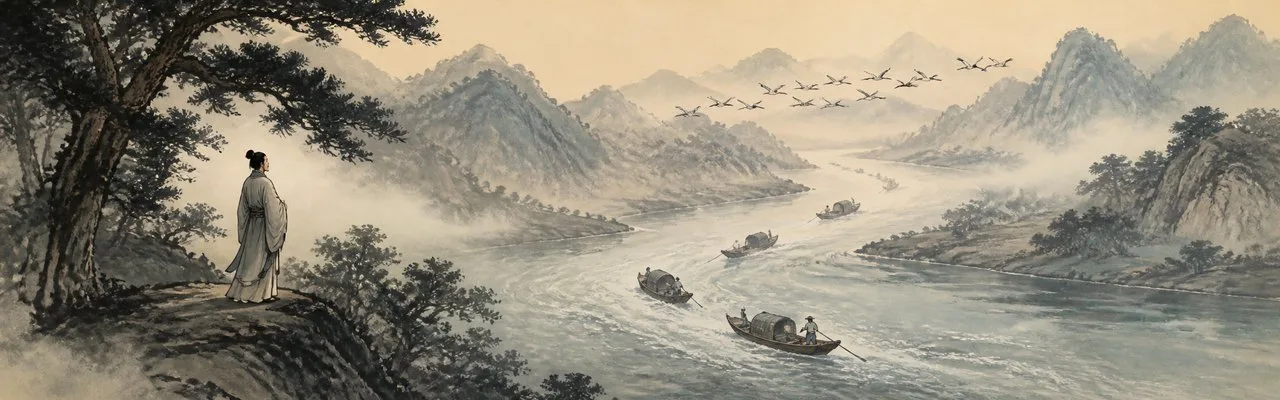
Ink illustration for hexagram 17, Sui 随, Following: a scholar under a pine watches a river where boats go with the current, beneath a flight of migrating birds between the mountains.

Following is intelligent adaptation, not obedience without thought. Notice what is leading, test whether it is worthy, and adjust without losing your centre. The purpose of this page is practical: to help a beginner recognise the situation, choose a sensible response, and avoid turning a symbolic reading into a rigid command.

GUA at a glance

  • Core situation: adapting to what is worthy while keeping independent judgment.

  • Helpful attitude: slow down enough to see the pattern, then choose a proportionate action.

  • Useful question: what stage is this situation in now, and what is the smallest responsible next step?

  • Main caution: Do not follow popularity, authority, or habit automatically. Ask where the movement is going and who carries the cost.

The GUA, drawn line by line

The standard sign is ䷐. Read the six positions from the bottom upward:

━━━ ━━━  上六
━━━━━━━  九五
━━━━━━━  九四
━━━ ━━━  六三
━━━ ━━━  六二
━━━━━━━  初九
 

The lower three lines form 震 ☳ (Thunder); the upper three form 兑 ☱ (Lake). The bottom is the beginning of the situation, the middle shows development and responsibility, and the top often shows excess, completion, or transition.

What this GUA means in simple terms

Following is intelligent adaptation, not obedience without thought. Notice what is leading, test whether it is worthy, and adjust without losing your centre.

The six lines as practical stages

The lines are positions in a changing situation. If you are reading a cast GUA, pay special attention to the moving line. If you are studying without a casting, read the six lines as six different vantage points rather than a guaranteed timeline.

1. 初九:官有渝,贞吉。出门交有功。

The standard changes; steadfastness brings good fortune. Going out of the gate to mix with others brings achievement.

At the start of Following, the standard you held changes, and the commentary says good fortune comes from “following what is correct”, not whoever is near. Step out of the gate and mix beyond your own circle; that way, it adds, “nothing is lost”. Begin by adjusting openly, not by clinging.

2. 六二:系小子,失丈夫。

Clinging to the little boy, one loses the strong man.

The inner central line clings to the “little boy”, the young line just below, and so loses the “strong man”, its true partner in the fifth place. The commentary is blunt: one “cannot hold both”. Choosing what is near and easy costs you what is right; decide whom you truly follow before habit decides for you.

3. 六三:系丈夫,失小子。随,有求得利,居贞。

Clinging to the strong man, one loses the little boy. Following brings what one seeks; it is fitting to remain steadfast.

Now the line clings to the strong man above and lets the little boy go; the commentary says its will “lets go of what lies below”. Following someone worthy does bring what you seek, but at this unsteady top of the lower trigram, remain steadfast so that attachment never turns into self-seeking.

4. 九四:随有获,贞凶。有孚在道,以明,何咎。

Following brings gains; steadfastness here brings misfortune. With sincerity on the right path, and with clarity, what blame could there be?

Next to the ruler, this strong line gathers followers of its own; the commentary says “its meaning is ominous”, since it draws loyalty that belongs to the leader. The remedy is sincerity on the path and clarity about whose work this is, “the merit of clarity”. Hold your gains openly, never as a rival.

5. 九五:孚于嘉,吉。

Sincere toward the excellent: good fortune.

The leader follows what is excellent with full sincerity, and the commentary grounds the good fortune in a “correct and central position”. Whoever leads must also follow: trust the good people and good counsel around you, and others will follow you in turn.

6. 上六:拘系之,乃从维之。王用亨于西山。

Held fast and bound, then followed and tied. The king makes offering on the western mountain.

At the very top, following is pulled so tight that it binds: “held fast, then tied”. The commentary calls this “exhaustion at the top”. Loyalty that must be tied down has run its course; like the king’s offering on the western mountain, turn the bond into reverence and let it rest.

Bottom line

GUA 17 is a practical lesson in adapting to what is worthy while keeping independent judgment. Use it to see the pattern more clearly, act with proportion, and remain willing to change when reality gives new information.

Continue with the previous GUA, 16 · Enthusiasm and Readiness, or the next GUA, 18 · Repairing What Has Decayed.

Seeker’s Q&A

When should I follow rather than lead?

Sui says following succeeds only when the one followed is right and you follow for the right reasons. The first line praises going out to meet others; the second and third warn that clinging to one tie means losing another.

Does a favourable reading mean I am safe?

Mu Jiang gives the most honest answer in the Zuo Zhuan: a reading is worth only as much as the conduct behind it. Look at what you have actually done before trusting what the omen says.

What does “at nightfall the noble person goes in to rest” mean?

Thunder in the lake is thunder gone quiet for the season. Follow the rhythm of the day: when evening comes, stop and go in, rather than dragging the day into the night.

How do I follow without losing myself?

The fifth line puts trust in what is good, “sincerity in excellence”. Follow people and causes that deserve it, and keep your own judgment awake.

One-minute practice

As the light fades this evening, put your work and phone away. Sit for one minute and let your attention follow the breath in and out, without steering it.