28 · Da Guo 大过 ䷛
第二十八卦 大过 ䷛
GUA 28, Great Excess, describes responding when responsibility or pressure exceeds the structure carrying it. The lower trigram, Wind and Wood ☴, can be read as the inner condition or starting impulse of the situation; the upper trigram, Lake ☱, shows the outer setting or the direction in which that impulse becomes visible. Read together, they describe a movement from underlying conditions into choices, behaviour, and consequences. In modern life, this pattern may appear in work, relationships, study, leadership, or an important decision whenever you are being asked to practise responding when responsibility or pressure exceeds the structure carrying it. The first task is not to predict success or failure. It is to establish what is actually happening, identify the present stage, notice who carries the responsibility and risk, and choose an action that fits the real conditions. Keep this central caution in view: Extraordinary pressure may require unusual action, but drama alone is not courage. Repair the structure.
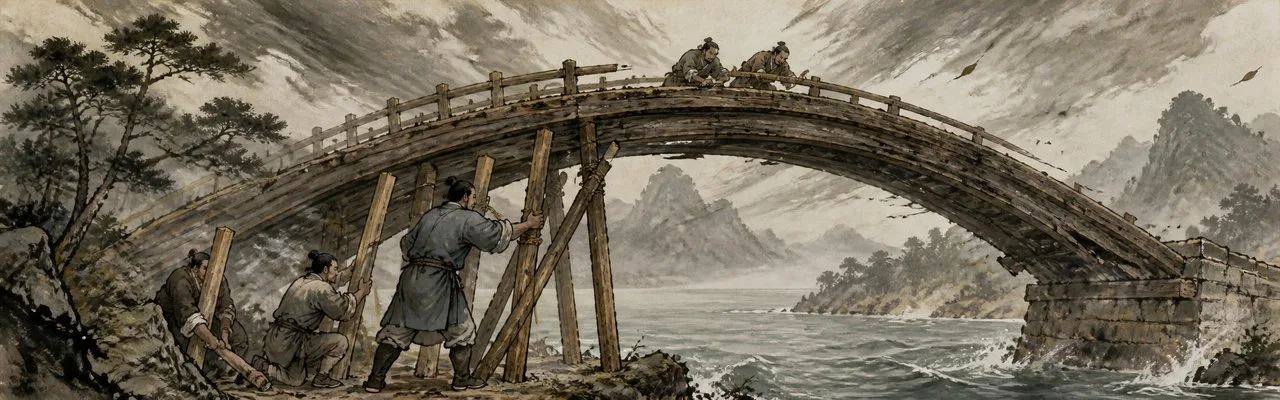
The load has become greater than the structure can safely carry. Reduce weight, add support, and make a decisive change before the beam fails. The purpose of this page is practical: to help a beginner recognise the situation, choose a sensible response, and avoid turning a symbolic reading into a rigid command.
GUA at a glance
Core situation: responding when responsibility or pressure exceeds the structure carrying it.
Helpful attitude: slow down enough to see the pattern, then choose a proportionate action.
Useful question: what stage is this situation in now, and what is the smallest responsible next step?
Main caution: Extraordinary pressure may require unusual action, but drama alone is not courage. Repair the structure.
The GUA, drawn line by line
The standard sign is ䷛. Read the six positions from the bottom upward:
━━━ ━━━  上六
━━━━━━━  九五
━━━━━━━  九四
━━━━━━━  九三
━━━━━━━  九二
━━━ ━━━  初六
The lower three lines form 巽 ☴ (Wind and Wood); the upper three form 兑 ☱ (Lake). The bottom is the beginning of the situation, the middle shows development and responsibility, and the top often shows excess, completion, or transition.
What this GUA means in simple terms
The load has become greater than the structure can safely carry. Reduce weight, add support, and make a decisive change before the beam fails.
A GUA does not order you to copy an ancient image literally. It gives you a pattern to compare with real life. Begin with the facts: who is involved, what has already changed, what remains uncertain, what must be protected, and who carries the risk.
The most useful reading is usually modest. Name the pattern, choose one practical action, watch what happens, and adjust. If the decision involves health, law, finance, safety, or another person’s rights, use appropriate professional advice and direct communication as well.
Where it may appear today
Work and study: use this GUA when a project, role, or learning process is asking for responding when responsibility or pressure exceeds the structure carrying it. Define the next deliverable and the person responsible for it.
Relationships: ask whether expectations have been spoken clearly. Do not use the reading to guess another person’s hidden motives; ask, listen, and respect consent.
Decisions: separate what you know from what you fear or hope. Prefer a reversible test when the evidence is still incomplete.
Personal practice: notice the habit this situation activates in you—rushing, withdrawing, pleasing, controlling, or avoiding—and create a calmer alternative.
A practical five-step reading
Name the situation. Describe it in one plain sentence without praise, blame, or prediction.
Locate the stage. Decide whether you are at the beginning, under growing pressure, carrying responsibility, or reaching an ending.
Identify the risk. Ask what could be damaged by haste, pride, secrecy, passivity, or excessive force.
Choose one action. Make it specific, proportionate, and possible to review.
Set a review point. Decide when new evidence will make you continue, stop, or change direction.
The six lines as practical stages
The lines are positions in a changing situation. If you are reading a cast GUA, pay special attention to the moving line. If you are studying without a casting, read the six lines as six different vantage points rather than a guaranteed timeline.
1. 初六:藉用白茅,无咎。
At the beginning, notice how you approach responding when responsibility or pressure exceeds the structure carrying it. Start with one small, reversible action and gather real feedback before committing more. In modern use, treat this as guidance for the stage you are in, not as a fixed prediction. Check facts, consent, timing, and consequences before acting.
2. 九二:枯杨生稊,老夫得其女妻,无不利。
The situation now has enough shape for cooperation. Find a reliable person, routine, or resource that helps you practise the central lesson of this GUA. In modern use, treat this as guidance for the stage you are in, not as a fixed prediction. Check facts, consent, timing, and consequences before acting.
3. 九三:栋桡,凶。
Pressure rises in the third position. This is where haste, pride, or frustration can distort your approach to responding when responsibility or pressure exceeds the structure carrying it; pause and check the method, not only the goal. In modern use, treat this as guidance for the stage you are in, not as a fixed prediction. Check facts, consent, timing, and consequences before acting.
4. 九四:栋隆,吉;有它吝。
The fourth position moves from inner preparation into outward action. Explain what you are doing, accept responsibility, and adjust to the response you actually receive. In modern use, treat this as guidance for the stage you are in, not as a fixed prediction. Check facts, consent, timing, and consequences before acting.
5. 九五:枯杨生华,老妇得其士夫,无咎无誉。
At the centre of responsibility, personal advantage matters less than the health of the whole situation. Use authority to make the lesson of this GUA workable for others. In modern use, treat this as guidance for the stage you are in, not as a fixed prediction. Check facts, consent, timing, and consequences before acting.
6. 上六:过涉灭顶,凶,无咎。
At the top, the pattern reaches an extreme. Finish cleanly, release what has become excessive, and leave enough space for the next stage of change. In modern use, treat this as guidance for the stage you are in, not as a fixed prediction. Check facts, consent, timing, and consequences before acting.
A simple modern example
A small organisation takes on a major contract without enough staff. It renegotiates scope, brings in experienced help, and pauses less important work instead of praising overwork.
Notice that the example does not try to predict an outcome. It uses the GUA to improve attention, timing, communication, and responsibility—the parts of the situation that people can actually influence.
Common mistakes to avoid
Extraordinary pressure may require unusual action, but drama alone is not courage. Repair the structure.
Do not treat one favourable or unfavourable phrase as a complete answer. Read the whole situation and the relevant line.
Do not use a GUA to replace evidence, professional expertise, consent, or an honest conversation.
Questions for reflection
What is the real situation, stated without drama?
Which part of this — responding when responsibility or pressure exceeds the structure carrying it — is most relevant now?
What would a smaller and more responsible action look like?
What result or sign will tell me that the approach needs to change?
Bottom line
GUA 28 is a practical lesson in responding when responsibility or pressure exceeds the structure carrying it. Use it to see the pattern more clearly, act with proportion, and remain willing to change when reality gives new information.
Continue with the previous GUA, 27 · Nourishment, or the next GUA, 29 · Repeated Danger.