19 · Lin 临 ䷒

第十九卦 临 ䷒

GUA 19, Approach, describes approaching people and responsibilities with presence, care, and awareness that favourable openings change. The lower trigram, Lake ☱, can be read as the inner condition or starting impulse of the situation; the upper trigram, Earth ☷, shows the outer setting or the direction in which that impulse becomes visible. Read together, they describe a movement from underlying conditions into choices, behaviour, and consequences. In modern life, this pattern may appear in work, relationships, study, leadership, or an important decision whenever you are being asked to practise approaching people and responsibilities with presence, care, and awareness that favourable openings change. The first task is not to predict success or failure. It is to establish what is actually happening, identify the present stage, notice who carries the responsibility and risk, and choose an action that fits the real conditions. Keep this central caution in view: Approach can become intrusion or control. Nearness is useful only when it respects the other side’s dignity.
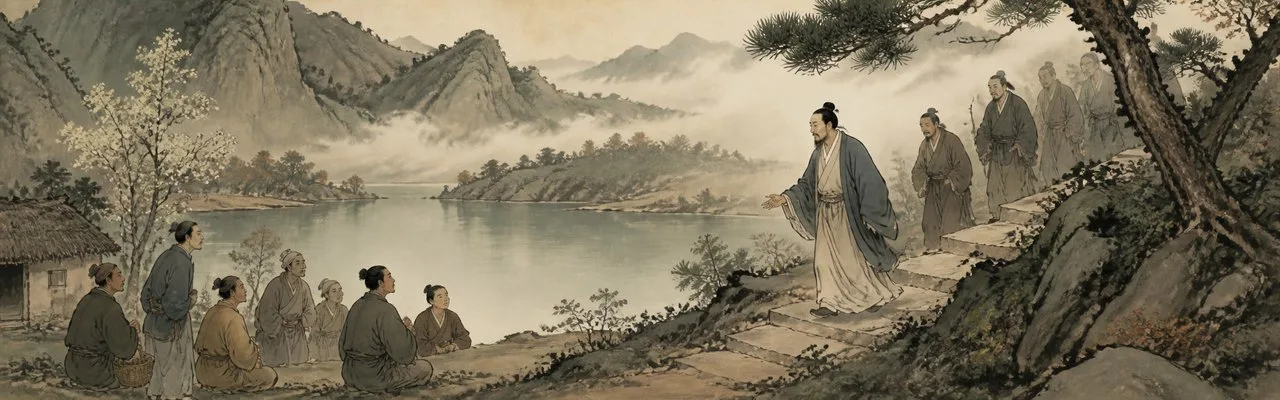
Ink illustration for hexagram 19, Lin 临, Approach: a robed man descends a stone stairway, followed by disciples, towards villagers gathered by a lake.

A favourable opening allows you to approach people, responsibility, or a new stage. Be present and generous, but remember that access changes over time. The purpose of this page is practical: to help a beginner recognise the situation, choose a sensible response, and avoid turning a symbolic reading into a rigid command.

GUA at a glance

  • Core situation: approaching people and responsibilities with presence, care, and awareness that favourable openings change.

  • Helpful attitude: slow down enough to see the pattern, then choose a proportionate action.

  • Useful question: what stage is this situation in now, and what is the smallest responsible next step?

  • Main caution: Approach can become intrusion or control. Nearness is useful only when it respects the other side’s dignity.

The GUA, drawn line by line

The standard sign is ䷒. Read the six positions from the bottom upward:

━━━ ━━━  上六
━━━ ━━━  六五
━━━ ━━━  六四
━━━ ━━━  六三
━━━━━━━  九二
━━━━━━━  初九
 

The lower three lines form 兑 ☱ (Lake); the upper three form 坤 ☷ (Earth). The bottom is the beginning of the situation, the middle shows development and responsibility, and the top often shows excess, completion, or transition.

What this GUA means in simple terms

A favourable opening allows you to approach people, responsibility, or a new stage. Be present and generous, but remember that access changes over time.

The six lines as practical stages

The lines are positions in a changing situation. If you are reading a cast GUA, pay special attention to the moving line. If you are studying without a casting, read the six lines as six different vantage points rather than a guaranteed timeline.

1. 初九:咸临,贞吉。

Approaching through mutual influence; steadfastness brings good fortune.

At the beginning, notice how you approach approaching people and responsibilities with presence, care, and awareness that favourable openings change. Start with one small, reversible action and gather real feedback before committing more.

2. 九二:咸临,吉无不利。

Approaching through mutual influence: good fortune, nothing that is not fitting.

The situation now has enough shape for cooperation. Find a reliable person, routine, or resource that helps you practise the central lesson of this GUA.

3. 六三:甘临,无攸利。既忧之,无咎。

Approaching with sweet words: nothing is fitting. Once one grieves over it, no blame.

Pressure rises in the third position. This is where haste, pride, or frustration can distort your approach to approaching people and responsibilities with presence, care, and awareness that favourable openings change; pause and check the method, not only the goal.

4. 六四:至临,无咎。

Approaching in person: no blame.

The fourth position moves from inner preparation into outward action. Explain what you are doing, accept responsibility, and adjust to the response you actually receive.

5. 六五:知临,大君之宜,吉。

Approaching with wisdom, as befits a great ruler: good fortune.

At the centre of responsibility, personal advantage matters less than the health of the whole situation. Use authority to make the lesson of this GUA workable for others.

6. 上六:敦临,吉无咎。

Approaching with generosity: good fortune, no blame.

At the top, the pattern reaches an extreme. Finish cleanly, release what has become excessive, and leave enough space for the next stage of change.

Bottom line

GUA 19 is a practical lesson in approaching people and responsibilities with presence, care, and awareness that favourable openings change. Use it to see the pattern more clearly, act with proportion, and remain willing to change when reality gives new information.

Continue with the previous GUA, 18 · Repairing What Has Decayed, or the next GUA, 20 · Observation.