29 · Kan 坎 ䷜

第二十九卦 坎 ䷜

GUA 29, Repeated Danger, describes learning reliable movement through recurring risk without becoming numb or panicked. The lower trigram, Water ☵, can be read as the inner condition or starting impulse of the situation; the upper trigram, Water ☵, shows the outer setting or the direction in which that impulse becomes visible. Read together, they describe a movement from underlying conditions into choices, behaviour, and consequences. In modern life, this pattern may appear in work, relationships, study, leadership, or an important decision whenever you are being asked to practise learning reliable movement through recurring risk without becoming numb or panicked. The first task is not to predict success or failure. It is to establish what is actually happening, identify the present stage, notice who carries the responsibility and risk, and choose an action that fits the real conditions. Keep this central caution in view: Familiar danger can create overconfidence. Repetition should deepen skill, not weaken caution.
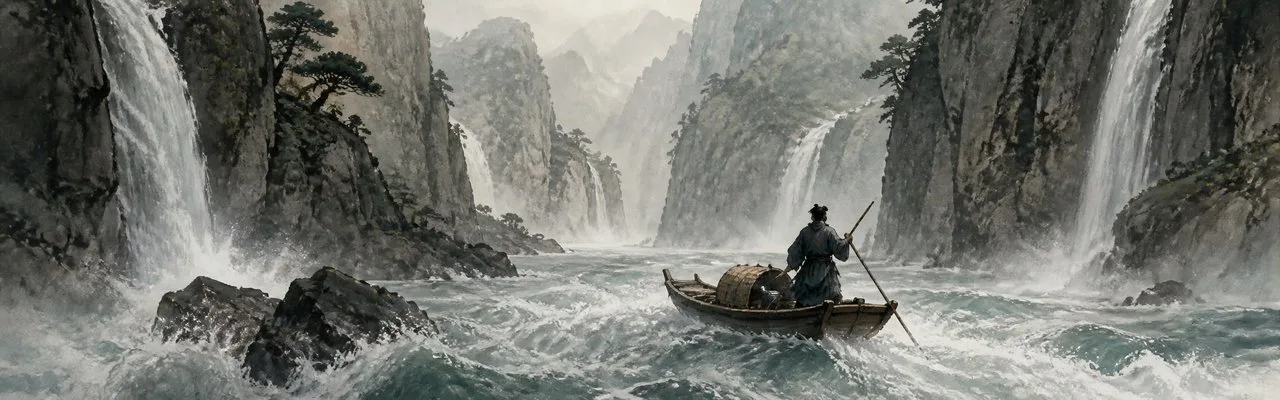
Ink illustration for hexagram 29, Repeated Danger: a boatman stands with a pole in a small boat amid rapids between high cliffs and waterfalls.

Repeated danger is managed through skill, routine, and truthfulness—not one lucky escape. Keep moving, but learn the shape of the risk. The purpose of this page is practical: to help a beginner recognise the situation, choose a sensible response, and avoid turning a symbolic reading into a rigid command.

GUA at a glance

  • Core situation: learning reliable movement through recurring risk without becoming numb or panicked.

  • Helpful attitude: slow down enough to see the pattern, then choose a proportionate action.

  • Useful question: what stage is this situation in now, and what is the smallest responsible next step?

  • Main caution: Familiar danger can create overconfidence. Repetition should deepen skill, not weaken caution.

The GUA, drawn line by line

The standard sign is ䷜. Read the six positions from the bottom upward:

━━━ ━━━  上六
━━━━━━━  九五
━━━ ━━━  六四
━━━ ━━━  六三
━━━━━━━  九二
━━━ ━━━  初六
 

The lower three lines form 坎 ☵ (Water); the upper three form 坎 ☵ (Water). The bottom is the beginning of the situation, the middle shows development and responsibility, and the top often shows excess, completion, or transition.

What this GUA means in simple terms

Repeated danger is managed through skill, routine, and truthfulness—not one lucky escape. Keep moving, but learn the shape of the risk.

The six lines as practical stages

The lines are positions in a changing situation. If you are reading a cast GUA, pay special attention to the moving line. If you are studying without a casting, read the six lines as six different vantage points rather than a guaranteed timeline.

1. 初六:习坎,入于坎窞,凶。

Pit upon pit: falling into a hollow within the pit. Misfortune.

“Pit upon pit”, and at the very bottom one slips into a hollow within the pit. The Small Image says misfortune comes from “losing the way”. In this first stage of danger, do not dig deeper or thrash about: withdraw to firm ground and find the path before taking another step.

2. 九二:坎有险,求小得。

The pit holds danger; seeking, one gains a little.

Still inside danger, this firm central line can “seek and gain a little”. The Small Image explains: it has “not yet left the middle” of the pit. Hold, and be content with small, sure gains; a firm heart in the centre keeps you steady, but this is not yet the moment for a bold escape.

3. 六三:来之坎坎,险且枕,入于坎窞,勿用。

Coming and going, pit upon pit; danger, with no firm rest. Falling into a hollow within the pit: do not act.

Coming or going, there is a pit either way, with “no firm rest”; the line says “do not act”. The Small Image concludes it will “in the end have no success”. At this risky top of the lower trigram, hold still: when every move lands in danger, stopping and waiting is the only wise action.

4. 六四:樽酒簋贰,用缶,纳约自牖,终无咎。

A jug of wine, a bowl of grain besides, in plain earthen vessels; offering the pledge through the window. In the end, no blame.

A jug of wine, a bowl of grain, plain earthen pots, a pledge passed “through the window”: in danger, sincerity needs no ceremony. The Small Image says this is where “firm and yielding meet”, the fourth beside the ruler. At this threshold, approach those above simply and honestly, through whatever opening there is.

5. 九五:坎不盈,祗既平,无咎。

The pit is not filled to overflowing; it is only level. No blame.

The pit is “not filled to overflowing”, only “level”: the water has risen just enough to flow out. The Small Image says “the centre is not yet great”. Leading from the centre, aim for level, not overflow; get yourself and others out of danger first, and leave grand displays for later.

6. 上六:系用徽纆,寘于丛棘,三岁不得,凶。

Bound with black cords, placed among thorn hedges; for three years one finds no way out. Misfortune.

At the top, bound with black cords and set among thorn hedges, one finds no way out “for three years”. The Small Image says this misfortune comes from having “lost the way”, and so it lasts. Overreach has run out of road: accept a long correction, and do not struggle against bindings you tied yourself.

Bottom line

GUA 29 is a practical lesson in learning reliable movement through recurring risk without becoming numb or panicked. Use it to see the pattern more clearly, act with proportion, and remain willing to change when reality gives new information.

Continue with the previous GUA, 28 · Great Excess, or the next GUA, 30 · Clarity and Attachment.

Seeker’s Q&A

One setback keeps following another. What does 坎 say to that?

坎 is “danger upon danger”, and its Judgment says that with sincerity the heart still finds its way. Repeated difficulty describes the situation; it isn’t a verdict on you. Keep moving like water: steadily, and without losing your shape.

Should I push harder, or wait?

The swimmer did neither. He learned how the water moved and went with it. Before you push, find out which way the situation is actually flowing.

How do I stay calm in a crisis?

Lengthen the out-breath and name the single next step. The Image of 坎 asks the noble person to keep their conduct constant; small, repeated actions are what carry you through.

Is drawing 坎 a bad sign?

Not in the Wudang reading. The Yi describes situations, and 坎’s advice is practical: sincerity, consistency, practice. 习, the first word of its name, means to train.

One-minute practice

Sit and breathe out slowly, as if pouring water into a deep well, longer than you breathe in. With each out-breath, let one worry settle to the bottom instead of stirring it. Do this for one minute.