Guqin Tables and Playing Spaces: Support, Posture and Listening
古琴桌与弹琴空间:承托、坐姿与聆听
A guqin is not played in empty space. It rests on furniture; the player needs room for both hands; listeners hear the instrument through the scale and surfaces of a particular room. These practical conditions are easy to overlook when the instrument is presented alone in a display case.
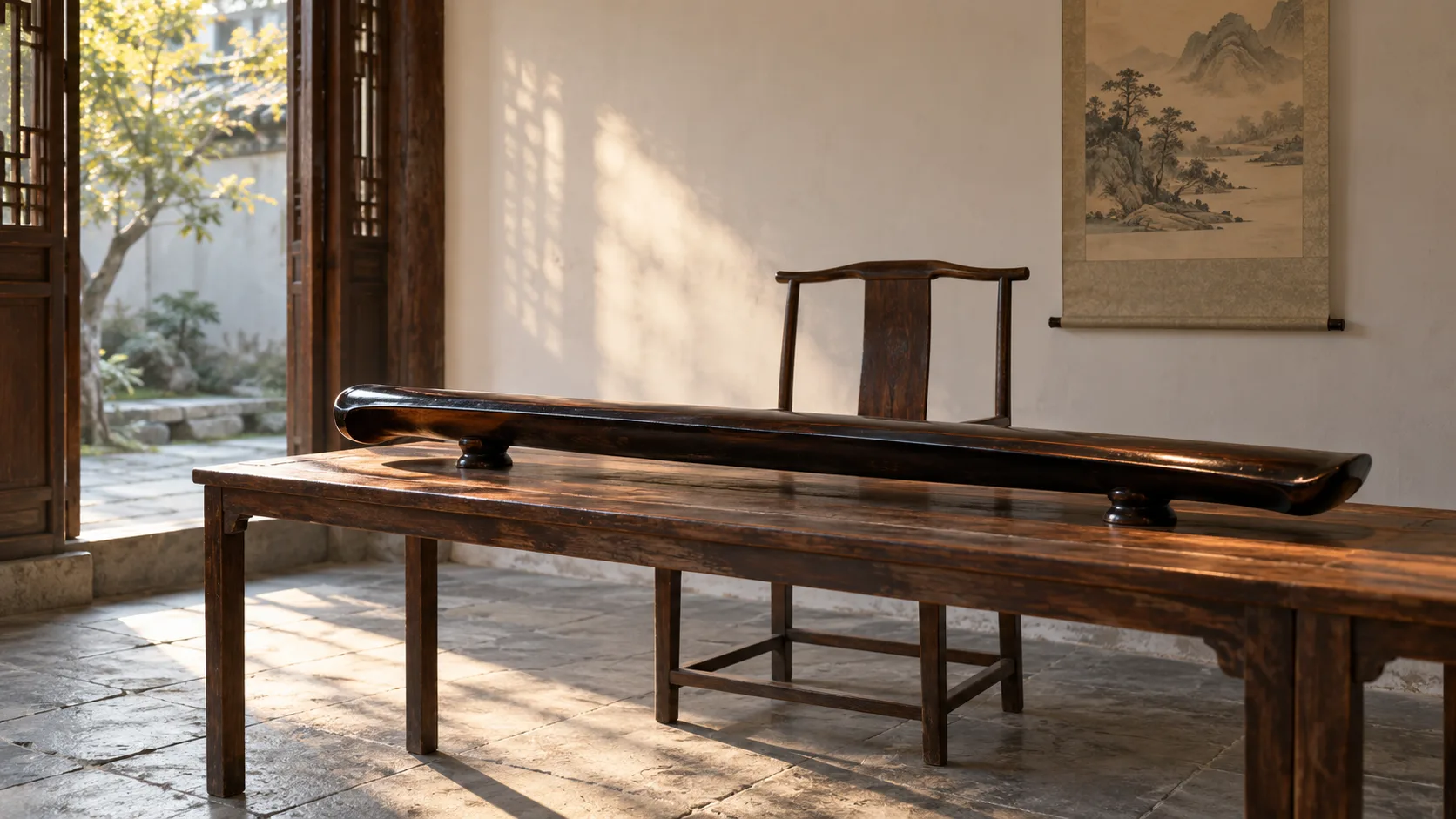
Surviving furniture and paintings do not reveal one universal setup. They show purpose-built qin tables, multipurpose side tables, different heights and both practical and symbolic uses. This object-led guide complements the Wudang guqin overview, the history of the guqin and the instrument’s strings, body and sound.
Begin with the table as an instrument support
A purpose-built table can shape the sound around it
The Palace Museum’s Ming lacquered qin table is 70 centimetres high, 97 centimetres wide and 45 centimetres deep. Its catalogue describes a lower panel with openwork intended to let sound resonate in the space beneath the top. The furniture did not replace the guqin’s own hollow body; it formed part of the immediate acoustic support around it. This is specific evidence from one documented object, not a rule for every table.
Narrowness, legroom and construction were practical choices
A different Qing zitan qin table in the Palace Museum measures 85 by 135 by 39 centimetres. The museum notes its narrow top, thin soundboard-like construction and stretchers positioned so they do not obstruct the player’s legs. It also says that Ming and Qing qin tables could function as cultivated display furniture. One object could therefore join use, craftsmanship and social presentation without those roles being identical.
Not every table holding a qin was made only for music
The Metropolitan Museum of Art identifies a sixteenth-century huanghuali side table that could hold books, small objects or a qin. Its height is 86.4 centimetres. That record prevents an overly neat classification: a qin may appear on a dedicated resonant table, a long side table or other stable furniture. Name the object according to its catalogue and construction before assigning a single purpose.
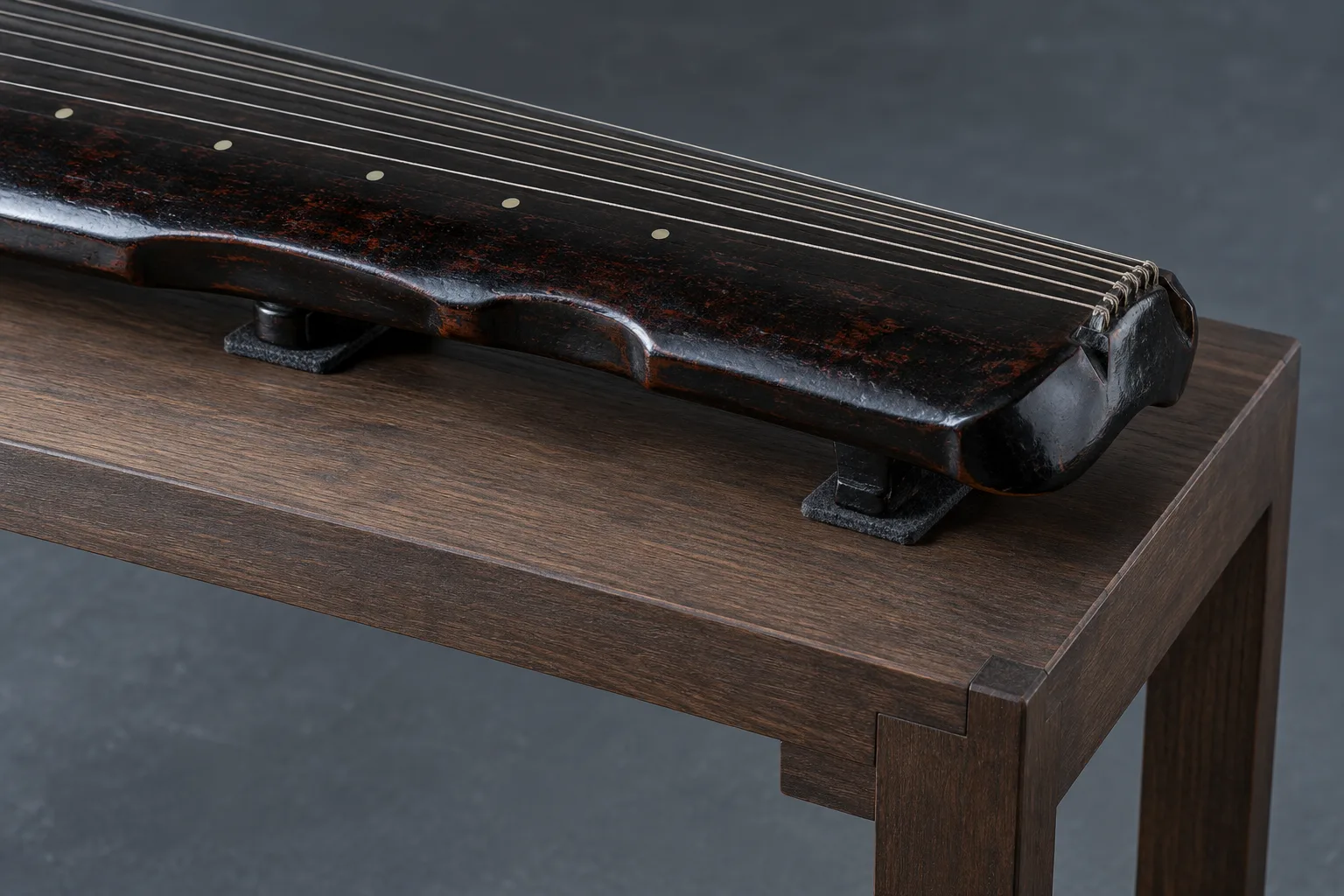
Read the relationship among instrument, body and room
The guqin must be stable without being trapped
The instrument’s underside and feet determine where it meets a support, while its upper surface must remain clear for plucking, stopped notes, harmonics and long left-hand slides. Stability matters, but clamping an instrument down or placing it on abrasive hardware would change the relationship between object and table. For the instrument itself, first review how the guqin works; for any valuable or historic qin, follow a conservator or experienced teacher rather than improvising supports.
Posture is a working relationship, not a sacred measurement
Table height, chair height, the player’s proportions and the particular instrument all interact. A workable arrangement lets the shoulders remain unforced, the right hand approach the strings freely and the left hand travel along the surface without the table edge blocking the body. Museum dimensions are evidence about furniture, not prescriptions for every modern player. Technique should be adjusted with a qualified teacher; there is no historical centimetre value that fits every body.
Paintings preserve arrangements, not step-by-step manuals
The National Palace Museum’s album leaf Listening to the Qin in a Moonlit House catalogues a qin together with chairs, tables and an architectural setting. Such images show that furniture, garden or room and social encounter belonged to the visual culture of listening. But a painted scene may compress, idealize or symbolize. Use it to ask how space is represented, not to reconstruct every distance as a technical instruction.
Listen to the scale of the setting
Guqin heritage includes music, knowledge and social practice
UNESCO’s account of guqin and its music treats the tradition as more than a surviving wooden object. It includes a solo repertory, notation, performance knowledge and a long association with cultivated learning. The room and table matter because they support a living act of playing and listening; they are not substitutes for the music or its transmission.
Outdoor ideals and indoor furniture belong to different kinds of evidence
The Met’s guqin catalogue essay notes Ming literati ideals of playing in a garden, pavilion or mountain setting. Those ideals help explain the recurring imagery of pines, moonlight and retreat. They should not be confused with a claim that historical musicians avoided rooms or always carried one table outdoors. Compare literary ideals, paintings and physical furniture instead of making any one source stand for the whole tradition.
Quiet attention does not mean an unchanging ritual
China’s national intangible-heritage record describes guqin art as a field of performance, technique, tuning theory, making, transmission and social life. Private enjoyment, reflection and exchange among friends are part of that history, but modern concerts, classrooms and recordings are also legitimate settings for living transmission. Continue with guqin melodies and ways to listen rather than treating one picturesque room as the only authentic experience.
Use a six-pass method for objects and practice
Separate catalogue fact from physical inference
- Identity: Does the museum call the object a qin table, side table, couch table or something else?
- Dimensions: Record height, width and depth without turning one example into a standard.
- Construction: Look for a thin top, cavity, lower panel, openwork, stretchers, joints and repairs.
- Contact: Ask where the qin’s feet rest and what surfaces touch the lacquer.
- Use: Distinguish documented playing, possible support, display and later museum presentation.
- Context: Compare furniture with paintings, texts and musical practice while keeping their evidence separate.
Build a modern setup by listening and observing
For a modern instrument, begin with a rigid, level table wide enough for secure support and clear hand movement. Use clean, reversible protective pads only where the maker or teacher recommends them. Check that the table does not rock, buzz or obstruct the knees; then listen for rattles and unwanted contact at soft as well as strong dynamics. Change one variable at a time. The guide to gesture, notation and interpretation provides the musical context for these practical choices.
Let variation improve the question
The most useful conclusion is not that one historic table supplies the “correct” setup. It is that furniture, body, instrument, room and social occasion form an adjustable relationship. A labelled museum object can document one solution; a painting can visualize another; a teacher can adapt a present-day arrangement. For responsible next steps, consult sources, recordings and guidance for learning the guqin.