How Chinese Texts Were Punctuated: Reading Marks, Sentence Division and Modern Editions
中国古籍怎样断句:句读、圈点与现代标点
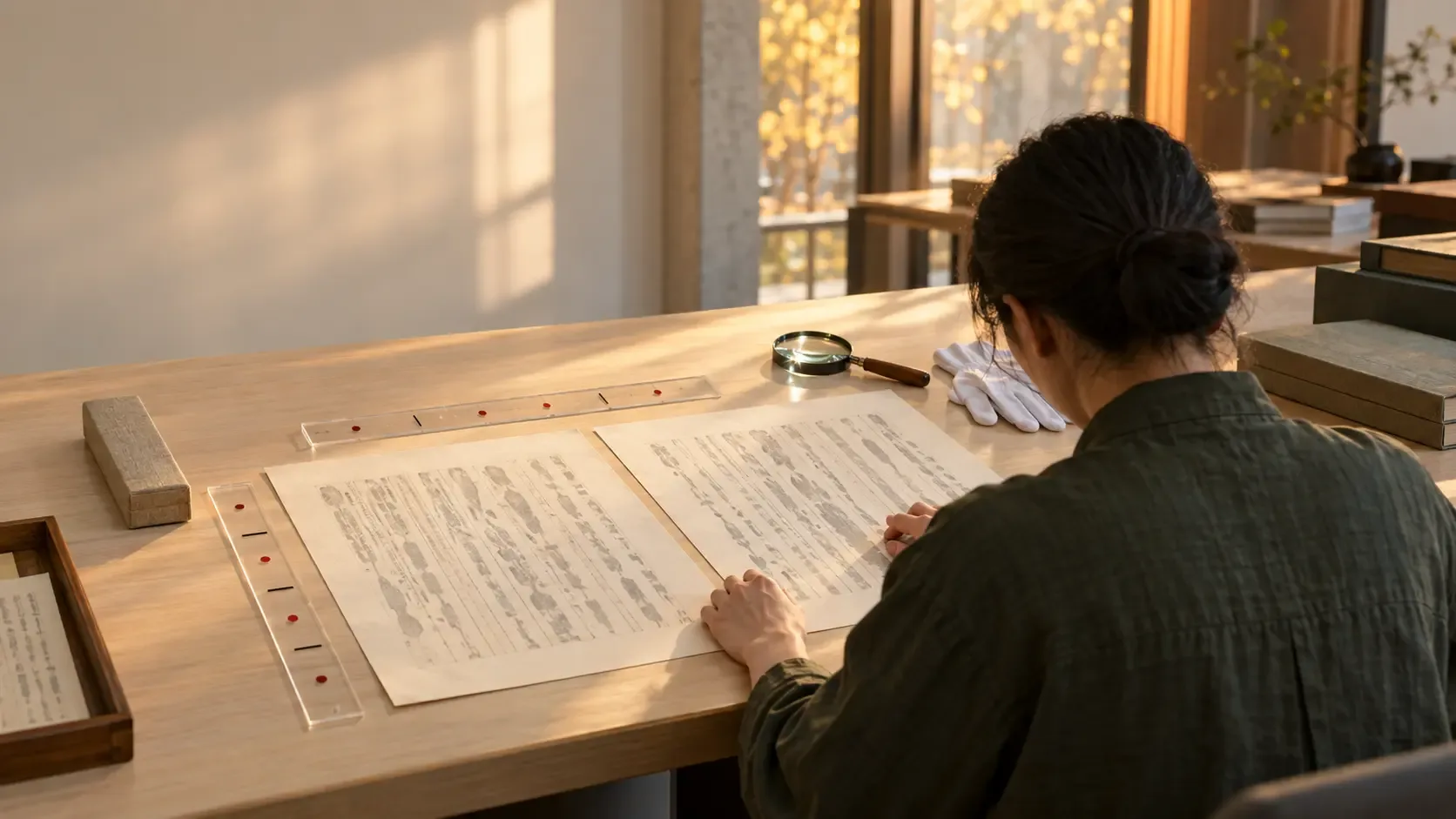
Punctuation is more than a row of symbols
Marks, spacing and layout all guide reading
It is tempting to say that old Chinese texts were “unpunctuated” and leave the matter there. That description fits many transmitted pages, but not the whole history. Matthias Richter’s broad account of punctuation in early manuscripts treats graphic marks, spacing, layout and features of the script as related ways of organizing a text. A blank interval, a change of line or a small sign could separate units without resembling a modern comma or full stop.
Early marks were selective, not a universal code
Excavated bamboo and silk manuscripts preserve chapter signs, repetition signs and marks beside particular passages, but their use differs among objects and scribes. Rens Krijgsman’s study of two Tsinghua manuscripts shows punctuation shaping sections, scenes and changes of speaker rather than marking every sentence mechanically. The safest conclusion is therefore neither “no punctuation” nor “the modern system already existed,” but that early textual producers used several selective and locally meaningful devices.
Judou: learning where a text pauses
Sentence division was a reading skill
The term 句讀, usually read jùdòu, names the divisions and pauses through which a continuous classical text becomes readable. In Han Yu’s Tang-dynasty Essay on the Teacher 師說, instruction in books and their judou appears as a basic task taught to children. The passage does not define one timeless set of printed signs. It shows that recognizing textual units was learned work, closely joined to recitation, syntax and explanation.
A division can exist before it is printed
A teacher could voice a pause, a pupil could add a dot, and an editor could later print a circle—three material acts serving related but not identical purposes. Manuscripts from Dunhuang also preserve written and dry-point reading aids, discussed in research on vernacular reading of Sinitic texts. This helps explain why an apparently bare page was not necessarily read without structure: training, performance and annotation supplied divisions that the base text did not make explicit.
The page itself does interpretive work
Columns, margins and small commentary create levels
Traditional pages organize more than a string of characters. Main text, double-column glosses, headings, blank spaces and marginal notes can establish hierarchy before a reader adds any punctuation. A printed commentary may surround or follow a passage; a manuscript can use size or position to distinguish an insertion. Read this material evidence beside our guides to thread-bound books and prefaces and postfaces.
Woodblock printing preserved choices, not one standard
Woodblock printing made it possible to reproduce circles, dots and commentarial layouts, yet many editions still carried little sentence punctuation. Others marked the canonical text but not its commentary, or used dots for several jobs. The block fixes the decisions of a particular edition; it does not prove that every reader or earlier witness divided the passage in the same way. Date, imprint, textual lineage and the relationship between main text and notes all matter.
Circles and dots did not always mean “stop”
Sentence marks and appreciation marks must be separated
A circle beside a character may mark the end of a sentence, but circles and dots also became tools of pingdian 評點: criticism, emphasis and appreciative reading. Dense marks could praise a phrase, identify a structural turn or guide attention rather than specify grammar alone. The same simple geometry therefore carried different functions. Calling every red dot “punctuation” can erase the distinction between dividing syntax and responding to style.
Commentators and readers made their judgment visible
Editorial circles, marginal comments and interlinear glosses turn reading into a visible record. In literary anthologies and annotated fiction, a critic’s marks may become part of the edition’s authority; in a private copy, a later reader may add another layer. Compare the site’s guides to anthologies and canon formation and the notebook tradition. Neither printed nor handwritten marks should be attributed to the original author without evidence.
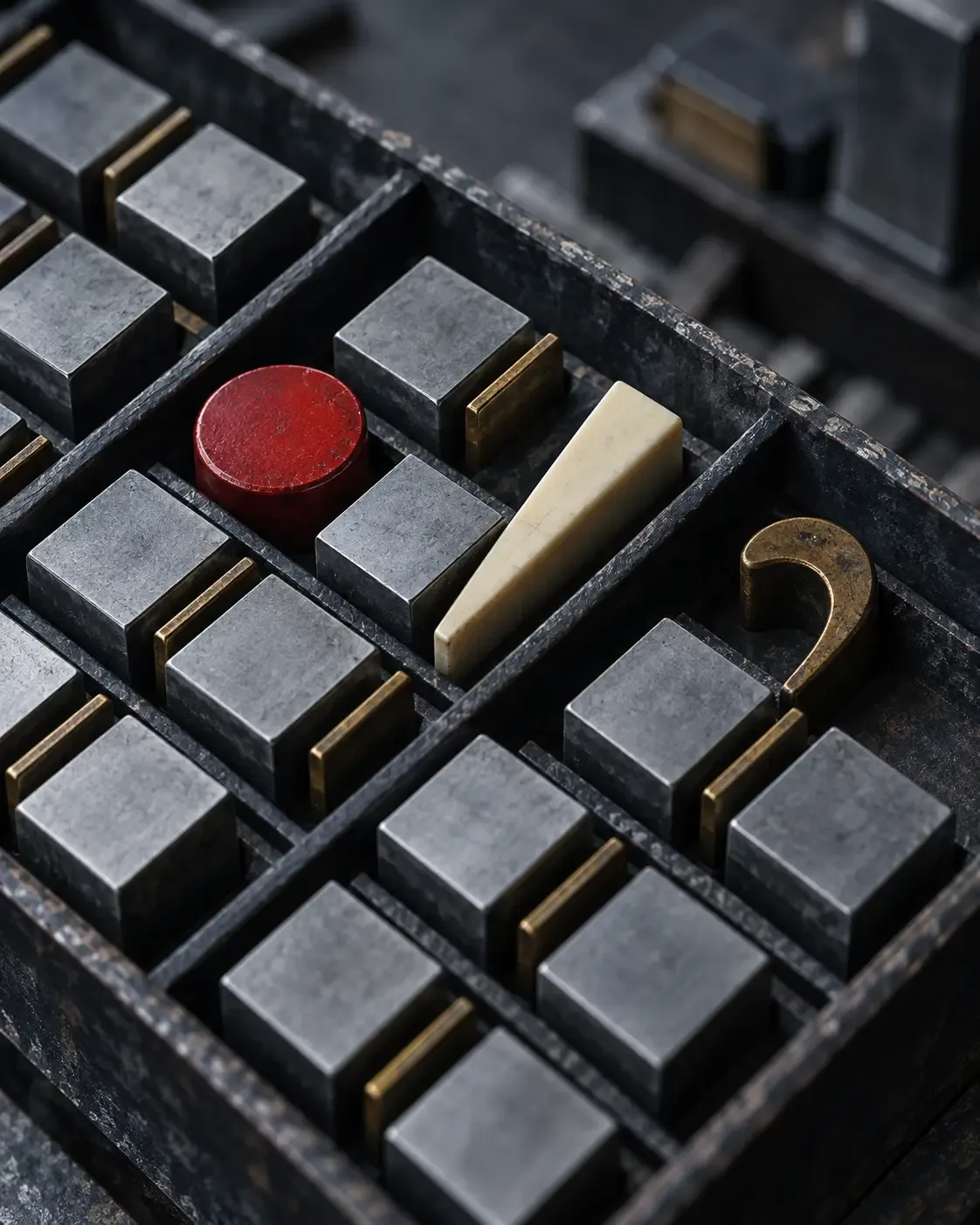
Every modern break is an editorial argument
Changing a boundary can change the grammar
When a source offers no fixed break, punctuation assigns relationships among verbs, subjects, quotations and clauses. Two grammatically possible divisions can yield different agents or emphases. The 1919 proposal for new punctuation even used competing divisions of older passages to argue that marks could prevent misunderstanding. A modern punctuated edition is thus valuable precisely because it makes an interpretation visible—not because its commas recover an author’s lost keystrokes.
Comparison is safer than hunting for one self-evident answer
Start with the exact characters in the witness, then compare commentaries and editions. Check whether a disputed word can begin a clause, end one, or introduce a quotation. Historical pronunciation, parallelism and genre may constrain the options. Our guide to dictionaries and rhyme books helps with older forms and readings, while leishu can reveal how later compilers excerpted and resegmented a passage.
From old reading marks to “new punctuation”
The modern change was gradual and collaborative
Modern Chinese punctuation did not arrive in a single instant or from one inventor. Late Qing translators, educators, newspapers and publishers experimented with signs and layouts in contact with Japanese and European print. In the early Republic, language reform, vernacular writing and mass education made a more differentiated system especially attractive. Continuities remained: modern reformers knew the older circle-and-dot practices even as they argued those signs could not express every grammatical or rhetorical relation.
The 1919 proposal named two different jobs
The revised Proposal to Promulgate New-Style Punctuation, dated 29 November 1919 and issued by the Ministry of Education in February 1920, distinguished 點, signs that divide sentences and clauses, from 標, signs that label such things as questions, quotations, names and book titles. It proposed thirteen categories while retaining an appendix on old-style circles and dots. That document is a reform argument, not a neutral history, but it clearly records what its authors wanted the new system to do.
How to read a punctuated classical text
Compare the facsimile, transcription and edited text
Ask three separate questions. What marks and spacing are physically visible in the witness? Which characters has the editor transcribed or normalized? Where has the editor added modern punctuation? A photographic facsimile answers the first question but may be hard to decipher; a diplomatic transcription clarifies forms while preserving uncertainty; a reading edition supplies helpful divisions. Confusing those layers turns editorial decisions into imaginary features of the original object.
Use a repeatable five-step test
First copy a short passage without its modern marks. Second identify names, grammatical particles and parallel phrases. Third propose more than one boundary where the syntax permits it. Fourth test each reading against a commentary, translation and another edition. Fifth record which marks are original, later annotations or your own. The method is slower than accepting the first edition, but it trains the same basic habit as judou: making divisions accountable to language and evidence.
Punctuation remains a living convention
Present standards solve present publishing problems
Contemporary mainland publishing follows the national standard GB/T 15834–2011, General Rules for Punctuation, while a modern reference grammar’s punctuation appendix lists the wider functional system used in current Chinese. These rules make education and publishing consistent. They should not be projected backward as a checklist by which an excavated manuscript or a Song edition either “succeeds” or “fails.”
Read the mark and the hand that placed it
A mark may belong to a scribe, teacher, critic, typesetter, modern editor or later reader. Identifying that layer is often more revealing than naming the symbol. The history of Chinese punctuation is therefore a history of reading made material: voices pausing, hands dividing, critics emphasizing and institutions standardizing. Continue with traditional primers, where sentence division was taught, or return to the Chinese poetry and literature route.