Chinese Letters (Chidu): Writing, Address and the Afterlife of Correspondence
中国尺牍导读:书信格式、称谓与墨迹流传
Chidu is a useful name, not a timeless box
From writing tablet to correspondence
The word 尺牘 (chǐdú) originally joins a measure, chi, to a wooden writing tablet, du; it later became a broad name for letters. The Chinese Text Project entry for 尺牘 preserves this semantic history and cites Liu Xie’s sixth-century Wenxin diaolong. Yet historical writers also used 書, 書信, 書札, 牋 and other terms. “Chinese letter” is therefore a reader’s umbrella, not proof that every period recognized one fixed document class.
Genre, action and surviving object must be separated
A letter could request, console, recommend, thank, refuse, arrange a visit or maintain distance. It was an action between people before it became a literary specimen or a museum object. Antje Richter’s study of early medieval epistolary culture accordingly examines both social practice and text, including materials, transport, conventions and individuality. Read the present guide beside the broader Chinese poetry and literature route, but do not treat a letter as simply a short essay with an address attached.
Address creates a relationship on the page
Opening and closing formulae locate the speakers
Names, kin terms, official titles, self-designations, respectful verbs and wishes for health place sender and recipient within a relationship. Their order and degree of elaboration vary by period, status and purpose. A formula can show deference without revealing the writer’s private feelings; an apparently modest self-reference can be expected etiquette rather than biography. Forms are evidence only after they are compared with contemporary usage.
Convention permits choice—it does not erase it
Repeated phrases made letters recognizable and efficient, but writers could compress, expand or redirect them. Richter’s table of contents itself separates structures and phrases, topoi, normativity and authenticity: a reminder that individuality emerges within conventions, not outside them. The studies gathered in A History of Chinese Letters and Epistolary Culture likewise cover more than two millennia, so a Qing manual should not be used as a universal key to a Han or Song letter.
The message had a material itinerary
Paper, folds, wrappers and carriers belonged to communication
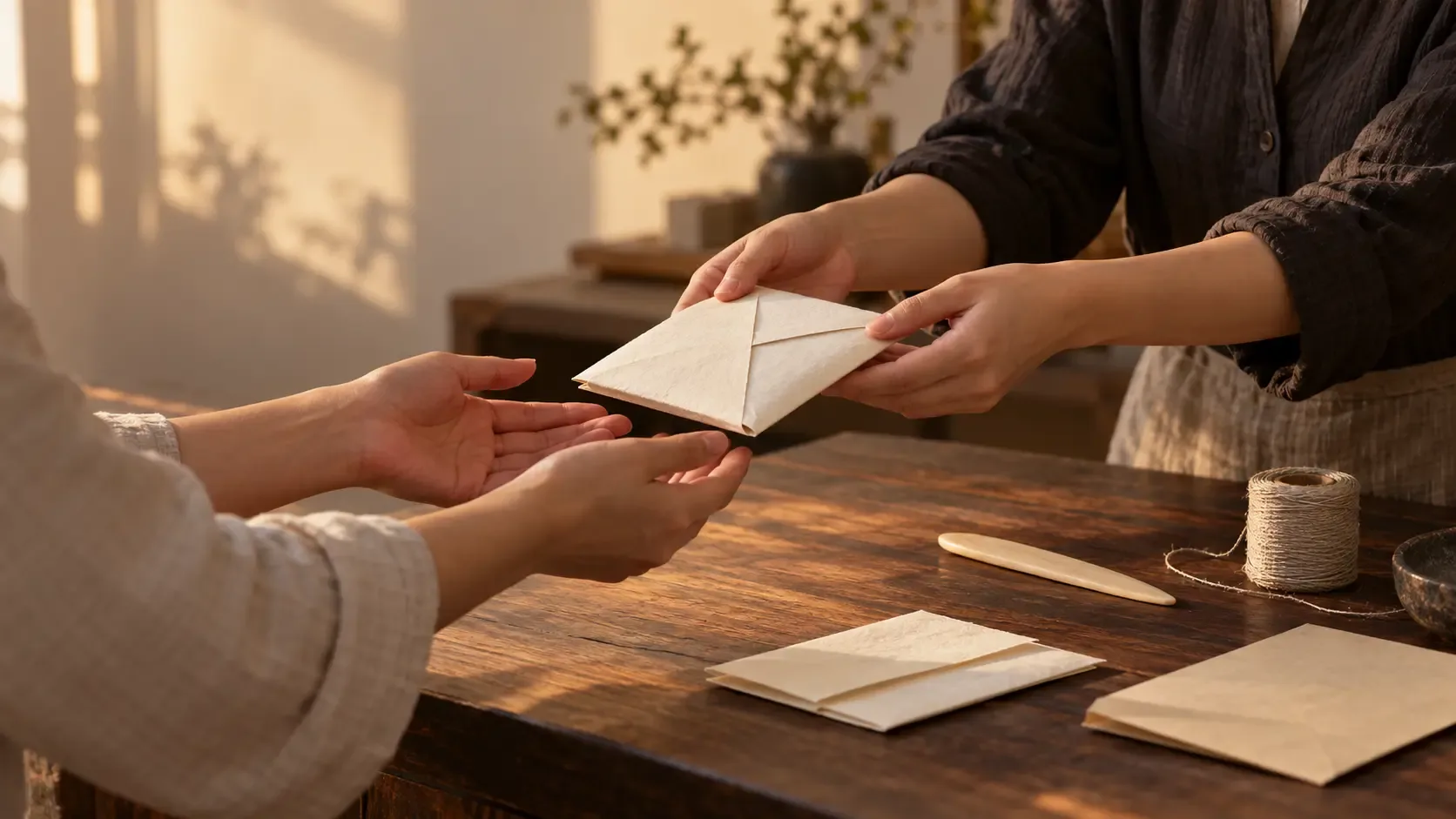
Before arrival, a letter had to be written, folded or enclosed, addressed, secured and carried. Sheet size, decorated paper, damage at a fold, an outer wrapper or a seal trace can answer questions the verbal text cannot. The National Palace Museum’s exhibition on decorated papers in painting and calligraphy shows how colors, patterns and manufacture could be integral to the writing surface. For material vocabulary, continue with our guide to Chinese calligraphy paper.
Delivery was part of the social act
A named messenger, servant, colleague or returning traveler could carry a packet; gifts or another person’s letter might travel with it. Delay, interception and loss always remained possible. “I received your letter” records one successful endpoint, not the whole system. Historians should ask who could write, employ a scribe, find a carrier and preserve a reply—and whose correspondence disappeared because those resources were unavailable.
Letters could be literature without ceasing to be letters
Brevity and occasion can be highly shaped
Liu Xie discussed correspondence within literary thought, and later collections transmitted letters admired for argument, feeling or style. Their occasion still matters. A graceful refusal answers pressure; a lament of separation performs friendship; a recommendation seeks an outcome. The literary quality is not evidence that the exchange was fictional, while practical content is not evidence that the language was artless. Both dimensions can operate in the same few lines.
“Private voice” is a hypothesis, not a default
Letters often sound immediate because they name illness, weather, fatigue or an absent friend. Yet writers knew that messages could be copied, shown or retained. Scribes and secretaries might help compose them; anthologists later selected polished examples. The safest reading tests intimacy against audience, formula, transmission and likely circulation. Our study of tea in Chinese letters applies that method to gifts and visits without treating every mention as an unfiltered diary entry.
Autograph, copy, anthology and rubbing are different witnesses
A surviving text may be far removed from the sent sheet
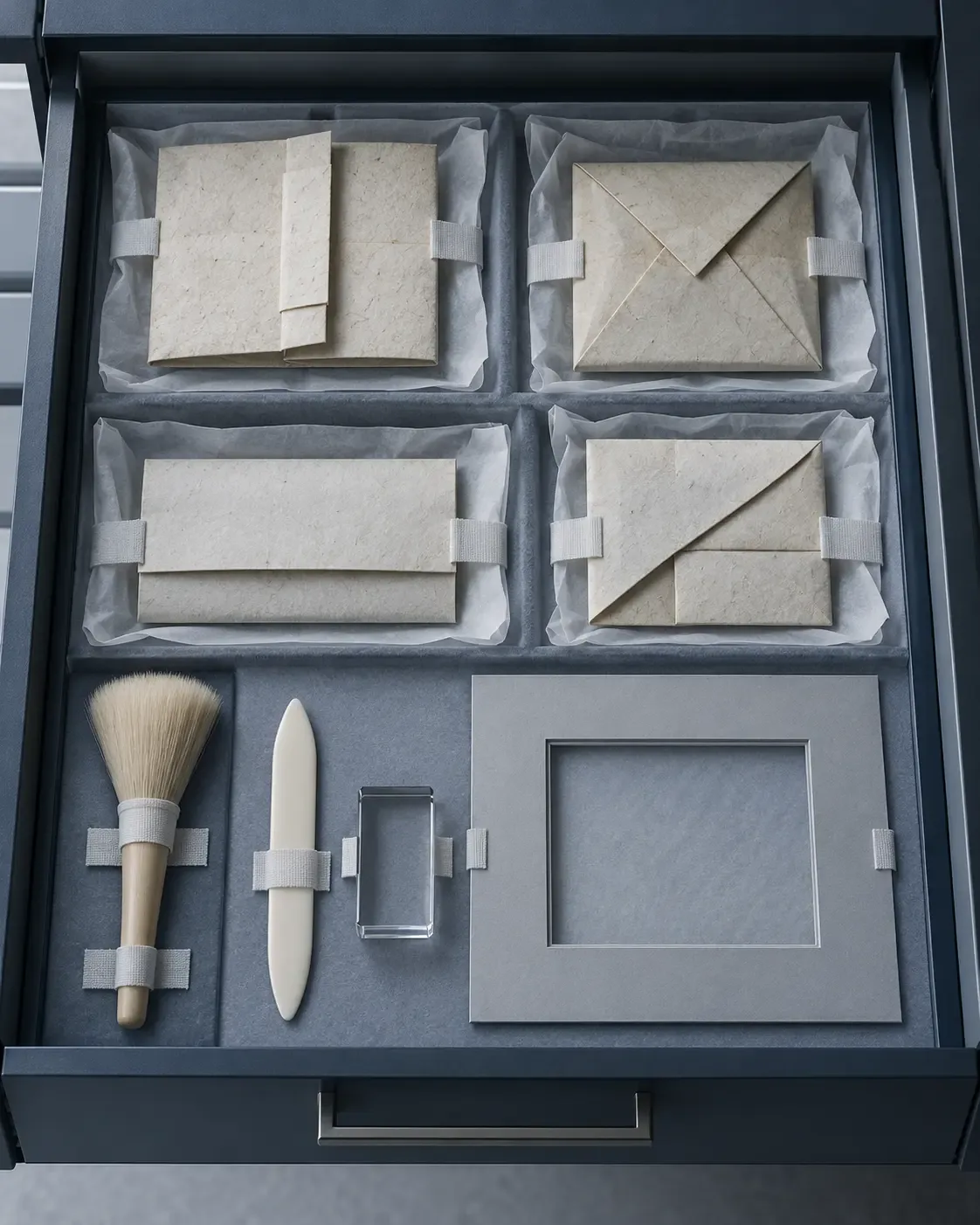
A letter can reach us as an autograph, a later manuscript copy, an excerpt in a collected works, a printed anthology, an engraved model or a rubbing. Each preserves and changes different things. The Metropolitan Museum’s On the Seventeenth Day, for example, is catalogued as a thirteenth-century rubbing of fourth-century texts associated with Wang Xizhi—not as the paper packets delivered by Wang himself. That distinction is essential to responsible reading.
Reformatting creates a new object history
Individual sheets might be trimmed, backed, mounted as album leaves and rearranged. Collectors’ seals, captions and bindings add later histories but can obscure the original sequence or folds. The site’s guides to thread-bound books and prefaces and postfaces help distinguish textual transmission from the present physical container.
Calligraphic afterlife changes what survives
Famous hands attract preservation
Letters by celebrated writers and artists were valued as traces of the hand. The Met’s album Letters to Fang Shiguan contains ten leaves by Bada Shanren, dated about 1688–1705; the museum explains that Fang apparently kept the letters and that they were later mounted together. The album preserves correspondence about health, meetings, favors, gifts and painting, but its survival also reflects friendship, artistic reputation and collecting.
The archive is therefore selective
Elite men, renowned calligraphers and texts judged publishable are overrepresented. Ordinary notes, women’s correspondence, commercial messages and the letters of people without collectors may survive unevenly or indirectly. A beautiful hand is not the statistical norm for Chinese communication. Compare the object’s brushwork through Chinese calligraphy, then use calligraphy masters and reading paths to avoid turning a famous name into a guarantee of autograph status.
Correspondence made networks, not just pairs
Intermediaries and copies widen the audience
The visible “I” and “you” may conceal a larger chain: secretary, carrier, host, family member, patron, editor and later reader. A recommendation letter introduces a third person; a request can mobilize an office; a copied exchange can circulate ideas. A Harvard digital-history background essay on epistolary networks in Song China emphasizes letters as communication, literary genre, intellectual transmission and material for publication among literati officials.
Numbers require the same caution as anecdotes
Network maps can reveal clusters and long-distance ties, but their edges derive from surviving and catalogued texts. One prolific collection can dominate the picture; a lost archive can erase a relationship. Treat a map as a model of recorded correspondence, not a complete social world. The same source criticism used for fragmentary biji or “brush notes” applies here: who selected, grouped and named the material?
A seven-question method for reading a Chinese letter
Begin with witness, relation and action
Ask: (1) What object or edition am I reading—autograph, copy, print or rubbing? (2) Who is named as sender and recipient, and how secure are those attributions? (3) What relation do forms of address construct? (4) What action does the letter attempt—request, thanks, consolation, news, refusal or introduction? Do not translate courtesy formulae as spontaneous confession before checking their conventional range.
Then reconstruct journey and afterlife
Ask: (5) What do paper, folds, wrapper, seals or damage reveal? (6) Who might have carried, copied, kept or published it? (7) Why did this witness survive, and what correspondence is missing beside it? Record uncertainty explicitly. A letter becomes most informative when text, social relation, physical itinerary and later preservation are read together—without mistaking an admired album leaf for the untouched private moment from which it began.