How to Read a Chinese Painting Album: Leaves, Sequence and Intimate Viewing
如何阅读中国画册页:开页、次序与案头观看
A Chinese painting album is not merely a stack of small pictures. It is an object designed to be opened, paused over and closed again. Each leaf offers a complete field, yet the order of leaves, the image on the facing page, the rhythm of repetition and change, and the album’s later mounting all influence what a viewer encounters.
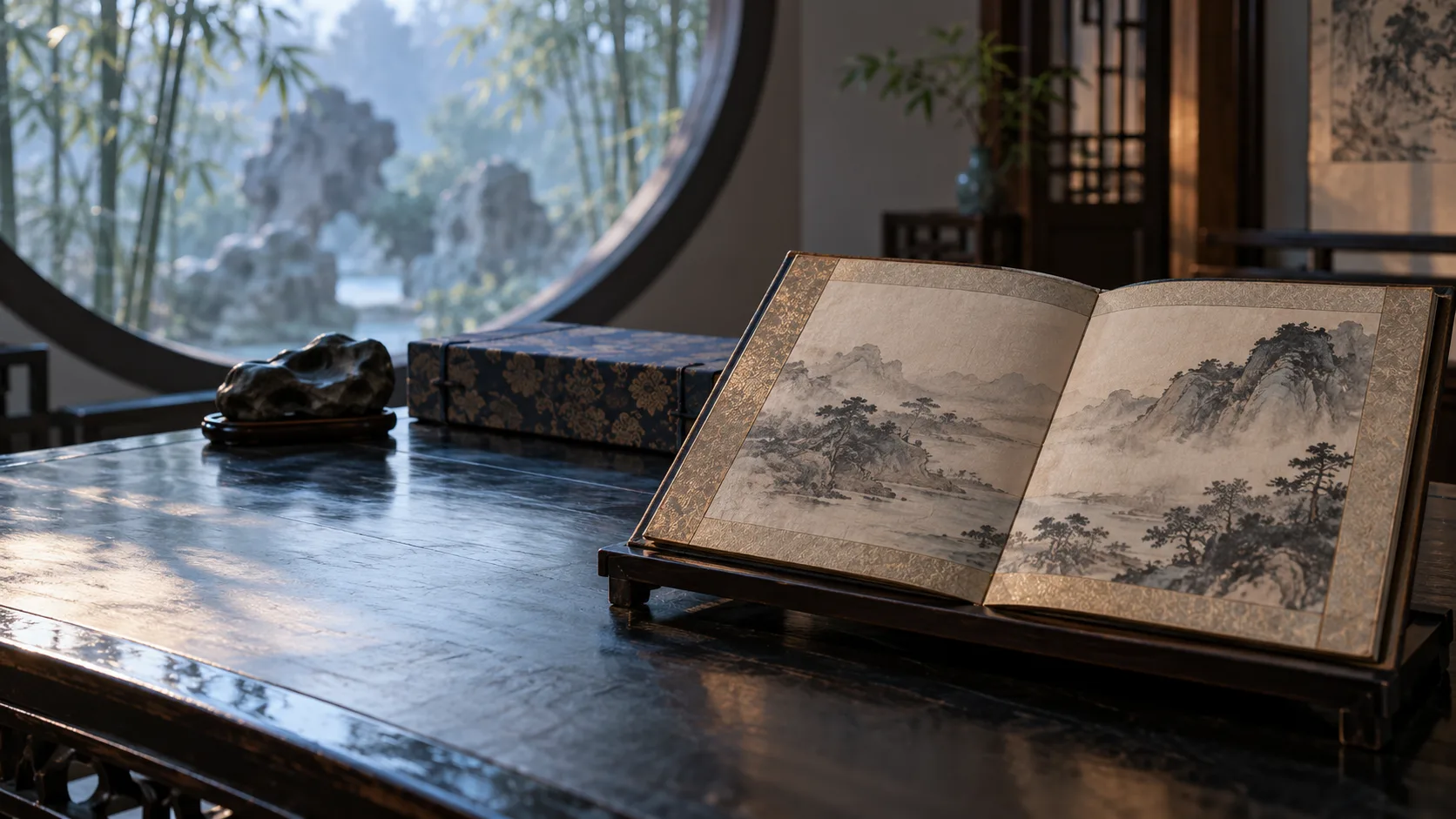
This intimate format complements the site’s guides to the Chinese handscroll and fan painting. A handscroll unfolds across time through a continuous horizontal mounting; an album advances through turns of the page. The most useful first question is therefore not simply “What does this picture show?” but “What kind of album is this, and how does one leaf speak to the next?”
Recognize the format before the image
Leaves assembled into a booklike object
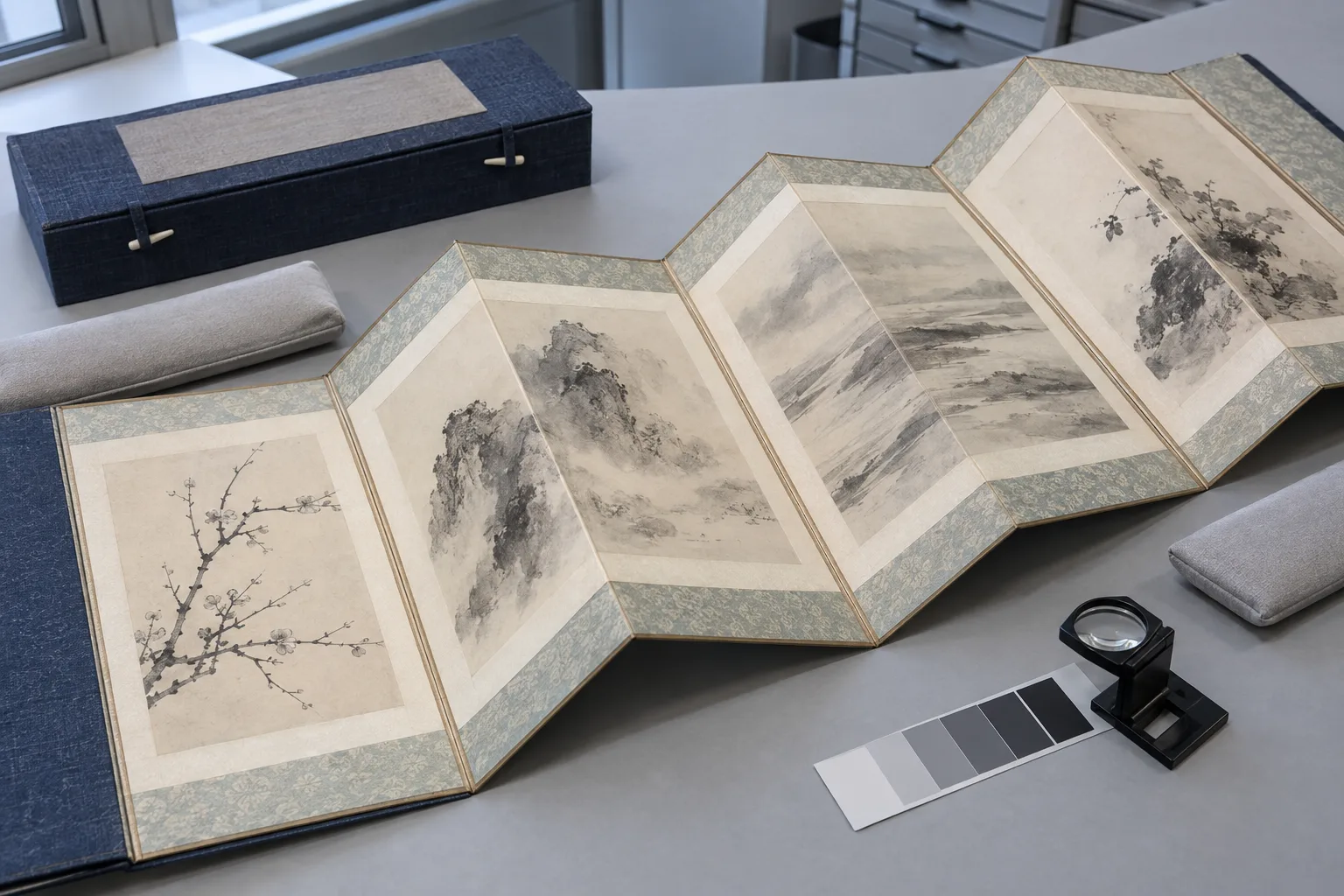
The Metropolitan Museum of Art’s guide to East Asian painting formats describes albums as relatively small square, rectangular or fan-shaped works mounted onto individual pages and assembled in a booklike structure, viewed from the right cover toward the left. The painted surface may be paper or silk; the page also includes mounting layers, borders and hinges that make handling possible.
An album can be made or assembled
Some albums were conceived as a group by one artist. Others were assembled by artists or collectors around a painter, period, subject or type of work. A detached leaf may have belonged to another sequence, and separate works can later be remounted together. Catalogue language—“album of twelve leaves,” “album leaf,” or “two leaves mounted as a hanging scroll”—therefore carries historical information.
Current format may not be original format
The Smithsonian records two works by Bada Shanren as album leaves now mounted together as a hanging scroll. Their present vertical arrangement is not the same viewing situation as turning pages. Before interpreting a pair, distinguish the artist’s work from the later object that contains it.
Read one opening at a time
Begin with the right-hand entry
Traditional albums are approached from the right cover. Record the frontispiece, title leaves, images, calligraphy and final inscriptions in their present order. Do not assume a digital gallery’s thumbnail order reproduces every historical opening. A reliable object record may identify leaves by letters or accession suffixes; keep those identifiers beside your notes.
Study the spread, not only the leaf
An opening may pair painting with calligraphy, two related landscapes, contrasting seasons, or works with no obvious thematic match. Scale, empty space and the direction of a branch or path can pull the eye across the centre fold. The site’s introduction to Chinese calligraphy helps with the written side, but image and text should first be described separately before a relationship is proposed.
Let the turn create surprise
The Met’s exhibition The Art of the Chinese Album emphasizes the format’s intimate character and the fresh world created at each turn. Shitao could use an album for sharp changes of viewpoint and subject; other painters explored sustained variation within one mode. Sequence may create contrast, development or return without forming a continuous narrative.
Follow variation across the whole
Repetition can be analytical
A series of landscapes can test different arrangements of mountain, water, trees and empty ground. Wang Jian’s Landscapes in the Styles of Ancient Masters gives each leaf a historical reference, yet the Met notes that the smaller format and Wang’s own brush manner transform those models. Looking for difference within repetition is more useful than searching for a single “best” leaf.
A journey can be divided into views
Zheng Min’s Eight Views of the Yellow Mountains, dated 1681, unfolds its subject in eight distinct parts and ends with a long inscription explaining the album’s creation. The painter worked from memory and imagined the album guiding a younger friend toward a future visit. The sequence connects place, recollection, friendship and anticipated travel without pretending to be a topographic survey.
Season and perspective can reset
Shitao’s Landscapes of the Four Seasons comprises eight leaves in ink and colour on paper. A seasonal album does not require one continuous weather system or viewpoint. Compare wet and dry brush, density and openness, high and low viewpoints, then ask whether the order produces a larger cycle.
Read the album as an object with a history
Painting, inscription and mounting have different dates
An artist’s date may apply to one leaf, while a colophon or collector’s seal belongs to a later encounter and the mounting to a later conservation campaign. The same caution applies to the ink and brush: what looks like a unified surface may combine different papers, repairs or remounted fragments. Record uncertainty rather than forcing all layers into one moment.
Digital display changes the encounter
Online viewers often place every leaf in a horizontal strip, making comparison easy but turning the album into something like a virtual scroll. Museum displays may open one spread or show separate leaves. These are valuable access modes, yet they should not erase the closed cover, page turn, reverse, thickness and restricted view that belong to the physical object.
A six-pass reading method
- Name. Identify album, single leaf, detached leaf or later remounting.
- Order. List covers, frontispiece, paintings, calligraphy and final inscriptions in the documented sequence.
- Open. Describe each facing pair before isolating individual leaves.
- Compare. Track changes in subject, brush, colour, viewpoint, season and empty space.
- Layer. Separate painting, inscription, seals, repairs, mounting and provenance by date and evidence.
- Return. Revisit the first leaf after the last and ask what the full sequence made newly visible.
A good album reading alternates between closeness and memory. Within the wider traditions of Chinese painting, attend to one leaf, turn the page, then carry enough of the previous image forward to recognize contrast or echo. That modest act of remembering is the format’s special demand—and one reason an album cannot be reduced to a grid of isolated reproductions.
Research note: This guide draws on the Metropolitan Museum of Art’s format essay and Chinese-album exhibition, its records for albums by Shitao, Zheng Min and Wang Jian, and the Smithsonian National Museum of Asian Art’s record of two Bada Shanren album leaves remounted as a hanging scroll. The examples demonstrate possibilities, not a universal album sequence.