INTERNAL MARTIAL FOUNDATIONS · 内家拳基础

Wudang Fuhu Quan Fundamentals (Taming-the-Tiger Fist): Low Crouching Stances (Pubu & Mabu), Tiger-Claw Tendon Extension, and Grounded Pressing Issuance 武当伏虎拳基础指南:仆步马步筑基、虎爪撑筋与虎背扑按整劲

A technical guide to Wudang Fuhu Quan (伏虎拳), detailing how beginners and intermediate practitioners build lower-body leg resilience, rounded 'Tiger-Back' (Hu Bei) spinal structure, and whole-body pressing power (Pu An Jin).


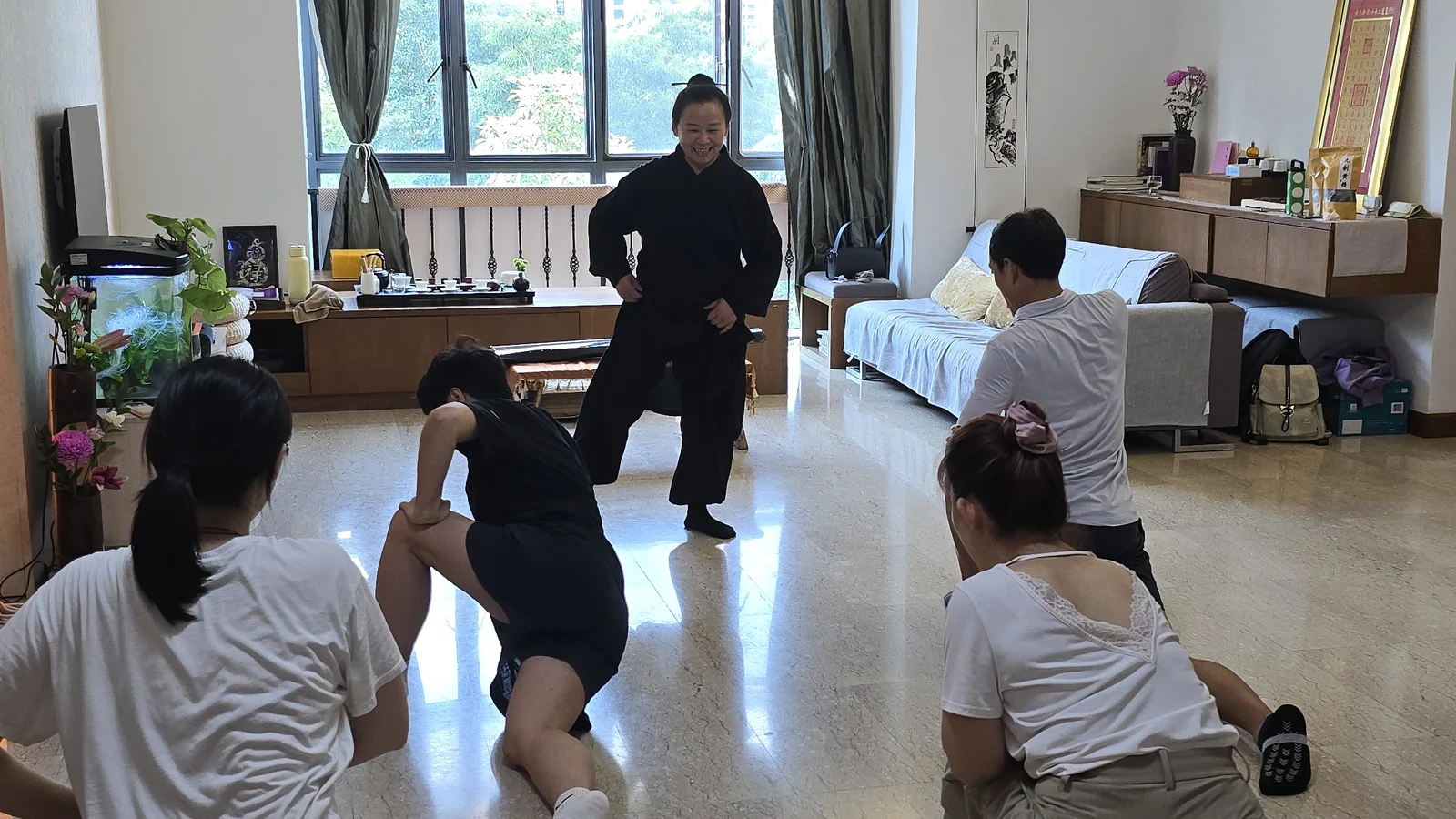
A Wudang taijiquan lesson in a sunlit room: students seen from behind kneel into deep lunges to open the hips while a teacher in black Taoist-style clothing stands in a wide stance, smiling, with an ink-painting scroll on the wall behind.

1. Role of Fuhu Quan in the Traditional Wudang Curriculum

Within the traditional curriculum of Wudangquan, Wudang Fuhu Quan (武当伏虎拳 — Wudang Taming-the-Tiger Fist) serves as a foundational bridge between introductory external frame conditioning and soft internal boxing. It demands unmistakable structural honesty: deep stances, long axial reaches, and crisp transitions between crouching concealment and decisive forward pouncing.

2. Low Crouching Stances: Alternating Pubu (Drop Stance) and Mabu (Horse Stance)

The hallmark of Fuhu Quan is its disciplined alternation between low drop stances (pubu 仆步) and wide horse stances (mabu 马步). In pubu, the practitioner folds deeply into one hip while extending the opposite leg flat along the ground with the sole fully planted, mimicking a tiger crouching behind mountain stone before springing upward into bow stance (gongbu 弓步) or horse stance.

Wudang Fuhu Quan Fundamentals (Taming-the-Tiger Fist): Low Crouching Stances (Pubu & Mabu), Tiger-Claw Tendon Extension, and Grounded Pressing Issuance

A technical guide to Wudang Fuhu Quan (伏虎拳), detailing how beginners and intermediate practitioners build lower-body leg resilience, rounded 'Tiger-Back' (Hu Bei) spinal structure, and whole-body pressing power (Pu An Jin).

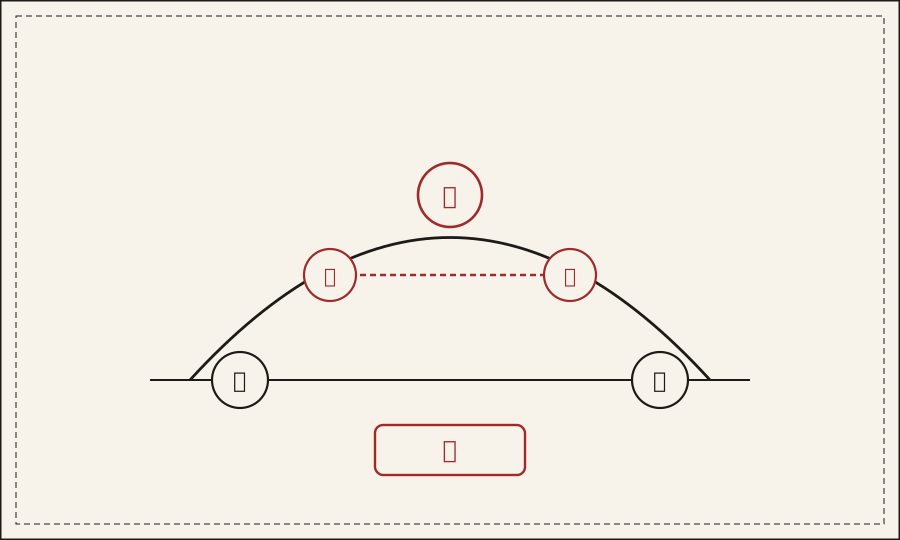
  1. ① Rooted Low Stance Base (Pubu / Mabu 仆步与马步): Deep hip crease fold and three-point foot contact anchoring into the flagstones.
  2. ② Mingmen & Dantian Fulcrum (命门与丹田枢轴): Lower-back opening that links leg drive to upper-body issuance.
  3. ③ Rounded Tiger Back (Hu Bei Yuan Cheng 虎背圆撑): Scapular expansion creating an elastic dorsal bow.
  4. ④ Tiger-Claw Tendon Extension (Hu Zhao Cheng Jin 虎爪撑筋): Hooked finger tips with hollow palm center (Laogong) engaging the forearm sinews.
  5. ⑤ Arcing Pounce Trajectory (Pu An Hu Xian 扑按弧线): Forward-and-downward spiral wave rising from the rear heel through the crown.
  6. ⑥ Grounded Pressing Issuance (An Jin Luo Di 按劲落地): Heavy, settled downward-forward release without leaning or overextending.

3. Tiger Back (Hu Bei), Tiger Claw (Hu Zhao), and Pouncing Press (Pu An Jin)

Upper-body mechanics in Fuhu Quan revolve around three coordinated elements: rounding the upper back (hu bei 虎背 — Tiger Back), extending the finger sinews into a hollow-palmed claw (hu zhao 虎爪 — Tiger Claw), and issuing downward-forward pressing energy (pu an jin 扑按劲).

4. Training Progression and Post-Practice Recovery

Practitioners should begin with slow, three-breath holds in each low transition rather than rushing through the choreography with momentum. After demanding stance sessions, evening sole warming via Rubbing the Yongquan Soles (Ca Yongquan) releases plantar tension and draws residual heat back to the lower Dantian.

Seeker’s Q&A · Frequently Asked Questions

What is the core takeaway of Wudang Fuhu Quan Fundamentals (Taming-the-Tiger Fist)?

A technical guide to Wudang Fuhu Quan (伏虎拳), detailing how beginners and intermediate practitioners build lower-body leg resilience, rounded 'Tiger-Back' (Hu Bei) spinal structure, and whole-body pressing power (Pu An Jin).