
INTERNAL MARTIAL FOUNDATIONS · 内家拳基础

Wudang Xuanwu Quan Fundamentals (Xuanwu Fist): Tortoise-Back Stability, Snake-Waist Coiling, and Nine-Palace Stepping 武当玄武拳基础指南:龟蛇合体身法、九宫走转与刚柔相济劲路

A comprehensive technical guide to Wudang Xuanwu Quan (Xuanwu Fist), exploring how the traditional Wudang emblem of the Tortoise and Snake (Gui-She He Ti) translates into biomechanical structure—rounding the upper back like a carapace, coiling the spine and waist like a serpent, and stepping along Nine-Palace (Jiugong) angles.


Mossy stone steps climbing through an ancient forest, with sunbeams breaking through the mist and a small stone marker beside the path.

1. Cultural & Martial Origins: The Tortoise-and-Snake Emblem (Gui-She) as Biomechanical Architecture

On Wudang Mountain, the classical icon of Xuanwu (玄武, the Dark/Mysterious Warrior of the Northern Quadrant) is the intertwined Tortoise and Snake (龟蛇合体). Within Wudang internal martial arts (Neijiaquan), Wudang Xuanwu Quan (武当玄武拳) translates this symbolic pairing directly into human biomechanics and energetic physiology. Rather than mimicking external animal theatrics, the practitioner embodies the Tortoise (龟, Gui) through a rounded, elastic thoracic upper back (拔背含胸, 'drawing up the back and containing the chest') and deeply rooted lower stances that absorb incoming force like a vaulted stone carapace; simultaneously, the practitioner embodies the Snake (蛇, She) through a supple, spiraling lumbar waist and agile forearm coils that slither around an opponent's guard and issue crisp, whip-like energy. Practiced in the heritage courtyards of Wudang Mountain's UNESCO World Heritage ancient Taoist temples and taught in structured classes at Lee Wudang International Pte. Ltd., Xuanwu Quan bridges the meditative slowness of Taijiquan with the brisk stepping and crisp issuance (发劲, Fajin) of comprehensive Wudang barehand boxing.

2. Dual Body Mechanics: Vaulting the Tortoise Carapace (Guibei) and Coiling the Snake Waist (Sheyao)

In Xuanwu Quan posture diagnostics, Tortoise and Snake govern two complementary axes of the torso: (1) Tortoise-Back Containment (龟背涵胸): the scapulae spread smoothly outward and downward while the sternum softens inward, creating a continuous defensive arch from the rear heel up through the Mingmen (命门) lumbar gate to the Dazhui (大椎, GV-14) prominence at the base of the neck. When an opponent presses against the forearms, the pressure is conducted around this curved dorsal vault into the ground rather than collapsing the chest; (2) Snake-Waist Undulation (蛇行缠腰): the waist and inguinal kua fold and rotate along horizontal and figure-eight spirals, allowing the spine to coil tightly before uncoiling into palm strikes, ridge-hand chops, or close-gate elbow wards. Internally, the Tortoise corresponds to quiet Kidney-Water stability (藏精), while the Snake corresponds to agile Heart-Spirit responsiveness (运神).

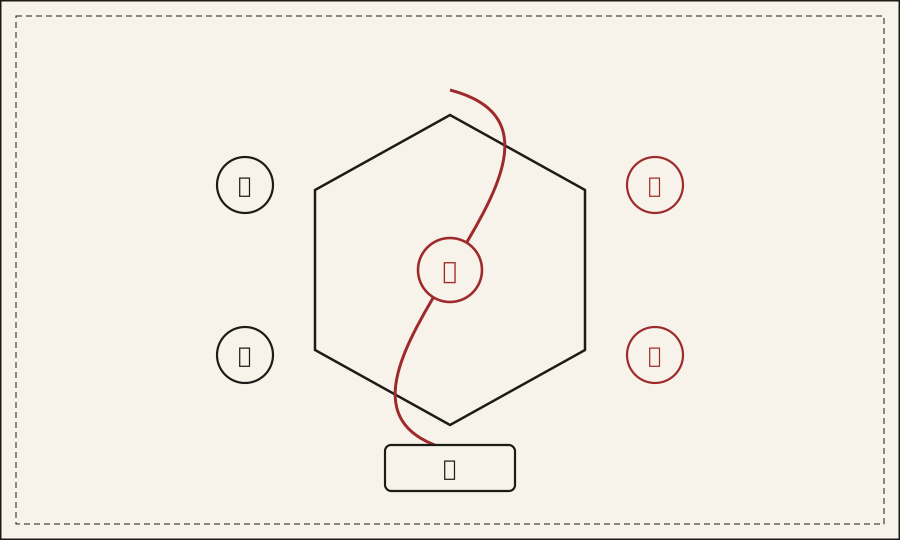
Numbers-only classical Wudang ink-and-cinnabar diagram of Wudang Xuanwu Quan showing the hexagonal Tortoise carapace structure and S-coiling Snake waist trajectory (①–⑥).

Classical Wudang diagram of Xuanwu Quan (numbers-only SVG key)

  1. ① Tortoise-Back Dorsal Vault (Guibei Hanxiong — Rounded Thoracic Arch)
  2. ② Snake-Waist S-Spiral Coiling (Shexing Chanyao — Lumbar & Kua Undulation)
  3. ③ Sinking Tortoise Root (Guichen Bu — Grounded Kidney-Water Stability)
  4. ④ Threading Snake Issuance (Shechuan Fajin — Spiraling Piercing Palm)
  5. ⑤ Central Mingmen & Dantian Pivot (Gui-She He Ti — Water and Fire Harmonized)
  6. ⑥ Nine-Palace Oblique Stepping Base (Jiugong Bu).

3. Nine-Palace Stepping (Jiugong Bu) and Alternating Soft-Hard Palm Changes

Unlike purely linear long-fist routines, Wudang Xuanwu Quan organizes its footwork across diagonal and circular angles inspired by the Nine Palaces (九宫步, Jiugong Bu). The practitioner alternates between low anchored horse and bow stances (龟沉步, Tortoise Sinking Step) and rapid, oblique mud-wading or cross-stepping pivots (蛇穿步, Snake Threading Step) that slip to the opponent's outside blind angle. Hand techniques combine open-palm coiling parries (缠手, Chanshou), vertical piercing palms (穿掌, Chuanzhang), downward pressing seals (按掌, Anzhang), and compact spiral fist strikes—always adhering to the Wudang principle that soft coiling precedes and conceals sudden issuance (柔中寓刚,刚后即柔).

4. Training Progression, Safety Guidelines, and Wudang Curriculum Bridges

Safety note: When training the low crouching transitions and brisk waist-whipping strikes of Xuanwu Quan, warm up the ankles, knees, and lumbar spine thoroughly and ensure the knees always track in the exact direction of the toes during oblique pivots. To connect Xuanwu Quan with weapon extensions and philosophical foundations, explore our Wudang Martial Arts Overview, compare its staff counterpart in Wudang Staff Fundamentals: Xuanwu Gun and Taiji Gun Guide and Wudang Eight Immortals Sword Fundamentals (Ba Xian Jian), reflect on martial ethics in Weapons Are Instruments of Ill Omen: Tian Dan Wei Shang (Tao Te Ching Chapter 31), and cool down with Combing the Scalp with Ten Fingers (Jie Fa / Shizhi Shutou) Daoyin Guide.

Seeker’s Q&A · Frequently Asked Questions

What is the core takeaway of Wudang Xuanwu Quan Fundamentals (Xuanwu Fist)?

A comprehensive technical guide to Wudang Xuanwu Quan (Xuanwu Fist), exploring how the traditional Wudang emblem of the Tortoise and Snake (Gui-She He Ti) translates into biomechanical structure—rounding the upper back like a carapace, coiling the spine and waist like a serpent, and stepping along Nine-Palace (Jiugong) angles.
